
BuddhistCatholicContemplativeEvangelicalGeneral ChristianHinduJewishLatter-day SaintMuslimNew VisionsProgressive Christian
Beliefs
- Buddhist
- Catholic
- Contemplative
- Evangelical
- General Christian
- Hindu
- Jewish
- Latter-day Saint
- More Voices
- Muslim
- New Visions
- Pagan
- Progressive Christian
Topics
- Religion News
- Food and Religion
- Sports and Religion
- Religious Art
- Religious Music and Entertainment
- Religious Events
- History and Religion
- Style and Religion
- Politics and Religion
- Women in Religion
- Recreation Outdoors and Religion
- Business Finance and Religion
- Careers Workplace and Religion
- Education and Religion
- Family Parenting and Religion
- Health Fitness and Religion
- Home and Religion
- Relationships and Religion
- Technology and Religion
- Travel and Religion
Columnists
- Buddhist Columnists
- Business Finance and Religion Columnists
- Careers Workplace and Religion Columnists
- Catholic Columnists
- Contemplative Columnists
- Education and Religion Columnists
- Evangelists Columnists
- Family Parenting and Religion Columnists
- General Christian Columnists
- Health Fitness and Religion Columnists
- Hindu Columnists
- History and Religion Columnists
- Home and Religion Columnists
- Jewish Columnists
- More Voices Columnists
- Latter Day Columnists
- Muslim Columnists
- New Visions Columnists
- Nonreligious Columnists
- Pagan Columnists
- Politics and Religion Columnists
- Progressive Columnists
- Recreation Outdoors and Religion Columnists
- Relationships and Religion Columnists
- Religion News Columnists
- Religious Art Columnists
- Religious Events Columnists
- Religious Music and Entertainment Columnists
- Sports and Religion Columnists
- Style and Religion Columnists
- Technology and Religion Columnists
- Travel and Religion Columnists
- Women in Religion Columnists
Resource Library
- 2026 Calendar
- Library of World Religions
- The 100 Most Holy Places on Earth
- Patheos Answers
- Podcasts
- Videos
- Faith Leaders Database
- Anglican Episcopalian
- Bahai
- Baptist
- Buddhism
- Christianity
- Confucianism
- Eastern Orthodoxy
- Hinduism
- Holiness and Pentecostal
- ISKCON
- Islam
- Judaism
- Lutheran
- Methodist
- The Church of Jesus Christ of Latter-day Saints
- New Age
- Paganism
- Presbytarian and Reformed
- Protestantism
- Religion Behind the Scenes
- Roman Catholic
- Scientology
- Shia Islam
- Sikhism
- Sufism
- Sunni Islam
- Taoism
- Zen
- See all religions
Research Tools
 Ad-Free & Subscriber Log-In Subscription Support
Ad-Free & Subscriber Log-In Subscription Support
Follow Patheos 

- Trending:
- Forgiveness
- |
- Marriage
- |
- Consciousness
- |
- Death Penalty
- |
- Election
- |
- Halloween
 PaterFamilias Today
- Home
- Evangelical
- What ARE Children For?
What ARE Children For?
Last updated on: November 3, 2016 at 10:20 am by C. R. Wiley
What ARE Children For? 2016-11-03T10:20:52-04:00 C. R. Wiley
Patheos Explore the world's faith through different perspectives on religion and spirituality! Patheos has the views of the prevalent religions and spiritualities of the world.
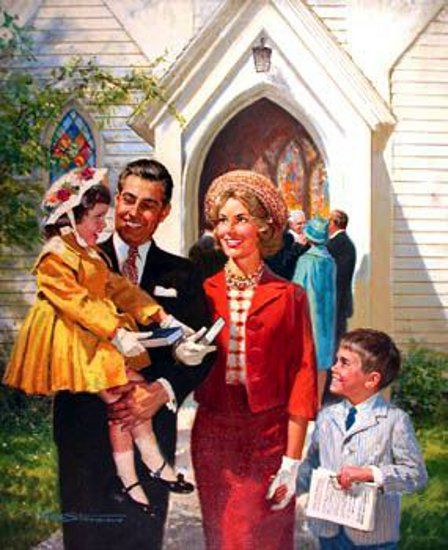
https://americangallery.wordpress.com/category/stevens-peter/
I continue my reflections on the New Testament household codes today with a subject you might mistakenly think is the least controversial of the four things I will address: children.
(The other three are the instructions given to slaves, wives, and household heads. I’ve already addressed slavery here, and here. I’ll get to the instructions for wives next. I will be treating the codes as they relate to heads of households after that. Paradoxically there seems to be less controversy about them.)
Now, what about the children?
How could there be any controversy about this?
Children, obey your parents in the Lord, for this is right. “Honor your father and mother” (this is the first commandment with a promise), “that it may go well with you and that you may live long in the land.” Ephesians 6:1-3 (ESV)
Well, for starters, it assumes the presence of children. And for many people today, they are objectionable little critters.
For one thing, they’re expensive. (See this.) For another thing, they get in the way. If you’re all about getting ahead in life, they have a way of slowing you down. (Even this appears to be misleading, at least for men. Men tend to work harder and their economic output seems to increase after they sire children. See this.)
You can tell a lot about people by what they take for granted. And one of the things people take for granted today is the notion that having children is merely a life-style choice. If you’re into kids, good for you. Other people are into dogs or collecting old cars. Different strokes for different folks.
That’s a little harsh, but many people justify having children with strictly subjective arguments. And when people do appeal to something more objective, the arguments seem to run against kids. Think of their carbon foot-prints and over-population and all that.
The reason people don’t know what kids are for is because the household for most people is a strictly recreational affair. It is a place where you co-habitate with your recreational partner (or partners). Really important things happen elsewhere–in cubicles, or on-line.
What we don’t have many of these days is working households. What I mean by that is real home economies, places where people are doing productive and practical things that need to be done in order to survive. But those are the sort of households that the household codes reinforced.
When I talk to people about the household codes they are either put off by them or they remark, “Those are outdated.” When I ask, “Can you describe a world in which they wouldn’t be outdated, but actually functional?” They’re usually at a loss. That brings me back to what people take as granted.
The primary reason people can’t see the sense in the codes is because the functions performed by traditional households have been outsourced. Corporations now hold most of the productive property in our society and households have largely been relieved of their social welfare functions so that people can work in the corporate economy.
It’s never put so baldly. Rather it is dressed up in the rhetoric of “liberation”. We have been liberated from having to do things for the people we love so that we can go work for other people. That’s the truth of our situation, like it or not. And the big bribe that our society pays us to go along with this is free-sex. For many people, that’s enough get them to subject themselves to wage-slavery.
But in traditional working households, all around the world, and until just yesterday it seems, children were a blessing. Not just because they’re cute, or say the darnedest things, but because they contributed to the household economy. You didn’t give them make-work chores so that they could become responsible adults. There was work that needed doing and they were put to it. And not only that, they were a parent’s retirement plan.
But getting back to taking things for granted. We’ve lost sight of what kids are for because we erroneously believe they’ve been replaced by modern institutions.
I’ve noticed that people tend to focus on the immediate causes for things and lose sight of their antecedents. What I mean is this, Social Security is no real replacement for children, it is merely a redistribution scheme that allows the childless to enjoy the surplus productivity of other people’s children. It also frees people up a bit so that they can serve the corporate economy without the guilt of abandoning their parents completely.
But what if people stop having kids? What will become of Social Security? It will go belly up, that’s what. And that’s what indeed is happening.
This is why countries in Europe that are a little further along the road to insolvency are reviving pro-natal policies. (It’s also the real reason euthanasia and liberal immigration policies are favored by elites, I suspect.) Back to the birthrate, check this out–the “Do It for Denmark” campaign.
But hopefully you see the point. We still need children. The problem is we’ve created a set of disincentives. Now people think of children as liabilities. Why have a baby when you can have a boat?
This is why welfare states are in trouble, and why I believe the functional household will return. (See this to learn more about my thoughts on these matters.)
But there is more to say for the household codes when it comes to children. I believe these codes help us to see a bigger reality–how the household of God functions and what it means to be a part of it. I’ll pick that theme up next time.
Previous Post

October 18, 2016
Story-telling and Sovereignty
Next Post

October 25, 2016 Is Horror Fiction Immoral?
Browse Our Archives
Select a Category Advising a Daughter Aristotle Art Atheism Author and Speaking Appearances Beauty Building Working Houses C R Wiley Children Community Creativity Cultural Apologetics Fatherhood Fiction Fidelity in marriage Film Freedom Gravitas H. P. Lovecraft Happiness Household Economy Infant Baptism Inklings Interpreting the Bible Interviews Jack Donovan Liturgy Localism Man of the House Manliness Martial Virtue Medieval Cosmology Metaphysics Mortimus Clay NecronomiCon New Left New Testament Household Codes Nietzsche Nominalism/Realism Politics Poverty Preaching Productive Property Reaching men Science Self-Sufficiency Side Hustles Social Ethics Social Security Spiritual Disciplines Sublime Techno-gnosticism The Pastor's Survival Guide Theology of the Family Tradition Uncategorized Virtue Weird Fiction
Select a Month February 2019 November 2018 October 2018 July 2018 June 2018 May 2018 April 2018 March 2018 February 2018 January 2018 December 2017 November 2017 October 2017 September 2017 August 2017 July 2017 June 2017 May 2017 April 2017 March 2017 February 2017 January 2017 December 2016 November 2016 October 2016 September 2016 August 2016 July 2016 June 2016 May 2016 April 2016 March 2016 February 2016 January 2016 December 2015
Follow Us!
TAKE THE
Religious Wisdom Quiz
Who was David’s best friend?
Select your answer to see how you score.
Joseph Jonathan Samuel Saul
Books by This Author Books by PaterFamilias Today
Books by C. R. Wiley

The Purloined Boy (The Weirdling Cycle #1)

Man of the House: A Handbook for Building a Shelter That Will Last in a World That Is Falling Apart
Related posts from PaterFamilias Today

Transcendence: Meaning from Above

Gutting Creation of Meaning Guts Scripture


Advice for a Single Woman Who Is Looking...
TRENDING AT PATHEOS Evangelical

How the author of the world's best hymn...
I've been working with John Newton for a while now. This makes...

Long before this Lectio Divina, Psalm 130 - the song - started...

What About the Trees? Another Living Parable
After I finished writing the last article about falling leaves as a...

Why Classical Education Is a Conversation, Not a...
Come and Read: Joy in Classical Education When I was a little...

Falling Leaves: A Living Parable on Letting Go
I’ve spent the vast majority of my life in the southeast corner...

Cornell University has received a great deal of negative publicity and intense...
view all Evangelical blogs
Ad-Free & Subscriber Log-In Subscription Support
- About Us
- 2026 Calendar
- Videos
- Podcasts
- Library of World Religions
- Faith In Media Tracker
- Advertise With Us
- Write for Us
- Privacy Policy
- Terms of Service
- Do Not Sell My Data
- Contact Us
- Radiant Digital
- Manage Newsletter Subscriptions
- Unsubscribe From Notifications
- Sitemap
Copyright 2008-2026, Patheos. All rights reserved.
Subscription Support Ad-Free & Subscriber Log-In
Follow Patheos