
BuddhistCatholicContemplativeEvangelicalGeneral ChristianHinduJewishLatter-day SaintMuslimNew VisionsProgressive Christian
Beliefs
- Buddhist
- Catholic
- Contemplative
- Evangelical
- General Christian
- Hindu
- Jewish
- Latter-day Saint
- More Voices
- Muslim
- New Visions
- Pagan
- Progressive Christian
Topics
- Religion News
- Food and Religion
- Sports and Religion
- Religious Art
- Religious Music and Entertainment
- Religious Events
- History and Religion
- Style and Religion
- Politics and Religion
- Women in Religion
- Recreation Outdoors and Religion
- Business Finance and Religion
- Careers Workplace and Religion
- Education and Religion
- Family Parenting and Religion
- Health Fitness and Religion
- Home and Religion
- Relationships and Religion
- Technology and Religion
- Travel and Religion
Columnists
- Buddhist Columnists
- Business Finance and Religion Columnists
- Careers Workplace and Religion Columnists
- Catholic Columnists
- Contemplative Columnists
- Education and Religion Columnists
- Evangelists Columnists
- Family Parenting and Religion Columnists
- General Christian Columnists
- Health Fitness and Religion Columnists
- Hindu Columnists
- History and Religion Columnists
- Home and Religion Columnists
- Jewish Columnists
- More Voices Columnists
- Latter Day Columnists
- Muslim Columnists
- New Visions Columnists
- Nonreligious Columnists
- Pagan Columnists
- Politics and Religion Columnists
- Progressive Columnists
- Recreation Outdoors and Religion Columnists
- Relationships and Religion Columnists
- Religion News Columnists
- Religious Art Columnists
- Religious Events Columnists
- Religious Music and Entertainment Columnists
- Sports and Religion Columnists
- Style and Religion Columnists
- Technology and Religion Columnists
- Travel and Religion Columnists
- Women in Religion Columnists
Resource Library
- 2026 Calendar
- Library of World Religions
- The 100 Most Holy Places on Earth
- Patheos Answers
- Podcasts
- Videos
- Faith Leaders Database
- Anglican Episcopalian
- Bahai
- Baptist
- Buddhism
- Christianity
- Confucianism
- Eastern Orthodoxy
- Hinduism
- Holiness and Pentecostal
- ISKCON
- Islam
- Judaism
- Lutheran
- Methodist
- The Church of Jesus Christ of Latter-day Saints
- New Age
- Paganism
- Presbytarian and Reformed
- Protestantism
- Religion Behind the Scenes
- Roman Catholic
- Scientology
- Shia Islam
- Sikhism
- Sufism
- Sunni Islam
- Taoism
- Zen
- See all religions
Research Tools
 Ad-Free & Subscriber Log-In Subscription Support
Ad-Free & Subscriber Log-In Subscription Support
Follow Patheos 

- Trending:
- Forgiveness
- |
- Marriage
- |
- Consciousness
- |
- Death Penalty
- |
- Election
- |
- Halloween
 PaterFamilias Today
- Home
- Evangelical
- New Testament Household Codes and the Problem of Slavery
New Testament Household Codes and the Problem of Slavery
Last updated on: November 7, 2016 at 3:18 pm by C. R. Wiley
New Testament Household Codes and the Problem of Slavery 2016-11-07T15:18:01-04:00 C. R. Wiley
Patheos Explore the world's faith through different perspectives on religion and spirituality! Patheos has the views of the prevalent religions and spiritualities of the world.
https://www.amazon.com/gp/product/0465025358/ref=pd_sbs_14_t_1?ie=UTF8&psc=1&refRID=D953F3XJ5ARMR08TT0WQ
Slavery is an ignominious fact of history.
Historically it was also well-nigh universal. I know you’ve heard otherwise, but its universality is simply another fact. Western civilization didn’t invent slavery. In fact, civilization itself didn’t invent slavery. Some of the most degrading forms slavery has taken developed within hunter-gatherer communities.
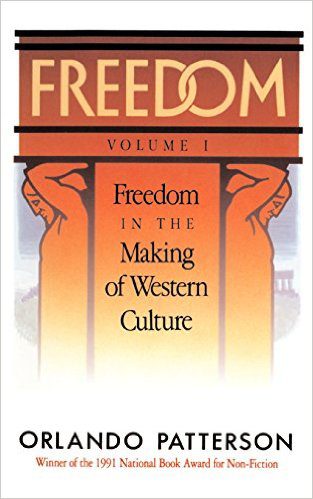
I learned these things years ago when I read the best treatment of the subject that I have come across, Orlando Patterson’s, Freedom in the Making of Western Culture. (It won the National Book Award in 1991.)
Patterson is a social historian at Harvard University. He is also a descendant of slaves. (He was born in Jamaica.)
Based upon what I learned from Patterson I think its safe to say we’re all the descended from slaves. Somewhere, at some point in the dim past, your ancestors were slaves.
Early on in the book Patterson recounts his dismay when he learned that slavery was a universal institution, while freedom has a very particular and surprising provenance. What we know as freedom today arose in the West, in the very civilization that many people make a good living denigrating. (And the civilization that happens to give them that living!)
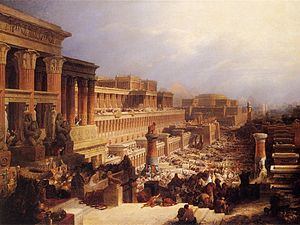
But here’s another surprising thing that Patterson reveals: it is the experience of slavery that served as a midwife for the value of freedom. That shouldn’t surprise anyone familiar with the Bible. It was bondage in Egypt that served as the womb for the nation of Israel. Exodus is the story of their liberation.
https://en.wikipedia.org/wiki/Book_of_Exodus
How odd then that they should have permitted slavery. Or so it seems to us, anyway. And I think it is this same inconsistency that bothers many people today when we read the household codes of the New Testament. Those codes made room for slavery. Why didn’t Christians simply free their slaves? Why didn’t Paul command them to? What’s all this about obey your masters?
While I’m sure that many Christian slave owners continued holding slaves for bad reasons, and while it is true that over time the emphasis on spiritual freedom in Christianity provided a theological basis for challenging the institution, still here in the New Testament we have codes telling slaves to obey their masters.
What do we do with that? No one is saying we should bring slavery back–no one we should listen to anyway. More important for me though is the claim that the codes are defunct because they make provision for slavery. Is that right?
I think the place to begin is with the fact that I noted above: historically slavery was a nearly universal institution. And something doesn’t get to be universal unless it solves certain problems.
I think we all know what one of those problems is: the problem of cheap labor.
But is that all there is to it? That addresses the demand side of things, but what about the supply? Sure, people could be born into slavery and you can wage war to acquire slaves. But it runs deeper.
This is another place where Patterson proved helpful to me. He notes that the other thing you need for slavery to spontaneously emerge is social displacement. Here’s how Patterson puts it:
“Slavery is the permanent, violent, and personal domination of natally alienated and generally dishonored persons. …(A slave) does not belong to the legitimate social or moral community.” pp. 9-10
Social displacement can happen in many ways: warfare (as I’ve already noted), natural disasters, economic insolvency, and so it goes, ad infinitum. When people are displaced in the thousands of ways that can happen, the problem for society is the problem of re-placement. Where do you put these people? There are relatives, of course. But what if they’ve been displaced too? Or maybe there’s just no more room?
Most people don’t think along these lines today. Individualism blinds us to a plain fact Aristotle noted: we’re social animals. We truly do need other people. Furthermore, many of the social institutions we take for granted could only have come into being in an advanced industrial civilization like ours. (Think of where all those charities and government social services we rely upon would be without fractional banking or taxes levied on highly productive businesses. They just wouldn’t exist. We couldn’t afford them.)
The cultures of antiquity in the near east and in Europe didn’t have those things. They were made up largely of hardscrabble households. When displaced persons needed somewhere to go, it was houses that took them in. (Naturally an economic institution arose to help that happen: the slave market.)
Some slave holding households could be quite large. The houses of the Patricians in Rome for example, or the house of Pharaoh in Egypt. But you see the point.
And once you’re brought into a household there’s the whole problem of where to put you in the hierarchy. You don’t suppose the folks who are already there are keen on being displaced themselves, do you? And what about inheritance? How do these newcomers fit into the long term prospects of a household?
So you see, taking people into households solved the displacement problem. But it created new problems. and the answer to those problems was slavery. A slave was a person who contributed to the economic livelihood of a household without enjoying ownership or inheritance rights. That was a problem for the slaves, but freemen generally didn’t feel like that was their problem to solve.
Hopefully this is beginning to make a little sense. Abolishing slavery is a little more complicated than just legislating it away. Slavery solved problems. To abolish slavery for good you must find new solutions for those problems.
And this is what western civilization has done. After many fits and starts and a lot of bloodshed over many centuries, we’ve managed to do it. But I suspect that the only way to keep slavery abolished is by keeping the institutions that have replaced it healthy. Lose those and slavery will be back.
I think that means we can keep households without keeping slaves. The work they once performed is now being done by machines and by wage laborers. And those resources are largely being put to work in large business corporations.
That’s the economic and political tale of slavery condensed for you. I’ve left a lot out that you can read about elsewhere. But the inclusion of slavery in the New Testament household codes shouldn’t invalidate them. Since a functional household does not necessitate the holding of slaves, the household codes on the subject of slavery have nothing to say to us.
Or do they?
Next Thursday I’ll return to the subject of slavery in the household codes in order to show you why its presence in the codes is actually a blessing in disguise. Slavery comes in many forms, you know. We were all born into slavery, whether we know it or not.
Previous Post

October 4, 2016
Christian Humility and the Self-Promotion Problem
Next Post

October 11, 2016 Was Jesus a Self-Promoter?
Browse Our Archives
Select a Category Advising a Daughter Aristotle Art Atheism Author and Speaking Appearances Beauty Building Working Houses C R Wiley Children Community Creativity Cultural Apologetics Fatherhood Fiction Fidelity in marriage Film Freedom Gravitas H. P. Lovecraft Happiness Household Economy Infant Baptism Inklings Interpreting the Bible Interviews Jack Donovan Liturgy Localism Man of the House Manliness Martial Virtue Medieval Cosmology Metaphysics Mortimus Clay NecronomiCon New Left New Testament Household Codes Nietzsche Nominalism/Realism Politics Poverty Preaching Productive Property Reaching men Science Self-Sufficiency Side Hustles Social Ethics Social Security Spiritual Disciplines Sublime Techno-gnosticism The Pastor's Survival Guide Theology of the Family Tradition Uncategorized Virtue Weird Fiction
Select a Month February 2019 November 2018 October 2018 July 2018 June 2018 May 2018 April 2018 March 2018 February 2018 January 2018 December 2017 November 2017 October 2017 September 2017 August 2017 July 2017 June 2017 May 2017 April 2017 March 2017 February 2017 January 2017 December 2016 November 2016 October 2016 September 2016 August 2016 July 2016 June 2016 May 2016 April 2016 March 2016 February 2016 January 2016 December 2015
Follow Us!
TAKE THE
Religious Wisdom Quiz
What Christian group is known for the doctrine of purgatory?
Select your answer to see how you score.
Methodists Catholics Lutherans Baptists
Books by This Author Books by PaterFamilias Today
Books by C. R. Wiley

The Purloined Boy (The Weirdling Cycle #1)

Man of the House: A Handbook for Building a Shelter That Will Last in a World That Is Falling Apart
Related posts from PaterFamilias Today

Transcendence: Meaning from Above

Gutting Creation of Meaning Guts Scripture


Advice for a Single Woman Who Is Looking...
TRENDING AT PATHEOS Evangelical

How the author of the world's best hymn...
I've been working with John Newton for a while now. This makes...

Long before this Lectio Divina, Psalm 130 - the song - started...

What About the Trees? Another Living Parable
After I finished writing the last article about falling leaves as a...

Why Classical Education Is a Conversation, Not a...
Come and Read: Joy in Classical Education When I was a little...

Falling Leaves: A Living Parable on Letting Go
I’ve spent the vast majority of my life in the southeast corner...

Cornell University has received a great deal of negative publicity and intense...
view all Evangelical blogs
Ad-Free & Subscriber Log-In Subscription Support
- About Us
- 2026 Calendar
- Videos
- Podcasts
- Library of World Religions
- Faith In Media Tracker
- Advertise With Us
- Write for Us
- Privacy Policy
- Terms of Service
- Do Not Sell My Data
- Contact Us
- Radiant Digital
- Manage Newsletter Subscriptions
- Unsubscribe From Notifications
- Sitemap
Copyright 2008-2026, Patheos. All rights reserved.
Subscription Support Ad-Free & Subscriber Log-In
Follow Patheos