
BuddhistCatholicContemplativeEvangelicalGeneral ChristianHinduJewishLatter-day SaintMuslimNew VisionsProgressive Christian
Beliefs
- Buddhist
- Catholic
- Contemplative
- Evangelical
- General Christian
- Hindu
- Jewish
- Latter-day Saint
- More Voices
- Muslim
- New Visions
- Pagan
- Progressive Christian
Topics
- Religion News
- Food and Religion
- Sports and Religion
- Religious Art
- Religious Music and Entertainment
- Religious Events
- History and Religion
- Style and Religion
- Politics and Religion
- Women in Religion
- Recreation Outdoors and Religion
- Business Finance and Religion
- Careers Workplace and Religion
- Education and Religion
- Family Parenting and Religion
- Health Fitness and Religion
- Home and Religion
- Relationships and Religion
- Technology and Religion
- Travel and Religion
Columnists
- Buddhist Columnists
- Business Finance and Religion Columnists
- Careers Workplace and Religion Columnists
- Catholic Columnists
- Contemplative Columnists
- Education and Religion Columnists
- Evangelists Columnists
- Family Parenting and Religion Columnists
- General Christian Columnists
- Health Fitness and Religion Columnists
- Hindu Columnists
- History and Religion Columnists
- Home and Religion Columnists
- Jewish Columnists
- More Voices Columnists
- Latter Day Columnists
- Muslim Columnists
- New Visions Columnists
- Nonreligious Columnists
- Pagan Columnists
- Politics and Religion Columnists
- Progressive Columnists
- Recreation Outdoors and Religion Columnists
- Relationships and Religion Columnists
- Religion News Columnists
- Religious Art Columnists
- Religious Events Columnists
- Religious Music and Entertainment Columnists
- Sports and Religion Columnists
- Style and Religion Columnists
- Technology and Religion Columnists
- Travel and Religion Columnists
- Women in Religion Columnists
Resource Library
- 2026 Calendar
- Library of World Religions
- The 100 Most Holy Places on Earth
- Patheos Answers
- Podcasts
- Videos
- Faith Leaders Database
- Anglican Episcopalian
- Bahai
- Baptist
- Buddhism
- Christianity
- Confucianism
- Eastern Orthodoxy
- Hinduism
- Holiness and Pentecostal
- ISKCON
- Islam
- Judaism
- Lutheran
- Methodist
- The Church of Jesus Christ of Latter-day Saints
- New Age
- Paganism
- Presbytarian and Reformed
- Protestantism
- Religion Behind the Scenes
- Roman Catholic
- Scientology
- Shia Islam
- Sikhism
- Sufism
- Sunni Islam
- Taoism
- Zen
- See all religions
Research Tools
 Ad-Free & Subscriber Log-In Subscription Support
Ad-Free & Subscriber Log-In Subscription Support
Follow Patheos 

- Trending:
- Forgiveness
- |
- Marriage
- |
- Consciousness
- |
- Death Penalty
- |
- Election
- |
- Halloween
 PaterFamilias Today
- Home
- Evangelical
- Tales of the Sublime: They aren’t Safe, but They Can be Good
Tales of the Sublime: They aren’t Safe, but They Can be Good
Last updated on: September 2, 2016 at 11:13 am by C. R. Wiley
Tales of the Sublime: They aren’t Safe, but They Can be Good 2016-09-02T11:13:28-04:00 C. R. Wiley
Patheos Explore the world's faith through different perspectives on religion and spirituality! Patheos has the views of the prevalent religions and spiritualities of the world.
http://www.amazon.com/Tolkien-Reader-J-R-R/dp/0345345061/ref=sr_1_2?s=books&ie=UTF8&qid=1460043267&sr=1-2&keywords=on+fairy+stories+j.r.r.+tolkien
G. K. Chesterton once spoke of nature as our “little sister” and C. S. Lewis in The Discarded Image said that the biggest problem with the medieval model of the cosmos (besides being factually inaccurate) was its neatness.
Things can get uncomfortably tidy and small when all the meanings are clear.
But that’s not our problem these days. A reversal has occurred: the ancients had a better sense of what things mean, they just didn’t know how they worked; we on the other hand know how many things work, we just don’t know what they mean.
Paradoxically this opens modern people up to what I call the Old Testament aesthetic.
This aesthetic has another name: the sublime. Some people confuse sublimity with beauty, or even delight. “Oh, how sublime!” someone might say upon seeing a wedding cake. But the sublime, as Edmund Burke taught us is darker, and bigger–much bigger. It is outsized and indifferent, especially that. The gardens of Versailles are beautiful, the Grand Canyon is sublime.
The thing to note about the sublime is it doesn’t need you. What’s more: it can kill you if you’re not careful. Still, it can have a mysterious pull on insects like us, like the light of a bug zapper.
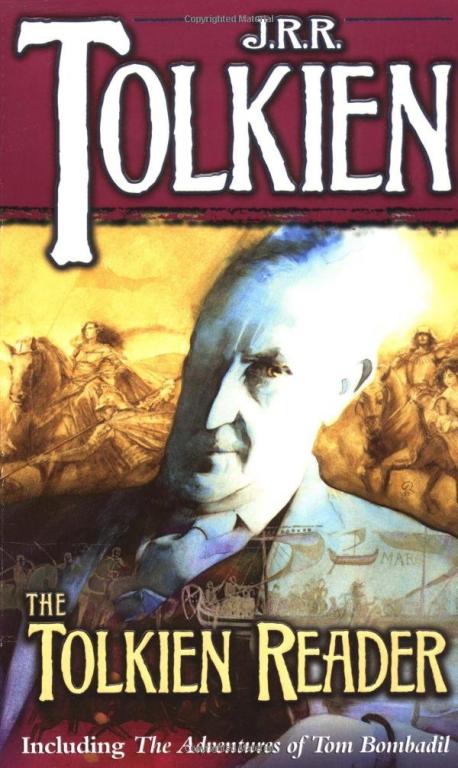
I have three fond memories of the tiny living room of my childhood. One is listening to Bill Cosby’s comedy album, “Why Is There Air?” (It’s been sad to see his demise.) The other two are the Time Life book with the foldout of the mural at the Peabody Museum of Natural History at Yale, I’m speaking of the Zallinger, Age of Reptiles mural, with its mighty Tyrannosaur Rex. I’d stare it for hours, enraptured and awed. Then there was the time my father read a selection from The Lord of the Rings. The Fellowship were in the mines of Moria and Merry and Pippin dropped that stone into the well to awaken the Balrog.
Two of those memories are sublime. I was made to feel small, and it pleased me somehow. I’ve been a fanboy of Tyrannosaur Rex and Tolkien ever since.
Don’t Explain, Describe
The thing to note about the sublime is explanations kill it. Knowledge has a way of reducing things to manageable proportions. It’s the whole knowledge is power thing. If you want your stories to have awe inspiring power though, you’ll need to leave your readers with more questions than answers. Remember, when it comes to the sublime, less is more.
https://en.wikipedia.org/wiki/2001:_A_Space_Odyssey_(soundtrack)
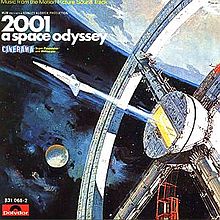
When it comes to Clarke’s 2001 A Space Odyssey, I’ve always preferred Kubrick’s film to the book for just this reason. Clarke explains too much in the end. Kubrick just flashes those images at us of the monolith, the lights, and the star-child, accompanied by the Richard Strauss tone poem Also spruce Zarathustra. (Talk about the right choice.) You finish overwhelmed. That’s the point.
Tolkien excelled at this sort of thing. He was far better at it than C. S. Lewis. (Lewis, even dealing with the dangers of Aslan seeks to reassure us, not unnerve us.) The contemporary Lovecraftian, and socialist, China Mieville praises Tolkien’s Watcher at the Gates of Moria for this.
Dude. That totally was cool. I mean, say what you like about him, Tolk gives good monster. Shelob, Smaug, the Balrog…in their astounding names, the fearful verve of their descriptions, their various undomesticated malevolence, these creatures are utterly embedded in our world-view. No one can write giant spiders except through Shelob: all dragons are sidekicks now. And so on.
But the thing about the Watcher in the Water is WTF? Here the technique of under-describing, withholding, comes startlingly to the fore, that other great technique for communicating balefulness. We know almost nothing about the many-limbed thing in the water outside Moria. Some think it’s a giant squid: me, I say not, given that it lives in fresh water, has too many tentacles, and that those tentacles have fingers. Which squids don’t have. But we know three things. It is tentacular; it is badass; and it is weird. And that uncertainty is what makes it rock.
But is it monsters we want, or something even scarier, more awesome?
I think the latter. And if you really are looking to put everything you know, everything you rely upon in life, into brackets, then you need the Wholly Other. You’re looking for the one who dwells in thick darkness. And the Old Testament gives you what you’re looking for.
Here’s a little sample of what I’m talking about:
Then the earth reeled and rocked; the foundations also of the mountains trembled and quaked because he was angry. Smoke went up from his nostrils. and devouring fire from his mouth; glowing coals flamed forth from him. He bowed the heavens and came down; thick darkness was under his feet. …he came swiftly on the wings of the wind. He made darkness his covering, his canopy around him,…. Out of the brightness before him hailstones and coals of fire broke through (the) clouds.
Now, where is that from? The Hobbit, perhaps? Maybe the Silmarillion?
Nope, that’s from Psalm 18: 7-12. Bet you didn’t know that the Lord is a dragon. (Where’s the flannel graph for the kiddies in Sunday School? If we had more of this, maybe boys would like church more.)
When the Lord reveals himself in the Old Testament, this is the sort of thing we see: a Spirit hovering over a bottomless sea, a voice from a whirlwind, glory so potent it could kill you, a giant striding in the sea, wheels of fire descending, trumpets that keep getting louder, mountains melting, gibbering prophets abasing themselves.
Sublime.
I you want that sort of power in your stories, you must stop holding the hand of your readers with your explanations. Don’t make connections. Leave them hanging if you want awe. Some things can only be known through silence.
Well, I’ve got one more episode in this series on telling meaningful stories without preaching. The next installment is how to end a story, fittingly enough.
Previous Post
August 31, 2016
How to Tell a Meaningful Story without Preaching It
Next Post
September 6, 2016 And Now, in Conclusion: How to End a Story
Browse Our Archives
Select a Category Advising a Daughter Aristotle Art Atheism Author and Speaking Appearances Beauty Building Working Houses C R Wiley Children Community Creativity Cultural Apologetics Fatherhood Fiction Fidelity in marriage Film Freedom Gravitas H. P. Lovecraft Happiness Household Economy Infant Baptism Inklings Interpreting the Bible Interviews Jack Donovan Liturgy Localism Man of the House Manliness Martial Virtue Medieval Cosmology Metaphysics Mortimus Clay NecronomiCon New Left New Testament Household Codes Nietzsche Nominalism/Realism Politics Poverty Preaching Productive Property Reaching men Science Self-Sufficiency Side Hustles Social Ethics Social Security Spiritual Disciplines Sublime Techno-gnosticism The Pastor's Survival Guide Theology of the Family Tradition Uncategorized Virtue Weird Fiction
Select a Month February 2019 November 2018 October 2018 July 2018 June 2018 May 2018 April 2018 March 2018 February 2018 January 2018 December 2017 November 2017 October 2017 September 2017 August 2017 July 2017 June 2017 May 2017 April 2017 March 2017 February 2017 January 2017 December 2016 November 2016 October 2016 September 2016 August 2016 July 2016 June 2016 May 2016 April 2016 March 2016 February 2016 January 2016 December 2015
Follow Us!
TAKE THE
Religious Wisdom Quiz
Who said, "Do you not know that your bodies are temples of the Holy Spirit"?
Select your answer to see how you score.
Peter Paul Jesus James
Books by This Author Books by PaterFamilias Today
Books by C. R. Wiley

The Purloined Boy (The Weirdling Cycle #1)

Man of the House: A Handbook for Building a Shelter That Will Last in a World That Is Falling Apart
Related posts from PaterFamilias Today

Transcendence: Meaning from Above

Gutting Creation of Meaning Guts Scripture

Is This Evangelicalism's Red-Pill Moment?

Making the Good Life from Home
TRENDING AT PATHEOS Evangelical

How the author of the world's best hymn...
I've been working with John Newton for a while now. This makes...

Long before this Lectio Divina, Psalm 130 - the song - started...

What About the Trees? Another Living Parable
After I finished writing the last article about falling leaves as a...

Why Classical Education Is a Conversation, Not a...
Come and Read: Joy in Classical Education When I was a little...

Falling Leaves: A Living Parable on Letting Go
I’ve spent the vast majority of my life in the southeast corner...

Cornell University has received a great deal of negative publicity and intense...
view all Evangelical blogs
Ad-Free & Subscriber Log-In Subscription Support
- About Us
- 2026 Calendar
- Videos
- Podcasts
- Library of World Religions
- Faith In Media Tracker
- Advertise With Us
- Write for Us
- Privacy Policy
- Terms of Service
- Do Not Sell My Data
- Contact Us
- Radiant Digital
- Manage Newsletter Subscriptions
- Unsubscribe From Notifications
- Sitemap
Copyright 2008-2026, Patheos. All rights reserved.
Subscription Support Ad-Free & Subscriber Log-In
Follow Patheos