
BuddhistCatholicContemplativeEvangelicalGeneral ChristianHinduJewishLatter-day SaintMuslimNew VisionsProgressive Christian
Beliefs
- Buddhist
- Catholic
- Contemplative
- Evangelical
- General Christian
- Hindu
- Jewish
- Latter-day Saint
- More Voices
- Muslim
- New Visions
- Pagan
- Progressive Christian
Topics
- Religion News
- Food and Religion
- Sports and Religion
- Religious Art
- Religious Music and Entertainment
- Religious Events
- History and Religion
- Style and Religion
- Politics and Religion
- Women in Religion
- Recreation Outdoors and Religion
- Business Finance and Religion
- Careers Workplace and Religion
- Education and Religion
- Family Parenting and Religion
- Health Fitness and Religion
- Home and Religion
- Relationships and Religion
- Technology and Religion
- Travel and Religion
Columnists
- Buddhist Columnists
- Business Finance and Religion Columnists
- Careers Workplace and Religion Columnists
- Catholic Columnists
- Contemplative Columnists
- Education and Religion Columnists
- Evangelists Columnists
- Family Parenting and Religion Columnists
- General Christian Columnists
- Health Fitness and Religion Columnists
- Hindu Columnists
- History and Religion Columnists
- Home and Religion Columnists
- Jewish Columnists
- More Voices Columnists
- Latter Day Columnists
- Muslim Columnists
- New Visions Columnists
- Nonreligious Columnists
- Pagan Columnists
- Politics and Religion Columnists
- Progressive Columnists
- Recreation Outdoors and Religion Columnists
- Relationships and Religion Columnists
- Religion News Columnists
- Religious Art Columnists
- Religious Events Columnists
- Religious Music and Entertainment Columnists
- Sports and Religion Columnists
- Style and Religion Columnists
- Technology and Religion Columnists
- Travel and Religion Columnists
- Women in Religion Columnists
Resource Library
- 2026 Calendar
- Library of World Religions
- The 100 Most Holy Places on Earth
- Patheos Answers
- Podcasts
- Videos
- Faith Leaders Database
- Anglican Episcopalian
- Bahai
- Baptist
- Buddhism
- Christianity
- Confucianism
- Eastern Orthodoxy
- Hinduism
- Holiness and Pentecostal
- ISKCON
- Islam
- Judaism
- Lutheran
- Methodist
- The Church of Jesus Christ of Latter-day Saints
- New Age
- Paganism
- Presbytarian and Reformed
- Protestantism
- Religion Behind the Scenes
- Roman Catholic
- Scientology
- Shia Islam
- Sikhism
- Sufism
- Sunni Islam
- Taoism
- Zen
- See all religions
Research Tools
 Ad-Free & Subscriber Log-In Subscription Support
Ad-Free & Subscriber Log-In Subscription Support
Follow Patheos 

- Trending:
- Forgiveness
- |
- Marriage
- |
- Consciousness
- |
- Death Penalty
- |
- Election
- |
- Halloween
 PaterFamilias Today
- Home
- Evangelical
- How to Tell a Story: a Primer for Preachers
How to Tell a Story: a Primer for Preachers
Last updated on: January 18, 2018 at 8:14 pm by C. R. Wiley
How to Tell a Story: a Primer for Preachers 2018-01-18T20:14:11-04:00 C. R. Wiley
Patheos Explore the world's faith through different perspectives on religion and spirituality! Patheos has the views of the prevalent religions and spiritualities of the world.
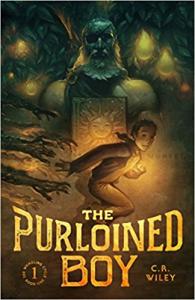 (Note: this is the first in a series of forays on the subject of preachers and the aesthetics of good story-telling. I think 4 posts should do it.)
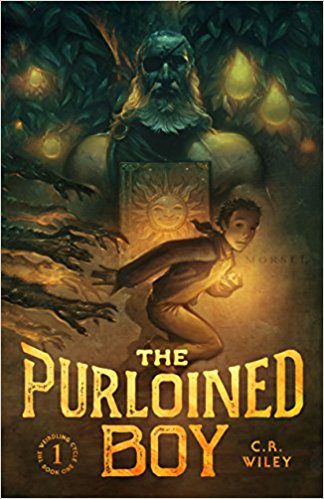
I write stories for kids, but really, I write them for myself.
There, I’m being honest. Here’s some more honesty. I write the stories largely by feel, and later I think about what I’m doing.
I suppose that could mean that the way I tell stories is largely ingrained, maybe through habit, or perhaps through reading other people’s stories and unconsciously following the tropes and techniques that have appealed to me. But I believe there is more to it than habituation and taste; I think there are larger, deeper things informing what I’m doing.
Here’s something else that informs what I do. I’m a Christian minister. Christianity is not something layered on to a more basic reality, for me it is reality itself.
I think most preachers who try their hand at telling stories would agree with that last paragraph. I’m not so sure about what I said before that though.
In this little essay I’m going to address writing fiction as a preacher who believes that Christianity is true, not just for me, but as true as you can get, as an account of reality itself.
As you can see, I am a Realist. So from the start that limits the options available to me when it comes to my aesthetic. But when it comes to my techniques, there’s something to say about how they express that aesthetic. Here goes.
Didacticism
I think this is where most preachers start; we want our stories to instruct, to have a moral. That’s something I think all stories do, whether an author owns up to it or not. Kafka in Metamorphosis made a point, a depressing and soul-crushing point from my point of view. But the point was intended to inform his readers about life, its meaning, and how to live. But it wasn’t art for art’s sake (which is a moral point too, by the way).
But when the point is the only thing you make, you’ve got a story with a moral.
Those are universal, we see them outside the Christian faith. Aesop was a pagan, but his fable The Ant and the Grasshopper makes a point that I agree with. When times are good, set something aside for when they’re not so good.
Stories of that kind can be artfully told and entertaining, but they also tend to be short.
Closely related to this sort of story is something known as allegory. Aesop’s fables are allegories, but what I’m thinking of here is something longer and more ambitious. Typically, when a preacher moves on from sermon illustrations to what is known as fiction, he writes allegory.
Allegories can be artfully crafted as well, The Pilgrim’s Progress was. And even though I think Bunyan’s account of the Christian life is incomplete (its feeble ecclesiology was corrected by C. S. Lewis in his Pilgrim’s Regress with the inclusion of Mother Kirk) nonetheless, Bunyan’s work is deservedly considered a classic. StillI find allegories wooden and lifeless. I have a hard time getting through them. And when I detect that I’m being led by the nose with an allegory I usually stop reading.
I think the reason these stories feel lifeless is their characters only exist to make a point. They don’t exist in themselves in a real sense, they lack reasons for being that are their own.

Zephyr, a successful character of mine, if I may say so.
Drawing by Justin Gerard
Preachers write this sort of stuff for a couple of reasons. For one thing writing interesting characters isn’t easy. That’s the technical side of it, but at a more basic level, the character must live in the heart of the author. And this calls for sympathy as well as an understanding of people and why they do what they do. If you can’t identify with a wide-range of people (even people you may not agree with or even like) you won’t be very good at writing character.
Writing character is one of the things I’ve been told I do pretty well. One of the protagonists in my middle-grade fantasy series is a girl that could be described as proto-feminist. Now I’m not a feminist, but I think I can sympathize with women who are. One of the more satisfying things I discovered when perusing the profiles of my fans on Goodreads is the number of teenage feminists who like my writing. I’ve even came across a blog for lesbians where I am quoted (favorably)!
This may make you uncomfortable. Preachers usually strive to be clear. Clearly some folks are missing the point with my protagonist. Or are they? (More about that next time.)
But if you’re going to write believable character something must be sacrificed. Usually allegorists sacrifice their characters. But if you want to write good character you must sacrifice your need to be clearly understood. (If you can’t do that, you really should stick to preaching.)
Going a little deeper, I think preachers often prefer a one to one correspondence in their stories–this character represents that (a virtue) and that character represents this (a vice), and so forth. They speak with an authorial voice that is very strong, too strong really for fiction. Soon it feels like preaching.
There is a metaphysic at work here–a bland and one dimensional one. But if you hope to tell a story that can make a point, yet do so with interesting characters–living characters–you’ll need a metaphysic that allows you do that. There is one, I’m happy to say. But most Protestants preachers don’t subscribe to it.
I’ll talk more about that next time too.
Previous Post

August 26, 2016
If you like folk music, you may like this: ChurchFolk!
Next Post
August 31, 2016 How to Tell a Meaningful Story without Preaching It
Browse Our Archives
Select a Category Advising a Daughter Aristotle Art Atheism Author and Speaking Appearances Beauty Building Working Houses C R Wiley Children Community Creativity Cultural Apologetics Fatherhood Fiction Fidelity in marriage Film Freedom Gravitas H. P. Lovecraft Happiness Household Economy Infant Baptism Inklings Interpreting the Bible Interviews Jack Donovan Liturgy Localism Man of the House Manliness Martial Virtue Medieval Cosmology Metaphysics Mortimus Clay NecronomiCon New Left New Testament Household Codes Nietzsche Nominalism/Realism Politics Poverty Preaching Productive Property Reaching men Science Self-Sufficiency Side Hustles Social Ethics Social Security Spiritual Disciplines Sublime Techno-gnosticism The Pastor's Survival Guide Theology of the Family Tradition Uncategorized Virtue Weird Fiction
Select a Month February 2019 November 2018 October 2018 July 2018 June 2018 May 2018 April 2018 March 2018 February 2018 January 2018 December 2017 November 2017 October 2017 September 2017 August 2017 July 2017 June 2017 May 2017 April 2017 March 2017 February 2017 January 2017 December 2016 November 2016 October 2016 September 2016 August 2016 July 2016 June 2016 May 2016 April 2016 March 2016 February 2016 January 2016 December 2015
Follow Us!
TAKE THE
Religious Wisdom Quiz
What does "Eden" (as in Garden of Eden) mean?
Select your answer to see how you score.
Green Land Blessing Beginning Delight
Books by This Author Books by PaterFamilias Today
Books by C. R. Wiley

The Purloined Boy (The Weirdling Cycle #1)

Man of the House: A Handbook for Building a Shelter That Will Last in a World That Is Falling Apart
Related posts from PaterFamilias Today

Transcendence: Meaning from Above

Gutting Creation of Meaning Guts Scripture

Is This Evangelicalism's Red-Pill Moment?

Making the Good Life from Home
TRENDING AT PATHEOS Evangelical

The REST of Your Life: A Creative Wrestles...
This week I had a conversation with a good friend from church....

How the author of the world's best hymn...
I've been working with John Newton for a while now. This makes...

Long before this Lectio Divina, Psalm 130 - the song - started...

What About the Trees? Another Living Parable
After I finished writing the last article about falling leaves as a...

Why Classical Education Is a Conversation, Not a...
Come and Read: Joy in Classical Education When I was a little...

Cornell University has received a great deal of negative publicity and intense...
view all Evangelical blogs
Ad-Free & Subscriber Log-In Subscription Support
- About Us
- 2026 Calendar
- Videos
- Podcasts
- Library of World Religions
- Faith In Media Tracker
- Advertise With Us
- Write for Us
- Privacy Policy
- Terms of Service
- Do Not Sell My Data
- Contact Us
- Radiant Digital
- Manage Newsletter Subscriptions
- Unsubscribe From Notifications
- Sitemap
Copyright 2008-2026, Patheos. All rights reserved.
Subscription Support Ad-Free & Subscriber Log-In
Follow Patheos