
BuddhistCatholicContemplativeEvangelicalGeneral ChristianHinduJewishLatter-day SaintMuslimNew VisionsProgressive Christian
Beliefs
- Buddhist
- Catholic
- Contemplative
- Evangelical
- General Christian
- Hindu
- Jewish
- Latter-day Saint
- More Voices
- Muslim
- New Visions
- Pagan
- Progressive Christian
Topics
- Religion News
- Food and Religion
- Sports and Religion
- Religious Art
- Religious Music and Entertainment
- Religious Events
- History and Religion
- Style and Religion
- Politics and Religion
- Women in Religion
- Recreation Outdoors and Religion
- Business Finance and Religion
- Careers Workplace and Religion
- Education and Religion
- Family Parenting and Religion
- Health Fitness and Religion
- Home and Religion
- Relationships and Religion
- Technology and Religion
- Travel and Religion
Columnists
- Buddhist Columnists
- Business Finance and Religion Columnists
- Careers Workplace and Religion Columnists
- Catholic Columnists
- Contemplative Columnists
- Education and Religion Columnists
- Evangelists Columnists
- Family Parenting and Religion Columnists
- General Christian Columnists
- Health Fitness and Religion Columnists
- Hindu Columnists
- History and Religion Columnists
- Home and Religion Columnists
- Jewish Columnists
- More Voices Columnists
- Latter Day Columnists
- Muslim Columnists
- New Visions Columnists
- Nonreligious Columnists
- Pagan Columnists
- Politics and Religion Columnists
- Progressive Columnists
- Recreation Outdoors and Religion Columnists
- Relationships and Religion Columnists
- Religion News Columnists
- Religious Art Columnists
- Religious Events Columnists
- Religious Music and Entertainment Columnists
- Sports and Religion Columnists
- Style and Religion Columnists
- Technology and Religion Columnists
- Travel and Religion Columnists
- Women in Religion Columnists
Resource Library
- 2026 Calendar
- Library of World Religions
- The 100 Most Holy Places on Earth
- Patheos Answers
- Podcasts
- Videos
- Faith Leaders Database
- Anglican Episcopalian
- Bahai
- Baptist
- Buddhism
- Christianity
- Confucianism
- Eastern Orthodoxy
- Hinduism
- Holiness and Pentecostal
- ISKCON
- Islam
- Judaism
- Lutheran
- Methodist
- The Church of Jesus Christ of Latter-day Saints
- New Age
- Paganism
- Presbytarian and Reformed
- Protestantism
- Religion Behind the Scenes
- Roman Catholic
- Scientology
- Shia Islam
- Sikhism
- Sufism
- Sunni Islam
- Taoism
- Zen
- See all religions
Research Tools
 Ad-Free & Subscriber Log-In Subscription Support
Ad-Free & Subscriber Log-In Subscription Support
Follow Patheos 

- Trending:
- Forgiveness
- |
- Marriage
- |
- Consciousness
- |
- Death Penalty
- |
- Election
- |
- Halloween
 PaterFamilias Today
- Home
- Evangelical
- Just What IS Science Good For Anyway?
Just What IS Science Good For Anyway?
Last updated on: July 9, 2016 at 11:16 am by C. R. Wiley
Just What IS Science Good For Anyway? 2016-07-09T11:16:53-04:00 C. R. Wiley
Patheos Explore the world's faith through different perspectives on religion and spirituality! Patheos has the views of the prevalent religions and spiritualities of the world.

https://en.wikipedia.org/wiki/Test_tube
Last week I created a little dust up with this provocative post.
I knew what would follow, when you question the universal efficacy of something many people hold as sacred you should expect a strong reaction.
(Nevertheless, some of the commenters revealed that they are not careful readers.)
The post was critical of the tendency we have to expect science to answer questions it is ill-equipped to answer, as for example, when people ask Stephen Hawking for his take on Brexit. I suppose it is interesting to know his opinion, but really, why should his opinion of the European Union carry anymore weight than someone else’s?
This is why it is good to recall that what we call science today got its start by narrowing the focus of inquiry.
Some have said it was a rebellion against Aristotelean science. (The rebellion has proven so successful most people today wouldn’t even consider Aristotle a scientist.) Ironically, Aristotle’s science was itself a rebellion in its own way against Platonic science. (Talk about odd, for most people now “Platonic science” seems like an oxymoron.)
The general trend is easy to follow though, we’ve moved away from the ethereal to the material. Looking at Aristotle can help here because he’s a transitional figure.
The Four Causes
Aristotle identified four reasons why something is what it is. They are: its material cause (what it is made of), its efficient cause (how it comes to be what it is), its formal cause (the internal order that reflects a nonmaterial principle) and last of all, its final cause (its purpose).
Platonic science was preoccupied exclusively with the last two things: formal and final considerations. These are metaphysical concerns because they traffic in meaning. This is the study of wholes. It is rational, but it was also imaginative. And the term for this study is contemplation.
Aristotle encouraged the study of material and efficient causation, things that Platonists considered unworthy of a liberally educated man. That’s because the outcomes of such study served the servile arts, those practical matters that minister to the body. Still, Aristotle, for all his “this worldliness” still prioritized formal and final causes. It took people like Francis Bacon to put contemplation on the shelf.
Science as we know it today is entirely given over to the study of material and efficient causation. Early on this was believed to be a useful technique for narrowing your focus. When you left the laboratory though you were still expected to think about larger questions. But today those larger questions have been relegated to the small realm of subjectivity. Most people believe the universe is a purposeless mechanism, and purposes, when they exist at all, only proceed from the subject to the object. People don’t conform to the nature of things, they make nature conform to their wills.
Notice I uses the plural there, because if there is no intrinsic purpose to anything, then we’re left with a battle of human wills when it comes to our lives in the world. It is either that, or isolating ourselves, making little bubbles of meaning to live in all by our lonesomes.
I’m grateful for modern science
The practice of science is hard work and it calls for a number of virtues, among them honesty and humility. Scientists are dealing with realities that we must conform our minds to.
Wonderful discoveries have followed its progress. I favor the hard sciences, the so-called soft sciences just seem to muddied to me by human interest to take very seriously. Their concerns more properly belong to the realms of ethics and religion, studies where human interests ideally are owned up to and dealt with directly without the pretense that they are not present.
I especially admire physics, and anything to do with cosmology. In my household when I’m asked what I’d like for my birthday or for Christmas my standard response is, “Faster than light space travel.”
The revenge of metaphysics
Nevertheless there are things the scientists will never be able to tell us. For instance, why shouldn’t we just squander the earth’s resources and just live for the moment? I think we all know it would be wrong to do that (even though we do it anyway). Still, science can only provide quotidian answers to ethical questions. Ethics, as you may recall from my little survey of Aristotle’s causes, doesn’t really belong to the study of material and efficient causation.
Yes, I know, people claim it does anyway. We call those people positivists. But when you reduce ethics to necessity in this way you’re no longer talking about ethics.
But even positivists don’t live as positivists should. That gruel is too thin to support life. And metaphysics is even making something of a come back in the academy. But that shouldn’t surprise anyone, because the fact that no one wants to live in a meaningless world may be the best evidence that we do live in a meaningful world after all.
Previous Post

July 5, 2016
The Ministry of Self-Defense
Next Post

July 12, 2016 If There Is No God, Then Harrison Bergeron Must Die!
Browse Our Archives
Select a Category Advising a Daughter Aristotle Art Atheism Author and Speaking Appearances Beauty Building Working Houses C R Wiley Children Community Creativity Cultural Apologetics Fatherhood Fiction Fidelity in marriage Film Freedom Gravitas H. P. Lovecraft Happiness Household Economy Infant Baptism Inklings Interpreting the Bible Interviews Jack Donovan Liturgy Localism Man of the House Manliness Martial Virtue Medieval Cosmology Metaphysics Mortimus Clay NecronomiCon New Left New Testament Household Codes Nietzsche Nominalism/Realism Politics Poverty Preaching Productive Property Reaching men Science Self-Sufficiency Side Hustles Social Ethics Social Security Spiritual Disciplines Sublime Techno-gnosticism The Pastor's Survival Guide Theology of the Family Tradition Uncategorized Virtue Weird Fiction
Select a Month February 2019 November 2018 October 2018 July 2018 June 2018 May 2018 April 2018 March 2018 February 2018 January 2018 December 2017 November 2017 October 2017 September 2017 August 2017 July 2017 June 2017 May 2017 April 2017 March 2017 February 2017 January 2017 December 2016 November 2016 October 2016 September 2016 August 2016 July 2016 June 2016 May 2016 April 2016 March 2016 February 2016 January 2016 December 2015
Follow Us!
TAKE THE
Religious Wisdom Quiz
Who was the first Nazarite?
Select your answer to see how you score.
Eli David Samuel Samson
Books by This Author Books by PaterFamilias Today
Books by C. R. Wiley

The Purloined Boy (The Weirdling Cycle #1)

Man of the House: A Handbook for Building a Shelter That Will Last in a World That Is Falling Apart
Related posts from PaterFamilias Today

Is This Evangelicalism's Red-Pill Moment?

Manhood at First Things and Touchstone

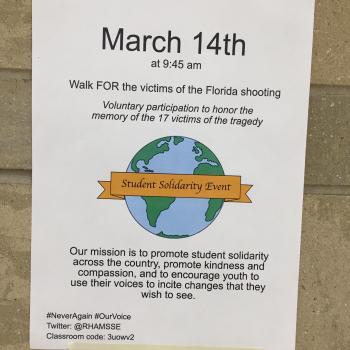
A Young Man Reflects on Gun Violence Walkout...
TRENDING AT PATHEOS Evangelical

How the author of the world's best hymn...
I've been working with John Newton for a while now. This makes...

Long before this Lectio Divina, Psalm 130 - the song - started...

What About the Trees? Another Living Parable
After I finished writing the last article about falling leaves as a...

Why Classical Education Is a Conversation, Not a...
Come and Read: Joy in Classical Education When I was a little...

Falling Leaves: A Living Parable on Letting Go
I’ve spent the vast majority of my life in the southeast corner...

Cornell University has received a great deal of negative publicity and intense...
view all Evangelical blogs
Ad-Free & Subscriber Log-In Subscription Support
- About Us
- 2026 Calendar
- Videos
- Podcasts
- Library of World Religions
- Faith In Media Tracker
- Advertise With Us
- Write for Us
- Privacy Policy
- Terms of Service
- Do Not Sell My Data
- Contact Us
- Radiant Digital
- Manage Newsletter Subscriptions
- Unsubscribe From Notifications
- Sitemap
Copyright 2008-2026, Patheos. All rights reserved.
Subscription Support Ad-Free & Subscriber Log-In
Follow Patheos