
BuddhistCatholicContemplativeEvangelicalGeneral ChristianHinduJewishLatter-day SaintMuslimNew VisionsProgressive Christian
Beliefs
- Buddhist
- Catholic
- Contemplative
- Evangelical
- General Christian
- Hindu
- Jewish
- Latter-day Saint
- More Voices
- Muslim
- New Visions
- Pagan
- Progressive Christian
Topics
- Religion News
- Food and Religion
- Sports and Religion
- Religious Art
- Religious Music and Entertainment
- Religious Events
- History and Religion
- Style and Religion
- Politics and Religion
- Women in Religion
- Recreation Outdoors and Religion
- Business Finance and Religion
- Careers Workplace and Religion
- Education and Religion
- Family Parenting and Religion
- Health Fitness and Religion
- Home and Religion
- Relationships and Religion
- Technology and Religion
- Travel and Religion
Columnists
- Buddhist Columnists
- Business Finance and Religion Columnists
- Careers Workplace and Religion Columnists
- Catholic Columnists
- Contemplative Columnists
- Education and Religion Columnists
- Evangelists Columnists
- Family Parenting and Religion Columnists
- General Christian Columnists
- Health Fitness and Religion Columnists
- Hindu Columnists
- History and Religion Columnists
- Home and Religion Columnists
- Jewish Columnists
- More Voices Columnists
- Latter Day Columnists
- Muslim Columnists
- New Visions Columnists
- Nonreligious Columnists
- Pagan Columnists
- Politics and Religion Columnists
- Progressive Columnists
- Recreation Outdoors and Religion Columnists
- Relationships and Religion Columnists
- Religion News Columnists
- Religious Art Columnists
- Religious Events Columnists
- Religious Music and Entertainment Columnists
- Sports and Religion Columnists
- Style and Religion Columnists
- Technology and Religion Columnists
- Travel and Religion Columnists
- Women in Religion Columnists
Resource Library
- 2026 Calendar
- Library of World Religions
- The 100 Most Holy Places on Earth
- Patheos Answers
- Podcasts
- Videos
- Faith Leaders Database
- Anglican Episcopalian
- Bahai
- Baptist
- Buddhism
- Christianity
- Confucianism
- Eastern Orthodoxy
- Hinduism
- Holiness and Pentecostal
- ISKCON
- Islam
- Judaism
- Lutheran
- Methodist
- The Church of Jesus Christ of Latter-day Saints
- New Age
- Paganism
- Presbytarian and Reformed
- Protestantism
- Religion Behind the Scenes
- Roman Catholic
- Scientology
- Shia Islam
- Sikhism
- Sufism
- Sunni Islam
- Taoism
- Zen
- See all religions
Research Tools
 Ad-Free & Subscriber Log-In Subscription Support
Ad-Free & Subscriber Log-In Subscription Support
Follow Patheos 

- Trending:
- Forgiveness
- |
- Marriage
- |
- Consciousness
- |
- Death Penalty
- |
- Election
- |
- Halloween
 PaterFamilias Today
- Home
- Evangelical
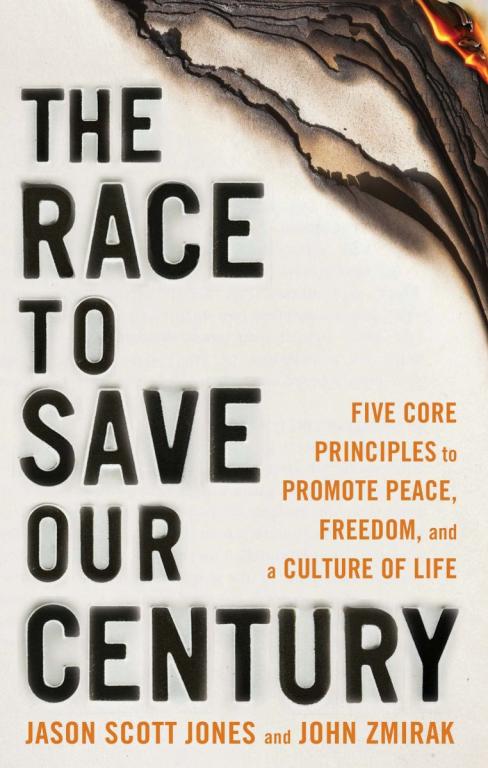
- Book Review: The Race to Save Our Century
Book Review: The Race to Save Our Century
Last updated on: April 25, 2016 at 9:14 am by C. R. Wiley
Book Review: The Race to Save Our Century 2016-04-25T09:14:49-04:00 C. R. Wiley
Patheos Explore the world's faith through different perspectives on religion and spirituality! Patheos has the views of the prevalent religions and spiritualities of the world.
http://www.amazon.com/gp/product/B01E7Y4S84/ref=dp-kindle-redirect?ie=UTF8&btkr=1
Confession is good for the soul, here’s mine: one of the authors of this book is a friend. Now, I don’t always agree with the things my friends say. And I don’t always review their books. I am reviewing this book; that says something. What does it say? Among other things, it says this is a book you should read if you are one of those people who believe the world can be set right by a single election cycle.
The idolatries come and go, but the spirit of idolatry abides. The idolatries of our time are well connected, richly endowed, and fully staffed. The institutions we trust to educate the young and govern our society—our schools, the courts, and even our churches—have largely been given over to their worship. It didn’t happen all at once, there was a long march through the institutions. Reclaiming them is going to take at least as long, probably longer. So I suppose I should address the title of the book up front. The title, The Race to Save Our Century is intended to convey the urgency of our situation. To prevent a repeat of the Twentieth Century—the Century of Blood—we need to act now. But it is going to be a long run nevertheless, a super-marathon.
This is a book for doers. The problem with the typical doer is he is not much of a thinker. He likes learning on the job. Most of the time this works out just fine; unfortunately this tends to give him the blithe confidence that the proverb about fools and angels was coined for. Well-intentioned conservative doobies do tend to get caught up in the latest conservative cause celebrate without much thought, not imagining there may be an unnamed demon at work out of view.
The first chapter of the book is dedicated to naming the demon. In the chapters that follow the authors list five signs of his presence. They are: Total War, Racism and Nationalism, Utopian Collectivism, Radical Individualism, and Utilitarian Hedonism. In prose as smooth as iced tea, and as bracing as a dope-slap, they run through the list. (These chapters are worth the price of the book.) But often signs are mistaken for what they signify. Not here, the authors name the demon. His name is “subhumanism”.
Subhumanism is what you’re left with when you make man the measure of all things. For mankind to stand in as his own standard, he must thoroughly eliminate every standard of value that stands outside himself—including (and especially) God. But this turns man into an onion. He peels away one skin of value after another until there’s nothing normative left. This is the great irony of subhumanism’s attempt to elevate man by evicting God from the cosmos. Without a creator there can be no hierarchy of value. Man has no ladder. He is reduced to material causes and ends. In the end the best he can make of himself is a sated chimp.
The second part of the book gets down to five core principles for restoring man to his elevated status as the image of God in the world. Quickly, they are: personalism, transcendence, subsidiarity, solidarity, and a humane economy. To expand: personalism is the affirmation of the value of every human being; transcendence is a recovery of universals, especially as they relate to ethics; subsidiarity is the revitalization of small-scale, local institutions—families, neighborhoods, voluntary associations, and so forth; solidarity is the affirmation of a global human family; and finally, a humane economy is a way of life that supports private property as a means to serve rather than deny the spiritual and communal aspects of man’s nature. While these five core principles are excellent, in the spirit of Richard Weaver’s, Ideas Have Consequences, transcendence really does rise to the top—it lends substance to all the rest.
The book’s final chapter is entitled, The Road to Subhumanism: How We Got Here. In it the authors draw on Henri de Lubac’s, The Drama of Atheist Humanism to show how misrepresentations of Christianity are used to justify subhumanism. Although this chapter is peppered with many helpful insights, it is the one chapter that I have a reservation about. In it canards are retired summarily, but one of them gets a pat on the head. More on that canard anon.
In the meantime here are a few questions I can’t help asking; these are not criticisms so much as a call for another book.
How do we apply these principles to the institutions of civil society? Without ever winning popular support, the subhumanists have managed to take control of the schools, the courts, most mainstream media, and government bureaucracies. Now they are using these institutions to leverage our civilization right over a cliff. The people who run these institutions are unlikely to recant anytime soon, they’re even less likely to resign. So what should we do? How do we work within these institutions without being conscripted into the subhumanist cabal?
Next, what about the content of Christian revelation? Is transcendence enough? Mormons and Muslims believe in universals too. Christians have leaned on natural law in the past, but there is more to the Christianity that. There’s the incarnation for one thing. Surely that informs our humanism. If this is too fulsome when it comes to content, what do we do with it? And this is just a start.
And what about the church? Who’s in and who’s out? Do we make it a “big tent”, including all its sundry manifestations—everything from Brazilian Pentecostals to Egyptian Copts, or more narrowly, i.e. the Roman Catholic Church? Then what role does the church play in the practice of these five core principles?
(While I’m here, I must say something for Jonathan Edwards. In the last chapter, during a pan on substitutionary atonement, Edwards’ sermon, Sinners in the Hands of an Angry God is quoted at length—yep, the spider illustration. You remember, the loathsome spider suspended above the flames of Hell? While the authors concede that substitutionary atonement has a prominent place in both Catholic and Protestant theology, you can’t miss how loathsome they find it. Further, the illustration is presented as just cause for subhumanism’s false charge that God is a punitive father figure. Well, Jonathan Edwards is a friend of mine and I believe in substitutionary atonement. This canard should have been dealt with like the rest of them.
First, the spider illustration is employed in an “awakening sermon” and its purpose is to reveal to the hearer the precarious place sin has placed him in. What critiques of the sermon miss is this: God does not drop the spider into the flames in the illustration. Why? because God’s mercy is not based on the goodness of sinners. It is based on the goodness of God. Having listened to many awakening sermons (I’ve even preached a few of them) I assure you the mercy of God is held in abeyance for the sake of effect, but it is never in doubt—just as the solution of a mystery in a crime novel is never in doubt. Edwards wasn’t a Universalist of course. He believed in Hell, and according to last report, so does the Pope.
Critiques of substitutionary atonement have always struck me as vaguely Unitarian. For a Trinitarian substitutionary atonement should be seen as a self-inflicted wound because God was in Christ. That’s because in Christianity God is in two places at once. But that’s only half the story; the resurrection and the ascension are also substitutionary. Christians not only died in Christ, they were raised in him.)
And now for my last question. Is it possible that a redemptive power is at work even in horrific events? Judah was carried off to Babylon, the early Church lived through persecution, the medieval church fought off Islam. In American history Pearl Harbor may have served a similar function. The country was sliding into socialism during the first three decades of the twentieth century. Does saying World War II helped to prevent that make war a good thing? Of course not. But in the Providence of God, nothing is wasted, not even the wickedness of the wicked. The crucifixion of the Son of God shows that. Maybe it takes obdurate Calvinists like me to remind people that Christian hope can never be defeated.
Now to end on a positive note, this is a very good book. You should buy it and read it, even if you’re Reformed. At my church we bought a copy for the church library. By the way, the name of our library is, The Edwards Library.
Previous Post
April 21, 2016
What Inside Out Managed to Leave Out
Next Post

April 27, 2016 Writing Good Character
Browse Our Archives
Select a Category Advising a Daughter Aristotle Art Atheism Author and Speaking Appearances Beauty Building Working Houses C R Wiley Children Community Creativity Cultural Apologetics Fatherhood Fiction Fidelity in marriage Film Freedom Gravitas H. P. Lovecraft Happiness Household Economy Infant Baptism Inklings Interpreting the Bible Interviews Jack Donovan Liturgy Localism Man of the House Manliness Martial Virtue Medieval Cosmology Metaphysics Mortimus Clay NecronomiCon New Left New Testament Household Codes Nietzsche Nominalism/Realism Politics Poverty Preaching Productive Property Reaching men Science Self-Sufficiency Side Hustles Social Ethics Social Security Spiritual Disciplines Sublime Techno-gnosticism The Pastor's Survival Guide Theology of the Family Tradition Uncategorized Virtue Weird Fiction
Select a Month February 2019 November 2018 October 2018 July 2018 June 2018 May 2018 April 2018 March 2018 February 2018 January 2018 December 2017 November 2017 October 2017 September 2017 August 2017 July 2017 June 2017 May 2017 April 2017 March 2017 February 2017 January 2017 December 2016 November 2016 October 2016 September 2016 August 2016 July 2016 June 2016 May 2016 April 2016 March 2016 February 2016 January 2016 December 2015
Follow Us!
TAKE THE
Religious Wisdom Quiz
What does "Capernaum" mean?
Select your answer to see how you score.
Village of comfort Port of peace City of trade Place of water
Books by This Author Books by PaterFamilias Today
Books by C. R. Wiley

The Purloined Boy (The Weirdling Cycle #1)

Man of the House: A Handbook for Building a Shelter That Will Last in a World That Is Falling Apart
Related posts from PaterFamilias Today

Transcendence: Meaning from Above

Gutting Creation of Meaning Guts Scripture

Is This Evangelicalism's Red-Pill Moment?

Manhood at First Things and Touchstone
TRENDING AT PATHEOS Evangelical

How the author of the world's best hymn...
I've been working with John Newton for a while now. This makes...

Long before this Lectio Divina, Psalm 130 - the song - started...

What About the Trees? Another Living Parable
After I finished writing the last article about falling leaves as a...

Why Classical Education Is a Conversation, Not a...
Come and Read: Joy in Classical Education When I was a little...

Falling Leaves: A Living Parable on Letting Go
I’ve spent the vast majority of my life in the southeast corner...

Cornell University has received a great deal of negative publicity and intense...
view all Evangelical blogs
Ad-Free & Subscriber Log-In Subscription Support
- About Us
- 2026 Calendar
- Videos
- Podcasts
- Library of World Religions
- Faith In Media Tracker
- Advertise With Us
- Write for Us
- Privacy Policy
- Terms of Service
- Do Not Sell My Data
- Contact Us
- Radiant Digital
- Manage Newsletter Subscriptions
- Unsubscribe From Notifications
- Sitemap
Copyright 2008-2026, Patheos. All rights reserved.
Subscription Support Ad-Free & Subscriber Log-In
Follow Patheos