
BuddhistCatholicContemplativeEvangelicalGeneral ChristianHinduJewishLatter-day SaintMuslimNew VisionsProgressive Christian
Beliefs
- Buddhist
- Catholic
- Contemplative
- Evangelical
- General Christian
- Hindu
- Jewish
- Latter-day Saint
- More Voices
- Muslim
- New Visions
- Pagan
- Progressive Christian
Topics
- Religion News
- Food and Religion
- Sports and Religion
- Religious Art
- Religious Music and Entertainment
- Religious Events
- History and Religion
- Style and Religion
- Politics and Religion
- Women in Religion
- Recreation Outdoors and Religion
- Business Finance and Religion
- Careers Workplace and Religion
- Education and Religion
- Family Parenting and Religion
- Health Fitness and Religion
- Home and Religion
- Relationships and Religion
- Technology and Religion
- Travel and Religion
Columnists
- Buddhist Columnists
- Business Finance and Religion Columnists
- Careers Workplace and Religion Columnists
- Catholic Columnists
- Contemplative Columnists
- Education and Religion Columnists
- Evangelists Columnists
- Family Parenting and Religion Columnists
- General Christian Columnists
- Health Fitness and Religion Columnists
- Hindu Columnists
- History and Religion Columnists
- Home and Religion Columnists
- Jewish Columnists
- More Voices Columnists
- Latter Day Columnists
- Muslim Columnists
- New Visions Columnists
- Nonreligious Columnists
- Pagan Columnists
- Politics and Religion Columnists
- Progressive Columnists
- Recreation Outdoors and Religion Columnists
- Relationships and Religion Columnists
- Religion News Columnists
- Religious Art Columnists
- Religious Events Columnists
- Religious Music and Entertainment Columnists
- Sports and Religion Columnists
- Style and Religion Columnists
- Technology and Religion Columnists
- Travel and Religion Columnists
- Women in Religion Columnists
Resource Library
- 2026 Calendar
- Library of World Religions
- The 100 Most Holy Places on Earth
- Patheos Answers
- Podcasts
- Videos
- Faith Leaders Database
- Anglican Episcopalian
- Bahai
- Baptist
- Buddhism
- Christianity
- Confucianism
- Eastern Orthodoxy
- Hinduism
- Holiness and Pentecostal
- ISKCON
- Islam
- Judaism
- Lutheran
- Methodist
- The Church of Jesus Christ of Latter-day Saints
- New Age
- Paganism
- Presbytarian and Reformed
- Protestantism
- Religion Behind the Scenes
- Roman Catholic
- Scientology
- Shia Islam
- Sikhism
- Sufism
- Sunni Islam
- Taoism
- Zen
- See all religions
Research Tools
 Ad-Free & Subscriber Log-In Subscription Support
Ad-Free & Subscriber Log-In Subscription Support
Follow Patheos 

- Trending:
- Forgiveness
- |
- Marriage
- |
- Consciousness
- |
- Death Penalty
- |
- Election
- |
- Halloween
 PaterFamilias Today
- Home
- Evangelical
- Why We Need a Libertarian Study Bible
Why We Need a Libertarian Study Bible
Last updated on: March 1, 2016 at 7:57 am by C. R. Wiley
Why We Need a Libertarian Study Bible 2016-03-01T07:57:06-04:00 C. R. Wiley
Patheos Explore the world's faith through different perspectives on religion and spirituality! Patheos has the views of the prevalent religions and spiritualities of the world.
http://www.logosresourcepages.org/History/geneva_bible.htm
Some people think of Romans 13:1-7 as a summary of everything the Bible has to say on the subject of government. And this is one reason those with a more libertarian cast of mind tend to be wary of the Good Book.
So, it may come as something of a surprise to learn that there’s a case to be made for a Libertarian Study Bible–maybe even an Anarchist Study Bible.
I first came across the case for a libertarian subtext to the Bible in Jacques Ellul. His, The Politics of God and the Politics of Man was one of those turning points in the road that you realizes years later has separated you so far from your old companions you can no longer speak to them without shouting.
There’s an odd tendency to equate the authoritarian personality with the conservative outlook. That’s just never jibed with my experience. The fussy, manipulative folk I’ve known have all come from the Left. I don’t think anyone could imagine J. R. R. Tolkien as a man of the Left; here he is on anarchism:
J. R. R. Tolkien
Public Domain, via The Times of Israel
“My political opinions lean more and more to Anarchy (philosophically understood, meaning the abolition of control not whiskered men with bombs) — or to ‘unconstitutional’ Monarchy. I would arrest anybody who uses the word State (in any sense other than the inaminate real of England and its inhabitants, a thing that has neither power, rights nor mind); and after a chance of recantation, execute them if they remained obstinate! If we could go back to personal names, it would do a lot of good.
Government is an abstract noun meaning the art and process of governing and it should be an offence to write it with a capital G or so to refer to people … The most improper job of any many, even saints (who at any rate were at least unwilling to take it on), is bossing other men. Not one in a million is fit for it, and least of all those who seek the opportunity …
There is only one bright spot and that is the growing habit of disgruntled men of dynamating factories and power-stations; I hope that, encouraged now as ‘patriotism’, may remain a habit! But it won’t do any good, if it is not universal.”
– J.R.R. Tolkien, letter to his son, 1943 (from The Letters of J.R.R. Tolkien).


http://www.amazon.com/The-Politics-God-Man-Jacques/dp/161097798X
The Bible’s Libertarian Subtext
If you really did publish a Libertarian Study Bible, you’d have a lot to work with.
In the Bible the connection between heaven’s authority and the authority of earthly rulers is not as seamless as is supposed. Here’s just a few things such a study Bible would have to work with:
- Civilization gets off to a bad start. There’s the unfortunate incident in the Garden, but then there’s Cain’s sons in Genesis 4. These are not meaningless facts, they reveal something untoward in the arts that give rise to civilization.
- Whenever Abraham has dealings with the local authorities in Genesis, he’s on his guard. He’s no sycophant, he’s a cagey operator, working the angles to the best advantage of his household. Isaac and Jacob seem to share his outlook.
- Then there’s the whole episode in Egypt, you know, slavery. Throw in your lot with the folks in charge and you’ll live to regret it. From this point on the die is cast, never entirely trust the folk in charge.
- But the most surprising thing in the whole Old Testament, and it is the best distillation of the Bible’s libertarian subtext, comes when the prophet Samuel reports to the Lord that the Israelites are lobbying for a king, you know, one like all the neighbors have. The Lord is not pleased, but he grants their request reluctantly, as a concession.
Here’s the pregnant passage:
1 Samuel 8:4-9 English Standard Version (ESV)
Then all the elders of Israel gathered together and came to Samuel at Ramah and said to him, “Behold, you are old and your sons do not walk in your ways. Now appoint for us a king to judge us like all the nations.” But the thing displeased Samuel when they said, “Give us a king to judge us.” And Samuel prayed to the Lord. And the Lord said to Samuel, “Obey the voice of the people in all that they say to you, for they have not rejected you, but they have rejected me from being king over them. According to all the deeds that they have done, from the day I brought them up out of Egypt even to this day, forsaking me and serving other gods, so they are also doing to you. Now then, obey their voice; only you shall solemnly warn them and show them the ways of the king who shall reign over them.”
But wait, it gets better; here’s Samuel’s warning:
1 Samuel 8:11-18 English Standard Version (ESV)
He said, “These will be the ways of the king who will reign over you: he will take your sons and appoint them to his chariots and to be his horsemen and to run before his chariots. And he will appoint for himself commanders of thousands and commanders of fifties, and some to plow his ground and to reap his harvest, and to make his implements of war and the equipment of his chariots. He will take your daughters to be perfumers and cooks and bakers. He will take the best of your fields and vineyards and olive orchards and give them to his servants. He will take the tenth of your grain and of your vineyards and give it to his officers and to his servants. He will take your male servants and female servants and the best of your young men[a] and your donkeys, and put them to his work. He will take the tenth of your flocks, and you shall be his slaves. And in that day you will cry out because of your king, whom you have chosen for yourselves, but the Lord will not answer you in that day.” (The underlining is mine, of course.)
You know, this doesn’t sound like an unqualified endorsement.
I could go on and on, but then I’d be writing the study Bible myself. There’s plenty of material in the Prophets and the wisdom literature. The Gospels sure don’t seem to be a panegyric to the blessings of bureaucracy. And you could say that one of the things John’s Revelation reveals is that there is something living in the entrails human government–and it ain’t pretty.
Descending into my world
I learned early on that the people in charge shouldn’t be trusted too much. I got off to a rough start, learning both at home and in school that the people in charge often look after themselves more than you.
And the idea that we should just completely hand over our self-defense to the governing authorities strikes me as naive. The police can’t be everywhere, and we shouldn’t want them to be. Government types can even turn on you. You know, far more people have been killed by their own governments in the last 100 years than in mass shootings. (And that’s not including wars. It’s called Democide.)
In the course of my public ministry my experience with petty bureaucrats has confirmed my prejudices.
In my last church I lead a million dollar building program. It included a beautiful commercial kitchen. We followed the rules, but near the end we were informed that one more thing needed–a grease trap. Okay, I thought, we can do that. There are lots of portable traps that can be placed beneath a sink and they cost hardly anything at all.
The new gal in the building department told me that wouldn’t do. Because our fellowship hall sat 300 people, we’d need a 1000 gallon grease trap buried outside. When I protested that we were not a restaurant, it made no difference. Rules are rules, not matter how inapplicable they are. And so after an unnecessary expense of $5,000 there is a little puddle of grease at the bottom of the cement behemoth behind the church. (And this is just a start, I could go on and on. Remind me to tell you about the time I helped to build a church for a Haitian congregation in Cambridge, Massachusetts and how the city made those poor people spend over an $150,000 on an unnecessary elevator.)
This is one of the problems with government bureaucracies in my experience, not only can they be pushy and officious, they can be stupid and wasteful. There’s no place for wisdom in lists of rules.
Less Ned Flanders, More Ferris Bueller
There’s something distasteful about earnest doobies: the eager-hand raised, the habit of falling into line, the ingratiating compliance. They’re not known for a penchant for self-reliance. And when the deluge comes (as it inevitably will) and all the things they’ve placed their trust in are washed away, they’ll constitute the howling mob calling for a king to take care of them. Self-annointed kings in times like that go by another name: demagogues.
While I don’t endorse using someone else’s Ferrari without permission, I’ve always believed that we all need a little more Ferris Bueller in the general population. Ask folk who their favorite character in Star Wars is and you’ll likely hear, “Han Solo, of course”. Of course. There’s a biblical case that could be made for why that’s so.

I admit, I have a weakness for Ferris Bueller…I skipped so much school that I had to take the 8th grade twice. http://www.imdb.com/title/tt0091042/
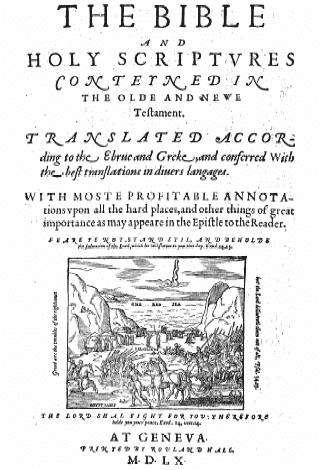
By the way, a case has been made that the very first Libertarian Study Bible was the Geneva Bible. You can read about it here.

Next Post

March 2, 2016 Tentmaking: It's Not Just for Missionaries Anymore
Browse Our Archives
Select a Category Advising a Daughter Aristotle Art Atheism Author and Speaking Appearances Beauty Building Working Houses C R Wiley Children Community Creativity Cultural Apologetics Fatherhood Fiction Fidelity in marriage Film Freedom Gravitas H. P. Lovecraft Happiness Household Economy Infant Baptism Inklings Interpreting the Bible Interviews Jack Donovan Liturgy Localism Man of the House Manliness Martial Virtue Medieval Cosmology Metaphysics Mortimus Clay NecronomiCon New Left New Testament Household Codes Nietzsche Nominalism/Realism Politics Poverty Preaching Productive Property Reaching men Science Self-Sufficiency Side Hustles Social Ethics Social Security Spiritual Disciplines Sublime Techno-gnosticism The Pastor's Survival Guide Theology of the Family Tradition Uncategorized Virtue Weird Fiction
Select a Month February 2019 November 2018 October 2018 July 2018 June 2018 May 2018 April 2018 March 2018 February 2018 January 2018 December 2017 November 2017 October 2017 September 2017 August 2017 July 2017 June 2017 May 2017 April 2017 March 2017 February 2017 January 2017 December 2016 November 2016 October 2016 September 2016 August 2016 July 2016 June 2016 May 2016 April 2016 March 2016 February 2016 January 2016 December 2015
Follow Us!
TAKE THE
Religious Wisdom Quiz
True or False: Proverbs 31 describes the characteristics of a godly husband.
Select your answer to see how you score.
FALSE TRUE
Books by This Author Books by PaterFamilias Today
Books by C. R. Wiley

The Purloined Boy (The Weirdling Cycle #1)

Man of the House: A Handbook for Building a Shelter That Will Last in a World That Is Falling Apart
Related posts from PaterFamilias Today

Transcendence: Meaning from Above

Gutting Creation of Meaning Guts Scripture


Advice for a Single Woman Who Is Looking...
TRENDING AT PATHEOS Evangelical

How the author of the world's best hymn...
I've been working with John Newton for a while now. This makes...

Long before this Lectio Divina, Psalm 130 - the song - started...

What About the Trees? Another Living Parable
After I finished writing the last article about falling leaves as a...

Why Classical Education Is a Conversation, Not a...
Come and Read: Joy in Classical Education When I was a little...

Falling Leaves: A Living Parable on Letting Go
I’ve spent the vast majority of my life in the southeast corner...

Cornell University has received a great deal of negative publicity and intense...
view all Evangelical blogs
Ad-Free & Subscriber Log-In Subscription Support
- About Us
- 2026 Calendar
- Videos
- Podcasts
- Library of World Religions
- Faith In Media Tracker
- Advertise With Us
- Write for Us
- Privacy Policy
- Terms of Service
- Do Not Sell My Data
- Contact Us
- Radiant Digital
- Manage Newsletter Subscriptions
- Unsubscribe From Notifications
- Sitemap
Copyright 2008-2026, Patheos. All rights reserved.
Subscription Support Ad-Free & Subscriber Log-In
Follow Patheos