
BuddhistCatholicContemplativeEvangelicalGeneral ChristianHinduJewishLatter-day SaintMuslimNew VisionsProgressive Christian
Beliefs
- Buddhist
- Catholic
- Contemplative
- Evangelical
- General Christian
- Hindu
- Jewish
- Latter-day Saint
- More Voices
- Muslim
- New Visions
- Pagan
- Progressive Christian
Topics
- Religion News
- Food and Religion
- Sports and Religion
- Religious Art
- Religious Music and Entertainment
- Religious Events
- History and Religion
- Style and Religion
- Politics and Religion
- Women in Religion
- Recreation Outdoors and Religion
- Business Finance and Religion
- Careers Workplace and Religion
- Education and Religion
- Family Parenting and Religion
- Health Fitness and Religion
- Home and Religion
- Relationships and Religion
- Technology and Religion
- Travel and Religion
Columnists
- Buddhist Columnists
- Business Finance and Religion Columnists
- Careers Workplace and Religion Columnists
- Catholic Columnists
- Contemplative Columnists
- Education and Religion Columnists
- Evangelists Columnists
- Family Parenting and Religion Columnists
- General Christian Columnists
- Health Fitness and Religion Columnists
- Hindu Columnists
- History and Religion Columnists
- Home and Religion Columnists
- Jewish Columnists
- More Voices Columnists
- Latter Day Columnists
- Muslim Columnists
- New Visions Columnists
- Nonreligious Columnists
- Pagan Columnists
- Politics and Religion Columnists
- Progressive Columnists
- Recreation Outdoors and Religion Columnists
- Relationships and Religion Columnists
- Religion News Columnists
- Religious Art Columnists
- Religious Events Columnists
- Religious Music and Entertainment Columnists
- Sports and Religion Columnists
- Style and Religion Columnists
- Technology and Religion Columnists
- Travel and Religion Columnists
- Women in Religion Columnists
Resource Library
- 2026 Calendar
- Library of World Religions
- The 100 Most Holy Places on Earth
- Patheos Answers
- Podcasts
- Videos
- Faith Leaders Database
- Anglican Episcopalian
- Bahai
- Baptist
- Buddhism
- Christianity
- Confucianism
- Eastern Orthodoxy
- Hinduism
- Holiness and Pentecostal
- ISKCON
- Islam
- Judaism
- Lutheran
- Methodist
- The Church of Jesus Christ of Latter-day Saints
- New Age
- Paganism
- Presbytarian and Reformed
- Protestantism
- Religion Behind the Scenes
- Roman Catholic
- Scientology
- Shia Islam
- Sikhism
- Sufism
- Sunni Islam
- Taoism
- Zen
- See all religions
Research Tools
 Ad-Free & Subscriber Log-In Subscription Support
Ad-Free & Subscriber Log-In Subscription Support
Follow Patheos 

- Trending:
- Forgiveness
- |
- Marriage
- |
- Consciousness
- |
- Death Penalty
- |
- Election
- |
- Halloween
 PaterFamilias Today
- Home
- Evangelical
- The Revenant Reviewed
The Revenant Reviewed
Last updated on: January 14, 2016 at 1:25 pm by C. R. Wiley
The Revenant Reviewed 2016-01-14T13:25:56-04:00 C. R. Wiley
Patheos Explore the world's faith through different perspectives on religion and spirituality! Patheos has the views of the prevalent religions and spiritualities of the world.
“O God, to whom vengeance belongeth, show thyself!” Psalm 94:1
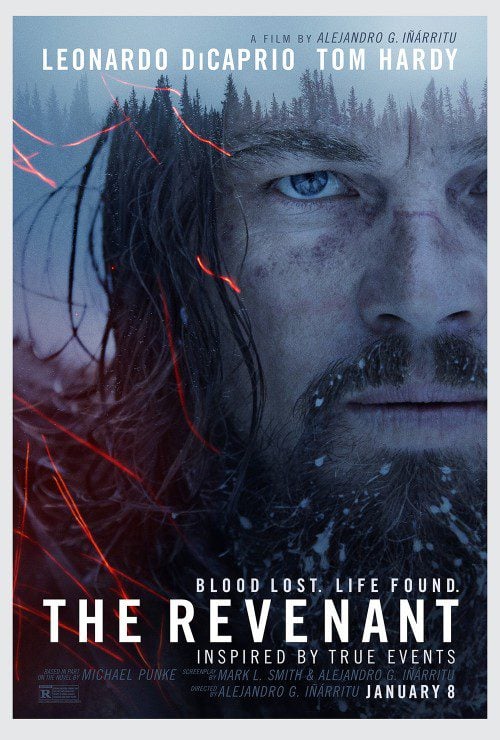
http://www.foxmovies.com/movies/the-revenant
I know a man who abandoned his children in a house with no heat on a bitter January day. He didn’t speak to them for years. And when he did, he never apologized, he just explained. Today he insists that he has loved them all along, love being a warm feeling that fills his precious heart whenever he thinks of them.
The Revenant is about a very different sort of father; correction, two such fathers.
I don’t talk about love much anymore. Odd for a preacher, I know. The word has lost so much of its old power. Overuse and misuse are partly to blame, me thinks. There’s the warm-hearted worthless father of a moment ago, but there’s also the cosmopolitan who loves everyone in general and no one in particular.
I speak of loyalty instead. Almost no one talks about that anymore. It’s rare and valuable. That’s why we still treasure it.
The Revenant is a story of loyalty, and almost by necessity, betrayal, and revenge.
Technically the film is magnificent. The cinematography immerses you in the unforgiving wilderness world of trappers and native Americans in the first half of the 19th century. But I’m not going to spend any time on that side of things because I suspect the reason the studio wanted Patheos writers to screen the film is because we can bring something else to the analysis of the story.
Here’s a few things you need to know. To call this film “entertaining” would be to degrade it. Taken in properly, it should be received with reverence and reflection. At the screening for the press that I attended, when the lights came up, there were two responses. The first, stunned silence. The second, chirpy talk like this: “What did you think of the bear?” or “How would you rate Hudson’s performance?” Maybe that’s the price paid for being a film critic, but it may be just another way to change the subject. Don’t be like those guys.
Second, the film is violent, I’m talking Braveheart violent. But it isn’t gratuitous violence. I think it is integral to the story. Without it you can not sympathize with the fear, and the anger, and the drive for vengeance that make the story.
Finally, you’ll note from the trailer that the film is inspired by true events. Hugh Glass was a real trapper and guide, and I was familiar with his story before hearing of the film. If you’d like to read up on him, here’s the wiki page– https://en.wikipedia.org/wiki/Hugh_Glass
It was a tangled world (and still is),
If you’re looking for a Dances with Wolves, Native Americans = good guys, white men = bad guys story, you won’t get it here. The real world is more complicated than that, and the film tells the truth. The tribes warred with each other, as well as with whites. The whites warred among themselves, the French still had a strong presence in the region at that time and resisted incursions by Americans. And the French and the Americans were allied with different tribes.
Throughout the film we pan out to see the big picture, and then get in close to see the faces of people in a crucible. The spine of the story is the devotion of two fathers to their children: Hugh Glass, American trapper and guide to his half Pawnee son, Hawk; and an Arikaree or Ree, chief to his daughter. Against these loyalties there are many betrayals, some small, some on the order of Judas.
After being mauled by a bear, Glass (played by DiCaprio) helplessly witnesses the murder of his son by fellow trapper, Thomas Fitzgerald (played convincingly by Tom Hardy). After Glass is abandoned for dead, he manages to scratch and crawl his way back to the nearest American settlement, 200 miles away, motivated by a desire for vengeance.
The Ree chief, who was responsible for a raid on Glass’s trapping expedition at the very beginning of the film, is out to save a daughter he mistakenly believes was stolen by the Americans. Later we find that she had actually been abducted by a French expedition ostensibly allied to the Ree,
These two quests interweave throughout the film and providentially each father helps the other come to the end of his quest.
Where God comes in
It wasn’t until I was about of a third of the way through the film that I understood the reason why Patheos writers were invited to the screening. What I had thought was just another survival story became one of the most theologically rich films ever made.
To talk about that I’ll need to give away some things. So if you’re one of those people who hate spoilers, stop here. Come back later to see what you think about my reflections. You’ve been warned.
I won’t be long, and I’ll only focus on three scenes.
The ruins of the mission church
Throughout the film Glass has flashbacks to the massacre of a Pawnee village by what look to be the French. He loses his wife in the attack, almost loses his son, and hints are made that Glass kills an officer in the process. Glass also has visions of his deceased wife in which she repeats, and I’m paraphrasing here: “When the storm comes, don’t look at the branches of the tree, look to the trunk.”
During his torturous trek back to the settlement he has another vision. This time of the ruins of a Catholic mission. The walls are covered with sacred art, and behind the altar there is the crucified Lord. Standing before it is his dead son, Hawk. Hawk had come upon Fitzgerald when he was attempting to suffocate Glass not long after the bear attack. Hawk had intervened, but he was too weak to overcome Fitzgerald. To cover up his attempt to murder Glass Fitzgerald kills Hawk. As you can see from the trailer, Glass witnesses the murder but he is too weak to intervene and he can not speak.
Hawk, the son, sacrificed himself so that Glass might live. In his vision Glass embraces Hawk only to find that Hawk has become the tree his mother spoke of.
To say anything more would rob the scene of its power.
God is a squirrel
After killing Hawk and abandoning Glass, Fitzgerald is accompanied by the unknowing Bridger, a young and compassionate man played by Will Poulter. Bridger didn’t see what became of Hawk and he feels tremendous guilt at abandoning Glass; but he cannot match the physical strength or ruthless energy of Fitzgerald. He is taken away against his will.
Fitzgerald begins to theologize along the way, partly to excuse his own betrayals by presuming upon the providence and grace of God, but in the process he reveals something else.
During a fireside conversation Fitzgerald reminisces about someone he knew who found God while struggling to survive in the wilderness. “God,” Fitzgerald recounts the man saying, “…is a squirrel. So, I ate the son of a bitch.”
The chuckleheads throughout the theater sniggered at this. But considering the sophisticated handling of theological themes I was witnessing, I couldn’t attribute this to the kind of juvenile posturing we see among those “new atheists”. I couldn’t help but wonder if Fitzgerald was saying more about himself than God, and Caiaphas-like, saying something true about the ways of divinity nonetheless. God is elusive, he hides, he’s difficult to catch, yet he is our food.
Vengeance belongs to the Creator
Toward the end of his seemingly interminable journey, Glass comes upon a lone Pawnee warrior named Hikuc (played by Arthur Redcloud) who has managed to chase a pack of wolves off from the the carcass of a buffalo. Glass, knowing Pawnee, begs for some of the food and Hikuc has mercy on him.
We come to learn that Hikuc lost his family to a Sioux raiding party, so he identifies with Glass’s losses. But he reveals that he has left revenge to God: “Vengeance belongs to the Creator.” This serves as our interpretive clue for understanding what comes next.
After Hikuc applies Pawnee healing arts to Glass’s wounds, he builds a shelter for him against an impending snow storm. The next morning Glass awakens to find Hikuc gone. Food has been left for him. But not long after setting out, Glass finds Hikuc dead, hung from a tree with a sign in French around his neck.
Glass finds his way to the French camp and in the course of stealing a horse he stumbles upon the missing Ree princess while she is being raped. Glass frees her and then escapes.
Mysterious are the ways of the Squirrel. Glass finds a nut and ultimately it will save him, but it will also lead to Fitzgerald’s death.
Glass and Fitzgerald meet again
When Glass finally returns to the settlement, he is greeted by the other surviving members of his original party as a man who has come back from the dead–the revenant. Fitzgerald flees and Glass pursues. But Fitzgerald is nearly as wily a woodsman as Glass and the final confrontation must be seen for oneself.
But in the end, the Squirrel gets vengeance.
Previous Post

January 7, 2016
Splash page for a new comic of mine...
Next Post

January 11, 2016 An Introduction to Productive Property
Browse Our Archives
Select a Category Advising a Daughter Aristotle Art Atheism Author and Speaking Appearances Beauty Building Working Houses C R Wiley Children Community Creativity Cultural Apologetics Fatherhood Fiction Fidelity in marriage Film Freedom Gravitas H. P. Lovecraft Happiness Household Economy Infant Baptism Inklings Interpreting the Bible Interviews Jack Donovan Liturgy Localism Man of the House Manliness Martial Virtue Medieval Cosmology Metaphysics Mortimus Clay NecronomiCon New Left New Testament Household Codes Nietzsche Nominalism/Realism Politics Poverty Preaching Productive Property Reaching men Science Self-Sufficiency Side Hustles Social Ethics Social Security Spiritual Disciplines Sublime Techno-gnosticism The Pastor's Survival Guide Theology of the Family Tradition Uncategorized Virtue Weird Fiction
Select a Month February 2019 November 2018 October 2018 July 2018 June 2018 May 2018 April 2018 March 2018 February 2018 January 2018 December 2017 November 2017 October 2017 September 2017 August 2017 July 2017 June 2017 May 2017 April 2017 March 2017 February 2017 January 2017 December 2016 November 2016 October 2016 September 2016 August 2016 July 2016 June 2016 May 2016 April 2016 March 2016 February 2016 January 2016 December 2015
Follow Us!
TAKE THE
Religious Wisdom Quiz
What woman followed Naomi to Bethlehem and later married Boaz?
Select your answer to see how you score.
Ruth Hannah Esther Sarah
Books by This Author Books by PaterFamilias Today
Books by C. R. Wiley

The Purloined Boy (The Weirdling Cycle #1)

Man of the House: A Handbook for Building a Shelter That Will Last in a World That Is Falling Apart
Related posts from PaterFamilias Today

Transcendence: Meaning from Above

Gutting Creation of Meaning Guts Scripture

Is This Evangelicalism's Red-Pill Moment?

Making the Good Life from Home
TRENDING AT PATHEOS Evangelical

How the author of the world's best hymn...
I've been working with John Newton for a while now. This makes...

Long before this Lectio Divina, Psalm 130 - the song - started...

What About the Trees? Another Living Parable
After I finished writing the last article about falling leaves as a...

Why Classical Education Is a Conversation, Not a...
Come and Read: Joy in Classical Education When I was a little...

Falling Leaves: A Living Parable on Letting Go
I’ve spent the vast majority of my life in the southeast corner...

Cornell University has received a great deal of negative publicity and intense...
view all Evangelical blogs
Ad-Free & Subscriber Log-In Subscription Support
- About Us
- 2026 Calendar
- Videos
- Podcasts
- Library of World Religions
- Faith In Media Tracker
- Advertise With Us
- Write for Us
- Privacy Policy
- Terms of Service
- Do Not Sell My Data
- Contact Us
- Radiant Digital
- Manage Newsletter Subscriptions
- Unsubscribe From Notifications
- Sitemap
Copyright 2008-2026, Patheos. All rights reserved.
Subscription Support Ad-Free & Subscriber Log-In
Follow Patheos