
BuddhistCatholicContemplativeEvangelicalGeneral ChristianHinduJewishLatter-day SaintMuslimNew VisionsProgressive Christian
Beliefs
- Buddhist
- Catholic
- Contemplative
- Evangelical
- General Christian
- Hindu
- Jewish
- Latter-day Saint
- More Voices
- Muslim
- New Visions
- Pagan
- Progressive Christian
Topics
- Religion News
- Food and Religion
- Sports and Religion
- Religious Art
- Religious Music and Entertainment
- Religious Events
- History and Religion
- Style and Religion
- Politics and Religion
- Women in Religion
- Recreation Outdoors and Religion
- Business Finance and Religion
- Careers Workplace and Religion
- Education and Religion
- Family Parenting and Religion
- Health Fitness and Religion
- Home and Religion
- Relationships and Religion
- Technology and Religion
- Travel and Religion
Columnists
- Buddhist Columnists
- Business Finance and Religion Columnists
- Careers Workplace and Religion Columnists
- Catholic Columnists
- Contemplative Columnists
- Education and Religion Columnists
- Evangelists Columnists
- Family Parenting and Religion Columnists
- General Christian Columnists
- Health Fitness and Religion Columnists
- Hindu Columnists
- History and Religion Columnists
- Home and Religion Columnists
- Jewish Columnists
- More Voices Columnists
- Latter Day Columnists
- Muslim Columnists
- New Visions Columnists
- Nonreligious Columnists
- Pagan Columnists
- Politics and Religion Columnists
- Progressive Columnists
- Recreation Outdoors and Religion Columnists
- Relationships and Religion Columnists
- Religion News Columnists
- Religious Art Columnists
- Religious Events Columnists
- Religious Music and Entertainment Columnists
- Sports and Religion Columnists
- Style and Religion Columnists
- Technology and Religion Columnists
- Travel and Religion Columnists
- Women in Religion Columnists
Resource Library
- 2026 Calendar
- Library of World Religions
- The 100 Most Holy Places on Earth
- Patheos Answers
- Podcasts
- Videos
- Faith Leaders Database
- Anglican Episcopalian
- Bahai
- Baptist
- Buddhism
- Christianity
- Confucianism
- Eastern Orthodoxy
- Hinduism
- Holiness and Pentecostal
- ISKCON
- Islam
- Judaism
- Lutheran
- Methodist
- The Church of Jesus Christ of Latter-day Saints
- New Age
- Paganism
- Presbytarian and Reformed
- Protestantism
- Religion Behind the Scenes
- Roman Catholic
- Scientology
- Shia Islam
- Sikhism
- Sufism
- Sunni Islam
- Taoism
- Zen
- See all religions
Research Tools
 Ad-Free & Subscriber Log-In Subscription Support
Ad-Free & Subscriber Log-In Subscription Support
Follow Patheos 

- Trending:
- Forgiveness
- |
- Marriage
- |
- Consciousness
- |
- Death Penalty
- |
- Election
- |
- Halloween
 PaterFamilias Today
- Home
- Evangelical
- Robert Crumb’s Book of Genesis, Part 2
Robert Crumb’s Book of Genesis, Part 2
Last updated on: January 1, 2016 at 5:40 pm by C. R. Wiley
Robert Crumb’s Book of Genesis, Part 2 2016-01-01T17:40:56-04:00 C. R. Wiley
Patheos Explore the world's faith through different perspectives on religion and spirituality! Patheos has the views of the prevalent religions and spiritualities of the world.
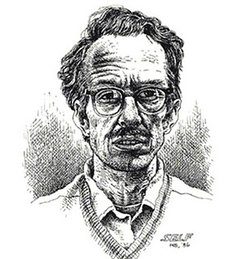
Robert Crumb from his author page at Amazon: http://www.amazon.com/R.-Crumb/e/B001IU0DRQ/ref=sr_ntt_srch_lnk_1?qid=1451583333&sr=1-1
Three or four years back I queried Books and Culture about writing a review of Crumb’s, Book of Genesis Illustrated. I received a “thanks, but no thanks” letter. From the wording I couldn’t help but think Crumb was too hot for them to handle.
(Maybe that’s unfair, maybe I was the problem, I’m not the typical Books and Culture writer. That would have been fine with me, so long as they had handed the job on to someone they felt better about. But as far as I can tell, they never tried that.)
Ironically, Crumb was the very reason that National Public Radio and The Guardian (among others) did cover the book. It’s a shame. The Bible is our book. And if there ever was an opportunity to talk about Robert Crumb and what he represents, isn’t it when he takes it upon himself to illustrate the Bible?
(By the way, follow that Guardian link to samples of the art from Genesis Illustrated.)
Crumb predicted Christians would avoid touching his book. But he created the book anyway, and that’s worth thinking about. (I have read some superficial treatments of Genesis Illustrated by “progressive Christians” but they all had the sound of, “Hey, I’m cool too!” about them and fail to critically discuss the book.)
How to interpret a comic book
The misleading thing about comic books is the word “book”. If you try to interpret a comic book by the same standards as you would judge other books, well, you won’t know what to look for.
Comics have more in common with film than with books. It is a visual medium. The drawings tell the story. Text is usually kept to a minimum and is generally employed to support the art. That’s why comic book artists tend to overshadow their writers. (Stan Lee and Neil Gaiman ore obvious exceptions, still, where would Stan “the Man” Lee be without Jack “the King” Kirby?) And the connection to film goes even deeper, films often start off as comics. I’m not talking about the adaptions of superhero comics. I mean storyboarding. It isn’t uncommon for a director to have an artist layout an entire film in a series of sketches before filming begins. And in the cases of science fiction and fantasy, comic book artists are often brought into to create the concept art that sets and costumes are based on. (Moebius’s work in this regard for films like Alien and The Fifth Element is legendary.)
So the key to understanding a comic is framing, layout, and the aesthetic–what could be called, the “mood” it evokes. You need to think about angles, close ups, sequence of action, lighting, and so forth. These things help create emphasis–directing the eye as the story is told.
Let’s look at layout: how a page is laid out says something about what’s important. The size of the frames in relation to each other tells you what the story teller is stressing. And another thing–the reveal. Because it is still a book, the turn of the page is part of the layout. What you see first when you turn a page is often a revelation.
So how does Crumb do? His treatment is mixed. His aesthetic is good for the subject, and he does some things really well when it comes to layout. At the same time he overemphasizes some things, while missing the importance of other things.
Today I’ll treat what he does well. I’ll save the flaws for next time, with one exception that I can’t help but address today.
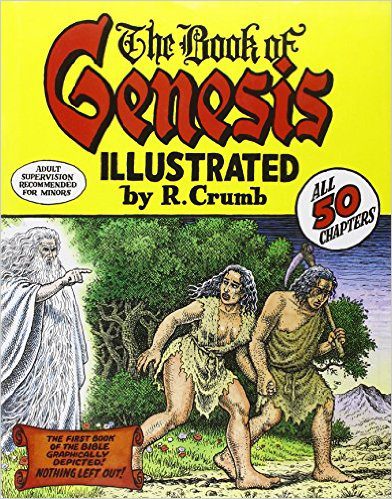
http://www.amazon.com/The-Book-Genesis-Illustrated-Crumb/dp/0393061027
What Crumb did well (not intended to be an exhaustive list):
The Aesthetic
Genesis is gritty material, and it is difficult to think of a better person to illustrate it than Robert Crumb. Perhaps Barry Windsor Smith could have done it (but he appears to be in retirement), or Geof Darrow. Frankly, it was his reputation for dark themes that gave me hope that Crumb could convey something to modern people that they need to hear. What? That the bloody, distressing, and despairing history of the human race belies the powerful hand of a numinous Providence. It is Lovecraft’s Cosmicism in reverse. How did he do? That I’m leaving it for next time is a hint.
The Genealogies
I’m not kidding you. Because he was committed to giving us the text as it is, Crumb gave the genealogies more attention than I’ve ever seen them given anywhere else. Each “begat” is depicted meticulously. Crumb invested a great deal of time in them, and they are worth lingering over.
I don’t believe he actually went into the Hebrew for any clues as to how to portray each person. What comes through is their individuality, and how fashions and customs must have changed over time.
And by giving each image the same sized frame he subtly communicates the relentless power of time to destroy and recreate, like waves of the sea.
Underdogs
I suspected that Crumb would have something to show us when it came to the victims in Genesis. Crumb knows the underside of life and can sympathetically portray what it feels like to be exploited or betrayed. Eve, Abel, Sarai, Leah, Joseph, we can feel for them and identify with them. (Eve? Yes, I’ll get to her in a minute.)
Joseph’s treatment by his brothers is interesting. Rather than triumph in his vindication, there are subtle clues that Crumb doesn’t like Joseph. Amid the tears of joy, his toying with his brothers is not appreciated (we see it in the eyes of the onlooking slaves), and then the whole plenty and famine sequence makes Joseph look like an opportunist and a suck up. (In his end notes Crumb makes his thoughts clear on this.)
Women
This brings me to women. Women are always a problem for Crumb, he hates them (he hates everyone), but he admires them too. They’re the only adults he can find something to like about. (Thankfully Crumb ignores children. If his sexual tastes had moved in their direction he’d be in prison now.)
Unfortunately Crumb has fallen into the fever swamp of original matriarchy. This is somewhat like believing in Atlantis. Every rumor is clung to like a life preserver. Or it’s like Margret Meade in Samoa, making stuff up to support a Rousseauian fantasy. What is presented as evidence is like building a dinosaur from a tooth. But even this is made to further the cause: the fact that we have so little evidence is itself evidence to true believers that a conniving and overweening patriarchy was at work. Those priests and their schemes! That we have sympathetic treatment of women in parts of Genesis is evidence nonetheless that there must have been a matriarchy, since men are so incorrigibly evil when it comes to women. The only way something positive could be recorded about a woman is men were afraid of those powerful matriarchs. So which is it?
How about none of the above? Maybe this stuff just happened as the story records? Or perhaps patriarchy was necessary for survival and women actually depended upon the strength of men? (It was a violent world as Crumb helps us to remember.) Or just maybe men and women actually got along sometimes and even liked each other. I know, those things sound wildly improbable to the modern ear.
In Genesis though, Crumb does subtly give us a case for the women. It comes across in the sidelong look (Eve as she glances toward Adam when he blames her for his disobedience), the betrayal of Sarai when Abraham asks her to collude in lying about their marriage, the leering Pharaoh as he lusts for her. This is what I hoped to get from Crumb.
A highpoint is the story of Hagar. I was left puzzled by his endnotes though. He seems to contradict himself by taking Sarah’s side in this. He condemns Hagar of insubordination of all things. Apparently it is just fine to submit to the abuses of a matriarch for Crumb.
Well, as you can see I’m already slipping into the negative side of my critique. And while I’ve hinted at Crumb’s conservatism, I still haven’t explained myself.
Those things will have to wait. I thought this would be a three part review, but it may grow into four.
Previous Post
December 30, 2015
Robert Crumb's Book of Genesis, Part 1
Next Post

January 4, 2016 Robert Crumb's Book of Genesis, Part 3
Browse Our Archives
Select a Category Advising a Daughter Aristotle Art Atheism Author and Speaking Appearances Beauty Building Working Houses C R Wiley Children Community Creativity Cultural Apologetics Fatherhood Fiction Fidelity in marriage Film Freedom Gravitas H. P. Lovecraft Happiness Household Economy Infant Baptism Inklings Interpreting the Bible Interviews Jack Donovan Liturgy Localism Man of the House Manliness Martial Virtue Medieval Cosmology Metaphysics Mortimus Clay NecronomiCon New Left New Testament Household Codes Nietzsche Nominalism/Realism Politics Poverty Preaching Productive Property Reaching men Science Self-Sufficiency Side Hustles Social Ethics Social Security Spiritual Disciplines Sublime Techno-gnosticism The Pastor's Survival Guide Theology of the Family Tradition Uncategorized Virtue Weird Fiction
Select a Month February 2019 November 2018 October 2018 July 2018 June 2018 May 2018 April 2018 March 2018 February 2018 January 2018 December 2017 November 2017 October 2017 September 2017 August 2017 July 2017 June 2017 May 2017 April 2017 March 2017 February 2017 January 2017 December 2016 November 2016 October 2016 September 2016 August 2016 July 2016 June 2016 May 2016 April 2016 March 2016 February 2016 January 2016 December 2015
Follow Us!
TAKE THE
Religious Wisdom Quiz
Like a sheep led to slaughter, silent before shearers, this servant was pierced for our transgressions. What chapter foretells this suffering?
Select your answer to see how you score.
Isaiah 9 Isaiah 53 Isaiah 61 Isaiah 7
Books by This Author Books by PaterFamilias Today
Books by C. R. Wiley

The Purloined Boy (The Weirdling Cycle #1)

Man of the House: A Handbook for Building a Shelter That Will Last in a World That Is Falling Apart
Related posts from PaterFamilias Today

Transcendence: Meaning from Above

Gutting Creation of Meaning Guts Scripture

Is This Evangelicalism's Red-Pill Moment?

Making the Good Life from Home
TRENDING AT PATHEOS Evangelical

How the author of the world's best hymn...
I've been working with John Newton for a while now. This makes...

Long before this Lectio Divina, Psalm 130 - the song - started...

What About the Trees? Another Living Parable
After I finished writing the last article about falling leaves as a...

Why Classical Education Is a Conversation, Not a...
Come and Read: Joy in Classical Education When I was a little...

Falling Leaves: A Living Parable on Letting Go
I’ve spent the vast majority of my life in the southeast corner...

Cornell University has received a great deal of negative publicity and intense...
view all Evangelical blogs
Ad-Free & Subscriber Log-In Subscription Support
- About Us
- 2026 Calendar
- Videos
- Podcasts
- Library of World Religions
- Faith In Media Tracker
- Advertise With Us
- Write for Us
- Privacy Policy
- Terms of Service
- Do Not Sell My Data
- Contact Us
- Radiant Digital
- Manage Newsletter Subscriptions
- Unsubscribe From Notifications
- Sitemap
Copyright 2008-2026, Patheos. All rights reserved.
Subscription Support Ad-Free & Subscriber Log-In
Follow Patheos