
BuddhistCatholicContemplativeEvangelicalGeneral ChristianHinduJewishLatter-day SaintMuslimNew VisionsProgressive Christian
Beliefs
- Buddhist
- Catholic
- Contemplative
- Evangelical
- General Christian
- Hindu
- Jewish
- Latter-day Saint
- More Voices
- Muslim
- New Visions
- Pagan
- Progressive Christian
Topics
- Religion News
- Food and Religion
- Sports and Religion
- Religious Art
- Religious Music and Entertainment
- Religious Events
- History and Religion
- Style and Religion
- Politics and Religion
- Women in Religion
- Recreation Outdoors and Religion
- Business Finance and Religion
- Careers Workplace and Religion
- Education and Religion
- Family Parenting and Religion
- Health Fitness and Religion
- Home and Religion
- Relationships and Religion
- Technology and Religion
- Travel and Religion
Columnists
- Buddhist Columnists
- Business Finance and Religion Columnists
- Careers Workplace and Religion Columnists
- Catholic Columnists
- Contemplative Columnists
- Education and Religion Columnists
- Evangelists Columnists
- Family Parenting and Religion Columnists
- General Christian Columnists
- Health Fitness and Religion Columnists
- Hindu Columnists
- History and Religion Columnists
- Home and Religion Columnists
- Jewish Columnists
- More Voices Columnists
- Latter Day Columnists
- Muslim Columnists
- New Visions Columnists
- Nonreligious Columnists
- Pagan Columnists
- Politics and Religion Columnists
- Progressive Columnists
- Recreation Outdoors and Religion Columnists
- Relationships and Religion Columnists
- Religion News Columnists
- Religious Art Columnists
- Religious Events Columnists
- Religious Music and Entertainment Columnists
- Sports and Religion Columnists
- Style and Religion Columnists
- Technology and Religion Columnists
- Travel and Religion Columnists
- Women in Religion Columnists
Resource Library
- 2026 Calendar
- Library of World Religions
- The 100 Most Holy Places on Earth
- Patheos Answers
- Podcasts
- Videos
- Faith Leaders Database
- Anglican Episcopalian
- Bahai
- Baptist
- Buddhism
- Christianity
- Confucianism
- Eastern Orthodoxy
- Hinduism
- Holiness and Pentecostal
- ISKCON
- Islam
- Judaism
- Lutheran
- Methodist
- The Church of Jesus Christ of Latter-day Saints
- New Age
- Paganism
- Presbytarian and Reformed
- Protestantism
- Religion Behind the Scenes
- Roman Catholic
- Scientology
- Shia Islam
- Sikhism
- Sufism
- Sunni Islam
- Taoism
- Zen
- See all religions
Research Tools
 Ad-Free & Subscriber Log-In Subscription Support
Ad-Free & Subscriber Log-In Subscription Support
Follow Patheos 

- Trending:
- Forgiveness
- |
- Marriage
- |
- Consciousness
- |
- Death Penalty
- |
- Election
- |
- Halloween
 PaterFamilias Today
- Home
- Evangelical
- Life After the Welfare State
Life After the Welfare State
Last updated on: January 20, 2016 at 7:13 pm by C. R. Wiley
Life After the Welfare State 2016-01-20T19:13:43-04:00 C. R. Wiley
Patheos Explore the world's faith through different perspectives on religion and spirituality! Patheos has the views of the prevalent religions and spiritualities of the world.
“This too shall pass.” The Sufi poets
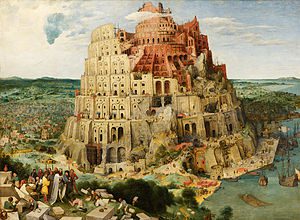
https://en.wikipedia.org/wiki/Tower_of_Babel
A few years back Francis Fukuyama published a book entitled, The End of History and the Last Man. The thesis is pretty simple. We have arrived at the end of our quest for the best possible political arrangement–liberal democracy.
I’ve have my doubts. There are so many ways things can go wrong, among them, success.
Success has many children, among them is hubris. And hubris kills his parents.
Liberal democracy has given us the welfare state, the benefits of which are now believed to be a natural right by many. But welfare states are human achievements that require resources and good habits to create and sustain. Those are largely taken for granted today. What will be fatal is not the ignorance of what it takes to keep the whole thing going though, it is the perverse incentives and structural contradictions of the very institution that will kill it.
I could give you a long list of things that I think will contribute to the end of the welfare state, but I’m going to limit myself to just two because I’m more interested in talking about life after the welfare state than I am in dealing with its demise. (Besides, these two are all it will take.)
Debt
Debt isn’t evil, on the contrary, it is one of the greatest innovations in the history of the human race.
When used wisely it can nourish economic growth and ameliorate loses by pushing costs off into the future. But for it to do these things returns must out pace debt satisfaction. If that doesn’t happen, you may be able to renegotiate terms for repayment. If you can’t do that, you’re bankrupt.
In the private sphere this happens all the time, businesses die because they are no longer productive and they can’t find investors to underwrite their unprofitability, and no one is willing to lend them any money. But in the private economy, new businesses are also being born all the time. And many of these new businesses are nourished by the decayed remains of failed businesses.
But that can’t happen for a welfare state.
Welfare states are designed to prevent failure–or catch the failures when they fall–the “safety net” you see. So, since welfare states don’t allow for failure, they can’t learn. Instead they must grow, either by pushing payments onto future growth through debt, or by forcing more people to buy in by eliminating private competitors, or by increasing taxes. (Or all the above.)
But eventually bankruptcy occurs. You may be able to stave that off by unforeseen economic growth due to some innovation in the private economy (e.g. computers), or by a particular form of immigration (immigrants who pay in more than they take out), or by finding new lenders.
But the principle is this: because the system will not permit failure on a small scale, eventually the entire system will fail. It will grow so fragile it will not support its own weight.
Infertility
If you were to interview the typical “man on the street” and ask, “Is population decline a good thing or a bad thing?” my guess is nine out of ten will say, “Good thing!”
But if you were to ask the same person, “Is the insolvency of Social Security a good thing or a bad thing?” or, “Is a fall in the value of assets like real estate or or 401Ks a good thing or a bad thing?” my guess is nine out of ten people will say, “Those are bad things!”
Here’s the problem for the welfare state: people can’t see how those two things (a decline in population and a decline in the value of assets) are connected. And not only is the welfare state to blame for this, its solvency is dependent on preventing these things from happening.
Welfare states remain solvent by growth. But they poison the soil they grow in.
Here’s one way this happens. We know that wherever a welfare state is established fertility plummets. The reason is pretty simple. People go from depending upon their children to depending upon the state. I had a Haitian friend years ago and in a conversation about family life he said that in Haitian culture the oldest son is nicknamed, “the crutch”. When I asked why he said, “Because he is the one you will lean on in your old age.”
(This, by the way, is why sons were favored in traditional cultures, even by women, actually, especially by women. They served as protectors and providers. It is not irrational prejudice that led to this attitude. People may not have been able to put their reasons into words, but they didn’t need to, the reasons were embedded in the practices. This may not seem fair, but survival usually isn’t.)
Today children are expensive pets, creatures to lavish ourselves upon but who serve no useful purpose. The operating assumption of welfare state planners is that people will have children anyway. But they are wrong. When it comes to the choice between a new boat and a new baby, more people than ever are choosing a boat.

All utopias fail
The first part of the nineteenth century was a fertile time for utopias. They were going up all over the place. What made this tolerable is they were small in scale and voluntary. They even had some salutary and concrete contributions to make–Shaker furniture comes to mind. (I’ve written about the Shakers and their aesthetic here.)
But they all seemed to have been hostile to two things: privately held productive property and life-long conjugal monogamy. In sum, these utopias were rebellions against traditional household order, households being built upon covenantal marriage and the intergenerational stewardship of productive property. And those rebellions failed, every one of them. (A delicious irony, utopia meaning literally, “no place”.)
What made the second half of the nineteenth century different, and far more harmful, was the push by Marx and others to make failed utopias a blessing we must all enjoy. And like those earlier utopias, these days we’re really hung up about two things–property and sex.
The return of the household economy
This brings me to my conclusion for today. It is my suspicion that when the welfare state fails, we will see a recovery of the old household economy, with many of the practices attendant to it. They will need to adapt to a post industrial, information saturated world. But many of the things we now rely upon the welfare state for will come home again–everything from education (home schooling) to care for the aged. I even think we will see the return of hard money lending on a large scale and many small, household-based, or affinity group-based, institutions doing it. If you want to get a little picture of what it will look like–with some significant differences–read the household codes in the New Testament.
But I’m beginning to get ahead of myself. I’ve written a book about this, and it will be out (if all goes well) in the fall of this year.
Here’s a another way to think about it if you’re more familiar with science fiction than the Bible. Tomorrow will look more like Dune than Star Trek.
Previous Post
January 15, 2016
Nominalism and the Law of Unintended Consequences
Next Post

January 20, 2016 Are Humans Obsolete?
Browse Our Archives
Select a Category Advising a Daughter Aristotle Art Atheism Author and Speaking Appearances Beauty Building Working Houses C R Wiley Children Community Creativity Cultural Apologetics Fatherhood Fiction Fidelity in marriage Film Freedom Gravitas H. P. Lovecraft Happiness Household Economy Infant Baptism Inklings Interpreting the Bible Interviews Jack Donovan Liturgy Localism Man of the House Manliness Martial Virtue Medieval Cosmology Metaphysics Mortimus Clay NecronomiCon New Left New Testament Household Codes Nietzsche Nominalism/Realism Politics Poverty Preaching Productive Property Reaching men Science Self-Sufficiency Side Hustles Social Ethics Social Security Spiritual Disciplines Sublime Techno-gnosticism The Pastor's Survival Guide Theology of the Family Tradition Uncategorized Virtue Weird Fiction
Select a Month February 2019 November 2018 October 2018 July 2018 June 2018 May 2018 April 2018 March 2018 February 2018 January 2018 December 2017 November 2017 October 2017 September 2017 August 2017 July 2017 June 2017 May 2017 April 2017 March 2017 February 2017 January 2017 December 2016 November 2016 October 2016 September 2016 August 2016 July 2016 June 2016 May 2016 April 2016 March 2016 February 2016 January 2016 December 2015
Follow Us!
TAKE THE
Religious Wisdom Quiz
Nahum describes the Lord as riding in the whirlwind and storms. What does he say are the clouds?
Select your answer to see how you score.
His glory His chariot The dust of his feet His covering
Books by This Author Books by PaterFamilias Today
Books by C. R. Wiley

The Purloined Boy (The Weirdling Cycle #1)

Man of the House: A Handbook for Building a Shelter That Will Last in a World That Is Falling Apart
Related posts from PaterFamilias Today

Transcendence: Meaning from Above

Gutting Creation of Meaning Guts Scripture


Is This Evangelicalism's Red-Pill Moment?
TRENDING AT PATHEOS Evangelical

The REST of Your Life: A Creative Wrestles...
This week I had a conversation with a good friend from church....

How the author of the world's best hymn...
I've been working with John Newton for a while now. This makes...

Long before this Lectio Divina, Psalm 130 - the song - started...

What About the Trees? Another Living Parable
After I finished writing the last article about falling leaves as a...

Why Classical Education Is a Conversation, Not a...
Come and Read: Joy in Classical Education When I was a little...

Cornell University has received a great deal of negative publicity and intense...
view all Evangelical blogs
Ad-Free & Subscriber Log-In Subscription Support
- About Us
- 2026 Calendar
- Videos
- Podcasts
- Library of World Religions
- Faith In Media Tracker
- Advertise With Us
- Write for Us
- Privacy Policy
- Terms of Service
- Do Not Sell My Data
- Contact Us
- Radiant Digital
- Manage Newsletter Subscriptions
- Unsubscribe From Notifications
- Sitemap
Copyright 2008-2026, Patheos. All rights reserved.
Subscription Support Ad-Free & Subscriber Log-In
Follow Patheos