
BuddhistCatholicContemplativeEvangelicalGeneral ChristianHinduJewishLatter-day SaintMuslimNew VisionsProgressive Christian
Beliefs
- Buddhist
- Catholic
- Contemplative
- Evangelical
- General Christian
- Hindu
- Jewish
- Latter-day Saint
- More Voices
- Muslim
- New Visions
- Pagan
- Progressive Christian
Topics
- Religion News
- Food and Religion
- Sports and Religion
- Religious Art
- Religious Music and Entertainment
- Religious Events
- History and Religion
- Style and Religion
- Politics and Religion
- Women in Religion
- Recreation Outdoors and Religion
- Business Finance and Religion
- Careers Workplace and Religion
- Education and Religion
- Family Parenting and Religion
- Health Fitness and Religion
- Home and Religion
- Relationships and Religion
- Technology and Religion
- Travel and Religion
Columnists
- Buddhist Columnists
- Business Finance and Religion Columnists
- Careers Workplace and Religion Columnists
- Catholic Columnists
- Contemplative Columnists
- Education and Religion Columnists
- Evangelists Columnists
- Family Parenting and Religion Columnists
- General Christian Columnists
- Health Fitness and Religion Columnists
- Hindu Columnists
- History and Religion Columnists
- Home and Religion Columnists
- Jewish Columnists
- More Voices Columnists
- Latter Day Columnists
- Muslim Columnists
- New Visions Columnists
- Nonreligious Columnists
- Pagan Columnists
- Politics and Religion Columnists
- Progressive Columnists
- Recreation Outdoors and Religion Columnists
- Relationships and Religion Columnists
- Religion News Columnists
- Religious Art Columnists
- Religious Events Columnists
- Religious Music and Entertainment Columnists
- Sports and Religion Columnists
- Style and Religion Columnists
- Technology and Religion Columnists
- Travel and Religion Columnists
- Women in Religion Columnists
Resource Library
- 2026 Calendar
- Library of World Religions
- The 100 Most Holy Places on Earth
- Patheos Answers
- Podcasts
- Videos
- Faith Leaders Database
- Anglican Episcopalian
- Bahai
- Baptist
- Buddhism
- Christianity
- Confucianism
- Eastern Orthodoxy
- Hinduism
- Holiness and Pentecostal
- ISKCON
- Islam
- Judaism
- Lutheran
- Methodist
- The Church of Jesus Christ of Latter-day Saints
- New Age
- Paganism
- Presbytarian and Reformed
- Protestantism
- Religion Behind the Scenes
- Roman Catholic
- Scientology
- Shia Islam
- Sikhism
- Sufism
- Sunni Islam
- Taoism
- Zen
- See all religions
Research Tools
 Ad-Free & Subscriber Log-In Subscription Support
Ad-Free & Subscriber Log-In Subscription Support
Follow Patheos 

- Trending:
- Forgiveness
- |
- Marriage
- |
- Consciousness
- |
- Death Penalty
- |
- Election
- |
- Halloween
 PaterFamilias Today
- Home
- Evangelical
- Can the Artless Preach?
Can the Artless Preach?
Last updated on: January 24, 2016 at 1:45 pm by C. R. Wiley
Can the Artless Preach? 2016-01-24T13:45:17-04:00 C. R. Wiley
Patheos Explore the world's faith through different perspectives on religion and spirituality! Patheos has the views of the prevalent religions and spiritualities of the world.
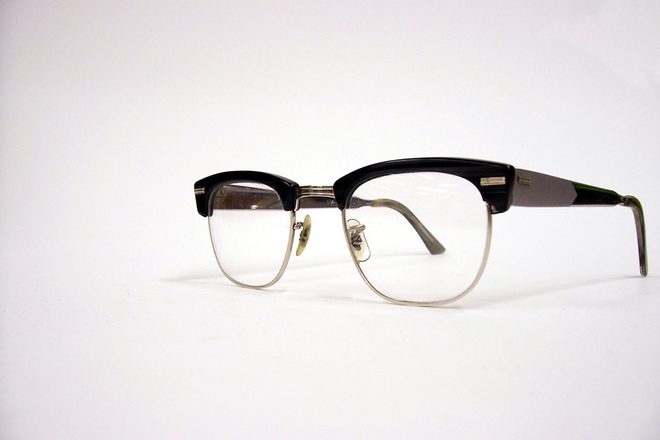
http://www.freeimages.com/photo/glasses-1420158
Within Protestantism anyway, when it comes to aspirants to the ministry, I hope it is not too harsh to say, different theological traditions seem to attract different types.
If they weren’t preachers, guys in one tradition I know of could be small-town politicians, in another, smarmy used-car salesmen. (Sorry about the smarmy thing, but you guys just come across that way.)
Before I matriculated into the Reformed tradition, I was part of a bunch of guys that worked hard at becoming that back-slapping uncle you yuk-it-up with at family gatherings. They were into group hugs.
Today I’m surrounded by men who could be accountants.
Just the facts, Ma’am.
The Reformed want to getting it right, and I like that. We’re good at summarizing doctrine, parsing our verbs, and when we’re really cooking, we even make lists to apply the Bible to our lives.
Sometimes, when we’re feeling surly, we exhort, which means we harangue. The Law is sweet on our tongues those days. We goad, we prod.
But do we inspire? I’m not talking about that saccharine stuff we use sometimes, the story of the Down Syndrome boy who was teased at recess, but when Valentine’s Day came along had a card for everyone in the class, bullies included, that sort of thing. I’m talking about the turn of phrase that opens heaven for people.
Artful preaching?
I recall reading a quotation from an old-time preacher that went something like this, “A novel is nothing but a well told lie.”
We don’t own our philistinism like that anymore. Instead we indulge in guilty pleasures. I was just talking about this the other day with a friend. I mentioned that I knew an old preacher from a back-slapper denomination who loved the Three Stooges. And he told me of a man in our denomination of certified public accountants who watches Star Trek when no one is looking.
I’m not saying that watching the Three Stooges or Star Trek will make you a better preacher, well, maybe the Three Stooges will. But learning the art of story definitely can help.
There’s two sides to this, and they’re related. First, you must be able to tell a good story if you hope to inspire, and once you’ve learned that, you’ll find that you’re a better interpreter of other people’s stories.
When I say story, I’m not just referring to anecdotes; I mean stories you have to think about, preferably something written down, with a protagonist and a plot, written in the third person. Short stories are a start, but a really long, complicated story is better: a novel would do it.
I’ve written a couple of those, a few short stories as well, and I can say from experience, not only am I better story teller than I once was, I’m a better interpreter of the Bible.
Choosing your facts carefully
I have a relative who couldn’t tell a story to save her life. She’s convinced that she can, unfortunately. But she gets lost in the detail, everything seems equally important to her. She interrupts herself every other sentence to make sure she has a name right, or the time of day, or what have you, and we all sit around politely thinking to ourselves, “Who cares? Get on with it!”
Facts can be like that. A well placed one, and you can balance the world on a noun. An avalanche of them and you are crushed by meaningless material. Facts must be ordered into hierarchies. If I were to tell you the number of clouds in the sky, or my blood pressure, or how my wallet keeps reminding me that I’m sitting on it, you might say, “Why are you telling me these things?” If I said in response, “I’m just giving you the facts about my day”, you might respond, “What’s the point of that?” To whit I could reply, like any good accountant, “I just report the facts, I don’t choose them.”
But when you tell a story you’ve got to choose; some things are more important than others. The way you know that is by seeing the point.
You see the point by getting inside a story. That’s something you probably do pretty well when you’re in the story (unlike my relative).
When you tell a story people enter into it vicariously. In a sense they live it with you in a virtual reality you create through the telling. I suppose you could say this is a kind of art, this virtual reality you make, art being making, as in artificial, or artifact, or artesian, or artful.
The Bible is the story of the world
I know that people say that the Bible is the story of God, or the story of salvation, and I don’t disagree with them. But many folk don’t know what that has to do with them. What God wants to do is his business, so long as he stays out of our business. But when you say that the Bible is the story of the world they are already in the story whether they want to be or not.
Here is how attempting to tell a really big story, like a novel, can help with this. The world’s story is immense, but it does have a protagonist–Jesus Christ the one through whom the world was made, and the heir of all things. It’s his story. Nevertheless there are billions of subplots, all weaving here and there within that larger plot. These are the stories of our lives, among other things. And these stories find their meaning within the larger story of the world.
If you can weave these little stories into the big one, you won’t need to make the Bible relevant. Instead you can ask your hearers where they fit into the story. (We’re all relevant in this story. When we glorify God we’re on the side of the protagonist. When we pursue vainglory, we’re the enemies he overcomes. We’re either wheat or weeds; and even wheat is awfully weedy. That’s why he must overcome even his friends.)
Allegory or analogy
The problem with allegories is they’re wooden, unadaptable things, with a one to one correspondence. I like The Pilgrim’s Progress just fine, but its already been done. No need for another.
Analogies though, those are highly adaptable, even protean. They can be held up to the eye, like a kaleidoscope, turned this way and that, and then there is that piercing light, filling the eye of the soul.
Now I know what you’re thinking. Christ’s story is not an analogy. And you’re right. We are the analogs, not him. He’s real.
When we preach his story we are invited into it, to participate in it so deeply that his death really becomes ours, and his life really becomes ours, and his reward really becomes ours. Now if you can pull that off, if you can get people to really see themselves in Christ, you’re a real artist.
There’s an old hymn, I Love to Tell the Story. It think it gets it right. A good preacher is not an accountant, he’s a bard, a Homer singing the praises of Achilles. But Homer’s son of a god was no savior. Our Son is; we sing his praises and bring our hearers into his story, not virtually, but really and truly. And if we do it right, “inspiration” goes from being an analogy to something real, it really happens.
Previous Post

January 21, 2016
Why Evangelical Gender-Egalitarians are Statists
Next Post

January 25, 2016 The Finest Hours, a Crucible of Courage: a Review
Browse Our Archives
Select a Category Advising a Daughter Aristotle Art Atheism Author and Speaking Appearances Beauty Building Working Houses C R Wiley Children Community Creativity Cultural Apologetics Fatherhood Fiction Fidelity in marriage Film Freedom Gravitas H. P. Lovecraft Happiness Household Economy Infant Baptism Inklings Interpreting the Bible Interviews Jack Donovan Liturgy Localism Man of the House Manliness Martial Virtue Medieval Cosmology Metaphysics Mortimus Clay NecronomiCon New Left New Testament Household Codes Nietzsche Nominalism/Realism Politics Poverty Preaching Productive Property Reaching men Science Self-Sufficiency Side Hustles Social Ethics Social Security Spiritual Disciplines Sublime Techno-gnosticism The Pastor's Survival Guide Theology of the Family Tradition Uncategorized Virtue Weird Fiction
Select a Month February 2019 November 2018 October 2018 July 2018 June 2018 May 2018 April 2018 March 2018 February 2018 January 2018 December 2017 November 2017 October 2017 September 2017 August 2017 July 2017 June 2017 May 2017 April 2017 March 2017 February 2017 January 2017 December 2016 November 2016 October 2016 September 2016 August 2016 July 2016 June 2016 May 2016 April 2016 March 2016 February 2016 January 2016 December 2015
Follow Us!
TAKE THE
Religious Wisdom Quiz
Who said, "He who is without sin among you, let him throw the first stone"?
Select your answer to see how you score.
James Paul Peter Jesus
Books by This Author Books by PaterFamilias Today
Books by C. R. Wiley

The Purloined Boy (The Weirdling Cycle #1)

Man of the House: A Handbook for Building a Shelter That Will Last in a World That Is Falling Apart
Related posts from PaterFamilias Today

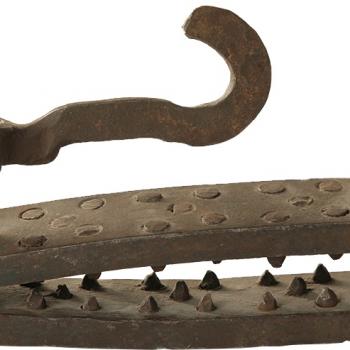
Thumbscrews: How Conservative Clergy Are Pressured into Silence


On Committing Fiction as a Pastor
TRENDING AT PATHEOS Evangelical

The REST of Your Life: A Creative Wrestles...
This week I had a conversation with a good friend from church....

How the author of the world's best hymn...
I've been working with John Newton for a while now. This makes...

Long before this Lectio Divina, Psalm 130 - the song - started...

What About the Trees? Another Living Parable
After I finished writing the last article about falling leaves as a...

Why Classical Education Is a Conversation, Not a...
Come and Read: Joy in Classical Education When I was a little...

Cornell University has received a great deal of negative publicity and intense...
view all Evangelical blogs
Ad-Free & Subscriber Log-In Subscription Support
- About Us
- 2026 Calendar
- Videos
- Podcasts
- Library of World Religions
- Faith In Media Tracker
- Advertise With Us
- Write for Us
- Privacy Policy
- Terms of Service
- Do Not Sell My Data
- Contact Us
- Radiant Digital
- Manage Newsletter Subscriptions
- Unsubscribe From Notifications
- Sitemap
Copyright 2008-2026, Patheos. All rights reserved.
Subscription Support Ad-Free & Subscriber Log-In
Follow Patheos