
BuddhistCatholicContemplativeEvangelicalGeneral ChristianHinduJewishLatter-day SaintMuslimNew VisionsProgressive Christian
Beliefs
- Buddhist
- Catholic
- Contemplative
- Evangelical
- General Christian
- Hindu
- Jewish
- Latter-day Saint
- More Voices
- Muslim
- New Visions
- Pagan
- Progressive Christian
Topics
- Religion News
- Food and Religion
- Sports and Religion
- Religious Art
- Religious Music and Entertainment
- Religious Events
- History and Religion
- Style and Religion
- Politics and Religion
- Women in Religion
- Recreation Outdoors and Religion
- Business Finance and Religion
- Careers Workplace and Religion
- Education and Religion
- Family Parenting and Religion
- Health Fitness and Religion
- Home and Religion
- Relationships and Religion
- Technology and Religion
- Travel and Religion
Columnists
- Buddhist Columnists
- Business Finance and Religion Columnists
- Careers Workplace and Religion Columnists
- Catholic Columnists
- Contemplative Columnists
- Education and Religion Columnists
- Evangelists Columnists
- Family Parenting and Religion Columnists
- General Christian Columnists
- Health Fitness and Religion Columnists
- Hindu Columnists
- History and Religion Columnists
- Home and Religion Columnists
- Jewish Columnists
- More Voices Columnists
- Latter Day Columnists
- Muslim Columnists
- New Visions Columnists
- Nonreligious Columnists
- Pagan Columnists
- Politics and Religion Columnists
- Progressive Columnists
- Recreation Outdoors and Religion Columnists
- Relationships and Religion Columnists
- Religion News Columnists
- Religious Art Columnists
- Religious Events Columnists
- Religious Music and Entertainment Columnists
- Sports and Religion Columnists
- Style and Religion Columnists
- Technology and Religion Columnists
- Travel and Religion Columnists
- Women in Religion Columnists
Resource Library
- 2026 Calendar
- Library of World Religions
- The 100 Most Holy Places on Earth
- Patheos Answers
- Podcasts
- Videos
- Faith Leaders Database
- Anglican Episcopalian
- Bahai
- Baptist
- Buddhism
- Christianity
- Confucianism
- Eastern Orthodoxy
- Hinduism
- Holiness and Pentecostal
- ISKCON
- Islam
- Judaism
- Lutheran
- Methodist
- The Church of Jesus Christ of Latter-day Saints
- New Age
- Paganism
- Presbytarian and Reformed
- Protestantism
- Religion Behind the Scenes
- Roman Catholic
- Scientology
- Shia Islam
- Sikhism
- Sufism
- Sunni Islam
- Taoism
- Zen
- See all religions
Research Tools
 Ad-Free & Subscriber Log-In Subscription Support
Ad-Free & Subscriber Log-In Subscription Support
Follow Patheos 

- Trending:
- Forgiveness
- |
- Marriage
- |
- Consciousness
- |
- Death Penalty
- |
- Election
- |
- Halloween

- Home
- Progressive Christian
- Time To Burn It Down
Time To Burn It Down
Last updated on: April 6, 2020 at 12:15 pm by C. Don Jones
Time To Burn It Down 2020-04-06T12:15:21-06:00 C. Don Jones
Patheos Explore the world's faith through different perspectives on religion and spirituality! Patheos has the views of the prevalent religions and spiritualities of the world.
Holy Week is the time we remember all of the events of the last week of Jesus’ life and death before the Resurrection. We remember the story from John where Jesus washes the disciples’ feet and gives the new commandment on Maundy Thursday. Celebrations of Holy Communion happen on the same day. We remember his death on Good Friday. But, we rarely have time for the events and statements that happen from Monday to Wednesday. The last week was a time when Jesus prophesied it would all burn down. Judgment is coming.
What Happened Then?
Chapters 11, 12, and 13 of Mark provides a lot of information about the days leading up to the plot and legal murder of Jesus. The historical backdrop of these chapters is what became known as The Jewish War A.D. 66-72. The major event for Jewish history was the taking of Jerusalem and the destruction of Herod’s Temple in A.D. 70. Jesus, according to Mark, foretells these events for Jerusalem. The writer gives reasons for the destruction to come. Some traditions claim the devastation – the desolating sacrilege – occurred because the Jewish leaders of the city rejected Jesus as their Messiah. The gospels never make that claim. Instead, they argue the devastation came because of something else.
What Happened On The Second Day?
The writer gives the events that lead to the plot to kill Jesus. The first happened the day after the Triumphal Entry. Jesus approaches the city and encounters a barren fig tree. We are told he was looking for figs that were not in season. He curses the tree because he finds no figs. He then goes on to the city and the Temple.
Jesus finds the Temple has become “a den of robbers” quoting words from Jeremiah. He takes action against unholy practices found there. He overturns “the tables of the moneychangers, and the seats of those who sold doves; and he would not allow anyone to carry anything through the temple.” (11:15-16)
Mark points out three issues here. The people who came to the temple from all over the known world brought Roman money with them. Jesus will later get his audience to admit the image on the money was that of Caesar. The Temple could not accept offerings from made with such unholy images. It issued it’s own coins. Trading the Roman money for these coins was not an exact trade. Money exchanges always offer reduced value for the new currency. In the ancient era, it was likely the reduced value was a lower quality of silver. The moneychangers made wealth in this way. Jesus is not against wealth. He is concerned with how it is made.
Injustice Masquerading as Holiness
The next issue is that those who sold doves were unseated. Doves were offered by the poorer people (Leviticus 5:7). If one must purchase doves for the sacrifice for sin offering, then any money exchanged to pay for the birds is already devalued. The price of the bird is inflated because of that. The poor were being exploited by these practices. They were unrighteous practices being dressed in the trappings of holiness.
The third issue is that things were being carried in the temple environs. Jesus does not allow this to happen. It appears to be too much to ask. The question is not about work being done in the Temple. It is about who is being told to do the work. Servants of those who enter to make sacrifices would be expected to bear the burdens of there masters. Jesus overturns this demand by having everyone lay their stuff down.
The Third Day
The next day the disciples see the cursed fig tree has died. But, the time for the lesson has not yet arrived. He tells Peter to “have faith in God.” The day is young and will only get more confusing.
Several spiritual authorities confront Jesus demanding to know why he caused such turmoil the previous day. He offers here a parable about the wicked tenants. In this story, Jesus tells about tenants in a vineyard who must pay rents to the landowner. They beat up the two slaves to collect the rent. Later, they kill the heir. There is only one possible conclusion.
Jesus receives two questions about possessions. One is from the Pharisees and Herodians about paying taxes to Caesar. Jesus instructs them to pay Caesar what is his and to God what belongs to God. The second question is from the sect of the Sadducees who have a good hypothetical question about the Resurrection. Obviously, they argue, a woman would even then belong to at least one of the men who married her. Which one does she belong to? Jesus doesn’t bother directly answering either questions. They are disguised as sincere questions of faith and practice. They are really traps.
Jesus concludes the discussion by answering the most important question about the Torah. What is the most important commandment. He answers directly this time. Love God and love your neighbor. The scribe agrees with his answer and comments, “this is much more important than whole burnt offerings and sacrifices.” Jesus responds the scribe is not far from the divine kingdom.
The Judgment Pronounced
Mark moves the discussion forward by claiming Jesus has greater authority than even King David did. He denounces the other scribes and their unholy practices. And then Jesus points to something else.
The offering of two copper coins by a widow who doesn’t have any of the silver coins most people would use catches Jesus’ attention. Jesus sits opposite of the temple treasury and sees this act of faith. The woman could not possibly live on the money she has. She throws it away into the temple’s treasury among the coveted money the loss of which upset so many authorities.
The disciples are still in awe of the temple. Jesus tells them it will not last. It will be taken apart. Jesus predicts devastating sacrilege will take place…again. He takes them outside the city to the Mount of Olives and explains why it will happen.
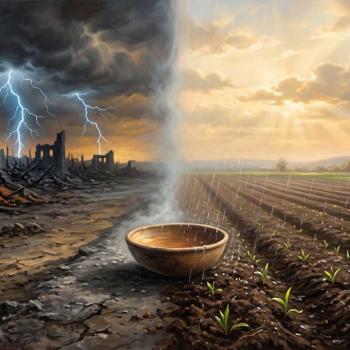
Jeremiah watched the destruction of the Temple of Solomon. He explained how the evil practices of idolatry and exploiting the poor and the stranger brought this all about. Mark explains that the era of the Temple of Herod ended the same way for the same reason. The time to burn it all down arrived. Jesus used the example of the fig tree in full leaf as the example. The end is near. And no harvest will be made.
Why Do We Avoid These Days?
We avoid these days because they are not comforting. Jesus died because what he said and did were threats to the powerful of his time. Holy Week is a time when we want to know that the fast is over and the feast is beginning. We want to know our personal sins are forgiven. We do not want to know that persistent institutional sins will bring consequences and judgement. It is even uncomfortable to know that, when it burns down, it won’t be on our terms.
A new life and way of being will rise from those ashes. It is fitting that I consider these days during a global pandemic. We are not experiencing the end of the world. We should ask ourselves this question. “Are we receiving a warning that the injustices of this era will bring judgment and destruction?” Can we do anything to stop it? Can we alleviate it in any way? Maybe. Maybe not. We can ask, “Should we do anything?”
Mark ends the Resurrection story with Jesus saying he will meet his disciples in Galilee where everything in his story began. The writer begins in the first chapter with calling for a change of heart and action to believe the good news that proclaims the promise and hope of ages.
Previous Post

April 4, 2020
Justice And Dionysius
Next Post
April 9, 2020 The New Commandment Requires Courage
Browse Our Archives
Select a Category Addiction Advent Afghanistan Anxiety Ascension Sunday Baptism Barack Obama Biblical Interpretation Bigotry Book Banning BSA Buddhism Choice Christmas Church Discipline Community Conscience Conspiracy theories COVID-19 Culture Wars death cults deconstruction Devotional Divine Judgment Donald Trump Earth Day Election Day empathy Environmentalism Evangelism Exploitation of the Poor Faith False Claims fascism Fear Forgiveness Genocide government Grace Gun Violence Halloween Hate Health Hillbilly Elegy Hindu Holy Communion Holy Week Homelessness Hope Identity Integrity Islam Joe Biden John Hagee Kamala Harris Labor Lent Liberation Theology Lies Love Love as action Neurological disorders Non-Christian Religions Online Worship Original Goodness Pandemic Peace Pentecost Philosophy Preaching Progressive Christianity Racism Redemptive Violence Myth Resentment Saint's Days Satire Sobriety social media Spiritual Self Care Spirituality Technology The Kingdom of God The United Methodist Church Theology Transfigurations Sunday Transgender persons Truth Uncategorized Violence Wesleyan Working Class
Select a Month September 2026 August 2026 July 2026 March 2026 January 2026 December 2025 November 2025 September 2025 July 2025 June 2025 May 2025 April 2025 March 2025 January 2025 October 2024 June 2024 May 2024 April 2024 March 2024 February 2024 January 2024 December 2023 November 2023 October 2023 September 2023 August 2023 July 2023 June 2023 May 2023 April 2023 March 2023 February 2023 January 2023 December 2022 November 2022 October 2022 September 2022 August 2022 July 2022 June 2022 May 2022 April 2022 March 2022 February 2022 January 2022 December 2021 November 2021 October 2021 September 2021 August 2021 July 2021 June 2021 May 2021 April 2021 March 2021 February 2021 January 2021 December 2020 November 2020 October 2020 September 2020 August 2020 July 2020 June 2020 May 2020 April 2020 March 2020 February 2020 January 2020 December 2019 November 2019 October 2019 September 2019 August 2019 July 2019 June 2019 May 2019 March 2019 February 2019 January 2019 December 2018 October 2018 September 2018 July 2018 February 2018 January 2018 August 2017 May 2017 November 2016 July 2016 June 2016 November 2015 May 2015 April 2015 March 2015 January 2015 November 2014 September 2014 August 2014 July 2014 June 2014 April 2014 March 2014 February 2014 January 2014 December 2013 November 2013 October 2013 September 2013 June 2013 March 2013 February 2013 December 2012 August 2012 July 2012 May 2012 February 2012 December 2011 October 2011 September 2011 August 2011 July 2011 June 2011 May 2011 April 2011 March 2011 February 2011 January 2011
Follow Us!
TAKE THE
Religious Wisdom Quiz
Who said: "The Lord knows how to rescue the godly from trials and to hold the unrighteous for punishment"?
Select your answer to see how you score.
Paul Peter James Jude
Related posts from Glorious Life

A Religious Socialist Answer to Dennis McIntyre


TRENDING AT PATHEOS Progressive Christian

What Being a Modern-Day Apostle Means to Me
In my last column, I discussed the ins and outs of modern-day...

Did Ancient China Once Worship the God of...
Across human history, a common thread weaves through the origins of the...

Love Your Neighbor – Including Earth-Kin: Lev. 19,...
God’s command to love your neighbor means acting in an ethical and...

Lead a Church Study of “Jesus and Lao...
Guest writer Jack Thomas (The Irreverent Reverend) reflects on leading his church...

Pastoral Wisdom for Responding to Sermon Pushback
Getting sermon pushback on your social justice sermon? Learn practical, Proverbs-based strategies...

Principles for Understanding the Apostolic Ministry Today
Whenever people discover that my formal ministry title is "apostle," as in...
view all Progressive Christian blogs
Ad-Free & Subscriber Log-In Subscription Support
- About Us
- 2026 Calendar
- Videos
- Podcasts
- Library of World Religions
- Faith In Media Tracker
- Advertise With Us
- Write for Us
- Privacy Policy
- Terms of Service
- Do Not Sell My Data
- Contact Us
- Radiant Digital
- Manage Newsletter Subscriptions
- Unsubscribe From Notifications
- Sitemap
Copyright 2008-2026, Patheos. All rights reserved.
Subscription Support Ad-Free & Subscriber Log-In
Follow Patheos