
BuddhistCatholicContemplativeEvangelicalGeneral ChristianHinduJewishLatter-day SaintMuslimNew VisionsProgressive Christian
Beliefs
- Buddhist
- Catholic
- Contemplative
- Evangelical
- General Christian
- Hindu
- Jewish
- Latter-day Saint
- More Voices
- Muslim
- New Visions
- Pagan
- Progressive Christian
Topics
- Religion News
- Food and Religion
- Sports and Religion
- Religious Art
- Religious Music and Entertainment
- Religious Events
- History and Religion
- Style and Religion
- Politics and Religion
- Women in Religion
- Recreation Outdoors and Religion
- Business Finance and Religion
- Careers Workplace and Religion
- Education and Religion
- Family Parenting and Religion
- Health Fitness and Religion
- Home and Religion
- Relationships and Religion
- Technology and Religion
- Travel and Religion
Columnists
- Buddhist Columnists
- Business Finance and Religion Columnists
- Careers Workplace and Religion Columnists
- Catholic Columnists
- Contemplative Columnists
- Education and Religion Columnists
- Evangelists Columnists
- Family Parenting and Religion Columnists
- General Christian Columnists
- Health Fitness and Religion Columnists
- Hindu Columnists
- History and Religion Columnists
- Home and Religion Columnists
- Jewish Columnists
- More Voices Columnists
- Latter Day Columnists
- Muslim Columnists
- New Visions Columnists
- Nonreligious Columnists
- Pagan Columnists
- Politics and Religion Columnists
- Progressive Columnists
- Recreation Outdoors and Religion Columnists
- Relationships and Religion Columnists
- Religion News Columnists
- Religious Art Columnists
- Religious Events Columnists
- Religious Music and Entertainment Columnists
- Sports and Religion Columnists
- Style and Religion Columnists
- Technology and Religion Columnists
- Travel and Religion Columnists
- Women in Religion Columnists
Resource Library
- 2026 Calendar
- Library of World Religions
- The 100 Most Holy Places on Earth
- Patheos Answers
- Podcasts
- Videos
- Faith Leaders Database
- Anglican Episcopalian
- Bahai
- Baptist
- Buddhism
- Christianity
- Confucianism
- Eastern Orthodoxy
- Hinduism
- Holiness and Pentecostal
- ISKCON
- Islam
- Judaism
- Lutheran
- Methodist
- The Church of Jesus Christ of Latter-day Saints
- New Age
- Paganism
- Presbytarian and Reformed
- Protestantism
- Religion Behind the Scenes
- Roman Catholic
- Scientology
- Shia Islam
- Sikhism
- Sufism
- Sunni Islam
- Taoism
- Zen
- See all religions
Research Tools
 Ad-Free & Subscriber Log-In Subscription Support
Ad-Free & Subscriber Log-In Subscription Support
Follow Patheos 

- Trending:
- Forgiveness
- |
- Marriage
- |
- Consciousness
- |
- Death Penalty
- |
- Election
- |
- Halloween
 Give Us This Day
- Home
- Evangelical
- What’s Postmodernism and what’s the Answer to it?
What’s Postmodernism and what’s the Answer to it?
Last updated on: July 14, 2017 at 5:53 pm by Fr. Charles Erlandson
What’s Postmodernism and what’s the Answer to it? 2017-07-14T17:53:24-05:00 Fr. Charles Erlandson
Patheos Explore the world's faith through different perspectives on religion and spirituality! Patheos has the views of the prevalent religions and spiritualities of the world.
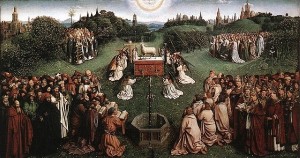 John 14:1-14
Many definitions have been given for postmodernism. To some, it is the end of the Enlightenment project with its belief in never-ending progress based on man’s reason, or the end of a single, overarching “metanarrative” that encompasses all of reality, or the belief that there is no inherent meaning in the universe because meaning is only constructed by people. Perhaps the one characteristic of postmodernism is that there is no agreement over what it means.
David Harvey has said that “Post-modernism swims, even wallows, in the fragmentary and the chaotic currents of change as if that is all there is.” He also believes that the postmodern emphasizes play over purpose, chance over design, anarchy over hierarchy, participation over distance, combination over selection, surface over depth, immanence over transcendence, and the Holy Ghost over the Father.
I believe that one good definition is simply homelessness. Postmodern man is “lost in the cosmos” and has become a plankton, floating in the world without purpose or direction. Having rejected God for the idolatry of self, only to discover that myself and other human selves make lousy gods, we woke up one day to realize that we were orphans without a home.
If 1 Corinthians 16 showed us a miniature portrait of how the Christian family and home should look, then postmodernism shows us a picture of the life that results from divorce and shattered homes. Divorce, illegitimacy, and the lack of a father in the household have been shown to contribute to poor achievement in school and throughout life, greater drug abuse, lower mortality, poorer health, and a litany of other social ills. The poverty rate for a child in a single-parent home, for example, is six times above that of a child in a married, two-parent home.
In families where the father is absent, children have lower motivation for achievement; greater inability to defer gratification for later rewards; lower self-esteem; and greater susceptibility to group influence and juvenile delinquency. The absent father family tends to produce more passive, effeminate, and dependent sons lacking in achievement, motivation and independence. Not surprisingly, those who grew up without a father are 8 times as likely to murder and 20 times as likely to be in prison.
The chaos and amorality and meaningless that we see as postmodernism is often the result of broken families, children who do not know their place in the world, and the loss of faith in and stability of any community. In a universe that we are told is without God, man is also spiritually without a home.
But our heavenly Father is not absent. He is neither so far from us that He doesn’t care or can’t help, or so close to us that He isn’t any stronger than we are. Our heavenly Father loves us so much that He has come to be with us.
“But I haven’t seen the Father – no one can,” you might say. To which Jesus has already provided the answer: “If you had known Me, you would have known my Father also; and from now on you know Him and have seen Him” (verse 7.)
“Lord, show us the Father, and it is sufficient for us,” we say.
And Jesus says: “Have I been with you so long, and yet you have not known me? He who has seen me has seen the Father.”
We have a father who is here and who has loved us enough to send His heavenly Son. This heavenly Father of ours has given us a home: heaven. “In my Father’s house are many mansions. I go to prepare a place for you” (verse 2.)
This is the answer to our postmodern condition: that man has a home again. After being evicted out of his original home, the Garden of Eden, for violating the terms of contract for tenancy, he has been ever since without a home. Not so much a man without a country but mankind without a heaven.
But through Jesus Christ, the Father, has given you a home, and that home is heaven. That home is God Himself, who has promised to dwell with His people so that they may dwell in Him. Just as Jesus is in the Father and the Father is in the Son, we are in Christ, as He is in us through the Holy Spirit.
We have a home! We know where we belong. And in this home, we have something else: we have a family. In our heavenly home, in God’s family, we have the kind of fellowship and relationships that God the Father has with God the Son and God the Holy Spirit. We understand that we are now all part of one Body, and that Body is the Body of Jesus Christ.
This is the answer to postmodernism: that God is in heaven, preparing an eternal home for us, to which we shall one day be resurrected.
And though heaven is our home, because heaven is wherever God is, there is a part of heaven on earth already here: it’s called the Church, the New Jerusalem that descends from heaven. And though we are still imperfect and have not yet been fully changed, Christians, above all others, should know who and where they are.
We have a heavenly Father who loves us and lives with us through His Son and Spirit, and we have an eternal home.
Therefore, let not your hearts be troubled, but believe in God.
Resolution: I resolve to come to my heavenly Father today, seeking the one thing I need most: forgiveness, strength, comfort, faith, joy, etc.
Prayer: Our Father, who art in heaven, hallowed be Thy name. Thy kingdom come. Thy will be done, on earth as it is in heaven. Give us this day our daily bread. And forgive us our trespasses, as we forgive those who trespass against us. And lead us not into temptation, but deliver us from evil. For thine is the kingdom, and the power, and the glory, for ever and ever. Amen.
Points for Meditation:
- Meditate on the perfections of your heavenly Father. In what ways is He like an earthly father, only perfect?
- Meditate on the passage as if Jesus were speaking to you. What words or phrases are especially meaningful to you? Allow these words to sink into you; allow yourself to be encouraged or strengthened, to rejoice, to give thanks, or to feel peace.
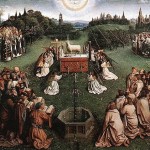
Jan van Eyck – Adoration of the Lamb – U.S. Public Domain

Previous Post
July 13, 2017
Are You Really the Disciple Jesus Loved?
Next Post
July 16, 2017 Who is the Holy Spirit?
Browse Our Archives
Select a Category Book Reviews Featured Give Us This Day Give Us This Day Devotional love me love my wife Love My Wife Reformed Catholicism Blog Spirit-Reality Take This Cup Uncategorized
Select a Month February 2022 November 2021 October 2021 August 2021 January 2021 December 2020 November 2020 September 2020 August 2020 July 2020 June 2020 May 2020 September 2018 July 2018 March 2018 November 2017 October 2017 September 2017 August 2017 July 2017 June 2017 May 2017 April 2017 March 2017 February 2017 January 2017 December 2016 November 2016 October 2016 September 2016 August 2016 July 2016 June 2016 May 2016 April 2016 March 2016 February 2016 January 2016 December 2015 November 2015 October 2015 September 2015 August 2015 July 2015 June 2015 May 2015 April 2015 March 2015 February 2015 January 2015 December 2014 November 2014 October 2014 September 2014 August 2014 July 2014 June 2014 May 2014 April 2014 March 2014 February 2014 January 2014 December 2013 November 2013 October 2013 September 2013 August 2013 July 2013 June 2013 May 2013 April 2013 March 2013 February 2013 January 2013 December 2012 November 2012 October 2012 September 2012 August 2012 July 2012 June 2012 May 2012 April 2012 March 2012 February 2012 January 2012 December 2011 November 2011 October 2011 September 2011 August 2011 July 2011 May 2011 April 2011 March 2011 February 2011 January 2011
Follow Us!
TAKE THE
Religious Wisdom Quiz
Who refused to defile himself with the king's food and wine?
Select your answer to see how you score.
Joel Daniel Ezekiel Obadiah
Related posts from Give Us This Day
Luke 20:27-40 - Every Day is Easter
Monday of Holy Week - John 14:1-14
Mark 12:18-27 - What will the Resurrection be...
Mark 12:13-17 - What is the proper relationship...
TRENDING AT PATHEOS Evangelical

How the author of the world's best hymn...
I've been working with John Newton for a while now. This makes...

Long before this Lectio Divina, Psalm 130 - the song - started...

What About the Trees? Another Living Parable
After I finished writing the last article about falling leaves as a...

Why Classical Education Is a Conversation, Not a...
Come and Read: Joy in Classical Education When I was a little...

Falling Leaves: A Living Parable on Letting Go
I’ve spent the vast majority of my life in the southeast corner...

Cornell University has received a great deal of negative publicity and intense...
view all Evangelical blogs
Ad-Free & Subscriber Log-In Subscription Support
- About Us
- 2026 Calendar
- Videos
- Podcasts
- Library of World Religions
- Faith In Media Tracker
- Advertise With Us
- Write for Us
- Privacy Policy
- Terms of Service
- Do Not Sell My Data
- Contact Us
- Radiant Digital
- Manage Newsletter Subscriptions
- Unsubscribe From Notifications
- Sitemap
Copyright 2008-2026, Patheos. All rights reserved.
Subscription Support Ad-Free & Subscriber Log-In
Follow Patheos