
BuddhistCatholicContemplativeEvangelicalGeneral ChristianHinduJewishLatter-day SaintMuslimNew VisionsProgressive Christian
Beliefs
- Buddhist
- Catholic
- Contemplative
- Evangelical
- General Christian
- Hindu
- Jewish
- Latter-day Saint
- More Voices
- Muslim
- New Visions
- Pagan
- Progressive Christian
Topics
- Religion News
- Food and Religion
- Sports and Religion
- Religious Art
- Religious Music and Entertainment
- Religious Events
- History and Religion
- Style and Religion
- Politics and Religion
- Women in Religion
- Recreation Outdoors and Religion
- Business Finance and Religion
- Careers Workplace and Religion
- Education and Religion
- Family Parenting and Religion
- Health Fitness and Religion
- Home and Religion
- Relationships and Religion
- Technology and Religion
- Travel and Religion
Columnists
- Buddhist Columnists
- Business Finance and Religion Columnists
- Careers Workplace and Religion Columnists
- Catholic Columnists
- Contemplative Columnists
- Education and Religion Columnists
- Evangelists Columnists
- Family Parenting and Religion Columnists
- General Christian Columnists
- Health Fitness and Religion Columnists
- Hindu Columnists
- History and Religion Columnists
- Home and Religion Columnists
- Jewish Columnists
- More Voices Columnists
- Latter Day Columnists
- Muslim Columnists
- New Visions Columnists
- Nonreligious Columnists
- Pagan Columnists
- Politics and Religion Columnists
- Progressive Columnists
- Recreation Outdoors and Religion Columnists
- Relationships and Religion Columnists
- Religion News Columnists
- Religious Art Columnists
- Religious Events Columnists
- Religious Music and Entertainment Columnists
- Sports and Religion Columnists
- Style and Religion Columnists
- Technology and Religion Columnists
- Travel and Religion Columnists
- Women in Religion Columnists
Resource Library
- 2026 Calendar
- Library of World Religions
- The 100 Most Holy Places on Earth
- Patheos Answers
- Podcasts
- Videos
- Faith Leaders Database
- Anglican Episcopalian
- Bahai
- Baptist
- Buddhism
- Christianity
- Confucianism
- Eastern Orthodoxy
- Hinduism
- Holiness and Pentecostal
- ISKCON
- Islam
- Judaism
- Lutheran
- Methodist
- The Church of Jesus Christ of Latter-day Saints
- New Age
- Paganism
- Presbytarian and Reformed
- Protestantism
- Religion Behind the Scenes
- Roman Catholic
- Scientology
- Shia Islam
- Sikhism
- Sufism
- Sunni Islam
- Taoism
- Zen
- See all religions
Research Tools
 Ad-Free & Subscriber Log-In Subscription Support
Ad-Free & Subscriber Log-In Subscription Support
Follow Patheos 

- Trending:
- Forgiveness
- |
- Marriage
- |
- Consciousness
- |
- Death Penalty
- |
- Election
- |
- Halloween
 Give Us This Day
- Home
- Evangelical
- Wednesday of the Third Sunday in Advent – Matthew 28:11-20
Wednesday of the Third Sunday in Advent – Matthew 28:11-20
Last updated on: December 13, 2011 at 6:04 pm by Fr. Charles Erlandson
Wednesday of the Third Sunday in Advent – Matthew 28:11-20 2011-12-13T18:04:18-05:00 Fr. Charles Erlandson
Patheos Explore the world's faith through different perspectives on religion and spirituality! Patheos has the views of the prevalent religions and spiritualities of the world.
 Matthew 28:11-20
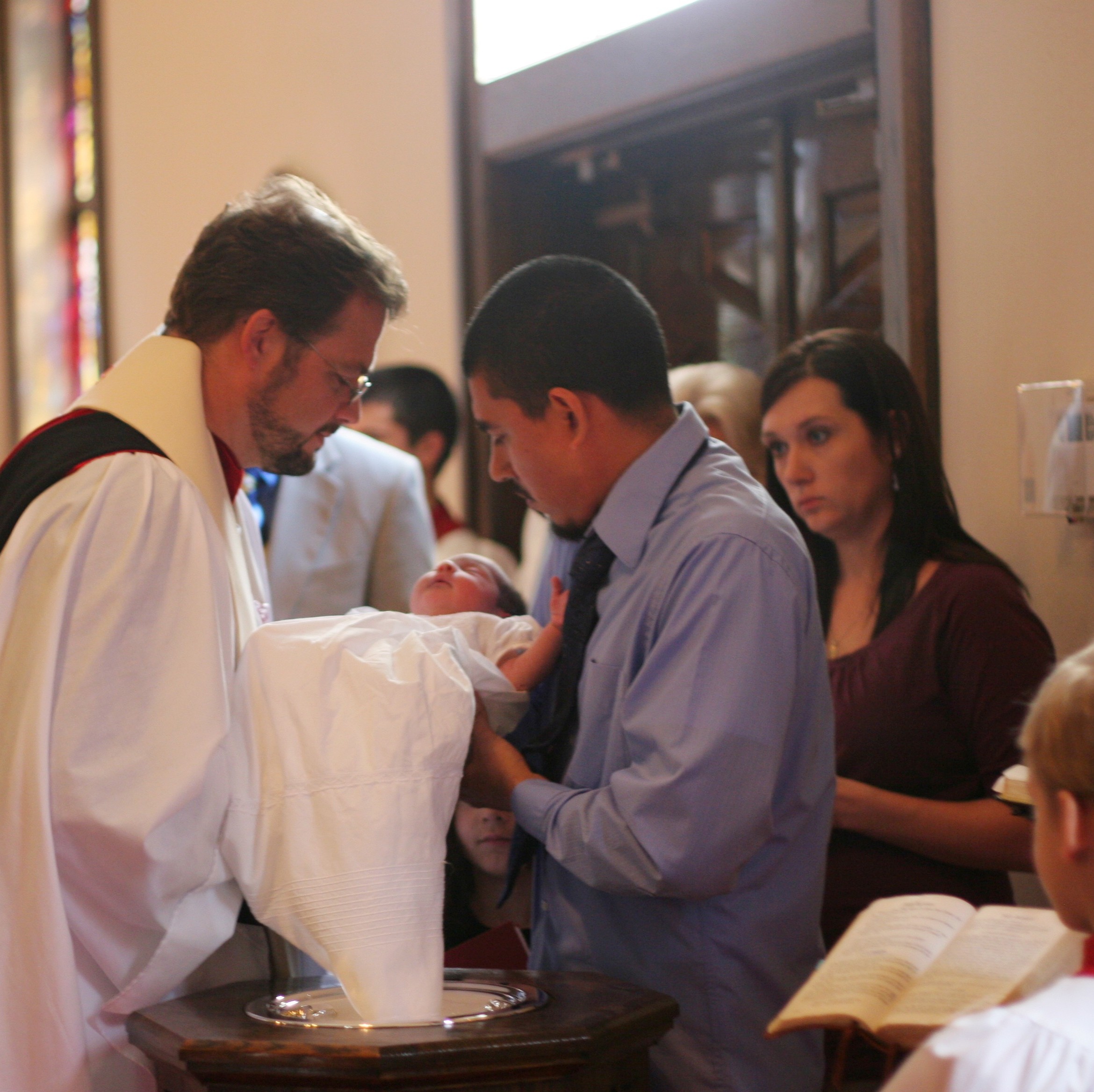
Matthew 28:18-20 has rightly been called the Great Commission, for great it is.
“Go, therefore, and make disciples of all the nations, baptizing them in the name of the Father, and of the Son, and of the Holy Spirit, teaching them to observe all things that I have commanded you; and lo I am with you always even to the end of the age.”
Why is the Great Commission so great? Because in the Great Commission we see how great the salvation and kingdom of our God truly is. In the Great Commission we witness – indeed, are made participants in – God’s redemption of the cosmos. In the Great Commission we see that the New Covenant in which Christ came to birth by His birth and life and death and rebirth which is not only here and now: it is now perpetuated through us as God with man labors to redeem man.
Here is the greatness of the Great Commission: that God, who created man out of the dust of the earth, now takes fallen man, who deserved nothing but to be returned to dust, and makes His home with him.
Here is the greatness of the Great Commission: that God, who created men out of the dust of the earth by breathing His Spirit into them and making them living beings, now takes lifeless, cowardly, doubting, and betraying bodies, breathes His Spirit into them, and makes them a living being called the Church, the Body of Jesus Christ. And it is this mystical Body of Jesus Christ that He will use to disciple the nations, to bring in His Kingdom, and to redeem the cosmos. Surely, He could have chosen to do it without us: but He chose to use us, His betrayers and those who nailed Him to the Cross.
But as great as the Great Commission is, I find that we often minimize it, finding ways, as we do, to escape the greatness of the commission of our Lord. We minimize the Great Commission by reducing it to “evangelism.”
Well, I’ve got news for you: I don’t believe in evangelism.
There, I’ve said it. Bring on the ecclesiastical tribunals, stop reading Daily Bread in protest: but I don’t believe in evangelism.
I don’t believe in evangelism because I believe in discipleship instead. Of course I believe in what we call “evangelism,” but not in the way it is often portrayed. I’m not even sure that “evangelize” is ever used as a verb in the Bible. Yes, there are evangelists, and there is a sacred and essential task of introducing people to Jesus Christ. But I’ve heard many well intentioned Christians and churches proclaim that “evangelism is the number one priority of the Church” or “evangelism is the most important task of the Church.”
Where do we get such an idea from? Where in the Bible are the proof texts for such theology? Often Matthew 28, the Great Commission, is cited, but as we know, the Great Commission is all about discipleship. One of the primary ways in which we minimize the Great Commission, therefore, is by shrinking its scope to the task of “evangelism.” But what Jesus didn’t say in the Great Commission was: “Make a few quick converts and then move on to the next victim.” What He said was: “Go therefore and make disciples of all the nations, baptizing them in the name of the Father, and of the Son, and of the Holy Spirit, teaching them to observe all things that I have commanded you.”
I view evangelism as being an essential and important component of discipleship, which is the larger task to which we are called. We are called to be disciples and to make disciples: that is the primary task of the Church. If I never “lead” someone to Christ but lead a faithful life of being a disciple of Jesus Christ for decades, have I somehow failed in life? Maybe I’ve planted countless seeds or watered or fertilized but have never been lucky enough to be the one who comes just at the right time to observe the first push of the new life through the soil. And maybe I’ve spent my life doing the backbreaking work of discipling those who others have first “led” to Christ.
I find the whole notion of evangelizing and “leading” people to conversion to Christ very vague and unhelpful at times. At what moment does the task of evangelism end? When someone says the Sinner’s Prayer? When they have an emotional experience of God for the first time? At what point do we abandon one who has just been “evangelized” and then go on to evangelize someone else because it’s the most important task, leaving who knows who to the lesser task of discipleship?
As I’ve said, I think it’s more useful to think of evangelism as being only the first phase of the biblical process of discipleship, which is a lifelong endeavor and which is not a solo flight into spirituality.
Another reason the Great Commission is so great is because it is the fulfillment of the first commandment God gave man. What was that first commandment? Even before the commandment not to eat of the Tree of the Knowledge of Good and Evil (it would be hard to build a life around not doing something!), God commanded Adam to be fruitful and multiply. So important is this sacred task that when God saved mankind through the ark of salvation, He repeated it to Noah twice.
But simply having children isn’t enough any longer. Now that our children are all born in sin, it is not enough to populate the earth with Adolf Hitlers and Saddam Husseins or even Mother Theresas without the grace of discipleship in her life. To be fruitful and multiply now requires that we have children and disciple them. This is why the task of bearing children and keeping them in the covenant is so crucial and always has been. It’s why every threat to the family as God ordained it, such as homosexuality or divorce or unwed mothers, is so destructive to human life and well-being.
I’ve come across some eye-opening research that suggests the importance of bearing children and keeping them in the faith. There are 6 billion people in the world, about 2 billion of whom are Christian. How many new Christians do you think are made each year? Go ahead – guess.
The truth is that there are about twenty-three million new Christians every year (based on an average of the years 1990-2000.) Now: how many of those 23 million new Christians made each year came from conversion from some other religion or no religion at all? The answer is about 1.8 million, which means that 21.3 million are born into Christian families. In other words, about 12 times as many Christians are made each year by Christians having children as are made by all of the churches’ and Christians’ efforts to “evangelize.”
Now the really interesting part of discipleship is that sociologists of religion have shown that the primary way that people become Christians is based on the density of the social networks they have. In other words, if someone is an atheist at a university, and all of his friends and colleagues are committed atheists, we should pity the poor Christian student who thought it was his duty to “convert” the professor. I’m not at all saying that we shouldn’t do such bold things: God performs miracles. But I am saying that it would be a miracle because it is not the normal way that God works.
Now where is it that we have the greatest density of social networks? It would have to be a social situation where you had the most time possible for the disciple of Jesus Christ to disciple someone. It would have to be the social situation where the discipler is as highly motivated to persevere in the laborious, often dull, exhausting work of making a disciple of Jesus Christ. And it would have to be the social situation where the person to be discipled is at the most impressionable time in his life.
Now let me see . . . where in the world could we ever find a social situation that meets all these criteria? In the Christian family! It’s no surprise, then, that God’s primary means of fulfilling the Great Commission has always been through the covenant He establishes with families. If you don’t believe me, then go back and read the whole Old Testament.
I’m working even now on an idea for a book based on this concept, which I call The Great Commission Family. If you want to find a way to enter fully into the glory of the New Covenant; if you want to be an active part of the Great Commission: then I submit that you should look no further than doing everything you can to have children and disciple them. If your circumstances do not permit this for whatever reason, then find any of the multiple ways you can assist and support Christian families in this sacred, most-important task of discipleship. There are many Christian families failing at this task, and they need your help.
But lest we’re tempted to think it’s all about the family, Jesus puts the task of discipleship squarely in the context of the Church. It is the Church as a whole to whom Christ promised His presence and Spirit. The task of discipleship is given to the entire Church, and only a church has all of the gifts and talents necessary to equip us for this work.
Hillary Clinton was wrong. It doesn’t take a village: it takes the Church.
Resolution: I resolve to meditate further on the meaning of the Great Commission and take some time today to see if I have been considering it the wrong way.
Prayer: Oh my lord, I know that you are always with me. Help me to obey your commandments, and lead me to share my faith with others, so that they may know you and love you. Amen.
Points for Meditation:
1. What opportunities do you have every day to share Jesus Christ with people? This sharing of Christ may take many forms.
2. If you spend time with children, meditate on how your interaction with them may more profitably be seen as a means of fulfilling the Great Commission.
© 2011 Fr. Charles Erlandson
Previous Post

December 12, 2011
Tuesday of the Third Sunday in Advent - Revelation 19
Next Post
December 14, 2011 Thursday of the Third Sunday in Advent - Revelation 20:1-6
Browse Our Archives
Select a Category Book Reviews Featured Give Us This Day Give Us This Day Devotional love me love my wife Love My Wife Reformed Catholicism Blog Spirit-Reality Take This Cup Uncategorized
Select a Month February 2022 November 2021 October 2021 August 2021 January 2021 December 2020 November 2020 September 2020 August 2020 July 2020 June 2020 May 2020 September 2018 July 2018 March 2018 November 2017 October 2017 September 2017 August 2017 July 2017 June 2017 May 2017 April 2017 March 2017 February 2017 January 2017 December 2016 November 2016 October 2016 September 2016 August 2016 July 2016 June 2016 May 2016 April 2016 March 2016 February 2016 January 2016 December 2015 November 2015 October 2015 September 2015 August 2015 July 2015 June 2015 May 2015 April 2015 March 2015 February 2015 January 2015 December 2014 November 2014 October 2014 September 2014 August 2014 July 2014 June 2014 May 2014 April 2014 March 2014 February 2014 January 2014 December 2013 November 2013 October 2013 September 2013 August 2013 July 2013 June 2013 May 2013 April 2013 March 2013 February 2013 January 2013 December 2012 November 2012 October 2012 September 2012 August 2012 July 2012 June 2012 May 2012 April 2012 March 2012 February 2012 January 2012 December 2011 November 2011 October 2011 September 2011 August 2011 July 2011 May 2011 April 2011 March 2011 February 2011 January 2011
Follow Us!
TAKE THE
Religious Wisdom Quiz
How long was Israel in Egyptian bondage?
Select your answer to see how you score.
400 years 500 years 300 years 200 years
Related posts from Give Us This Day

John 1:19-34 - John the Baptist

Luke 19:11-28 - The King and His Treasure
Luke 14:25-35 - The Price of Admission to...
TRENDING AT PATHEOS Evangelical

How the author of the world's best hymn...
I've been working with John Newton for a while now. This makes...

Long before this Lectio Divina, Psalm 130 - the song - started...

What About the Trees? Another Living Parable
After I finished writing the last article about falling leaves as a...

Why Classical Education Is a Conversation, Not a...
Come and Read: Joy in Classical Education When I was a little...

Falling Leaves: A Living Parable on Letting Go
I’ve spent the vast majority of my life in the southeast corner...

Cornell University has received a great deal of negative publicity and intense...
view all Evangelical blogs
Ad-Free & Subscriber Log-In Subscription Support
- About Us
- 2026 Calendar
- Videos
- Podcasts
- Library of World Religions
- Faith In Media Tracker
- Advertise With Us
- Write for Us
- Privacy Policy
- Terms of Service
- Do Not Sell My Data
- Contact Us
- Radiant Digital
- Manage Newsletter Subscriptions
- Unsubscribe From Notifications
- Sitemap
Copyright 2008-2026, Patheos. All rights reserved.
Subscription Support Ad-Free & Subscriber Log-In
Follow Patheos