
BuddhistCatholicContemplativeEvangelicalGeneral ChristianHinduJewishLatter-day SaintMuslimNew VisionsProgressive Christian
Beliefs
- Buddhist
- Catholic
- Contemplative
- Evangelical
- General Christian
- Hindu
- Jewish
- Latter-day Saint
- More Voices
- Muslim
- New Visions
- Pagan
- Progressive Christian
Topics
- Religion News
- Food and Religion
- Sports and Religion
- Religious Art
- Religious Music and Entertainment
- Religious Events
- History and Religion
- Style and Religion
- Politics and Religion
- Women in Religion
- Recreation Outdoors and Religion
- Business Finance and Religion
- Careers Workplace and Religion
- Education and Religion
- Family Parenting and Religion
- Health Fitness and Religion
- Home and Religion
- Relationships and Religion
- Technology and Religion
- Travel and Religion
Columnists
- Buddhist Columnists
- Business Finance and Religion Columnists
- Careers Workplace and Religion Columnists
- Catholic Columnists
- Contemplative Columnists
- Education and Religion Columnists
- Evangelists Columnists
- Family Parenting and Religion Columnists
- General Christian Columnists
- Health Fitness and Religion Columnists
- Hindu Columnists
- History and Religion Columnists
- Home and Religion Columnists
- Jewish Columnists
- More Voices Columnists
- Latter Day Columnists
- Muslim Columnists
- New Visions Columnists
- Nonreligious Columnists
- Pagan Columnists
- Politics and Religion Columnists
- Progressive Columnists
- Recreation Outdoors and Religion Columnists
- Relationships and Religion Columnists
- Religion News Columnists
- Religious Art Columnists
- Religious Events Columnists
- Religious Music and Entertainment Columnists
- Sports and Religion Columnists
- Style and Religion Columnists
- Technology and Religion Columnists
- Travel and Religion Columnists
- Women in Religion Columnists
Resource Library
- 2026 Calendar
- Library of World Religions
- The 100 Most Holy Places on Earth
- Patheos Answers
- Podcasts
- Videos
- Faith Leaders Database
- Anglican Episcopalian
- Bahai
- Baptist
- Buddhism
- Christianity
- Confucianism
- Eastern Orthodoxy
- Hinduism
- Holiness and Pentecostal
- ISKCON
- Islam
- Judaism
- Lutheran
- Methodist
- The Church of Jesus Christ of Latter-day Saints
- New Age
- Paganism
- Presbytarian and Reformed
- Protestantism
- Religion Behind the Scenes
- Roman Catholic
- Scientology
- Shia Islam
- Sikhism
- Sufism
- Sunni Islam
- Taoism
- Zen
- See all religions
Research Tools
 Ad-Free & Subscriber Log-In Subscription Support
Ad-Free & Subscriber Log-In Subscription Support
Follow Patheos 

- Trending:
- Forgiveness
- |
- Marriage
- |
- Consciousness
- |
- Death Penalty
- |
- Election
- |
- Halloween
 Give Us This Day
- Home
- Evangelical
- The Mysterious Melchidezek
The Mysterious Melchidezek
Last updated on: May 1, 2018 at 1:15 pm by Fr. Charles Erlandson
The Mysterious Melchidezek 2018-05-01T13:15:47-05:00 Fr. Charles Erlandson
Patheos Explore the world's faith through different perspectives on religion and spirituality! Patheos has the views of the prevalent religions and spiritualities of the world.
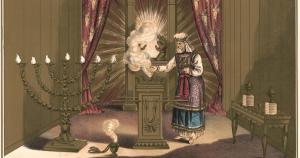 The Mysterious Melchidezek – Hebrews 7:1-11
Quick – who was the person in the Old Testament who was the closest to God?
That was a question a Sunday school teacher of mine once asked. Some said Moses and some said David (I think some said Abraham – I’m not sure.) Wanting to be different and not give the same answer as everyone else, I said “Adam,” knowing I was sure to draw some puzzled stares. “Before he sinned,” I clarified.
I remember asking my Dad during church that day how he would have answered that same question. I distinctly remember his answer: “Melchizedek.”
“Mel who?” I said, laughing aloud in unbelief. What a ridiculous name!
But sure enough, when he directed me to Hebrews Chapter 7, there was Melchizedek. And he was, indeed, very close to God.
Who is this mysterious man Melchizedek? I won’t repeat all of the details about Melchizedek that the writer of Hebrews gives. I’m asking the question about who was he? Christian theologians have written about him a lot over the centuries, and there are some fascinating arguments made for just who he is. My favorite possibility is that Melchizedek is Noah’s son, Shem, the one who is especially blessed and the one from whom the Semites or Shemites, including Abraham, are descended. If Melchizedek were Shem, he would have been in his 500s when he met Abraham, and shortly after Melchizedek meets Abraham, God makes his covenant with Abraham in Genesis 15. Shem was 98 at the time of the flood and lived until he was 600, and his life would have overlapped with Abraham’s for 150 years. If Melchizedek were Shem, and Abraham knew this, consider how much greater he might have considered Shem to be, who personally went all the way back to the covenant God made with Noah and who would have been the only men alive (perhaps excepting Ham and Japheth) who had actually lived in antediluvian times. Knowing the respect that the patriarch of a family was given, we can only imagine the respect Abraham would have given his great-great-great-great-great-great-great grandfather!
Another theory states that Melchizedek was a manifestation of the pre-incarnate Christ. Melchizedek is not only the priest of God Most High but also the king of Salem or of Jerusalem, that is the king of peace or Prince of Peace. And, of course, Christ was both priest and king. Melchizedek was without father or mother and without genealogy. He was made like the Son of God, and he remains a priest forever. How wonderful to think that Abraham might have seen Jesus Christ Himself!
This is so much fun that I wish I had time to go into more detail. But “of these things we cannot now speak in detail.” Unfortunately, I don’t ultimately buy into either of the fascinating theories I just elaborated. If Melchizedek were Shem, why wouldn’t he simply be called “Shem,” just 3 short chapters after the genealogy of Shem in Genesis 11? The fact is that we do know Shem’s genealogy in great detail. According to Philip Edgecombe Hughes’s classic commentary on Hebrews, the interpretation that Melchizedek was Shem was introduced by rabbinical scholars at the end of the 1st century A.D. as a way to counteract the high view of Christ of the writer of Hebrews.
As far as the theory that Melchizedek was a pre-incarnate Jesus Christ, I’d like to believe that too, but ultimately I don’t. The fact is that Melchizedek is like the Son of God. This way of speaking about Christ, if Melchizedek were Christ, would, however, undermine the higher view of Christ of the writer of Hebrews, and our faith in Him as the Son of God, and not merely one like Him. Jesus Christ, who is a man, did have a genealogy and mother and father: in fact, He has the most celebrated genealogy and mother in all of history! The writer of Hebrews keeps calling him a man, and so even if it could be Christ, it would be the human side of Christ, complete with beginning, parents, and genealogy. As speculative as the early church fathers sometimes were, most of them agreed that Melchizedek was a man, and not Christ.
What has happened is that we have forgotten how to interpret the Bible typologically, that is, in terms of types. Clearly, the writer of Hebrews is using a kind of interpretation well known by the ancient world, the ancient church, and the church up until the time of the Reformation. In typology, a person or thing is a type or prototype for the antitype or true thing that is to come. In this way, the entire Old Testament, with its covenant, law, priests, temple, and sacrifices, are all types of Christ. The writer of Hebrews is using Melchizedek as only a part of his larger typological interpretation that Jesus Christ is superior to angels, Aaron, and the Old Covenant.
Oh dear! I’ve spent my whole time talking about speculations about who Melchizedek might be, and very little time in talking about who Jesus Christ is. I’ve taken my eyes off of Jesus, who is the real point of Chapter 7 (and not Melchizedek) and who is my High Priest. When reading the fascinating parts of the Bible, or any part of the Bible, the goal is not to get hung up on endless speculations or to go off on tangents. These have their place in Bible study, but Bible study is not necessarily a form of worship and devotion. Too often, we allow our Bible “study” to turn into games of Trivial Pursuit or intellectual or imaginative exercises – and we miss Jesus Christ.
If we come to this fascinating passage in Hebrews 7, and leave it without having encountered Jesus Christ but only His type, Melchizedek, then we have missed the point entirely. As great as Melchizedek was, typologically, the point is that it is Jesus Christ who is the King of Righteousness and the Prince of Peace. It is Jesus Christ who is our High Priest who intercedes for us and who remains a Priest forever who has sacrificed for us. It is Jesus Christ who was begotten and not made, and it is Jesus Christ to whom Abraham and Aaron, and Melchizedek and all of us, must bow our knees in worship.
Prayer: O Lord, forgive me for the times when, even in hearing your Word, I have been distracted from seeing You. Open my eyes that I may see wonderful things in Your Word, the most wonderful of which is You Yourself. Give Yourself to me today that I might truly see You for Who You Are, and, having seen, to worship You as I ought. Amen.
Point for Meditation:
- Meditate on the superiority of Jesus Christ to the temple, priest, and sacrifices of the Old Covenant. Respond appropriately with praise and thanksgiving.
- Meditate on the superiority of Jesus Christ to every other aspect of your life.
Resolution: I resolve to meditate on Jesus Christ as revealed in Hebrews 7 and to find one way to appropriately respond to who He is and His Presence in my life today.
High Priest in the Holy of Holies – U.S. Public Domain

Previous Post

April 20, 2015
Are You Tethered to an Anchor?
Next Post
April 22, 2015 The Highness of Our High Priest
Browse Our Archives
Select a Category Book Reviews Featured Give Us This Day Give Us This Day Devotional love me love my wife Love My Wife Reformed Catholicism Blog Spirit-Reality Take This Cup Uncategorized
Select a Month February 2022 November 2021 October 2021 August 2021 January 2021 December 2020 November 2020 September 2020 August 2020 July 2020 June 2020 May 2020 September 2018 July 2018 March 2018 November 2017 October 2017 September 2017 August 2017 July 2017 June 2017 May 2017 April 2017 March 2017 February 2017 January 2017 December 2016 November 2016 October 2016 September 2016 August 2016 July 2016 June 2016 May 2016 April 2016 March 2016 February 2016 January 2016 December 2015 November 2015 October 2015 September 2015 August 2015 July 2015 June 2015 May 2015 April 2015 March 2015 February 2015 January 2015 December 2014 November 2014 October 2014 September 2014 August 2014 July 2014 June 2014 May 2014 April 2014 March 2014 February 2014 January 2014 December 2013 November 2013 October 2013 September 2013 August 2013 July 2013 June 2013 May 2013 April 2013 March 2013 February 2013 January 2013 December 2012 November 2012 October 2012 September 2012 August 2012 July 2012 June 2012 May 2012 April 2012 March 2012 February 2012 January 2012 December 2011 November 2011 October 2011 September 2011 August 2011 July 2011 May 2011 April 2011 March 2011 February 2011 January 2011
Follow Us!
TAKE THE
Religious Wisdom Quiz
Who said: "The reason the Son of God appeared was to destroy the devil's work"?
Select your answer to see how you score.
Jesus Peter John Paul
Related posts from Give Us This Day

Tuesday of Trinity 15 - Matthew 7:13-29

Monday of Trinity 15 - Matthew 7:1-14

Saturday of Trinity 14 - Matthew 6:19-34

Friday of Trinity 14 - Matthew 6:1-18
TRENDING AT PATHEOS Evangelical

The REST of Your Life: A Creative Wrestles...
This week I had a conversation with a good friend from church....

How the author of the world's best hymn...
I've been working with John Newton for a while now. This makes...

Long before this Lectio Divina, Psalm 130 - the song - started...

What About the Trees? Another Living Parable
After I finished writing the last article about falling leaves as a...

Why Classical Education Is a Conversation, Not a...
Come and Read: Joy in Classical Education When I was a little...

Cornell University has received a great deal of negative publicity and intense...
view all Evangelical blogs
Ad-Free & Subscriber Log-In Subscription Support
- About Us
- 2026 Calendar
- Videos
- Podcasts
- Library of World Religions
- Faith In Media Tracker
- Advertise With Us
- Write for Us
- Privacy Policy
- Terms of Service
- Do Not Sell My Data
- Contact Us
- Radiant Digital
- Manage Newsletter Subscriptions
- Unsubscribe From Notifications
- Sitemap
Copyright 2008-2026, Patheos. All rights reserved.
Subscription Support Ad-Free & Subscriber Log-In
Follow Patheos