
BuddhistCatholicContemplativeEvangelicalGeneral ChristianHinduJewishLatter-day SaintMuslimNew VisionsProgressive Christian
Beliefs
- Buddhist
- Catholic
- Contemplative
- Evangelical
- General Christian
- Hindu
- Jewish
- Latter-day Saint
- More Voices
- Muslim
- New Visions
- Pagan
- Progressive Christian
Topics
- Religion News
- Food and Religion
- Sports and Religion
- Religious Art
- Religious Music and Entertainment
- Religious Events
- History and Religion
- Style and Religion
- Politics and Religion
- Women in Religion
- Recreation Outdoors and Religion
- Business Finance and Religion
- Careers Workplace and Religion
- Education and Religion
- Family Parenting and Religion
- Health Fitness and Religion
- Home and Religion
- Relationships and Religion
- Technology and Religion
- Travel and Religion
Columnists
- Buddhist Columnists
- Business Finance and Religion Columnists
- Careers Workplace and Religion Columnists
- Catholic Columnists
- Contemplative Columnists
- Education and Religion Columnists
- Evangelists Columnists
- Family Parenting and Religion Columnists
- General Christian Columnists
- Health Fitness and Religion Columnists
- Hindu Columnists
- History and Religion Columnists
- Home and Religion Columnists
- Jewish Columnists
- More Voices Columnists
- Latter Day Columnists
- Muslim Columnists
- New Visions Columnists
- Nonreligious Columnists
- Pagan Columnists
- Politics and Religion Columnists
- Progressive Columnists
- Recreation Outdoors and Religion Columnists
- Relationships and Religion Columnists
- Religion News Columnists
- Religious Art Columnists
- Religious Events Columnists
- Religious Music and Entertainment Columnists
- Sports and Religion Columnists
- Style and Religion Columnists
- Technology and Religion Columnists
- Travel and Religion Columnists
- Women in Religion Columnists
Resource Library
- 2026 Calendar
- Library of World Religions
- The 100 Most Holy Places on Earth
- Patheos Answers
- Podcasts
- Videos
- Faith Leaders Database
- Anglican Episcopalian
- Bahai
- Baptist
- Buddhism
- Christianity
- Confucianism
- Eastern Orthodoxy
- Hinduism
- Holiness and Pentecostal
- ISKCON
- Islam
- Judaism
- Lutheran
- Methodist
- The Church of Jesus Christ of Latter-day Saints
- New Age
- Paganism
- Presbytarian and Reformed
- Protestantism
- Religion Behind the Scenes
- Roman Catholic
- Scientology
- Shia Islam
- Sikhism
- Sufism
- Sunni Islam
- Taoism
- Zen
- See all religions
Research Tools
 Ad-Free & Subscriber Log-In Subscription Support
Ad-Free & Subscriber Log-In Subscription Support
Follow Patheos 

- Trending:
- Forgiveness
- |
- Marriage
- |
- Consciousness
- |
- Death Penalty
- |
- Election
- |
- Halloween
 Give Us This Day
- Home
- Evangelical
- Tuesday of the 3rd Sunday after Easter – Hebrews 10:1-14
Tuesday of the 3rd Sunday after Easter – Hebrews 10:1-14
Last updated on: April 27, 2015 at 5:19 pm by Fr. Charles Erlandson
Tuesday of the 3rd Sunday after Easter – Hebrews 10:1-14 2015-04-27T17:19:14-05:00 Fr. Charles Erlandson
Patheos Explore the world's faith through different perspectives on religion and spirituality! Patheos has the views of the prevalent religions and spiritualities of the world.
 Hebrews 10:1-14
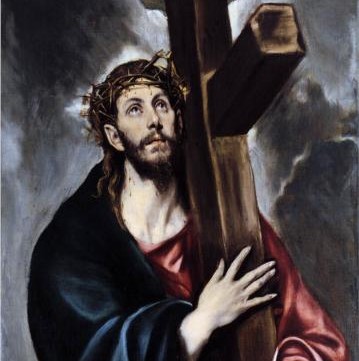
“Behold, I have come to do Your will, O God” (verse 7, quoting Psalm 40.)
“By that will we have been sanctified through the offering of the body of Jesus Christ once for all” (verse 10.)
Did you know that you were saved by obedience, by good works?
NO, not your own, but those of Jesus Christ. It is by the will of the Father that you are saved. But what if the Father had willed to save you, ordained that it would happen through His Son, and the Son had refused to obey? Such a thing is unimaginable, because the Son is God and because we know Him to be so perfect and holy.
But what if the Son had not obeyed?
We would all still be dead in our sins.
There is a lesson about humility and obedience from the life of Christ, but too many take His humility and obedience and use it as an opportunity for their own pride and disobedience.
First of all, even the Son, the eternal Son, does the will of the Father. It was the Father’s will that the Son be sent into the world to save the world and to be born a human to save humans. Even before He took on humanity, therefore, the Son submitted to the Father. In theological terms, we call this the economical Trinity. Though ontologically the Father, the Son, and the Holy Spirit are all equally God and have equal glory, the Son is subordinate to the will of the Father, and the Spirit to the Father and the Son.
And there is a lesson here about humility, submission, and obedience. Even before He became man, the Son knew about subordination.
But then the Father asked the Son to become a human being so that the will of the Father to save humanity might be fulfilled.
And what was the Son’s answer?
“Not now, Dad, I’m a little busy. I’m in the middle of this planet creating project, and I don’t want to be interrupted.”
“Aw, Dad, do I have to? Can’t you send somebody else?”
“Alright, Dad, just a minute” (and then He goes on doing what He was doing and never gets around to taking on human flesh).
It sounds ridiculous when we imagine the Son of God giving such proud and impertinent answers to the Father.
But the truly ridiculous thing is that these are the very excuses (and worse!) that we give for not obeying the will of the Father. Now a case might be made that the Son would have a right to reason with the Father, even though it’s an impossibility that God would be divided against Himself. But where do we get off saying “NO!” to God? And yet we do it all the time.
It is not just through the will of the Father (verse 10) that we have been sanctified but also through the will of the Son. And what was the will of the Son? To do the will of the Father. “I have come down from heaven, not to do My own will, but the will of Him who sent me” (John 6:38). “My food is to do the will of Him who sent Me, and to finish His work” (John 4:34). Jesus’ daily bread, which He ate in the wilderness even when there was no other food, was to do the will of the Father.
In obeying, as the Son obeyed, we are fed by the Son, who is our Daily Bread, the Bread of Heaven, the manna by which God nourishes us. And when we disobey, we become famished and weak, and we wonder why.
“Why doesn’t God help me?” we cry out, conveniently forgetting that we have been refusing to do eat our daily bread and do His holy will.
By His obedience, by the voluntary will of Jesus Christ to perfectly obey the will of the Father, you are saved. In obedience to the will of the Father, the Son became man. In obedience to the will of the Father, the Son was tempted, suffered, and died. We all remember the anguish with which Jesus obeyed the will of the Father in the Garden of Gethsemane, choosing to obey and suffer, rather than to disobey and not suffer.
By this active obedience of Jesus Christ you are saved. There’s a story told about J. Gresham Machen, a staunchly orthodox Presbyterian minister who fought valiantly and intelligently against the liberal opponents of his day in the 1920s. Just before he died, Machen dictated a telegram to John Murray, who was a professor of systematic theology at Westminster Seminary. Machen’s last words in this life were, “I’m so thankful for the active obedience of Christ. No hope without it.”
You are saved by Christ’s active obedience. But the active obedience of Jesus Christ requires active obedience on our part as well. You can’t really participate in the Christ, who lived, obeyed, died, rose again, and sits at right hand interceding – for you – unless you actively obey as well. The alternative would be to say that it was fine for the Son of God (who was perfect) to obey, but that we who are imperfect and sinners and in danger of Hell do not need to obey.
Excuse me? Didn’t Christ come so that you could obey? You’ll have to forgive me for another tirade against those who say they are Christians and also say that they don’t have to obey God. He doesn’t really care if I’m fornicating by living with someone outside of marriage. He doesn’t really care if I get drunk or get high (which is just another form of drunkenness). It doesn’t matter how much I sin because Jesus already paid for all my sins.
Jesus Christ became obedient – to the point of death, even the death on a cross – so that you, too, could obey and receive God’s blessing.
You know that there are things in your life that God, without a doubt, is commanding you to do. You might sublimate them, and you might be able to distract yourself from them by the busi-ness of the world. But at night, when the world is quiet, you know that they’re there.
What are those things that God has been commanding you to do that you have not been doing? Today is a good time to remind yourself of the things God has been telling you to do. Remember the ways He has been speaking to you: through His Word, through prayer, through other Christians, through the sermon.
Now, write down the things you know He’s been telling you, and put a date on it for future reference.
Finally, remember the obedience of Jesus Christ to the Father, which has brought you salvation.
Then decide today what you will do about it.
Prayer: I thank You, Father, for your Son Jesus Christ; for the truth of his Word and the example of His life; for His steadfast obedience, by which He overcame temptation; for His dying, through which He overcame death; for His rising to life again, by which we are raised to the life of your kingdom; and for His sitting at Your right hand from where He intercedes and ministers on our behalf. Amen.
Point for Meditation: Go back and re-read the last 5 paragraphs of today’s Give Us This Day and take time to meditate on what God is asking you to do. Spend time, if necessary, praying that God will remove all obstacles, especially your stubborn heart.
Resolution: I resolve to write down the things I know God has been telling me to do and to resolve to take one specific action on one of them today. © 2015 Fr. Charles Erlandson
Give Us This Day daily devotional
Previous Post

April 26, 2015
The Sacrifice in Heaven
Next Post
April 28, 2015 Wednesday of the 3rd Sunday after Easter - Hebrews 10:15-25
Browse Our Archives
Select a Category Book Reviews Featured Give Us This Day Give Us This Day Devotional love me love my wife Love My Wife Reformed Catholicism Blog Spirit-Reality Take This Cup Uncategorized
Select a Month February 2022 November 2021 October 2021 August 2021 January 2021 December 2020 November 2020 September 2020 August 2020 July 2020 June 2020 May 2020 September 2018 July 2018 March 2018 November 2017 October 2017 September 2017 August 2017 July 2017 June 2017 May 2017 April 2017 March 2017 February 2017 January 2017 December 2016 November 2016 October 2016 September 2016 August 2016 July 2016 June 2016 May 2016 April 2016 March 2016 February 2016 January 2016 December 2015 November 2015 October 2015 September 2015 August 2015 July 2015 June 2015 May 2015 April 2015 March 2015 February 2015 January 2015 December 2014 November 2014 October 2014 September 2014 August 2014 July 2014 June 2014 May 2014 April 2014 March 2014 February 2014 January 2014 December 2013 November 2013 October 2013 September 2013 August 2013 July 2013 June 2013 May 2013 April 2013 March 2013 February 2013 January 2013 December 2012 November 2012 October 2012 September 2012 August 2012 July 2012 June 2012 May 2012 April 2012 March 2012 February 2012 January 2012 December 2011 November 2011 October 2011 September 2011 August 2011 July 2011 May 2011 April 2011 March 2011 February 2011 January 2011
Follow Us!
TAKE THE
Religious Wisdom Quiz
True or False: Mordecai refused to bow down to Haman.
Select your answer to see how you score.
TRUE FALSE
Related posts from Give Us This Day

James Clark - Book Review of Take This...
Jesus Took on All Human Suffering - Part...

The Different States of Love - and the...

TRENDING AT PATHEOS Evangelical

How the author of the world's best hymn...
I've been working with John Newton for a while now. This makes...

Long before this Lectio Divina, Psalm 130 - the song - started...

What About the Trees? Another Living Parable
After I finished writing the last article about falling leaves as a...

Why Classical Education Is a Conversation, Not a...
Come and Read: Joy in Classical Education When I was a little...

Falling Leaves: A Living Parable on Letting Go
I’ve spent the vast majority of my life in the southeast corner...

Cornell University has received a great deal of negative publicity and intense...
view all Evangelical blogs
Ad-Free & Subscriber Log-In Subscription Support
- About Us
- 2026 Calendar
- Videos
- Podcasts
- Library of World Religions
- Faith In Media Tracker
- Advertise With Us
- Write for Us
- Privacy Policy
- Terms of Service
- Do Not Sell My Data
- Contact Us
- Radiant Digital
- Manage Newsletter Subscriptions
- Unsubscribe From Notifications
- Sitemap
Copyright 2008-2026, Patheos. All rights reserved.
Subscription Support Ad-Free & Subscriber Log-In
Follow Patheos