
BuddhistCatholicContemplativeEvangelicalGeneral ChristianHinduJewishLatter-day SaintMuslimNew VisionsProgressive Christian
Beliefs
- Buddhist
- Catholic
- Contemplative
- Evangelical
- General Christian
- Hindu
- Jewish
- Latter-day Saint
- More Voices
- Muslim
- New Visions
- Pagan
- Progressive Christian
Topics
- Religion News
- Food and Religion
- Sports and Religion
- Religious Art
- Religious Music and Entertainment
- Religious Events
- History and Religion
- Style and Religion
- Politics and Religion
- Women in Religion
- Recreation Outdoors and Religion
- Business Finance and Religion
- Careers Workplace and Religion
- Education and Religion
- Family Parenting and Religion
- Health Fitness and Religion
- Home and Religion
- Relationships and Religion
- Technology and Religion
- Travel and Religion
Columnists
- Buddhist Columnists
- Business Finance and Religion Columnists
- Careers Workplace and Religion Columnists
- Catholic Columnists
- Contemplative Columnists
- Education and Religion Columnists
- Evangelists Columnists
- Family Parenting and Religion Columnists
- General Christian Columnists
- Health Fitness and Religion Columnists
- Hindu Columnists
- History and Religion Columnists
- Home and Religion Columnists
- Jewish Columnists
- More Voices Columnists
- Latter Day Columnists
- Muslim Columnists
- New Visions Columnists
- Nonreligious Columnists
- Pagan Columnists
- Politics and Religion Columnists
- Progressive Columnists
- Recreation Outdoors and Religion Columnists
- Relationships and Religion Columnists
- Religion News Columnists
- Religious Art Columnists
- Religious Events Columnists
- Religious Music and Entertainment Columnists
- Sports and Religion Columnists
- Style and Religion Columnists
- Technology and Religion Columnists
- Travel and Religion Columnists
- Women in Religion Columnists
Resource Library
- 2026 Calendar
- Library of World Religions
- The 100 Most Holy Places on Earth
- Patheos Answers
- Podcasts
- Videos
- Faith Leaders Database
- Anglican Episcopalian
- Bahai
- Baptist
- Buddhism
- Christianity
- Confucianism
- Eastern Orthodoxy
- Hinduism
- Holiness and Pentecostal
- ISKCON
- Islam
- Judaism
- Lutheran
- Methodist
- The Church of Jesus Christ of Latter-day Saints
- New Age
- Paganism
- Presbytarian and Reformed
- Protestantism
- Religion Behind the Scenes
- Roman Catholic
- Scientology
- Shia Islam
- Sikhism
- Sufism
- Sunni Islam
- Taoism
- Zen
- See all religions
Research Tools
 Ad-Free & Subscriber Log-In Subscription Support
Ad-Free & Subscriber Log-In Subscription Support
Follow Patheos 

- Trending:
- Forgiveness
- |
- Marriage
- |
- Consciousness
- |
- Death Penalty
- |
- Election
- |
- Halloween
 Give Us This Day
- Home
- Evangelical
- The Son of Encouragement
The Son of Encouragement
Last updated on: September 4, 2017 at 3:52 pm by Fr. Charles Erlandson
The Son of Encouragement 2017-09-04T15:52:48-05:00 Fr. Charles Erlandson
Patheos Explore the world's faith through different perspectives on religion and spirituality! Patheos has the views of the prevalent religions and spiritualities of the world.
 Acts 11:19-30
Although Luke does not devote extended passages to him, as he does to both Peter and Paul, Barnabas figures prominently in the Acts of the Apostles. In fact, aside from Peter or Paul, there is more about Barnabas than anyone else. Stephen gets a long chapter and part of another chapter, and Philip gets most of a chapter about him. But Barnabas is mentioned in Acts 4, 9, 11, 12, 13, 14, and 15. He was the key person in bringing Paul to the church, as well as Paul’s first missionary companion.
The early church believed that Barnabas wrote the book of Hebrews. He was educated and was a Levite – someone who would know about the intricacies of the Old Covenant so thoroughly discussed in Hebrews. Hebrews 13:22 may include a cryptic reference to Barnabas, the “son of encouragement,” where it reads, “And I appeal to you, brethren, bear with the word of exhortation (encouragement).”
What is it that made Barnabas so special in the life of the early church? Actually, he had many wonderful virtues, but the one that his name bears is that of encouragement. His given name was Joses, and so he was privileged to have the name of one of the brothers of Jesus Himself. But the apostles named him “Barnabas,” that is, “son of encouragement.” What a wonderful name! Wouldn’t you like to be known as the son or daughter of encouragement?
The first word to describe Barnabas might be “generous,” for the first thing we find him doing is selling some of his land and laying the money at the feet of the apostles (Acts 4:36). The second word to describe him might be “courageous,” for it was Barnabas who dared to bring Saul to the disciples and make him a part of the church (Acts 9:27). Without Barnabas, how much longer would it have taken for Saul to do the work the Lord had called him to?
In this same passage, we might also begin to apply the name “son of encouragement” to him because of the tremendous encouragement he must have been to Saul. And so the one who was full of the Holy Spirit, the Encourager, is en-couraged to be able to face Saul of Tarsus, and then by the Spirit becomes the encourager of Saul and others.
It is then that we come to today’s story of Barnabas from Acts 11. Barnabas is the one the Jerusalem church sends out to Antioch, the place where believers in Jesus Christ were first called Christians. How appropriate that one of the men who so manifested the grace of Jesus Christ in his life and faithfully followed him was there to be called a Christian when this name was first applied. Who knows – it may even have been the son of encouragement who first used the name Christian!
In Antioch, Barnabas was privileged to see the grace of God at work. Being a man receptive to the Spirit, he was glad. Being a man filled with the Spirit, he encouraged them all that with purpose of heart they should continue with the Lord. Verse 24 records Luke’s summary of the character of Barnabas, and as a consequence I’ve just changed what I want written as my epitaph from, “He tried,” to this verse: “He was a good man, full of the Holy Spirit and of faith.” What a wonderful testimony to Barnabas!
The story gets interesting here, when we remember the reason that Barnabas and Paul are reunited. Way back in Acts 8, after witnessing the martyrdom of St. Stephen, Saul initiates his own persecution. As a result of this persecution, the Christians were scattered, as far as Phoenicia, Cyprus (where Barnabas was from), and Antioch. So first, it seems as if Saul’s persecution caused the gospel to come to Cyprus, where Barnabas probably heard the Good News. And then Barnabas helps bring Saul, the chief havoc creator and Grand Persecutor, into the church.
And now, here in Acts 11:25, it is Barnabas, the Son of Encouragement, who departs for Tarsus to find Saul. He then brings Saul to Antioch, so that together the Dynamic Duo can assemble with the church and teach in Antioch for an entire year. Further demonstrating his gift for encouragement, Barnabas (with Saul) took the money for relief to the Christians in Judea.
Barnabas was so important in the early church that he is listed first among the prophets and teachers there (another case for his possible authorship of Hebrews). As Barnabas, Saul, and others ministered to the Lord and fasted, the Holy Spirit told the Antiochian church to set apart – guess who? Barnabas and Saul. Where is the first place they go? To Barnabas’ home of Cyprus. How encouraging it must have been to him to preach to his homeland and how encouraging for those who heard a native Cypriot preaching Jesus Christ to them! Somewhere around this time, Saul is also renamed as Barnabas was, and from then on was known as Paul.
Barnabas was to continue ministering with Paul until Acts 15 and his division from Paul over John Mark’s abandonment of the mission trip. This Son of Encouragement held such an important place in the early church that he is one of the few privileged to be called an “apostle” (Acts 14:14, which is also another argument that he wrote Hebrews, for those who are keeping score at home).
Peter and Paul are justly celebrated by Christians everywhere, but today we celebrate the life of Barnabas, the Son of Encouragement. May his life act continue to encourage Christians everywhere. May we seek, like him, to be sons and daughters of encouragement, seeking to further the Kingdom of God in whatever ways we can. And like Barnabas, may we lead such holy lives that at the end of them it may be written of each us: “He was a good man (woman), full of the Holy Spirit and of faith.”
Prayer: Grant, O God, that we may follow the example of your faithful servant Barnabas, who, seeking not his own renown but the well-being of your Church, gave generously of his life and substance for the relief of the poor and the spread of the Gospel; through Jesus Christ our Lord, who lives and reigns with you and the Holy Spirit, one God, for ever and ever.
Point for Meditation:
- What Barnabases have you had in your life? How did they encourage you in the Lord?
- In what ways is the Lord calling you to be like Barnabas, especially in the ministry of encouragement?
Resolution: I resolve either to give thanks for the encouragement I have received in the Lord or to seek to encourage one person in the Lord today.
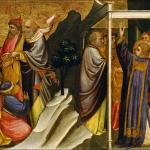
Paul and Barnabas at Lystra – U.S. Public Domain

Previous Post

May 22, 2016
Rejoice When Other Rejoice!
Next Post
May 22, 2016 Joshua = Jesus
Browse Our Archives
Select a Category Book Reviews Featured Give Us This Day Give Us This Day Devotional love me love my wife Love My Wife Reformed Catholicism Blog Spirit-Reality Take This Cup Uncategorized
Select a Month February 2022 November 2021 October 2021 August 2021 January 2021 December 2020 November 2020 September 2020 August 2020 July 2020 June 2020 May 2020 September 2018 July 2018 March 2018 November 2017 October 2017 September 2017 August 2017 July 2017 June 2017 May 2017 April 2017 March 2017 February 2017 January 2017 December 2016 November 2016 October 2016 September 2016 August 2016 July 2016 June 2016 May 2016 April 2016 March 2016 February 2016 January 2016 December 2015 November 2015 October 2015 September 2015 August 2015 July 2015 June 2015 May 2015 April 2015 March 2015 February 2015 January 2015 December 2014 November 2014 October 2014 September 2014 August 2014 July 2014 June 2014 May 2014 April 2014 March 2014 February 2014 January 2014 December 2013 November 2013 October 2013 September 2013 August 2013 July 2013 June 2013 May 2013 April 2013 March 2013 February 2013 January 2013 December 2012 November 2012 October 2012 September 2012 August 2012 July 2012 June 2012 May 2012 April 2012 March 2012 February 2012 January 2012 December 2011 November 2011 October 2011 September 2011 August 2011 July 2011 May 2011 April 2011 March 2011 February 2011 January 2011
Follow Us!
TAKE THE
Religious Wisdom Quiz
How many times does the Bible mention the word "love"?
Select your answer to see how you score.
700 Over 300 100 500
Related posts from Give Us This Day

John 12:44-50 - Power and Fear, Glory and...
TRENDING AT PATHEOS Evangelical

How the author of the world's best hymn...
I've been working with John Newton for a while now. This makes...

Long before this Lectio Divina, Psalm 130 - the song - started...

What About the Trees? Another Living Parable
After I finished writing the last article about falling leaves as a...

Why Classical Education Is a Conversation, Not a...
Come and Read: Joy in Classical Education When I was a little...

Falling Leaves: A Living Parable on Letting Go
I’ve spent the vast majority of my life in the southeast corner...

Cornell University has received a great deal of negative publicity and intense...
view all Evangelical blogs
Ad-Free & Subscriber Log-In Subscription Support
- About Us
- 2026 Calendar
- Videos
- Podcasts
- Library of World Religions
- Faith In Media Tracker
- Advertise With Us
- Write for Us
- Privacy Policy
- Terms of Service
- Do Not Sell My Data
- Contact Us
- Radiant Digital
- Manage Newsletter Subscriptions
- Unsubscribe From Notifications
- Sitemap
Copyright 2008-2026, Patheos. All rights reserved.
Subscription Support Ad-Free & Subscriber Log-In
Follow Patheos