
BuddhistCatholicContemplativeEvangelicalGeneral ChristianHinduJewishLatter-day SaintMuslimNew VisionsProgressive Christian
Beliefs
- Buddhist
- Catholic
- Contemplative
- Evangelical
- General Christian
- Hindu
- Jewish
- Latter-day Saint
- More Voices
- Muslim
- New Visions
- Pagan
- Progressive Christian
Topics
- Religion News
- Food and Religion
- Sports and Religion
- Religious Art
- Religious Music and Entertainment
- Religious Events
- History and Religion
- Style and Religion
- Politics and Religion
- Women in Religion
- Recreation Outdoors and Religion
- Business Finance and Religion
- Careers Workplace and Religion
- Education and Religion
- Family Parenting and Religion
- Health Fitness and Religion
- Home and Religion
- Relationships and Religion
- Technology and Religion
- Travel and Religion
Columnists
- Buddhist Columnists
- Business Finance and Religion Columnists
- Careers Workplace and Religion Columnists
- Catholic Columnists
- Contemplative Columnists
- Education and Religion Columnists
- Evangelists Columnists
- Family Parenting and Religion Columnists
- General Christian Columnists
- Health Fitness and Religion Columnists
- Hindu Columnists
- History and Religion Columnists
- Home and Religion Columnists
- Jewish Columnists
- More Voices Columnists
- Latter Day Columnists
- Muslim Columnists
- New Visions Columnists
- Nonreligious Columnists
- Pagan Columnists
- Politics and Religion Columnists
- Progressive Columnists
- Recreation Outdoors and Religion Columnists
- Relationships and Religion Columnists
- Religion News Columnists
- Religious Art Columnists
- Religious Events Columnists
- Religious Music and Entertainment Columnists
- Sports and Religion Columnists
- Style and Religion Columnists
- Technology and Religion Columnists
- Travel and Religion Columnists
- Women in Religion Columnists
Resource Library
- 2026 Calendar
- Library of World Religions
- The 100 Most Holy Places on Earth
- Patheos Answers
- Podcasts
- Videos
- Faith Leaders Database
- Anglican Episcopalian
- Bahai
- Baptist
- Buddhism
- Christianity
- Confucianism
- Eastern Orthodoxy
- Hinduism
- Holiness and Pentecostal
- ISKCON
- Islam
- Judaism
- Lutheran
- Methodist
- The Church of Jesus Christ of Latter-day Saints
- New Age
- Paganism
- Presbytarian and Reformed
- Protestantism
- Religion Behind the Scenes
- Roman Catholic
- Scientology
- Shia Islam
- Sikhism
- Sufism
- Sunni Islam
- Taoism
- Zen
- See all religions
Research Tools
 Ad-Free & Subscriber Log-In Subscription Support
Ad-Free & Subscriber Log-In Subscription Support
Follow Patheos 

- Trending:
- Forgiveness
- |
- Marriage
- |
- Consciousness
- |
- Death Penalty
- |
- Election
- |
- Halloween
 Give Us This Day
- Home
- Evangelical
- Tract #2 Part 1 – When Did Anglicanism Begin?
Tract #2 Part 1 – When Did Anglicanism Begin?
Last updated on: November 20, 2020 at 11:14 am by Fr. Charles Erlandson
Tract #2 Part 1 – When Did Anglicanism Begin? 2020-11-20T11:14:37-05:00 Fr. Charles Erlandson
Patheos Explore the world's faith through different perspectives on religion and spirituality! Patheos has the views of the prevalent religions and spiritualities of the world.
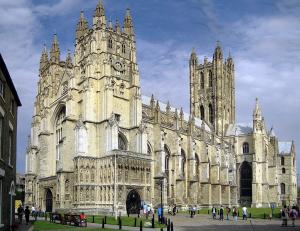
Tract #2 Part 1 – When Did Anglicanism Begin?
Here is Part 1 of Tract 2 of my Tracts for the Times 2.0 – “When Did Anglicanism Begin?”
In my first Tracts for the Times 2.0, I provided a nuanced definition of Anglicanism that I hope will provide an anchor and encouragement in these fractured and fractious times. A definition of Anglicanism was the place to begin because in times of confusion, contestation, and fragmentation, issues of identity come to the foreground. The question of who we are as Anglicans has become a primary concern for many of us.
A second, high-interest issue that is related to the issue of Anglican identity is the question of just when Anglicanism began.
If you say “with Henry VIII” in any of the classes I teach at Cranmer Theological House, I will threaten you with either an automatic F or a pile of remedial work. Many incorrectly assume that the Church in England began with Henry VIII’s desire for Anne Boleyn and the male heir she might possibly give him. But clearly there was an English Church before Henry VIII declared himself the head of the English Church in 1534. In fact, one of the unique distinctives of the English Reformation is that it is the one of the very few Protestant Reformations in which an entire national church was reformed.
Some who know that Anglicanism and the Church of England didn’t begin with Henry VIII have read enough to believe that the Church of England was established in A.D. 597 when Pope Gregory sent Augustine of Canterbury to evangelize the British Isles. However, when Augustine showed up on British soil, he discovered that an indigenous church, complete with bishops and differing customs, already existed there. We will need to look much further back than A.D. 597 if we want to see the origins of Anglicanism.
Before I examine the Church in the British Isles before 597, I want to highlight the importance of this pursuit. Many assume that the Church in England began in 597 and continued as a part of the Roman Catholic Church until 1533, when Henry VIII selfishly wrested the English Church from Rome. This narrative strongly suggests that Henry’s actions were illegal and immoral and that the true home of the English Church is in the arms of the Church of Rome.
However, the historical facts tell a different story in three parts. The first part of the history is the history of the Church in England before the Church was incorporated to a large degree within the life of the Roman Catholic Church. I will present compelling evidence in this tract that the Church in England was independent of the Church of Rome for roughly five and half centuries (and for four centuries at a minimum). The second part of the story, which I’ll tell in the next Tracts for the Times 2.0, is the story of how the English Church became more closely identified with the Roman Catholic Church, while at the same time frequently protesting her ancient independence from Rome. The third part of the story is the now nearly 500 years of the independence of the English Church from the Roman Catholic Church.
When we tell the historical story this way, the Roman Catholic Church looks like the usurper, and not Henry VIII. Anglicanism can rightfully claim an ancient lineage and one that is largely independent of Rome. We have no need to become Roman Catholics to be apostolic, catholic, or ancient. It would be a tragedy if Anglicans sold their birthright as an ancient Church with her own beautiful treasures by being ingested and digested by the Roman Church.
Finally, I will be using the term “Anglicanism” to mean just what I said in Tract #1: “the life of the Catholic Church that was planted in England in the first few centuries after Christ; reshaped decisively by the English Reformation that reformed the received Catholic traditions and also renewed by the Evangelical and Catholic Revivals and other historical movements of the Spirit; and that has now been inculturated into independent, global churches.” This definition allows us to see the continuity of contemporary Anglicanism with all that has gone before it in the life of the Church in England from the time of its first planting until the present age. It’s fashionable to assert that “Anglicanism” should only apply to the English Church and its offspring, post-1533. For example, the recent, state-of-the-art, five-volume Oxford History of Anglicanism begins, in spite of filling five volumes, with 1520. But it’s important to remember the historical continuity with all that went before, including elements of a distinctive English spirituality that to some degree still inhabit and inform the present.
Discerning the earliest origins of the Church in the British Isles in incredibly difficult, although the evidence becomes clearer beginning in the fourth century. This is in part because evidence of Christianity in the first and second centuries is relatively scarce throughout the world, and not just in Britain. Evidence for Christianity also becomes more salient after Constantine issued his Edict of toleration in 313.
An impressive array of scholars and councils held that the English Church was the first among the nations to receive the gospel, based on Joseph of Arimathea’s having landed there in the first century. This includes Roman Catholic historians and scholars of the 15th and 16th centuries. Even more impressive is the fact that at the Councils of Pisa (1409), Constance (1417), Sienna (1424) and Basle (1434) the antiquity of the English Church (equal to France, Spain, and Italy) was asserted, at least in part, by an appeal to Joseph of Arimathea. Modern scholarship almost unanimously believes that the legends surrounding Joseph date to the Gesta Regum Anglorum (History of The Kings of England, finished in 1125), in which William of Malmesbury wrote that Glastonbury Abbey was built by preachers sent by Pope Eleuterus to Britain. Later additions included Joseph, unlike the original. In this case, the legend that Joseph came to Britain may be a 12th-century addition; however, the claim that Christianity arrived in England very early is a claim with much earlier and broader historical support. Claims that the gospel came to Britain early are quite numerous, including many from sources before Augustine landed there: however, none of these mention Joseph of Arimathea.
Before I proceed, I want to offer a brief note on my methodology. I’ve spent considerable time combing through the available evidence, attempting to separate the wheat from the chaff. The number of books and websites discussing the early Church in Britain is remarkable. However, many of these sources are amateur ones who often copy information and references from previous sources, without bothering to authenticate them. I have chosen in this Tract to focus on that which has been best substantiated. Together, the evidence paints a compelling portrait of a British Church that was fairly substantial and vigorous and which had intercourse with the Roman Church and yet developed its own indigenous brand of Christianity that did not see itself as Roman Catholic.
I don’t have time in this tract to review each claim to an early origin of Christianity in England (there are many of these)[1], so I will mention only Aristobulus, whom a few early writers cite as having arrived in Britain in the first century. On the Seventy Apostles of Christ is attributed to Pseudo-Hippolytus, which, even though probably spuriously attributed to Hippolytus, seems to have been written around the time of Hippolytus, who died in 235. This work lists Aristobulus (commonly associated with the Aristobulus of Romans 16:10) as one of the 70 mentioned in the Gospels, and, in fact, a bishop of Britain. The Orthodox churches believe Saint Paul made Aristobulus a bishop and sent him to preach the Gospel in Britain, and he is honored on two days in their calendar.[2]
Several of the Church Fathers testify to the fact that Christianity came to the British Isles at an early date. Tertullian (155-240) wrote: “The extremities of Spain, the various parts of Gaul, the regions of Britain which have never been penetrated by Roman arms have received the religion of Christ.” Origen (writing in 240-245) wrote: “For when, before the arrival of Christ, did the land of Britain agree together in the worship of the one God?” St. Chrysostom (349-407) makes a reference in which he assumes that churches already exist in the British Isles.[3]
In a stunning passage, Jerome (347-420) not only speaks of a church in Britain but also that the British church has the same faith as all the other churches and that all bishops have equal dignity and are equally successors of the apostles. In his letter to Evangelus, he writes: “Gaul and Britain, Africa and Persia, India and the East worship one Christ and observe one rule of truth. If you ask for authority, the world outweighs its capital. Wherever there is a bishop, whether it be at Rome or at Engubium, whether it be at Constantinople or at Rhegium, whether it be at Alexandria or at Zoan, his dignity is one and his priesthood is one. Neither the command of wealth nor the lowliness of poverty makes him more a bishop or less a bishop. All alike are successors of the apostles.”
Since I want these Tracts to be a manageable size, I will conclude Tract #2, Part 1 here. Next time, I’ll look at what five early Church historians say, the presence of British bishops at early councils, and physical evidence for British churches in the fourth century.
[1] I don’t have time, for example, to examine the claims that in A.D. 165 King Lucius King Lucius declared Britain to be a Christian nation.
[2] Many sources also cite that Dorotheus of Tyre claimed (c. 300) that Aristobulus was a bishop of Britain. However, my preliminary research indicates that these claims erroneously attribute this quote to a work of Dorotheus that may not even exist.
[3] I have not yet found confirming evidence for another, more enticing quote by St. Chrysostom.
Previous Post

November 10, 2020
Tract #1 – What is Anglicanism?
Next Post
November 24, 2020 Tracts for the Times 2.0 Tract #2 Part 2 - When Did Anglicanism Begin?
Browse Our Archives
Select a Category Book Reviews Featured Give Us This Day Give Us This Day Devotional love me love my wife Love My Wife Reformed Catholicism Blog Spirit-Reality Take This Cup Uncategorized
Select a Month February 2022 November 2021 October 2021 August 2021 January 2021 December 2020 November 2020 September 2020 August 2020 July 2020 June 2020 May 2020 September 2018 July 2018 March 2018 November 2017 October 2017 September 2017 August 2017 July 2017 June 2017 May 2017 April 2017 March 2017 February 2017 January 2017 December 2016 November 2016 October 2016 September 2016 August 2016 July 2016 June 2016 May 2016 April 2016 March 2016 February 2016 January 2016 December 2015 November 2015 October 2015 September 2015 August 2015 July 2015 June 2015 May 2015 April 2015 March 2015 February 2015 January 2015 December 2014 November 2014 October 2014 September 2014 August 2014 July 2014 June 2014 May 2014 April 2014 March 2014 February 2014 January 2014 December 2013 November 2013 October 2013 September 2013 August 2013 July 2013 June 2013 May 2013 April 2013 March 2013 February 2013 January 2013 December 2012 November 2012 October 2012 September 2012 August 2012 July 2012 June 2012 May 2012 April 2012 March 2012 February 2012 January 2012 December 2011 November 2011 October 2011 September 2011 August 2011 July 2011 May 2011 April 2011 March 2011 February 2011 January 2011
Follow Us!
TAKE THE
Religious Wisdom Quiz
She is more precious than rubies, and nothing you desire compares to her. Her ways are pleasant and all her paths are peace. Who is she?
Select your answer to see how you score.
Wisdom A virtuous woman Understanding Knowledge
Related posts from Give Us This Day
Tracts for the Times 2.0 Tract #2 Part...
Tract #1 – What is Anglicanism?
The 1-Sentence Definition of Anglicanism
How would you define Anglicanism?
TRENDING AT PATHEOS Evangelical

How the author of the world's best hymn...
I've been working with John Newton for a while now. This makes...

Long before this Lectio Divina, Psalm 130 - the song - started...

What About the Trees? Another Living Parable
After I finished writing the last article about falling leaves as a...

Why Classical Education Is a Conversation, Not a...
Come and Read: Joy in Classical Education When I was a little...

Falling Leaves: A Living Parable on Letting Go
I’ve spent the vast majority of my life in the southeast corner...

Cornell University has received a great deal of negative publicity and intense...
view all Evangelical blogs
Ad-Free & Subscriber Log-In Subscription Support
- About Us
- 2026 Calendar
- Videos
- Podcasts
- Library of World Religions
- Faith In Media Tracker
- Advertise With Us
- Write for Us
- Privacy Policy
- Terms of Service
- Do Not Sell My Data
- Contact Us
- Radiant Digital
- Manage Newsletter Subscriptions
- Unsubscribe From Notifications
- Sitemap
Copyright 2008-2026, Patheos. All rights reserved.
Subscription Support Ad-Free & Subscriber Log-In
Follow Patheos