
BuddhistCatholicContemplativeEvangelicalGeneral ChristianHinduJewishLatter-day SaintMuslimNew VisionsProgressive Christian
Beliefs
- Buddhist
- Catholic
- Contemplative
- Evangelical
- General Christian
- Hindu
- Jewish
- Latter-day Saint
- More Voices
- Muslim
- New Visions
- Pagan
- Progressive Christian
Topics
- Religion News
- Food and Religion
- Sports and Religion
- Religious Art
- Religious Music and Entertainment
- Religious Events
- History and Religion
- Style and Religion
- Politics and Religion
- Women in Religion
- Recreation Outdoors and Religion
- Business Finance and Religion
- Careers Workplace and Religion
- Education and Religion
- Family Parenting and Religion
- Health Fitness and Religion
- Home and Religion
- Relationships and Religion
- Technology and Religion
- Travel and Religion
Columnists
- Buddhist Columnists
- Business Finance and Religion Columnists
- Careers Workplace and Religion Columnists
- Catholic Columnists
- Contemplative Columnists
- Education and Religion Columnists
- Evangelists Columnists
- Family Parenting and Religion Columnists
- General Christian Columnists
- Health Fitness and Religion Columnists
- Hindu Columnists
- History and Religion Columnists
- Home and Religion Columnists
- Jewish Columnists
- More Voices Columnists
- Latter Day Columnists
- Muslim Columnists
- New Visions Columnists
- Nonreligious Columnists
- Pagan Columnists
- Politics and Religion Columnists
- Progressive Columnists
- Recreation Outdoors and Religion Columnists
- Relationships and Religion Columnists
- Religion News Columnists
- Religious Art Columnists
- Religious Events Columnists
- Religious Music and Entertainment Columnists
- Sports and Religion Columnists
- Style and Religion Columnists
- Technology and Religion Columnists
- Travel and Religion Columnists
- Women in Religion Columnists
Resource Library
- 2026 Calendar
- Library of World Religions
- The 100 Most Holy Places on Earth
- Patheos Answers
- Podcasts
- Videos
- Faith Leaders Database
- Anglican Episcopalian
- Bahai
- Baptist
- Buddhism
- Christianity
- Confucianism
- Eastern Orthodoxy
- Hinduism
- Holiness and Pentecostal
- ISKCON
- Islam
- Judaism
- Lutheran
- Methodist
- The Church of Jesus Christ of Latter-day Saints
- New Age
- Paganism
- Presbytarian and Reformed
- Protestantism
- Religion Behind the Scenes
- Roman Catholic
- Scientology
- Shia Islam
- Sikhism
- Sufism
- Sunni Islam
- Taoism
- Zen
- See all religions
Research Tools
 Ad-Free & Subscriber Log-In Subscription Support
Ad-Free & Subscriber Log-In Subscription Support
Follow Patheos 

- Trending:
- Forgiveness
- |
- Marriage
- |
- Consciousness
- |
- Death Penalty
- |
- Election
- |
- Halloween
 Give Us This Day
- Home
- Evangelical
- Thursday of 5th Sunday after Epiphany – 1 Thessalonians 4:1-12
Thursday of 5th Sunday after Epiphany – 1 Thessalonians 4:1-12
Last updated on: February 13, 2014 at 8:01 am by Fr. Charles Erlandson
Thursday of 5th Sunday after Epiphany – 1 Thessalonians 4:1-12 2014-02-13T08:01:56-05:00 Fr. Charles Erlandson
Patheos Explore the world's faith through different perspectives on religion and spirituality! Patheos has the views of the prevalent religions and spiritualities of the world.
 1 Thessalonians 4:1-12
Why is St. Paul so concerned about the “abundant life”? What is this abundant life of which he speaks? Some would have you believe that this “abundant life” is the same thing as material prosperity. If so, I think St. Paul would have been surprised that he wasn’t living a very abundant life after all!
In 1 Thessalonians 4:1, Paul urges and exhorts the Thessalonians to “abound more and more,” and in verse 4:10 he urges them again to “increase more and more.” The fact that Paul urges and exhorts the Thessalonians to such abundance indicates that this abundance is something the Thessalonians may readily obtain.
What is this abundance of which Paul urges the Thessalonians to partake? The one word answer appears to be: “sanctification.”
I can see it now: gigantic billboards, expensive newspaper ads, and enthusiastic church members making invitations. The people begin to fill up the church on the appointed night as the speaker begins to talk about the promised topic of “The Abundant Life – and How You Can Have it NOW!” Electricity is in the air – the big night is here! Now is the opportunity of a lifetime to strike it rich.
But a strange thing happens: the speaker begins to talk about how the abundant life God wants for us is to walk in holiness, to be holy as he is holy. His text is 1 Thessalonians 4:1-12 – he didn’t even have the decency to veer off into the second half of the chapter where the people at least could hear about how they might be raptured from all evil.
Instead, he sticks stubbornly to the text at hand on the abundant life and says,
“What is the abundant life of which St. Paul speaks in verse 1? It is tied to the second half of the same sentence, verse 1, in which Paul says ‘just as you received from us how you ought to walk and please God.’ The abundant life St. Paul is speaking of is one in which we live abundantly because we live for God. We live abundantly because we have learned how to please God by obeying His commandments. Paul makes his point even more clearly when he continues to verse 2 and says, ‘for you know what commandments we gave you through the Lord Jesus.’ So what Paul is saying in 1 Thessalonians 4 is that he urges the Thessalonians to live more abundantly by living more righteously. If they do this, they will be blessed because they are walking with God.’”
The people squirm and fidget a little, getting a little antsy for the good stuff to come. Some anticipate his next point: “and if you live a holy life, then God has promised to bless you abundantly with things in this life.”
The speaker isn’t getting to that point, though. Instead, he says, “This is the reason Paul raises the issue of sexual immorality. It’s not that he wants to titillate his readers or dwell on sordid details. His point is that one of the reasons Christians do not have an abundant life in their holy God is that they are not leading holy sexual lives.
The giver of every good and perfect gift, God the Father, has given His people the Holy Spirit, the Holy Spirit. He who rejects the commandments of God therefore is rejecting God and the Holy Spirit, and not just Paul or other men (verse 8.) To the degree that we do not live holy lives, obeying the righteous commandments of God, God will withhold the abundance of His blessings from us.”
“Now,” think the people, “now move in for the kill. Say it. Say it! ‘And if we live holy lives then God has promised to bless us materially.’”
The speaker continues, unhurried. “And what is the most important, the most holy, commandment that God has given? Paul tells the Thessalonians in verse 9 that he doesn’t even need to teach them, because they are taught by God, to love one another. This commandment to love one another is at the center of a holy life and therefore at the center of an abundant life. It is holy love of God and neighbor that will keep Christians sexually pure and faithful. It is holy love that will lead to the abundant life. Paul, surprisingly, commends the Thessalonians for the love they already have toward all the brethren.
But then he urges them in verse 10 to ‘increase more and more’! What more could he ask? He asks the Thessalonians to aspire to an even more abundantly holy life, a life even more abundantly pleasing to God and obedient to Him.
This is the abundance of which St. Paul has been speaking: a life that is so transformed by God that it becomes more like God and is more and more abundantly united to Him. ‘Be holy as I am holy.’ ‘Love, as I first loved you.’ ‘Use my good gift of sex the way I intended for it to be used.’ Do these things, and you will be blessed by enjoying a deeper and deeper fellowship with me.’”
At this point, it has dawned on several of the people that this speaker has no intention of talking about how God is bound to give them a better job, a nicer house, or the big screen TV. Some of them get up and walk out. This gives ideas to some of the others who are disappointed themselves.
Seemingly oblivious to this secret rapture of listeners, the speaker moves to his conclusion.
”And what is the final way that St. Paul says we should be holy and therefore live more abundantly? By leading a quiet life in which we mind our own business and work with our hands. That’s it. One of the most important secrets to the abundant life is not to seek get rich schemes; it’s not to be excited about the terrors and decadence outside; and it’s not to vegetate and simply coast in life. The secret is to be about your Father’s business, which are the ordinary day to day things He has already given you. If you are faithful in these few small things – the keeping oneself pure, the cleaning house and making dinner, the faithful and diligent labor at your place of employment, the wise use of money, the loving but firm raising of your children, the cheerful acceptance of all the Lord has already given you – then you will abound more and more in holiness and in a godly life.
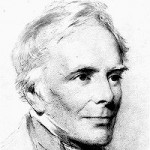
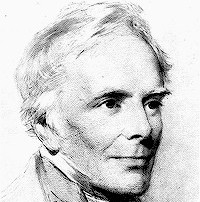
John Keble, who lived at a time of great religious and societal excitement in the nineteenth century, a time at which one could feel the tectonic plates underlying the Church of England begin to shift, said this: ‘After all, the surest way to uphold or restore our endangered Church, will be for each of her anxious children, in his own place and station, to resign himself more thoroughly to his God and Saviour in those duties, public and private, which are not immediately affected by the emergencies of the moment: the daily and hourly duties, I mean, of piety, purity, charity, justice.’
The preacher paused a moment, scarcely noticing his skeleton crowd. Finally, he said:
“What, then, is this abundant life that St. Paul says you can have now? It is sanctification, a life of progressive (more and more) holiness, of progressive submission to the will of God, and therefore of progressive union with God and progressive blessing from God.”
As the speaker concluded, the two people who were left spontaneously shouted “Amen!”
Prayer: Father, we thank You for Your holy commandments which are reflections of Your holy character. Help me to seek to abound more and more in discovering what pleases You, and having found it, to practice doing it.
Points for Meditation:
1. Meditate on the ways in which God has progressively sanctified your life. Remember to stop and give thanks along the way.
2. Meditate on the various ways in which you know yourself to not be living in holy obedience to God’s commandments. Pick one of these and meditate on how it has kept you from God, and listen to what God is asking you to do regarding this area that has not been sanctified. (And then do it!)
Resolution: I resolve today to seek to increase more and more in sanctification. In particular, I resolve to find one way in which I have not been holy, to surrender that to the Lord today, and to take decisive and holy action. If there is none that seems especially pressing today, I will resolve to practice leading a quiet life of acceptance of what God has given me today.
© 2014 Fr. Charles Erlandson
Give Us This Day daily devotional
Previous Post

February 11, 2014
Wednesday of Epiphany 5 - 1 Thessalonians 2:17-3:13
Next Post
February 13, 2014 Friday of 5th Sunday after Epiphany - 2 Thessalonians 3:6-18
Browse Our Archives
Select a Category Book Reviews Featured Give Us This Day Give Us This Day Devotional love me love my wife Love My Wife Reformed Catholicism Blog Spirit-Reality Take This Cup Uncategorized
Select a Month February 2022 November 2021 October 2021 August 2021 January 2021 December 2020 November 2020 September 2020 August 2020 July 2020 June 2020 May 2020 September 2018 July 2018 March 2018 November 2017 October 2017 September 2017 August 2017 July 2017 June 2017 May 2017 April 2017 March 2017 February 2017 January 2017 December 2016 November 2016 October 2016 September 2016 August 2016 July 2016 June 2016 May 2016 April 2016 March 2016 February 2016 January 2016 December 2015 November 2015 October 2015 September 2015 August 2015 July 2015 June 2015 May 2015 April 2015 March 2015 February 2015 January 2015 December 2014 November 2014 October 2014 September 2014 August 2014 July 2014 June 2014 May 2014 April 2014 March 2014 February 2014 January 2014 December 2013 November 2013 October 2013 September 2013 August 2013 July 2013 June 2013 May 2013 April 2013 March 2013 February 2013 January 2013 December 2012 November 2012 October 2012 September 2012 August 2012 July 2012 June 2012 May 2012 April 2012 March 2012 February 2012 January 2012 December 2011 November 2011 October 2011 September 2011 August 2011 July 2011 May 2011 April 2011 March 2011 February 2011 January 2011
Follow Us!
TAKE THE
Religious Wisdom Quiz
What did Ezekiel cook his food over as a sign of coming judgment?
Select your answer to see how you score.
Ashes Stones Cow dung Wood
Related posts from Give Us This Day

James Clark - Book Review of Take This...

Revelation 17 - Who is Mystery Babylon?
TRENDING AT PATHEOS Evangelical

The REST of Your Life: A Creative Wrestles...
This week I had a conversation with a good friend from church....

How the author of the world's best hymn...
I've been working with John Newton for a while now. This makes...

Long before this Lectio Divina, Psalm 130 - the song - started...

What About the Trees? Another Living Parable
After I finished writing the last article about falling leaves as a...

Why Classical Education Is a Conversation, Not a...
Come and Read: Joy in Classical Education When I was a little...

Cornell University has received a great deal of negative publicity and intense...
view all Evangelical blogs
Ad-Free & Subscriber Log-In Subscription Support
- About Us
- 2026 Calendar
- Videos
- Podcasts
- Library of World Religions
- Faith In Media Tracker
- Advertise With Us
- Write for Us
- Privacy Policy
- Terms of Service
- Do Not Sell My Data
- Contact Us
- Radiant Digital
- Manage Newsletter Subscriptions
- Unsubscribe From Notifications
- Sitemap
Copyright 2008-2026, Patheos. All rights reserved.
Subscription Support Ad-Free & Subscriber Log-In
Follow Patheos