
BuddhistCatholicContemplativeEvangelicalGeneral ChristianHinduJewishLatter-day SaintMuslimNew VisionsProgressive Christian
Beliefs
- Buddhist
- Catholic
- Contemplative
- Evangelical
- General Christian
- Hindu
- Jewish
- Latter-day Saint
- More Voices
- Muslim
- New Visions
- Pagan
- Progressive Christian
Topics
- Religion News
- Food and Religion
- Sports and Religion
- Religious Art
- Religious Music and Entertainment
- Religious Events
- History and Religion
- Style and Religion
- Politics and Religion
- Women in Religion
- Recreation Outdoors and Religion
- Business Finance and Religion
- Careers Workplace and Religion
- Education and Religion
- Family Parenting and Religion
- Health Fitness and Religion
- Home and Religion
- Relationships and Religion
- Technology and Religion
- Travel and Religion
Columnists
- Buddhist Columnists
- Business Finance and Religion Columnists
- Careers Workplace and Religion Columnists
- Catholic Columnists
- Contemplative Columnists
- Education and Religion Columnists
- Evangelists Columnists
- Family Parenting and Religion Columnists
- General Christian Columnists
- Health Fitness and Religion Columnists
- Hindu Columnists
- History and Religion Columnists
- Home and Religion Columnists
- Jewish Columnists
- More Voices Columnists
- Latter Day Columnists
- Muslim Columnists
- New Visions Columnists
- Nonreligious Columnists
- Pagan Columnists
- Politics and Religion Columnists
- Progressive Columnists
- Recreation Outdoors and Religion Columnists
- Relationships and Religion Columnists
- Religion News Columnists
- Religious Art Columnists
- Religious Events Columnists
- Religious Music and Entertainment Columnists
- Sports and Religion Columnists
- Style and Religion Columnists
- Technology and Religion Columnists
- Travel and Religion Columnists
- Women in Religion Columnists
Resource Library
- 2026 Calendar
- Library of World Religions
- The 100 Most Holy Places on Earth
- Patheos Answers
- Podcasts
- Videos
- Faith Leaders Database
- Anglican Episcopalian
- Bahai
- Baptist
- Buddhism
- Christianity
- Confucianism
- Eastern Orthodoxy
- Hinduism
- Holiness and Pentecostal
- ISKCON
- Islam
- Judaism
- Lutheran
- Methodist
- The Church of Jesus Christ of Latter-day Saints
- New Age
- Paganism
- Presbytarian and Reformed
- Protestantism
- Religion Behind the Scenes
- Roman Catholic
- Scientology
- Shia Islam
- Sikhism
- Sufism
- Sunni Islam
- Taoism
- Zen
- See all religions
Research Tools
 Ad-Free & Subscriber Log-In Subscription Support
Ad-Free & Subscriber Log-In Subscription Support
Follow Patheos 

- Trending:
- Forgiveness
- |
- Marriage
- |
- Consciousness
- |
- Death Penalty
- |
- Election
- |
- Halloween
 Give Us This Day
- Home
- Evangelical
- The Anglo-Catholic Spirituality
The Anglo-Catholic Spirituality
Last updated on: December 27, 2011 at 10:42 pm by Fr. Charles Erlandson
The Anglo-Catholic Spirituality 2011-12-27T22:42:59-05:00 Fr. Charles Erlandson
Patheos Explore the world's faith through different perspectives on religion and spirituality! Patheos has the views of the prevalent religions and spiritualities of the world.
 The Anglo-Catholic Spirituality

In my last blog I presented the idea that among orthodox Anglicans there are now 4 spiritualities that are presenting problems of diversity for a coherent orthodox Anglican identity: Anglo-Catholic, Evangelical, Charismatic, and Global. There are 2 other, older spiritualities I should mention before I discuss the Anglo-Catholic spirituality. The first is what might be called the High Church or Reformed Catholic spirituality; the second is the old school version of the Evangelical spirituality. While adherents of these “parties” may have had their differences in the past, they were held together in a classic Anglican consensus.
Beginning in the 19th century, however, the Anglo-Catholic spirituality was born as an heir to the Oxford Movement of the 1830s and 1840s. While Keble, Newman (while he remained an Anglican), and Pusey maintained a classic High Church spirituality in most ways, they also paved the way for an Anglo-Catholic spirituality that has often challenged a traditional or classic Anglican identity.
A precise definition of Anglo-Catholicism may not be possible, but Anglo-Catholics appear to range from those who would appear little different from traditional High Church Anglicans to those referred to as “Anglo-Papalists,” who seek to approximate Roman Catholicism in various ways. Often, Anglo-Catholics attempt to impose a Catholic (often Roman Catholic) ethos of worship and religious life on Anglicanism, and therefore Anglo-Catholics are in general associated with beliefs and practices related to the Roman Catholic Church.
One way in which some Anglo-Catholics challenge a coherent Anglican identity is in their rejection of the Prayer Book, which I regard as essential to any coherent Anglican identity. Some Anglo-Catholics prefer the Missal, and an assortment of other Anglo-Catholic communities use the Anglican Breviary. This is basically an English translation of the pre-Vatican II Roman Catholic Breviary, whose official publishers stating that “there is almost a negligible difference” between it and the Roman Catholic Breviary. Some Anglo-Catholics in London, for example, don’t accept either the Prayer Book or Common Worship but instead use the mass prescribed by Vatican II.
Anglo-Catholics seem almost unanimous in their rejection of the Thirty-nine Articles. Where they do affirm the Articles, they usually affirm them in a Newmanian sense (Newman!) that’s contrary to their intended meaning. Others, such as most of the Continuing Churches, choose simply to ignore them. Even those who are in the ACNA and formally hold to them as part of the ACNA seem to do so with a great deal of mental reservation about them.
Anglo-Papalists are Anglo-Catholics who are especially desirous to approximate a Roman Catholic spirituality and may be seen as those who believe the true nature of the Church of England can only be recognized when it is once again united with the Roman Catholic Church. One of the most visible reminders of this goal was the re-establishment of the piety of the Roman Catholic Church is the shrine of Our Lady of Walsingham and the pilgrimages to this shrine.
A list of some of the innovations characteristic of Anglo-Catholics includes: perpetual reservation of the Sacrament on the high altar; Benediction; the Rosary; shrines of the Sacred Heart, Our Lady, and of St. Joseph; Corpus Christi processions; the complete disuse of the English language; the regular use of the Latin Missal; and others. The Roman Catholic tendency of some Anglo-Catholics is also represented by the desire of some Anglicans to formally become part of the Roman Catholic Church. This has recently been facilitated by Rome’s offer of the Anglican Ordinariate (that could be a whole blog in itself!)
An Anglo-Catholicism that usually rejects the 39 Articles, sometimes rejects the Prayer Book, and often employs services that are outside of Anglicanism as established in the 16th century and practiced until the middle of the 19th century has already necessitated an enlarged definition of Anglicanism and Anglican comprehension. For the most part, however, Anglo-Catholicism has been assimilated into the Anglican mainstream, although tensions still remain. The question for the future is not only will they continue to want to remain in communion with Evangelicals and Charismatics but also to what degree will they accept the 39 Articles as a theological norm for Anglicanism.
Despite the ways in which Anglo-Catholicism has enlarged and perhaps confused Anglican identity, the Evangelical spirituality, as it has existed since the 1960s presents what are probably even greater challenges to Anglican identity. I’ll examine some of these challenges in my next blog.
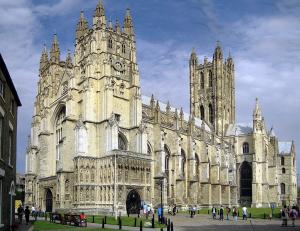
Anglo-Catholic Rite of Benediction from Wikipedia article on Benediction.jpg
Previous Post

December 27, 2011
Feast of the Holy Innocents - Mark 10:13-16, 23-31
Next Post
December 28, 2011 December 29 - Hebrews 1
Browse Our Archives
Select a Category Book Reviews Featured Give Us This Day Give Us This Day Devotional love me love my wife Love My Wife Reformed Catholicism Blog Spirit-Reality Take This Cup Uncategorized
Select a Month February 2022 November 2021 October 2021 August 2021 January 2021 December 2020 November 2020 September 2020 August 2020 July 2020 June 2020 May 2020 September 2018 July 2018 March 2018 November 2017 October 2017 September 2017 August 2017 July 2017 June 2017 May 2017 April 2017 March 2017 February 2017 January 2017 December 2016 November 2016 October 2016 September 2016 August 2016 July 2016 June 2016 May 2016 April 2016 March 2016 February 2016 January 2016 December 2015 November 2015 October 2015 September 2015 August 2015 July 2015 June 2015 May 2015 April 2015 March 2015 February 2015 January 2015 December 2014 November 2014 October 2014 September 2014 August 2014 July 2014 June 2014 May 2014 April 2014 March 2014 February 2014 January 2014 December 2013 November 2013 October 2013 September 2013 August 2013 July 2013 June 2013 May 2013 April 2013 March 2013 February 2013 January 2013 December 2012 November 2012 October 2012 September 2012 August 2012 July 2012 June 2012 May 2012 April 2012 March 2012 February 2012 January 2012 December 2011 November 2011 October 2011 September 2011 August 2011 July 2011 May 2011 April 2011 March 2011 February 2011 January 2011
Follow Us!
TAKE THE
Religious Wisdom Quiz
What empire defeated the Assyrians and took control of Israel?
Select your answer to see how you score.
Egyptian Greek Babylonian Persian
Related posts from Give Us This Day
Tracts for the Times 2.0 Tract #2 Part...
Tract #2 Part 1 – When Did Anglicanism...
Tract #1 – What is Anglicanism?
The 1-Sentence Definition of Anglicanism
TRENDING AT PATHEOS Evangelical

How the author of the world's best hymn...
I've been working with John Newton for a while now. This makes...

Long before this Lectio Divina, Psalm 130 - the song - started...

What About the Trees? Another Living Parable
After I finished writing the last article about falling leaves as a...

Why Classical Education Is a Conversation, Not a...
Come and Read: Joy in Classical Education When I was a little...

Falling Leaves: A Living Parable on Letting Go
I’ve spent the vast majority of my life in the southeast corner...

Cornell University has received a great deal of negative publicity and intense...
view all Evangelical blogs
Ad-Free & Subscriber Log-In Subscription Support
- About Us
- 2026 Calendar
- Videos
- Podcasts
- Library of World Religions
- Faith In Media Tracker
- Advertise With Us
- Write for Us
- Privacy Policy
- Terms of Service
- Do Not Sell My Data
- Contact Us
- Radiant Digital
- Manage Newsletter Subscriptions
- Unsubscribe From Notifications
- Sitemap
Copyright 2008-2026, Patheos. All rights reserved.
Subscription Support Ad-Free & Subscriber Log-In
Follow Patheos