
BuddhistCatholicContemplativeEvangelicalGeneral ChristianHinduJewishLatter-day SaintMuslimNew VisionsProgressive Christian
Beliefs
- Buddhist
- Catholic
- Contemplative
- Evangelical
- General Christian
- Hindu
- Jewish
- Latter-day Saint
- More Voices
- Muslim
- New Visions
- Pagan
- Progressive Christian
Topics
- Religion News
- Food and Religion
- Sports and Religion
- Religious Art
- Religious Music and Entertainment
- Religious Events
- History and Religion
- Style and Religion
- Politics and Religion
- Women in Religion
- Recreation Outdoors and Religion
- Business Finance and Religion
- Careers Workplace and Religion
- Education and Religion
- Family Parenting and Religion
- Health Fitness and Religion
- Home and Religion
- Relationships and Religion
- Technology and Religion
- Travel and Religion
Columnists
- Buddhist Columnists
- Business Finance and Religion Columnists
- Careers Workplace and Religion Columnists
- Catholic Columnists
- Contemplative Columnists
- Education and Religion Columnists
- Evangelists Columnists
- Family Parenting and Religion Columnists
- General Christian Columnists
- Health Fitness and Religion Columnists
- Hindu Columnists
- History and Religion Columnists
- Home and Religion Columnists
- Jewish Columnists
- More Voices Columnists
- Latter Day Columnists
- Muslim Columnists
- New Visions Columnists
- Nonreligious Columnists
- Pagan Columnists
- Politics and Religion Columnists
- Progressive Columnists
- Recreation Outdoors and Religion Columnists
- Relationships and Religion Columnists
- Religion News Columnists
- Religious Art Columnists
- Religious Events Columnists
- Religious Music and Entertainment Columnists
- Sports and Religion Columnists
- Style and Religion Columnists
- Technology and Religion Columnists
- Travel and Religion Columnists
- Women in Religion Columnists
Resource Library
- 2026 Calendar
- Library of World Religions
- The 100 Most Holy Places on Earth
- Patheos Answers
- Podcasts
- Videos
- Faith Leaders Database
- Anglican Episcopalian
- Bahai
- Baptist
- Buddhism
- Christianity
- Confucianism
- Eastern Orthodoxy
- Hinduism
- Holiness and Pentecostal
- ISKCON
- Islam
- Judaism
- Lutheran
- Methodist
- The Church of Jesus Christ of Latter-day Saints
- New Age
- Paganism
- Presbytarian and Reformed
- Protestantism
- Religion Behind the Scenes
- Roman Catholic
- Scientology
- Shia Islam
- Sikhism
- Sufism
- Sunni Islam
- Taoism
- Zen
- See all religions
Research Tools
 Ad-Free & Subscriber Log-In Subscription Support
Ad-Free & Subscriber Log-In Subscription Support
Follow Patheos 

- Trending:
- Forgiveness
- |
- Marriage
- |
- Consciousness
- |
- Death Penalty
- |
- Election
- |
- Halloween
 Give Us This Day
- Home
- Evangelical
2017-02-15T09:35:10-05:00
Patheos Explore the world's faith through different perspectives on religion and spirituality! Patheos has the views of the prevalent religions and spiritualities of the world.
Mark 15:33-47 – The Women and the Crucifixion
Last updated on: February 15, 2017 at 9:35 am By Fr. Charles Erlandson
** **Jesus Christ has redeemed mankind by the entirety of His life and ministry. This redemption is seen everywhere and has worked its way into the DNA of humanity in ways that few perceive. The kind of liberty that many people in many nations experience is, ultimately, a fruit of Christianity. The dominion of nature and the quest for understanding God’s creation that has led to so much material progress is also one outworking of the redemption of mankind.
One of the most remarkable things about the contemporary world compared to the ancient world is the place of honor now given to women. We give great honor to the Greek philosophers that are an important part of our Western heritage. Here is what the great philosopher Demosthenes (who is representative and not a radical) had so say about women: “we have courtesans for the sake of pleasure; we have concubines for daily cohabitation; and we have wives to bear children and manage the household.”
You would expect that the Jews at the time of Jesus would have a remarkably better view of women. Yet in the past, the Jews considered a woman not a person, but property. In their morning prayer service, men prayed: “Thank you God for not making me a Gentile, a woman or a slave.”
Contrast this with the place given to women by Jesus Christ. What a bizarre beginning to the life of one who is called the Messiah, the Christ, and the Son of God! How outrageous it must have seemed to the ancients that the mother in the story gets more attention than the father! In this way, Mary is the forebearer of the exaltation of women that Jesus Christ would bring. In this way, Jesus would undo the curse put upon women by Eve’s disobedience.
Consider the genealogy of Jesus the Christ found in Matthew’s Gospel. Here we find four odd names: Tamar, Rahab, Ruth, and Uriah’s wife. What all of these four names have in common is that they are the names of women, and not just women but tainted women. Being a woman in ancient times was low enough, but to be a tainted woman?! Tamar sleeps with her father in law; Rahab is a prostitute; Ruth is a foreigner; and Bathsheba (Uriah’s wife) sleeps with King David.
And yet God has grafted them into His family and into the family line of His Son.
Have you ever wondered how Jesus and the disciples had the resources to travel around for three years without full-time jobs? The answer is “Women.” In Luke 8:2-3 we read that not only the 12 disciples traveled around with Him but also “certain women who had been healed of evil spirits and infirmities – Mary called Magdalene, out of whom had come seven demons, and Joanna the wife of Chuza, Herod’s steward, and Susanna, and many others who provided for Him from their substance.”
All throughout the New Testament, you see, women are exalted from their previous humble position. And then we come to the Crucifixion. The disciples have fled, and who do we find heroically watching the Crucifixion (from a distance)? The women! “There were also women looking on from afar, among whom were Mary Magdalene (another prostitute), Mary the mother of James the Less and of Joses, and Salome, who also followed Him and ministered to Him when He was in Galilee, and many other women who came up with Him to Jerusalem” (verses 40-41).
What did these women see? They saw the Son of Man humbled and then lifted up so that they who had been humbled as women might be lifted up. Though they did not yet understand, what they were witnessing was their own exaltation, and ours as well.
The Gospel writers’ restraint in giving the details of the Crucifixion is haunting. Instead of a six-hour blow by blow description, we read the following in Mark: “And when they crucified Him . . .” (verse 24). And that’s about it. No details about the sound the hammer in the nails through the flesh must have made. No description of the moment by moment agony and the drop by drop loss of blood. No gruesome by Matthias Grünewald or Mel Gibson.
And then: “And Jesus cried out with a loud voice, and breathed His last” (verse 37).
This is what the women saw. Has it ever occurred to you that most of the description of the Crucifixion and Resurrection came from the women? They had nothing to lose in staying by Jesus, except for Jesus Himself. They had left all else and put their entire hope and trust in Him.
And maybe that’s the lesson for today for all of us – women, men, and children: hope and humility.
No wonder Jesus said, “Blessed are the poor in spirit, for theirs is the kingdom of heaven.
Blessed are they who mourn, for they shall be comforted.
Blessed are the meek, for the shall inherit the earth.
Blessed are the pure in heart, for they shall see God.”
I wonder today if there isn’t a lesson for me, a privileged, well-fed man sitting in a comfortable house in the United States in the 21st century. Sometimes I wonder why I can’t see God very well. Maybe it’s because I’ve fled from Him, not out of fear like the disciples, but out of satiety. Maybe I haven’t properly estimated the lowliness of my position before God, and maybe I’ve returned back to my normal life just at the time when all the good stuff begins to happen offstage.
Don’t abhor, don’t flee from the painful parts of your life: for there, if you look closely, you will find your Lord. Don’t let the good things of this world go to your head so that you can no longer see the King of Glory who came to hang on a Cross.
And so it wasn’t only Jesus who died today, on Good Friday, here in Mark 15 but also the old world. The ancient world in which women were almost subhuman and not often treated with respect, honor, and love has died. Yes, it has taken centuries for this to be worked out in the world, but then so the Crucifixion, Resurrection, and Ascension have all been kneaded into the bread of our life.
When Christ died, He died for the sins of the world, including men’s sins towards women, women’s sins against men, and all of the other stupid, selfish, sinful things man has been doing for millennia. All of this – including the horror of domestic wars, the battle of the sexes, and all of the hellish horrors man is so fond of – is what Christ died for today.
At just the moment when it looks like all was lost, all was won. On Good Friday, the world was turned upside down, and so it’s only fitting that it is the women, and not the men, who remain to bear witness to this quiet revolution in the heavens.
May I have the love of a devoted mother. May I see myself, along with my Lord, as the abased and humiliated one. May I see myself as the demon-possessed prostitute delivered of both curses. And then, maybe then, I’ll see Him the way I want to see Him.
So today I want to learn from these wise and humble women to cling to Him, even, especially, when things are hard. I, too, want to look on as He is crucified so that I may look on when He is resurrected.
Look! There He is in your life!
Prayer: Today a tomb holds Him who holds the creation in the hollow of His hand; a stone covers Him who covered the heavens with glory. Life sleeps and hell trembles, and Adam is set free from his bonds. Glory to Thy dispensation, whereby Thou hast accomplished all things, granting us an eternal Sabbath, Thy most holy Resurrection from the dead.
What is this sight that we behold? What is this present rest? The King of the ages, having through his passion fulfilled the plan of salvation, keeps Sabbath in the tomb, granting us a new Sabbath. Unto Him let us cry aloud: Arise, O Lord, judge thou the earth, for measureless is Thy great mercy and Thou dost reign forever.
Come, let us see our Life lying in the tomb, that He may give life to those who in their tombs lie dead. Come, let us look today on the Son of Judah as He sleeps, and with the prophet let us cry aloud to Him: Thou hast slept as a lion; who shall awaken thee, O King? But of Thine own free will do thou rise up, who willingly dost give Thyself for us. O Lord, glory to Thee. Amen. (Orthodox prayer for Holy Saturday)
Points for Meditation:
- In what other ways has the death of Jesus turned the old world upside down?
- In what ways is God asking you to be more humble or more humbly accept what He has ordained in your life?
- In what ways is God calling you to courage founded on Him, instead of a fear founded on yourself?
Resolution: I resolve to find one way today in which my Lord is asking me to crucify (humble) myself before Him that He might bring new life to me.
Crucifixion of Christ, Matthias Grunewald – in U.S. Public Domain

2022-02-14T20:39:53-05:00
Patheos Explore the world's faith through different perspectives on religion and spirituality! Patheos has the views of the prevalent religions and spiritualities of the world.
James Clark – Book Review of Take This Cup
Last updated on: February 14, 2022 at 8:39 pm By Fr. Charles Erlandson

Review – Take This Cup by Charles Erlandson | The North American Anglican
James Clark
Take This Cup: How God Transforms Suffering into Glory and Joy. By Charles Erlandson. Eugene, OR: Wipf & Stock, 2020. 216 pp. $46 (cloth); $26 (paper).
Suffering, as Charles Erlandson observes, is the only universal human experience. Given that suffering is additionally “so heavy, so painful, [and] so destructive” (1), it is unsurprising that so many books have been written on suffering in the Christian life.
Erlandson contributes to this vein of reflection by “offering a Christian theodicy—a vindication of God’s goodness in light of the existence of evil and suffering.” His argument should thus be distinguished from a defense, in which one offers a possible rather than plausible explanation for suffering (e.g., Alvin Plantinga’s God, Freedom, and Evil). Moreover, Erlandson says his theodicy “will only make sense…to Christians” (x).
Erlandson begins by noting that suffering is “the just punishment for sin, and the necessary consequence for disobeying God and disordering his creation and our hearts” (31). We fallen humans “know that suffering is evil and naturally want to avoid it” (2). Yet suffering finds us nevertheless—as Erlandson puts it, “Ever since the fall, to be human is to suffer” (18)—and if we were left to our own devices that would be the dismal end of the matter.
God, however, desires “to redeem us from our sin and its consequences,” and for this reason “Jesus Christ, the Son of God, takes the cup [of suffering] on our behalf” (7). Indeed, “Christ came to redeem all mankind from every kind of evil and suffering,” and Erlandson points out that to this end Christ’s suffering consisted in “not only the six hours on the cross or the twelve or so hours at the passion and crucifixion but his entire life” (18–19, emphasis original).
Now having risen and ascended, Jesus, “by his suffering…has transformed all Christian suffering” (31, emphasis original). This is not to say suffering is no longer painful: “Make no mistake: suffering is not inherently redemptive but is instead inherently evil and destructive” (31). Even so, “What men and Satan mean for evil, God means for good. This is true not only for Joseph [from Genesis] but also for the Christian and all Christian suffering” (30).
The way in which Christian suffering is transformed by Christ, as Erlandson explains it, is that when we are baptized we are thereby “truly united to Jesus Christ” (51) and become “partakers of Christ” (54, emphasis original). After our baptism, we continue to partake of Christ through the Eucharist, in which “we consume the Lord who has given himself to us as heavenly food” (68).
In both of these sacraments Christians are made part of what is called the mystical body of Christ. This is not a “mere metaphor,” but refers to a “metaphysical reality” (47) in which Christ and the church are united, with Christ as the head and the church as his body, yet “without either of them losing its identity” (47–49). Practically speaking, the church is “the prolongation or extension of the life of Jesus Christ through time and space. The scope of Christ’s ministry is not merely the two billion Christians alive today but includes all of the things He has done or will do for men through men from the first chapters of the Scriptures until the time he returns!” (50)
On Erlandson’s account, this has significant implications for Christian suffering: “Remembering all that we have said about Christ uniting himself to us, we rejoice because our suffering unites us to the source of all joy. This union with Christ is the source of our every joy” (98, emphasis original). In short, Christian suffering is transformed into glory and joy because in our suffering we are united to Christ. Some of the particular joys God brings about through our suffering include being “brought back to [God] the Shepherd when we wander like sheep from him” (109), being transformed into Christ’s image (113), and binding us to our fellow-sufferers in Christ (119).
In addition to such joys as these, Erlandson emphasizes that “because of the sacramental bond between Christ and his mystical body, the church, Christ partakes of our suffering, and we partake of his sufferings” (76). As such, Erlandson argues, there is a real sense in which our suffering is redemptive: “While my suffering itself remains an evil, God has now, through Christ, transformed it into a means of his redemption of the world” (107). In other words, “Redeemed man, the body of Christ, now participates directly in the redemption of the world” (170). To say we participate in redemption does not mean redemption originates in us, for “the glorious work of redemption…is purely God’s” (171). Rather, Christ, “through you…is redeeming your suffering , your life, and the suffering and lives of others. This is the meaning of human suffering” (169, emphasis original).
By way of evaluation, while Erlandson says his theodicy will only make sense to Christians, it would be more precise to say it will only make sense to Christians who accept the sort of high ecclesiology articulated by figures like E. L. Mascall and Fulton Sheen, both of whom Erlandson cites favorably. For that matter, Christians who do not have a similarly high sacramentology will find less to appreciate here.
One final point: Erlandson suggests that “a kind of suffering…may…be at the heart of the Holy Trinity” (120). On its face, this appears to be a denial of divine impassibility. However, Erlandson has clarified to me in private correspondence that if this were in fact possible, it would be very different from “suffering” as it is predicated of humans. Indeed, Thomas Weinandy—author of Does God Suffer?, one of the foremost defenses of divine impassibility—also speculates that it might be possible to predicate suffering of God in a way “radically different” (168) from conventional usage. It is worth noting, however, that Weinandy goes on to say, “It would be better, for the sake of clarity and consistency, not to predicate suffering of God at all” (170).
In sum, Erlandson’s book is a distinctively high-church reflection on the significance of Christian suffering that deserves to be widely read and digested.
2022-02-07T22:12:10-05:00
Patheos Explore the world's faith through different perspectives on religion and spirituality! Patheos has the views of the prevalent religions and spiritualities of the world.
The Best Thing God Ever Did was the Worst Thing Man Ever Did
Last updated on: February 7, 2022 at 10:12 pm By Fr. Charles Erlandson
When Christ consumed the Cup of Suffering, He transfigured the world forever.
When Christ consumed the Cup, He transformed the meaning of suffering.
When Christ consumed the Cup, He transmuted its contents from evil into good.
God’s judgment upon man was translated from “Guilty!” to “Not Guilty.”
Death was transported into life.
Suffering was transmogrified from punishment and a sign of death and judgment into glory and joy and a sign that God is with us.
God is famous for performing miracles: we read of Jesus turning water into wine, healing lepers and the lame from their infirmities, and raising people from the dead. God Himself is a living miracle. First, is the miracle of the Holy Trinity, three Persons, and one God. Then, comes the miracle of Christ, who is forever both God and man. Even man is a miracle, having been created ex nihilo by God in the beginning.
Aside from the miracle that is God Himself, God’s greatest miracle is transforming evil into good.
For Jesus Christ is the True Alchemist. You might remember that medieval alchemists endeavored to transmute base elements such as lead and mercury into the nobler elements of gold and silver. While the alchemical Philosopher’s Stone was never discovered (which could not only transmute elements but would also transmute men into immortals), the Theologian’s Stone has been present to all since the first century. We need no hermetical religion, for the Great Transmutation wrought by Christ is open and visible to all.
To help us comprehend such an incomprehensibility as the transformation of evil into good, I will begin with a question: “Was the Cross of Jesus a good or evil thing?”
The twentieth and twenty-first centuries have reminded us all of the great evil of which man is capable, one of the worst of which is the taking of the life of another made in the image of God. Worse still would be to be a mass murderer, especially on the grand scale of Mao, Stalin, or Hitler.
But undoubtedly the worst thing men could ever imagine or do, the very thing they did, was to murder the King of Glory. Was the Crucifixion of Christ, therefore, a good or an evil thing? Both. It was meant for evil in the hands of sinful men but meant for good by God.
Jesus is the new Joseph (as well as the New Adam, New Abel, New Noah, New Moses, New Joshua, and New David). Out of envy and hatred, Joseph’s brothers sold him into slavery. But, due to God’s love and providence, Joseph not only prospered personally: he also saved the world, especially Israel. The climax of Joseph’s story, when he is reunited with his brothers, comes when he says to them: “But as for you, you meant evil against me; but God meant it for good, in order to bring it about as it is this day, to save many people alive” (Genesis 50:20).
What men and Satan mean for evil, God means for good. This is true not only for Joseph but also for the Christian and all Christian suffering.
The worst thing men could ever do, which we actually did, is to kill the King of Glory.
But the best thing God ever did was to send His Son to be killed on the Cross for us.
2021-11-22T22:29:35-05:00
Patheos Explore the world's faith through different perspectives on religion and spirituality! Patheos has the views of the prevalent religions and spiritualities of the world.
Jesus Took on All Human Suffering – Part 2
Last updated on: November 22, 2021 at 10:29 pm By Fr. Charles Erlandson
Everything Jesus did was an act of self-giving and humility. Jesus took on all human suffering.
Jesus Learned Obedience by What He Suffered
One of the most marvelously mysterious verses in the Holy Scriptures is this: “He learned obedience by the things which He suffered” (Heb 5:8). The terrible obedience of the Cross could only have been performed by a life perfectly devoted to the habit of obedience (perhaps in the same way that by a life devoted to fasting and denying self, Jesus prepared Himself for the 40 days and nights of fasting). Jesus’ obedience to His heavenly Father was coordinate with His obedience to His earthly father and mother. Although when Jesus was twelve, He was mature enough to discuss with the teachers of the Law in the Temple, when He returned home, He was subject to His parents (Luke 2:51).
Jesus came to obey the will of the Father, for He said not only “I have come down from heaven, not to do My own will, but the will of Him who sent Me” (John 6:38) but also “My food is to do the will of Him who sent Me, and to finish His work” (John 4:34). He was without sin, for He perfectly obeyed the will of the Father and perfectly kept the Law.
Jesus obeyed the most difficult commandment of all: to Take the Cup. Although in His humanity, part of Him did not desire the Cup, His response to the will of the Father was “nevertheless not My will, but Yours, be done” (Luke 22:42).
This obedience was a form of suffering, for it was a giving up of self and its desires and will. All of us who have ever obeyed another, in a matter which we do not desire to, know that obedience involves suffering.
Jesus Experienced Our Common Sufferings
Often, we focus too exclusively on the extraordinary suffering of Christ: His Passion and Crucifixion. But these are only the perfection of a life filled with suffering, most of which was “ordinary.” Whatever category of suffering we are capable of experiencing, Jesus suffered it for us.
Is any of you weak or tired? Jesus was weak and tired for you. As Gregory Nazianzen said: “And perhaps He goes to sleep, so that He may bless sleep also; perhaps He is tired that He may hallow weariness also; perhaps He weeps that He may make tears blessed” (Oration 37).
Perhaps nothing summarizes the postmodernism condition better than homelessness. For while more people live in homes that they own than ever before (and larger ones at that), we are lost in the cosmos, without a place or identity, and far from our true Home. Is any of you homeless or hungry? Jesus fasted and went without meals for you. The Maker of Homes, the Home of Homes, our Eternal Home, went homeless for you.
Is any of you poor? Jesus emptied Himself for you. He gave up the certainty and security of His trade and relied on the gifts of others for three years. Having created everything, He owned nothing.
Has any of you endured mocking, spitting, hitting, and scourging? In spite of the fact that we have each done these things to Christ, He has borne them all for us.
Has any of you been betrayed or abandoned? The postmodern condition of homelessness is caused, in large part, by our betraying and abandoning one another. We live in a culture of divorce, for we divide that which God has joined. We do this not only in the holy bonds of matrimony but also in every possible human relationship. We break up, withdraw, move away from home, and distance ourselves from one another. Although we betrayed and abandoned Jesus, He took betrayal and abandonment from us and made them His own.
We might expect this from our enemies or opponents, but it always hurts most when we are betrayed or abandoned by those we love and who have loved us. Husbands and wives, parents and children, brothers and sisters, friends and friends, pastors and parishioners: our own familiar friends betray us, and it hurts like Hell because it is truly a taste of that abandoned and divorced and homeless place.
Has any of you been tried or condemned unjustly? Here, we find ourselves standing in awe at the epicenter of God’s catastrophic deliverance. For throughout His life, and especially at His trial and on the Cross, Jesus was tried and condemned – for you. At the Cross, the only perfect and just man to live was condemned by sinful men. This condemnation was catholic in scope, for who was to blame for putting Jesus to death? Both Jew and Gentile, both you and me, and us and them.
Not only did the Just die for the unjust (1 Pet 3:18): the Judge died for the guilty. It isn’t only that a just man died for another just man, and it’s even more than the Just Man dying for unjust men. On the Cross, the sentence of the divine Judge was taken up by the Judge Himself. This is the Good News: that God put Himself in our place that He might put us in His place.
2018-08-01T06:42:48-05:00
Patheos Explore the world's faith through different perspectives on religion and spirituality! Patheos has the views of the prevalent religions and spiritualities of the world.
Revelation 16 and the Cross of Christ
Last updated on: August 1, 2018 at 6:42 am By Fr. Charles Erlandson
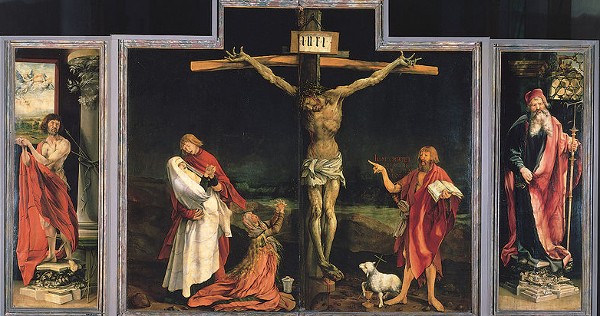 Revelation 16 and the Cross of Christ
What if we saw Revelation 16 as applying not just to the enemies of God, whether first-century, present, or future, but saw it as applying to the sacrifice of Christ on the Cross? Such an application can’t account for all of the details of the chapter, but I do believe it provides an immensely profitable way of reading and experiencing the chapter.
It is one thing to think of the seven bowls of God’s wrath in terms of some remote, symbolic judgment of anonymous people in the future, another to think of them in terms of the judgment of God that each of us deserves, and a most miraculous other to think of them in terms of the spotless Lamb of God who came to take away the sins of the world.
Each of the 4 kinds of biblical application to our lives, the literal, allegorical, moral (or tropological), and anagogical interpretations (see Introduction to Give Us This Day), can and should be used to interpret and understand Revelation 16. Today I want us to see the moral (how this applies to me today) and the anagogical (how it applies to Christ) interpretations.
First, and briefly for we must come to Christ today, you should understand that the seven bowls of God’s wrath are not just intended for the wicked nations and individuals of history and not just intended for apostate Israel but also intended for something much more personal and proximate: you! Read over the bowls of judgment, feel and smell the foul and loathsome sore that comes upon men with the mark of the Beast, and recall to your memory that you were once of the kingdom of dark.
See and smell the blood, dead sea and the stinking rotting creation contained therein; see and feel the scorching, relentless sun as it burns you one degree at time; hear the cries of those who gnaw at their tongues because of the plague of darkness that has fallen upon men; see the dragons, hear the beating of offensive wings as they leap upon the earth; and come to the thunderings and lightnings And earthquake of Almighty God as He divides the cities of men and causes their nations to fall, as every island flees away and even the mountains take cover. . .
. . . and remember that all of these plagues, the plagues of Egypt, the plagues of Hell, are your inheritance in the earth. These, and not what you now have, are what you deserve.
But more mysterious still than the fact that these seven bowls of wrath should have come upon you, upon us, is the truth that they fell instead upon the Lamb of God, Jesus Christ, the Son of God!
To begin with, notice Revelation 15:8 (remembering that originally there were no chapter and verse divisions in the Bible): “The temple was filled with smoke from the glory of God and from His power, and no one was able to enter the temple till the seven plagues of the seven angels were completed.” It is as if St. John is saying that no man can enter into the true temple of Heaven until the judgment of God upon man is satisfied. And, indeed, until Jesus Christ propitiated the wrath of God and hung on the Cross and rose from the dead and ascended into Heaven, no man had as of yet entered into Heaven.
On the Cross, Christ suffered every one of these plagues for you. On the Cross, God poured out upon the Son His wrath reserved for man. And so the springs of water become blood (verse 4), and so out of the side of Christ flow both water and blood, and out of his brow He sweated water like blood.
And on the Cross, His kingdom became full of darkness (verse 10), as the disciples fled along with the light and there was darkness over the face of the earth for three hours.
And on the Cross the minions and myrmidons of Pandemonium conspired against the Lord and against His Messiah, saying, “Let us break our bonds in sunder and cast away our cords from us!” This place, Golgotha, the Place of the Skull, is the place where the unclean spirits come out of the mouth of the dragon. This place, Calvary, the Cross of Christ, is the place where Satan has his final fateful encounter with Christ.
And so cursed is Christ who hung upon a tree, who became a curse for us (Galatians 3:13), for He made Him who knew no sin to became sin for us (2 Corinthians 5:21).
Now we know why Christ was in such anguish in Gethsemane. If this is the vision permitted to St. John, how much more must the Son of God Himself seen when He looked into the heavens that Thursday night? He was not just another man being horribly mangled on the Roman cross: He was the sacrificial Lamb of God who took upon Himself the sins and curses of mankind. Now we know why He sweat drops like blood and why He prayed to the Father for the cup to be taken away. What cup? The bowl of God’s wrath, described in Revelation 16. He was given the cup of the wine of fierceness of His wrath (verse 19). How cruel, how wonderful that Christ, knowing what cup He had to drink, offered the cup of salvation and health to His disciples on that same night!
And so when Christ has taken upon Himself the sins of the world and drunk the bowls of wrath for man, a loud voice came out of the temple of heaven, from the throne, crying with Him, “It is finished!” (verse 17.) And at that moment, there was an earthquake (verse 18.)
And so Revelation 16 solves two of my greatest problems in one day. On the one hand, I’m perplexed about what meaning such fantastic literature can have for me today, in my humdrum, trivial round and common task. On the other hand, I wonder how that ordinary, secular life that seems to be too normal to relate to the signs and wonders of the Bible can be shown to me to be a world filled with shock and awe and palpable mysteries beyond compare.
The answer to both my problems is the inspired imagination of St. John who, through the ministry of the Spirit, was shown that behind the façade of this ordinary world is a wonderful, whirling, wheeling world where Good Friday was not just another Roman execution but the battle of Armageddon and where weekly worship on the Lord’s Day is not just another regular event but a recreation of the work of the Lamb of God who drank the cup of woe and took away the sins of the world and offers instead the cup of life to us!
And to me, that’s manifold more miraculous and mesmerizing than some idle speculation about what might come upon the earth long after I have exited it.
Prayer: You are righteous, O Lord,
The One who is and who was and who is to be,
Because You have judged these things.
For they have shed the blood of saints and prophets,
And You have given them blood to drink.
For it is their just due.
You are worthy, O Lambe, to take the scroll,
And to open its seals;
For You were slain,
And have redeemed us to God by Your blood
Out of every tribe and tongue and people and nation,
And have made us kings and priests to our God;
And we shall reign on the earth.
Worthy is the Lamb who was slain
To receive power and riches and wisdom,
And strength and honor and glory and blessing!”
Blessing and honor and glory and power
Be to Him who sits on the throne,
And to the Lamb, forever and ever!
Points for Meditation:
- Meditate today upon the judgment from God that you deserve and the grace that He gives you instead.
- Meditate today upon the sacrifice of Christ for you on the Cross.
- Consider today how you might become more aware to the living miracle of Christ and His sacrifice in your life.
Resolution: I resolve to set aside some time today to become awake to the work of Christ for me and to find one way to appropriately praise or thank Him.
Crucifixion of Christ, Matthias Grunewald – in U.S. Public Domain
2018-07-22T17:02:02-05:00
Patheos Explore the world's faith through different perspectives on religion and spirituality! Patheos has the views of the prevalent religions and spiritualities of the world.
Revelation 9 – The Judgment of God
Last updated on: July 22, 2018 at 5:02 pm By Fr. Charles Erlandson
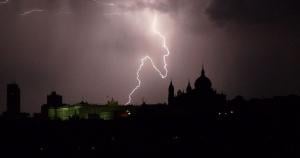
Revelation 9 The Judgment of God
Although it may not be clear exactly what St. John is talking about in Revelation 9, one thing’s for sure: I don’t want to be a part of it!
I’d like today to look at Revelation 9 as possibly being fulfilled in the first century by the Romans persecution of the Jews. The horrific historical reality of these terrors ought to be enough to convince us that the judgment of God is a certain reality, even if only at the end of time.
The well of the Abyss seemed to have been opened up against Jerusalem and Israel in the first century, a judgment for her rejection of the Lord greater even than the captivities by the Assyrians and Babylonians. Some have likened the five month period to the time in A.D. 66 when Gessius Florus, the procurator of Judea terrorized the Jews for five months, from May to September, trying to incite them to rebellion. Josephus date the beginning of the Jewish War from this time. This five month period from May to September is also the time when locusts normally appeared.
John’s description of the locusts, who are probably demons, bears similarities to the description of the invading heathen armies mentioned in the prophets. It’s also possible that these locusts were not only the Romans but the Zealots, from whom, Josephus tells us, the Jews had more to fear than from the Romans. “Zealots ransacked houses with their insatiable hunger for loot; they murdered men and violated women for sport; they drank their spoils with blood, and from mere satiety they shamelessly gave themselves up to effeminate practices, plaiting their hair and putting on women’s clothes, drenching themselves with perfumes and painting their eyelids to make themselves attractive. They copied not merely the dress, but also the passions of women, devising in their excess of licentiousness unlawful pleasures in which they wallowed as in a brothel. Thus they entirely polluted the city with their foul practices. Yet though they wore women’s faces, their hands were murderous. They would approach with mincing steps, then suddenly become fighting men, and, whipping out their swords from under their dyed cloaks, they would run through every passerby.”
In response to the Jewish rebellion provoked by Gessius Florus, Cestius invaded Palestine with large numbers of troops from the regions near the Euphrates River. When Cestius inexplicably retreated when near victory, the revolt against Rome was transformed into a war, the Jewish War that Josephus describes in such terrifying terms.
His descriptions include frenzied mobs attacking one another, deluded multitudes following after false prophets, mass murders, executions, and suicides, fathers slaughtering their own families, mothers eating their own children, and the crucifixion of Jews at the rate of 500 per day.
During the Feast of Unleavened Bread of A.D. 66, there were signs from heaven, according to Josephus. On the eighth day of the month Nisan at 3:00 a.m. a light shone so brightly that it looked like daylight. This lasted for half an hour. During the same feast the east gate of the inner sanctuary, a massive brass gate that could scarcely be moved by 20 men, opened of its own accord at midnight.
At the second Passover celebrated a month later for those who couldn’t attend the first, Josephus relates the following: “a supernatural apparition was seen, too amazing to be believed. What I have to relate would have been dismissed as an invention had it not been vouched for by eyewitnesses and followed by disasters that bore out the signs. Before sunset there were seen in the sky over the whole country chariots and regiments in arms speeding through the crowds and encircling the towns.”
Josephus also relates that this same year, “A star that looked like a sword stood over the city and a comet that continued for a whole year.” Josephus, a Jew, remarks that Jerusalem was “no longer the dwelling place of God.” Four years later, Josephus writes, “I believe that the Deity has fled from the holy places and stands now on the side of those with whom you are at war. Why, when an honorable man will fly from a wanton home and abhor its inmates, do you think that God still remains with this household in its iniquity — God who sees each hidden thing and hears what is wrapped in silence?”
Josephus also addresses the judgment that befell the Jews for their rejection of God, saying: “These men, therefore, trampled upon all the laws of man, and laughed at the laws of God; and as for the oracles of the prophets, they ridiculed them as the tricks of jugglers; yet did these prophets foretell many things concerning the rewards of virtue, and punishments of vice, which when these zealots violated, they occasioned the fulfilling of those very prophecies belonging to their own country.” He concludes that , “Neither did any other city ever suffer such miseries, nor did any age ever breed a generation more fruitful in wickedness than this was, from the beginning of the world.”
God will not be mocked. He may extend His mercy for many generations, even until the end of time. He may not judge any of us, not even the most reprobate of all, in this life. But the day is coming when God will mete out justice for all who have rejected Him.
This ought to motivate us to do two things. The first is to never forget that we should watch, for we know not when the Master is returning: at evening, at midnight, at the crowing of the cock, or at morning. The second is to be eternally and daily thankful that those who love and obey the Lord have been delivered from such a judgment.
Prayer: O God, who knowest the weakness and corruption of our nature, and the manifold temptations which we daily meet with; We humbly beseech thee to have compassion on our infirmities, and to give us the constant assistance of thy Holy Spirit; that we may be effectually restrained from sin, and excited to our duty. Imprint upon our hearts such a dread of thy judgments, and such a grateful sense of thy goodness to us, as may make us both afraid and ashamed to offend thee. And, above all, keep in our minds a lively remembrance of that great day, in, which we must give a strict account of our thoughts, words, and actions; and according to the works done in the body, be eternally rewarded or punished, by him whom thou hast appointed the Judge of quick and dead, thy Son Jesus Christ our Lord. Amen.
Points for Meditation:
- Meditate on the seriousness of sin.
- Meditate on the mercy of God.
Resolution: I resolve to thank God today for preserving me from His judgment.
2018-04-12T19:42:46-05:00
Patheos Explore the world's faith through different perspectives on religion and spirituality! Patheos has the views of the prevalent religions and spiritualities of the world.
Good Friday – Suffering as a Means to Union with Christ
Last updated on: April 12, 2018 at 7:42 pm By Fr. Charles Erlandson
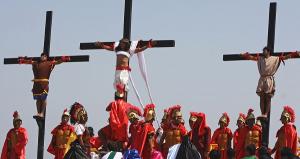
Good Friday – Suffering as a Means to Union with Christ
Because Christ has become man and suffered to redeem man, suffering is a primary means of participating in God’s nature and being united to Him.
But God’s presence, power, and love would not be given to man unless by some means the life of Christ, including His suffering, were communicated to His people. This means of communication is the Incarnation of Christ, in which the divine and human nature are joined together forever. All that Jesus accomplished through His suffering, including His exaltation and glorification in His Resurrection and Ascension, are now communicable to man.
So closely has God come to man that St. Peter teaches that we have become partakers of the divine nature (2 Peter 2:14). Jesus shares this new, “divinized” human nature with the Church, who partakes of Christ and has a blessed union with Him. The Church is called “The Body of Christ,” for Christ is truly in us through His Spirit. We have become “one flesh” with Him so that we are not only the Body of Christ but also his Holy Bride.
After Jesus’ human nature ascended into heaven in Acts 1, He sent His Holy Spirit into His Body to make it the living Body of Christ on earth. All throughout the book of Acts, therefore, the Church teaches and does what Jesus taught and did, since Jesus is living in and through the Church.
When the Church in the book of Acts and the Church today (for the Church is one) suffer, they suffer as Jesus Christ*.* The language Jesus uses when He called St. Paul on the road to Damascus is striking: “Saul, Saul, why are you persecuting Me?” (Acts 9:4.) So closely does Jesus identify with His Body and Bride the Church that even though Saul is persecuting the Church, Jesus ask Saul why he’s persecuting Him. The Church, therefore, as the Body of Christ and in union with Christ, suffers for, with, and as Jesus Christ.
We are especially united to Jesus Christ and His suffering through the sacrament of Baptism. St. Paul teaches: “Do you not know that all of us who have been baptized into Christ Jesus were baptized into his death? We were buried therefore with him by baptism into death, in order that, just as Christ was raised from the dead by the glory of the Father, we too might walk in newness of life. For if we have been united with him in a death like his, we shall certainly be united with him in a resurrection like his” (Romans 5:3-5.)
But when we are united to Christ in Baptism, we are united to all of Christ: first His suffering, then His death, and then His Resurrection and Ascension. Recapitulating the life of Christ, we suffer afflictions, and trials which then ultimately lead to glory and joy. For this reason Peter teaches: “But rejoice insofar as you share Christ’s sufferings, that you may also rejoice and be glad when his glory is revealed” (1 Peter 4:13).
At your baptism, the sign of Christ and His suffering was place upon you in the shape of the Cross, which also represents the Name of the Holy Trinity, the Father, the Son, and the Holy Spirit. At your baptism, Christ shared His Cross with you and has bound you to Him by it.
Because we are spiritually and mystically united to Christ, we will suffer as His Body. The suffering of the Church is, therefore, a sign that she belongs to Jesus Christ. We might even say that suffering is a sacrament of God’s presence. When the Church suffers for Jesus Christ, it must be because the Lord who suffered for us is very near.
The suffering of the Church is sacramental because it is a true participation in Christ and His sufferings. Our suffering is Christ’s suffering, and His suffering is our suffering. His Cross is our cross, and our crosses are His.
When we suffer, as members of His suffering Body, we each carry with us a splinter of the One True Cross. Unlike the medieval forgeries of the splinters of the Cross, however, each Christian who suffers is carrying a holy relic, a splinter of the suffering of Christ on the Cross.
God’s blessed and mighty redemption for us is, therefore, something He not only does for us but through us, for we are the Body of Christ, and God has made us partakers of His nature and redemption.
If God’ redemption were simply something He did to us, we’d be rocks.
If His redemption were something He did for us, we’d be children.
If God’s redemption were something He did with us, we’d be men.
But since God’s redemption is something He does through us, we are members of Christ’s Body.
Because of this, the Church also suffers as Christ, united to Him as His Body.
Many Christians believe that their suffering doesn’t count – that somehow the suffering that “counts” is only the suffering of those who are persecuted for Christ’s sake. But Christ has come to redeem all of our suffering, and all of our suffering is united to Christ by His suffering.
There is no suffering so small that it doesn’t count. All Christian suffering counts and is being redeemed by Christ!
Because Christ has become man and suffered to redeem man, suffering is a primary means of participating in God’s nature and being united to Him.
Cruxifixion – Creative Commons Attribution-Share Generic 2.0 license

2017-07-23T20:55:01-05:00
Patheos Explore the world's faith through different perspectives on religion and spirituality! Patheos has the views of the prevalent religions and spiritualities of the world.
I AM!
Last updated on: July 23, 2017 at 8:55 pm By Fr. Charles Erlandson
 John 18:1-11
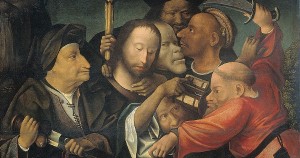
“Now when He said to them, ‘I AM,’ they drew back and fell to the ground.”
I’ll bet your English translation of the New Testament says not “I AM” but “I am He” or something like that. Yes, on one level Jesus is answering those who seek to know if He is Jesus of Nazareth.
But He is also saying so much more to them and to you.
This is a striking scene, worthy of our resting here for a while in meditation. Jesus has just been praying in the Garden of Gethsemane with His disciples, a scene that is described in more detail in the other Gospels.
Irony abounds all throughout Maundy Thursday and Good Friday! There is such a mismatch between what is happening on the surface and what is happening in the depths, between what is happening on earth and what is happening in heaven.
When Jesus has His Last Supper with His disciples, they probably don’t know what He has just done for them and to them. For all they know, they’re just celebrating another Passover. Little do they know that this is THE Passover, THE Sacrifice, THE Lamb of God that takes away the sins of the world.
When Jesus prays for them in John 17 in the Garden, little do they know that this is THE High Priest praying before the Father for them, offering up THE Sacrifice. Little did they know that at Gethsemane (which means “Olive Press”) that Jesus Christ is the Olive Tree, to which both Jews and Gentiles are related. He is also the olives that are about to be pressed and crushed, whose oil will flow and bring healing and anointing to the nations. Thus, the Anointed One is anointed not only with the Spirit but with His own sacrifice. The disciples cannot know any of this yet.
When Jesus crossed the Kidron Brook with His disciples, little would they have known that they had just seen the Crucifixion and the sacrifice of the sins of the world foreshadowed before them.
Remember that this is Thursday night of Passover week. Hundreds of thousands of Jews have come to Jerusalem to offer up their Passover lambs. These lambs were sacrificed in the Temple, and estimates for the number of lambs offered during this time range from 200,000 to 500,000. Where did all of this blood go, for if it had collected in the Temple, the priests, Levites, and worshipers would have drowned in blood?!
The blood of the lambs was poured into a pipe at the base of the altar of sacrifice. This blood was carried via water ducts to the Kidron Brook, the same brook that Jesus and the disciples cross over at approximately 11:00 p.m. on Maunday Thursday. As they cross, the full moon would have illuminated the brook to them, and they would have seen the blood mixed with the water of the brook. But only Jesus would have seen in it His own flow of blood and water while on the Cross.
Likewise, those who come to arrest Jesus have no idea WHO IT IS they are about to arrest. They probably think many different things about WHO HE IS – all of them wrong! The soldiers are looking for Jesus of Nazareth because it’s their job, and they must do it. The officers of the chief priests and Pharisees have been delegated to go and find this troublemaker who can no longer be tolerated. To them, He is a false prophet and teacher. And then there is Judas, the anti-disciple. Had he truly believed Who Christ was, how could he have betrayed Him?
And so our English Bibles help us to live by sight and not by faith. We’re allowed to think that Jesus is just saying, “Hi, guys. Yoo-hoo, over here. I’m Jesus of Nazareth. I’m the guy you want.”
When what He’s really saying is, “I AM!”
If all He were saying was, “I’m the one you’re looking for,” then why did those who came to arrest Him draw back and fall to the ground? What – did the thongs of their sandals get tangled up and they tripped?
No, they have an involuntary moment of prostration (an IMP, as we in the theo biz like to call it [actually, I just made that up]). They cannot help but draw backwards and fall to the ground because for one brief second they know in their souls who Jesus is. And then they come to their “senses” and get on with the surreal business of arresting God.
Hidden in the “I am he” is the “I AM!”
And so it is with our lives. We go through the day, reading our lives as if Jesus is just some guy saying, “I’m the one you’re looking for,” when really He’s proclaiming, “I AM!”
You will not always have a day of Resurrection or even a day of Crucifixion. Not all your prayers will be like those of Jesus in Gethsemane, and not all your Eucharists will seem like the Last Supper.
But The One Who Is I AM stands before you every day. He will not usually come with such force that like those coming to arrest Him you are compelled to draw back and fall down.
But the I AM who caused this armed guard and mob to fall back and down is the same I AM who in St. John’s vision caused him to fall down like a dead man. He is the same I AM who appeared to Moses in the burning bush and to Ezekiel in the wheels of heaven. And He Is the same I AM who appears before you each and every day of your life.
These men who came to arrest Jesus, though they saw a prominence of the glory of the Son flare forth for one second, did not believe. And yet we, who have not seen His glory in this way, believe.
Our days are spent hearing only the “I’m the one you’re looking for” from Christ. But we are to hear, beneath His small still voice, the “I AM!” that He is also proclaiming.
I AM is here before you this very day. He is the One you are looking for. When you see Him, do not treat Him as a common occurrence, regardless of the poverty in which He comes.
Treat Him like the I AM. Prostrate yourself before Him, not because the atomic blast of His glory compels you to but because the force of your love for Him compels you to.
Acknowledge Him to be I AM. Love Him as HE IS.
If you do this, you won’t need to worry about your response when He comes: “Should I bow or genuflect or prostrate myself. What shall I say?”
When you acknowledge Him as I AM, today and every day, throughout the day, you’ll know exactly how to respond.
Prayer: O Father of glory, this is the cry of our hearts – to be changed from one degree of glory to another, until, in the resurrection, at the last trumpet, we are completely conformed to the image of your Son, Jesus Christ our Lord. Until then we long to grow in grace and in the knowledge of our Lord, especially the knowledge of his glory. We want to see it as clearly as we see the sun, and to savor it as deeply as our most desired pleasure. O merciful God, incline our hearts to your Word and the wonders of your glory. Wean us from our obsession with trivial things. Open the eyes of our hearts to see each day what the created universe is telling us about your glory. Enlighten our minds to see the glory of your Son. We believe that you are the All-glorious One, and that there is none like you. Help our unbelief. Forgive the wandering of our affections and the undue attention we give to lesser things. In Jesus’ name we pray, amen. (John Piper)
Points for Meditation:
- Think about the ways in which you may be reminded about the presence of God in your life.
- Consider when are some likely times throughout the day when you can properly acknowledge the presence and person of Christ and can respond appropriately.
Resolution: I resolve to spend some time today to specifically acknowledge Jesus Christ as I AM, and to allow time to respond to Him appropriately.
Arrest of Jesus – U.S. Public Domain

2017-07-17T17:51:25-05:00
Patheos Explore the world's faith through different perspectives on religion and spirituality! Patheos has the views of the prevalent religions and spiritualities of the world.
How to Abide in Christ
Last updated on: July 17, 2017 at 5:51 pm By Fr. Charles Erlandson

 John 15:1-16
In John 15, Jesus teaches us that we are to abide in Him as the branches abide in the vine. This is an image of the continuous life of feasting on Christ that we are to have, and there are 3 main truths about abiding in Christ for us to eat this morning.
First, abiding in Christ means feeding off Him. As the branch only has life as it comes from the vine, we only have our spiritual life to the degree that it is Christ who lives in us. He is our heavenly food, the Bread of Heaven, as He offers Himself to us each day. If we feed off Him, then we become spiritually alive and healthy and bear fruit. But if we don’t, then we are like the dead branches we’ve all seen on trees that are still attached to the tree and look like they’re alive, but when you touch them you realize they are dead and brittle and will soon be broken off.
Sometimes, we seem to assume that this abiding in Christ by feeding will happen automatically, without our choosing to eat Christ. But in the Christian life, there is no IV drip, which enables us to lie comatose so that Christ feeds us regardless of our efforts to seek Him. As with the manna in the wilderness, we have to go out and gather it daily.
It’s true that by the grace of the one who planted us in Christ, we have a direct connection to the Vine who is the source of our life. Jesus Christ is in every sphere of our lives, offering Himself to us that we might abide in Him and be fed by and become like Him. But we have to come to Him in order to abide in Him.
Rather than seeing each day as something that just happens or as something that we ourselves direct, what if we began to see each day as the daily bread that Christ is giving us? Furthermore, what if we learned that each day, and all of its events, is the very way that Christ comes to us?
When we awake in the morning and when we go to sleep in the evening, Christ is there to greet us, offering Himself to us as our daily bread, our heavenly food. And we insist on choosing coffee and toast or milk and Lucky Charms instead. Every earthly food that we eat is to be a reminder that Christ is feeding us and that we must lift our mouths and eyes and ears to Him to take Him into us so that we might become Him. And so some of us remember to give thanks for our earthly food, that we might feed off Christ.
But it’s not just the eating of food where Christ is present but every activity of your every day. Each new activity of every day is an activity to which Christ is calling you to and is one of His means of feeding you, if only you will abide in Him. It’s been my intention to offer a brief prayer before I begin every new activity of the day so that I may continually feed off Christ and see Him in all things. I realize how imperfectly I’ve been doing this the last several weeks, and so I’ll begin again.
Andrew Murray wrote: “We begin to number our days not from the sun’s rising over the world, or by the work we do or the food we eat, but the daily renewal of the miracle of the manna – the blessedness of daily fellowship with Him who is the Life and the Light of the world.”
Second, abiding in Christ means being pruned by the Father (verse 2.) God’s pruning of us, also known as His loving discipline, and which comes in the many species of suffering and not getting what we want – is to teach us to abide in Him and to help us to bear more fruit. Without the suffering in our lives, we are much too likely to think that we have gotten the good things in our lives by ourselves – that we are autotrophs who produce their own food. If God doesn’t prune us, we grow chaotically for the sake of growth, and all of our growth is self-directed; all of God’s good gifts go to make us obese on His goodness because we have not expended His heavenly food on others, which is the fruit of love.
The suffering in your life is one of the greatest ways to abide in Christ and live in Him. If it’s true that our life is in Christ and that He abides in us and we in Him, then we get all of Christ: the glory, yes, but also the suffering. This week above all other weeks should remind us of this principle: first comes the suffering of the Crucifixion, and then the glory of the Resurrection. First comes Good Friday, and then Easter.
The suffering that is in your life is the suffering that God has assigned you. It is a personalized cross, lovingly measured and handcrafted by the Master Carpenter just for you. Your cross, the suffering in your life, becomes the means of participating in and abiding in Christ and His Cross, to which you are united. But only if you seek Christ through it; otherwise, suffering is just suffering (which stinketh!)
Therefore, when you see suffering in your life, greet it as Jesus Christ Himself, who is coming with His Cross for you.
Finally, abiding in Christ means bearing fruit. “As the branch cannot bear fruit of itself, unless it abides in the vine, neither can you, unless you abide in Me” (verse 4.) “By this is My Father glorified, that you bear much fruit; so you will be My disciples” (verse 8.)
A vine is planted for the fruit it yields, and it is judged on this basis. The vine and the branches do not exist only for themselves. What, then, is the fruit of which Christ speaks and which we are to bear? Primarily, it is to be made like Christ in all things. If you abide in Jesus Christ and feed off Him daily and minutely, then you will bear fruit because Christ will be living in and through you. In fact, if you are abiding in Christ, you can’t help but bear fruit. On the other hand, if your life seems dry and not to be bearing fruit; if you are not becoming more like Christ; if you are not sowing His seeds among others: then the odds are you haven’t been abiding in Him as much as you should.
There are many fruits that abiding in Christ yields. Chief among these is the abiding itself, the union with God through Christ that is the goal of all mankind and our greatest dream. Abiding in Christ, living with God, is nothing less than heaven itself.
But there are other magnificent fruits, such as the fruits of the Spirit that are increasingly manifested in us. When we abide in Christ, just as His suffering becomes our suffering (and vice versa), His joy becomes our joy (verse 11.) His love becomes our love (verse 12.)
How was it that the life of Jesus Christ yielded such abundant, sweet, and nourishing fruit? Because He abided in the Father. How did He do this? By perfectly obeying the will of the Father. This, too, is the way we feed off Christ and yield fruit: to obey His commandments. “If you keep My commandments, you will abide in My love, just as I have kept my Father’s commandments and abide in His love” (verse 10.)
Ultimately, love, that topic which I can’t seem to escape in my meditations on Christ and the Word, is the measure of how much we are abiding in Christ. Love God, obey His commandments, and love your neighbor by serving Him, and you will be abiding in Christ. To the degree that we are obeying God every moment and living in His presence, we will be abiding in Christ. To the degree that you abide in Christ, you will bear fruit, the fruits of love and obedience; of joy and the other fruits of the Spirit; of feeding others in love and spreading the Seed of Christ across the earth; and the most blessed fruit of all: His life-giving, awesome, ecstatic presence with you.
Resolution: I resolve to practice one way of abiding in Christ today: seeing Him in my daily life; turning more frequently to Him in prayer; accepting my suffering as His cross for me; giving up myself for another; etc.
Prayer: Father, I thank You for uniting me to Your Son Jesus Christ and giving me life in and through Him. Lord Jesus Christ, I thank You for feeding me with Yourself, my daily manna from heaven. I ask that You will give me an increased desire to abide in You that I may bear the fruits of the Spirit in my life, and especially the fruit of love, through Jesus Christ our Lord. Amen.
Points for Meditation:
- Meditate more deeply on the way you have chosen to abide in Christ today. Prepare to feed off Him in this way. Remember Him in this way throughout the day.
- Renew your vows for Lent one more time, using them as a means of abiding in Christ, and not allowing them to become routine or thoughtless.
Vine and Branches – Creative Commons Attribution-Share Alike 2.0 Generic license

2017-07-18T15:22:18-05:00
Patheos Explore the world's faith through different perspectives on religion and spirituality! Patheos has the views of the prevalent religions and spiritualities of the world.
Who is the Holy Spirit?
Last updated on: July 18, 2017 at 3:22 pm By Fr. Charles Erlandson
 John 14:15-31
As Jesus prepared to leave this world and ascend into heaven, He made sure that His ministry would continue from heaven. To that end, the Spirit was sent by the Father through the Son to earth, so that the disciples of Jesus Christ may be blessed. Entire theological treatises could and have been written on the importance of this point, but there’s one point we should all grasp this morning, and it is this: the Holy Spirit is nothing less than the presence of Jesus Christ with His people.
Imagine that you are one of the 12 disciples of Jesus Christ. It is the week before Jesus’ death, and He has some difficult things to say to you, His disciples, the most difficult of which is that He must shortly leave you. Later, you realize that He is referring not only to His Crucifixion, but especially to His Ascension into heaven and His departing from you in His flesh. But He recognizes your fears and says to you: “I will not leave you orphans; I will come to you.”
In this He recognizes that one of man’s greatest fears is that of being left alone.
Some time ago, a movie came out called Home Alone (with the obligatory sequels) that humorously preyed upon this fear, and horror movies are filled with true fear about the things that may happen when we are alone. God Himself told Adam, “It is not good for man to be alone.” I was very dependent on my parents growing up, even to a relatively late age, and had a fear that they would die before I was 21 and could make it to manhood. (Thank God they are still alive. As for me, I’m still working on the manhood thing!)
The disciples express this deep, human fear. Many times throughout their life with Jesus, the disciples had known fear, and they had learned to trust Him for all things (though not perfectly). He is the one who has calmed all their fears: fear of persecution, fear from want, fear from drowning, and the like. But perhaps their greatest fear of all was to be left by their Lord, from whom they were now inseparable, and who was the source of all their security in this world and the next.
This was the Lord for whom they had forsaken and left all else, and now He was telling them that He was leaving them.
But Jesus, even when His own soul is so troubled, comforts them and takes time to teach them. He also encourages and equips them for their future ministry, and He does all of this by promising the Holy Spirit.
Now if you put yourself in the disciples’ place for a moment, you might begin to realize what they’re going through. It’s simple for Jesus to say that He will send another Comforter or Helper (verse 16), but it’s not so simple for the disciples to accept it. It’s almost as if you tell a child, “I have to leave you forever now, but don’t worry, I’ll send another father to replace me later.” Even though they trust the relationship, this would not be easy, and there is no substitute for the human, fleshly presence.
But is this enough? To make sure it is enough, He also says, in verse 18, “I will not leave you orphans; I will come to you.” Now what does He mean, “I will come to you”? In the context, He can only mean that though He is going, He will also come. I don’t think He means His Second Coming: that would provide no comfort for the disciples then and there.
He means that though He will soon physically ascend into heaven, shortly after that, at Pentecost, He will send His Spirit to be with them in His place. In verse 19, He continues to make His meaning clear: “A little while longer and the world will see Me no more, but you will see Me.”
How can they see Him while the world does not? If this referred to only the Resurrection, the world could see that. But if it refers to the sending of the Spirit – only His disciples can see that.
Now here is where theology becomes very practical (as true theology always must). Jesus is leaving the disciples, and they need to be en-couraged. Jesus can only do this by sending them someone of equal value to Himself, someone who is, in fact, Him. Since Jesus promises to be with them, and He promises to send the Spirit as well, we find that the doctrine of the Trinity and the equality of the Son and the Spirit suddenly becomes very real and personal.
In other words, the Holy Spirit, as Peter tells us in his epistle, is the Spirit of Christ. Jesus can promise to be with His disciples because He is sending them His Spirit, the Holy Spirit, for The Holy Spirit is the very presence of Jesus with His people.
“But what about me?” I ask this morning.
What about you? What was true for Jesus’ disciples the week before His Crucifixion is just as true for us today. The Holy Spirit is the Spirit of Christ who is Jesus’ presence with His people. Like the disciples, we are prone to think it is an inferior thing for Christ to be gone in the body. “If only He were here in person, in the flesh,” we are tempted to think, “then things would be different.”
I hear people say, “I can’t wait to be with Jesus,” and certainly, it’s true that the joys of heaven are unsurpassed . . . . But I tell you that Jesus of Nazareth, the same one who walked the shores of the Holy Land 2000 years ago, and who will be with you in heaven . . . is with us – with you today. And He’s here through His Spirit that He sent first on Pentecost.
Wherever we find the Holy Spirit, there we find Jesus Christ Himself . . . because the Holy Spirit is the very presence of Jesus in your life. It is even proper to say that God Almighty, the Father, the Son, and the Holy Spirit dwells within you! Look at what Jesus says in verse 23. “If anyone loves Me, he will keep My word; and My Father will love him, and we will come to him and make our home with him.”
I’m sorry, but WOW!
Therefore, it is a far better thing that Jesus ascended into heaven and sent the Spirit. While on earth, in the flesh, Jesus was limited. Only a relatively few people were graced with His presence. But now, through the Spirit, Jesus Christ comes to millions upon millions all at the same time. It’s like the miracle of the feeding of the 5000 where earthly food was multiplied, except that by the Holy Spirit, the Bread of Heaven Himself rises and is multiplied and made available to the whole Church universal!
It is a far better thing as well because we not only have the presence of Christ standing beside us, as did the disciples: we also have the presence of Christ, through the Spirit, dwelling within us. We are now made God’s holy temple: God truly dwells with man, and His glory inhabits each of you, because by the Holy Pentecost the presence of Jesus Christ lives in each of you!
The miracles of the Incarnation, the Resurrection, and Pentecost reside in each of us each day!
Just where do we see Jesus Christ, through the Holy Spirit today? What do we find the Holy Spirit doing for us, as the Spirit of Christ? We find Him doing the very same things Jesus Christ did while here in the flesh.
The Holy Spirit therefore extends and completes the work of Christ, and He does it through you and me! As Jesus comforted His disciples, He comforts you, through His Spirit. He comforts us because Christ is present with you, and He comforts us especially through the Christians, or Christ-bearers, that He puts in our lives.
In our lives, the Spirit of Truth teaches Truth, and He does it once again through those in whom He dwells, that is, the saints. Through the Spirit, the Master encourages and equips the Church for ministry, just as He did His more famous disciples 2000 years ago.
Sometimes, we think, and even desire, that the Holy Spirit would work in a magical kind of way. But instead, we find that our King comes to us lowly and riding on a donkey and that the Holy Spirit does what He does through us humans.
And why? For the same reason that the Son became flesh: because of His love for
humanity and because of the glory it brings Him to do His will through sinners and weaklings like you and me!
Through the Holy Spirit, the Son was incarnate in the human flesh of Jesus Christ. And through the Holy Spirit, the Son is incarnated in the flesh of the Church, which is His Body. You, therefore, and this is the extremely practical lesson of Pentecost, you, the Body of Christ, are the very presence of Christ here on earth. And so you too must continue His ministry of comfort and love, of encouragement and equipping.
The Spirit is the presence of Jesus Christ, and He is in you. Therefore, do the works of the Spirit; do the things Jesus Christ did. And rejoice, that the Lord, though He has ascended, is with us!
Prayer: O God, who dost teach the hearts of thy faithful people by sending to them the light of thy Holy Spirit: grant us by the same Spirit to have a right judgment in all things and evermore to rejoice in his holy comfort; through the merits of Christ Jesus our Saviour, who liveth and reigneth with thee, in the unity of the same Spirit, one God, now and for ever. Amen.
Point for Meditation:
- If you truly saw that the Jesus Christ and the Spirit work through the people of God in your life, how might you see that Jesus has come to you today? How has He come to you in the past?
- How is He asking you to go in His name and serve Him today, as His presence on earth?
Resolution: I resolve to spend today looking for how Christ and the Spirit come to me today through the saints in my life.
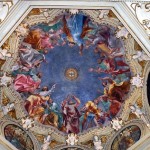
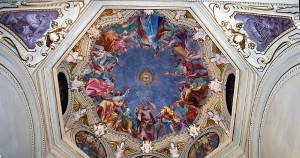
Pentecost, San Marco Milan – By permission of copyright holder

Follow Us!
TAKE THE
Religious Wisdom Quiz
Which high priest led in the reading and explaining of the Law to the people?
Select your answer to see how you score.
Eliashib Nehemiah Ezra Zerubbabel
Browse Our Archives
Select a Category Book Reviews Featured Give Us This Day Give Us This Day Devotional love me love my wife Love My Wife Reformed Catholicism Blog Spirit-Reality Take This Cup Uncategorized
Select a Month February 2022 November 2021 October 2021 August 2021 January 2021 December 2020 November 2020 September 2020 August 2020 July 2020 June 2020 May 2020 September 2018 July 2018 March 2018 November 2017 October 2017 September 2017 August 2017 July 2017 June 2017 May 2017 April 2017 March 2017 February 2017 January 2017 December 2016 November 2016 October 2016 September 2016 August 2016 July 2016 June 2016 May 2016 April 2016 March 2016 February 2016 January 2016 December 2015 November 2015 October 2015 September 2015 August 2015 July 2015 June 2015 May 2015 April 2015 March 2015 February 2015 January 2015 December 2014 November 2014 October 2014 September 2014 August 2014 July 2014 June 2014 May 2014 April 2014 March 2014 February 2014 January 2014 December 2013 November 2013 October 2013 September 2013 August 2013 July 2013 June 2013 May 2013 April 2013 March 2013 February 2013 January 2013 December 2012 November 2012 October 2012 September 2012 August 2012 July 2012 June 2012 May 2012 April 2012 March 2012 February 2012 January 2012 December 2011 November 2011 October 2011 September 2011 August 2011 July 2011 May 2011 April 2011 March 2011 February 2011 January 2011
TRENDING AT PATHEOS Evangelical

The REST of Your Life: A Creative Wrestles...
This week I had a conversation with a good friend from church....

How the author of the world's best hymn...
I've been working with John Newton for a while now. This makes...

Long before this Lectio Divina, Psalm 130 - the song - started...

What About the Trees? Another Living Parable
After I finished writing the last article about falling leaves as a...

Why Classical Education Is a Conversation, Not a...
Come and Read: Joy in Classical Education When I was a little...

Cornell University has received a great deal of negative publicity and intense...
view all Evangelical blogs
Ad-Free & Subscriber Log-In Subscription Support
- About Us
- 2026 Calendar
- Videos
- Podcasts
- Library of World Religions
- Faith In Media Tracker
- Advertise With Us
- Write for Us
- Privacy Policy
- Terms of Service
- Do Not Sell My Data
- Contact Us
- Radiant Digital
- Manage Newsletter Subscriptions
- Unsubscribe From Notifications
- Sitemap
Copyright 2008-2026, Patheos. All rights reserved.
Subscription Support Ad-Free & Subscriber Log-In
Follow Patheos