
BuddhistCatholicContemplativeEvangelicalGeneral ChristianHinduJewishLatter-day SaintMuslimNew VisionsProgressive Christian
Beliefs
- Buddhist
- Catholic
- Contemplative
- Evangelical
- General Christian
- Hindu
- Jewish
- Latter-day Saint
- More Voices
- Muslim
- New Visions
- Pagan
- Progressive Christian
Topics
- Religion News
- Food and Religion
- Sports and Religion
- Religious Art
- Religious Music and Entertainment
- Religious Events
- History and Religion
- Style and Religion
- Politics and Religion
- Women in Religion
- Recreation Outdoors and Religion
- Business Finance and Religion
- Careers Workplace and Religion
- Education and Religion
- Family Parenting and Religion
- Health Fitness and Religion
- Home and Religion
- Relationships and Religion
- Technology and Religion
- Travel and Religion
Columnists
- Buddhist Columnists
- Business Finance and Religion Columnists
- Careers Workplace and Religion Columnists
- Catholic Columnists
- Contemplative Columnists
- Education and Religion Columnists
- Evangelists Columnists
- Family Parenting and Religion Columnists
- General Christian Columnists
- Health Fitness and Religion Columnists
- Hindu Columnists
- History and Religion Columnists
- Home and Religion Columnists
- Jewish Columnists
- More Voices Columnists
- Latter Day Columnists
- Muslim Columnists
- New Visions Columnists
- Nonreligious Columnists
- Pagan Columnists
- Politics and Religion Columnists
- Progressive Columnists
- Recreation Outdoors and Religion Columnists
- Relationships and Religion Columnists
- Religion News Columnists
- Religious Art Columnists
- Religious Events Columnists
- Religious Music and Entertainment Columnists
- Sports and Religion Columnists
- Style and Religion Columnists
- Technology and Religion Columnists
- Travel and Religion Columnists
- Women in Religion Columnists
Resource Library
- 2026 Calendar
- Library of World Religions
- The 100 Most Holy Places on Earth
- Patheos Answers
- Podcasts
- Videos
- Faith Leaders Database
- Anglican Episcopalian
- Bahai
- Baptist
- Buddhism
- Christianity
- Confucianism
- Eastern Orthodoxy
- Hinduism
- Holiness and Pentecostal
- ISKCON
- Islam
- Judaism
- Lutheran
- Methodist
- The Church of Jesus Christ of Latter-day Saints
- New Age
- Paganism
- Presbytarian and Reformed
- Protestantism
- Religion Behind the Scenes
- Roman Catholic
- Scientology
- Shia Islam
- Sikhism
- Sufism
- Sunni Islam
- Taoism
- Zen
- See all religions
Research Tools
 Ad-Free & Subscriber Log-In Subscription Support
Ad-Free & Subscriber Log-In Subscription Support
Follow Patheos 

- Trending:
- Forgiveness
- |
- Marriage
- |
- Consciousness
- |
- Death Penalty
- |
- Election
- |
- Halloween
 Give Us This Day
- Home
- Evangelical
- Saturday of Pentecost Sunday (Trinity Eve) – 2 Corinthians 13:5-14
Saturday of Pentecost Sunday (Trinity Eve) – 2 Corinthians 13:5-14
Last updated on: June 7, 2014 at 3:00 pm by Fr. Charles Erlandson
Saturday of Pentecost Sunday (Trinity Eve) – 2 Corinthians 13:5-14 2014-06-07T15:00:33-05:00 Fr. Charles Erlandson
Patheos Explore the world's faith through different perspectives on religion and spirituality! Patheos has the views of the prevalent religions and spiritualities of the world.
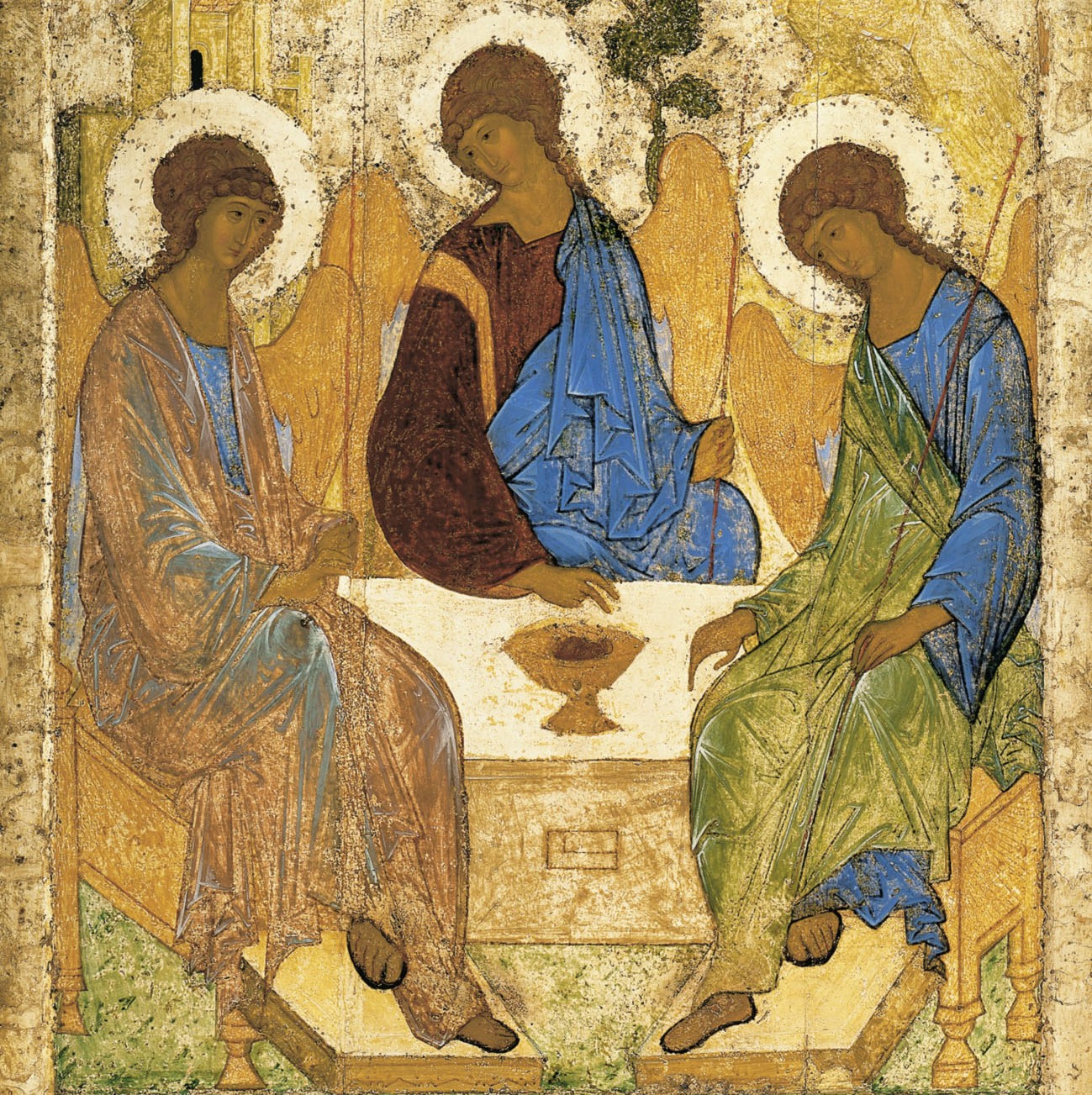
 2 Corinthians 13:5-14
In St. Paul’s final words of the two letters we have of his to the Corinthian church, Paul speaks of power and weakness in the Kingdom of God, especially as it relates to Christian ministry. For those who are familiar with St. Paul’s writings, it will come as no surprise (even if it remains somewhat strange and mysterious) that St. Paul so often speaks of his weakness and yet even 2000 years later manifests himself in his letters as the most powerful personality in the history of the Church outside of Jesus Christ Himself.
Theologically, Paul’s strength in his weakness is no mystery: we’ve all read 2 Corinthians 12:9 and understand that Jesus told him: “My strength is made perfect in weakness.” Therefore, Paul himself can say in 12:10, “For when I am weak, then I am strong.” We know as well that although Jesus was crucified in weakness, He lives by the power of God (13:3). But what are we to make of Paul’s words in verse 4, that “we are also weak in Him, but we shall live with Him by the power of God toward you”?
Sometimes Paul seems like the big bad wolf, ready to blow the Corinthian house down, and other times he comes as gentle as a dove. How can Paul juggle the two?
It seems as if the following is what is going on in the life and ministry of St. Paul and what is commended to our lives and ministries as well. Paul, who believed himself strong in himself, was shown his weakness by the power of the resurrected Lord Jesus Christ. Paul learned, through his ministry of suffering, that he was weak not only before God but also before the demands of a life that was submitted to the Lord and that would suffer on behalf of the Lord. Having submitted and been conquered by His Lord, Paul’s weakness now became his strength because it was now the power of Jesus Christ, and not his own power, that inspired and vivified him.
In his own self, then, Paul is weak, but in the Lord, he is strong. For this reason, Paul can continually submit to the weakness of his own infirmities, the persecution of his ministry, and the thankless and painful job of ministering to the Corinthian church and other churches. Yet because Paul was submitted to Christ, he was strengthened to do all that God had called him to do.
There is another side to Paul’s strength and weakness. In 13:10, and in other places, Paul makes clear that he could come to the Corinthians with his full strength, authority, and ferocity. At times, Paul does speak and act with great strength and authority, and he reminds the Corinthians that he can be like this whenever it becomes necessary.
But how many times does he prefer to come like a gentle father to his children, not wishing to have to rebuke or discipline them? Paul, therefore, will come with the strength of humility, love, and self-denial but with the power of Christ. First, gently and patiently, and then forcefully and with discipline, if necessary.
Following the example of his Master, his principle is that “we are weak that you may be made strong.” He will spend and be spent on the church he loves, and when he is emptied of self and weak, the love and strength of Christ inhabits him.
In spite of the difficulties of his ministry and the hardheadedness of the Corinthians – no, actually because of them – Paul’s final words to the Corinthians are: “The grace of the Lord Jesus Christ, and the love of God, and the communion of the Holy Spirit be with you all. Amen.”
As we prepare for Trinity Sunday and the Trinity season, St. Paul would have us seek the completeness of the Trinity (verse 11). Acknowledging our own weakness, we are made strong and perfect in the Lord. Humbling ourselves, we are exalted to the presence of the perfect Trinity.
Living in love and peace, the God of love and peace will be with us (verse 11). Seeking the Holy Trinity in all things, the Father, the Son, and the Holy Spirit, the grace of our Lord Jesus Christ, and the love of God the Father, and the fellowship of the Holy Spirit will be with us all. Amen.
Prayer: Father, thank You for Your love in giving up Your Son to save us from ourselves; Jesus, thank You for Your all-sufficient grace that is made perfect in my weakness; Spirit, thank You for the communion of saints, the Church, which You sustain with Your presence in us all. Help me to accept Your love, grace, and communion, that I may be made a living member in Your Body, the Church.
Points for Meditation:
1. Make a list of ways in which you still assert your own strength. Choose the most pressing one to meditate on more fully, and then practice denying yourself and giving this way to God.
2. Meditate on the ways in which you are willing to give up yourself but need to petition the Lord more fervently for His grace and strength.
Resolution: I resolve to allow myself to be weak in my own strength, that I might be strong in Christ. I resolve to find one way in which I have not accepted God’s call to give up myself and rely on His strength and to practice giving it up to God.
© 2014 Fr. Charles Erlandson
Give Us This Day daily devotional
Previous Post

June 7, 2014
Friday of Pentecost Sunday (Ember Friday) - Acts 6
Next Post
June 7, 2014 Monday of Trinity Sunday - Acts 7:1-16
Browse Our Archives
Select a Category Book Reviews Featured Give Us This Day Give Us This Day Devotional love me love my wife Love My Wife Reformed Catholicism Blog Spirit-Reality Take This Cup Uncategorized
Select a Month February 2022 November 2021 October 2021 August 2021 January 2021 December 2020 November 2020 September 2020 August 2020 July 2020 June 2020 May 2020 September 2018 July 2018 March 2018 November 2017 October 2017 September 2017 August 2017 July 2017 June 2017 May 2017 April 2017 March 2017 February 2017 January 2017 December 2016 November 2016 October 2016 September 2016 August 2016 July 2016 June 2016 May 2016 April 2016 March 2016 February 2016 January 2016 December 2015 November 2015 October 2015 September 2015 August 2015 July 2015 June 2015 May 2015 April 2015 March 2015 February 2015 January 2015 December 2014 November 2014 October 2014 September 2014 August 2014 July 2014 June 2014 May 2014 April 2014 March 2014 February 2014 January 2014 December 2013 November 2013 October 2013 September 2013 August 2013 July 2013 June 2013 May 2013 April 2013 March 2013 February 2013 January 2013 December 2012 November 2012 October 2012 September 2012 August 2012 July 2012 June 2012 May 2012 April 2012 March 2012 February 2012 January 2012 December 2011 November 2011 October 2011 September 2011 August 2011 July 2011 May 2011 April 2011 March 2011 February 2011 January 2011
Follow Us!
TAKE THE
Religious Wisdom Quiz
How many plagues did God send upon Egypt?
Select your answer to see how you score.
12 7 5 10
Related posts from Give Us This Day

James Clark - Book Review of Take This...

Revelation 8 - Heavenly Worship and Prayer
What Do We Mean by the Communion of...

The Day I Prayed for the G.I. Joe...
TRENDING AT PATHEOS Evangelical

The REST of Your Life: A Creative Wrestles...
This week I had a conversation with a good friend from church....

How the author of the world's best hymn...
I've been working with John Newton for a while now. This makes...

Long before this Lectio Divina, Psalm 130 - the song - started...

What About the Trees? Another Living Parable
After I finished writing the last article about falling leaves as a...

Why Classical Education Is a Conversation, Not a...
Come and Read: Joy in Classical Education When I was a little...

Cornell University has received a great deal of negative publicity and intense...
view all Evangelical blogs
Ad-Free & Subscriber Log-In Subscription Support
- About Us
- 2026 Calendar
- Videos
- Podcasts
- Library of World Religions
- Faith In Media Tracker
- Advertise With Us
- Write for Us
- Privacy Policy
- Terms of Service
- Do Not Sell My Data
- Contact Us
- Radiant Digital
- Manage Newsletter Subscriptions
- Unsubscribe From Notifications
- Sitemap
Copyright 2008-2026, Patheos. All rights reserved.
Subscription Support Ad-Free & Subscriber Log-In
Follow Patheos