
BuddhistCatholicContemplativeEvangelicalGeneral ChristianHinduJewishLatter-day SaintMuslimNew VisionsProgressive Christian
Beliefs
- Buddhist
- Catholic
- Contemplative
- Evangelical
- General Christian
- Hindu
- Jewish
- Latter-day Saint
- More Voices
- Muslim
- New Visions
- Pagan
- Progressive Christian
Topics
- Religion News
- Food and Religion
- Sports and Religion
- Religious Art
- Religious Music and Entertainment
- Religious Events
- History and Religion
- Style and Religion
- Politics and Religion
- Women in Religion
- Recreation Outdoors and Religion
- Business Finance and Religion
- Careers Workplace and Religion
- Education and Religion
- Family Parenting and Religion
- Health Fitness and Religion
- Home and Religion
- Relationships and Religion
- Technology and Religion
- Travel and Religion
Columnists
- Buddhist Columnists
- Business Finance and Religion Columnists
- Careers Workplace and Religion Columnists
- Catholic Columnists
- Contemplative Columnists
- Education and Religion Columnists
- Evangelists Columnists
- Family Parenting and Religion Columnists
- General Christian Columnists
- Health Fitness and Religion Columnists
- Hindu Columnists
- History and Religion Columnists
- Home and Religion Columnists
- Jewish Columnists
- More Voices Columnists
- Latter Day Columnists
- Muslim Columnists
- New Visions Columnists
- Nonreligious Columnists
- Pagan Columnists
- Politics and Religion Columnists
- Progressive Columnists
- Recreation Outdoors and Religion Columnists
- Relationships and Religion Columnists
- Religion News Columnists
- Religious Art Columnists
- Religious Events Columnists
- Religious Music and Entertainment Columnists
- Sports and Religion Columnists
- Style and Religion Columnists
- Technology and Religion Columnists
- Travel and Religion Columnists
- Women in Religion Columnists
Resource Library
- 2026 Calendar
- Library of World Religions
- The 100 Most Holy Places on Earth
- Patheos Answers
- Podcasts
- Videos
- Faith Leaders Database
- Anglican Episcopalian
- Bahai
- Baptist
- Buddhism
- Christianity
- Confucianism
- Eastern Orthodoxy
- Hinduism
- Holiness and Pentecostal
- ISKCON
- Islam
- Judaism
- Lutheran
- Methodist
- The Church of Jesus Christ of Latter-day Saints
- New Age
- Paganism
- Presbytarian and Reformed
- Protestantism
- Religion Behind the Scenes
- Roman Catholic
- Scientology
- Shia Islam
- Sikhism
- Sufism
- Sunni Islam
- Taoism
- Zen
- See all religions
Research Tools
 Ad-Free & Subscriber Log-In Subscription Support
Ad-Free & Subscriber Log-In Subscription Support
Follow Patheos 

- Trending:
- Forgiveness
- |
- Marriage
- |
- Consciousness
- |
- Death Penalty
- |
- Election
- |
- Halloween
 Give Us This Day
- Home
- Evangelical
- Saturday of the Second Sunday in Advent – Revelation 18:1-10
Saturday of the Second Sunday in Advent – Revelation 18:1-10
Last updated on: December 11, 2015 at 5:37 pm by Fr. Charles Erlandson
Saturday of the Second Sunday in Advent – Revelation 18:1-10 2015-12-11T17:37:17-05:00 Fr. Charles Erlandson
Patheos Explore the world's faith through different perspectives on religion and spirituality! Patheos has the views of the prevalent religions and spiritualities of the world.
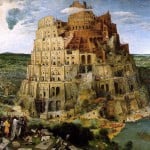 Revelation 18:1-10
“Come out of her, my people, lest you share in her sins, and lest you receive of her plagues. For her sins have reached to heaven, and God has remembered her iniquities. . . . Alas, alas, that great city Babylon, that mighty city! For in one hour your judgment has come.”
What a terrible proclamation, what misery and judgment!
I’m glad that this part of Revelation has nothing to do with me! (Yeah, right!) Even though I tend toward the preterist interpretation of Revelation, that it is primarily about the heaven and earth shattering things that have already happened with the coming of Christ and the revolution in the heavens, I also believe that every part of the Bible continues to have application for me and for other Christians.
The truth is that ever since the King of Babylon began to roam the earth, there have always been Babylons, and these Babylons are places of demons, prisons for foul spirits, and places where not only human merchandise but also human bodies and souls are bought and sold. And the temptation of God’s people has always been to become to attached to and too intimate with the inhabitants of Babylon.
It was this marrying outside the Covenant that marked Esau’s rejection of God, that led Solomon astray, and that was the refrain of the Old Testament prophets for centuries. Even as Israel was leaving Egypt, one of many Babylons and the land of slavery, the Israelites were busy longing for the good old days of slavery and bricks made without straw. They preferred the leeks and onions of Egypt over the bread of heaven from God.
But this passage has nothing to do with us.
Except for the fact that there are still Babylonian Empires all around us, scattered throughout the nations of the world. Even the good ol’ U.S. of A is a Babylon in a way. How are the mighty fallen! How far have we come from a nation of Christians who thought that their Christianity should be a part of every part of their life to a nation where a majority of people call themselves Christians but half of them get divorced; believe the church and state should be entirely separate things; where we send our children to be educated in institutions that are legally required to act as if God doesn’t exist and where a collective amnesia of the Christian origins of the U.S. is systematically indoctrinating our children; where we buy and sell the wares of Babylon and are quantity consumers of the myths and legends of Babylon that come packaged as the movies and TV shows we watch and the music we listen to; where we have hired the government to give our alms for us; and where we’re raising a majority of children who do not believe in moral absolutes.
When I read the writings of the early Church Fathers, I’m always amazed at how morally strict they were. Every Christian I know wants the Church to be more like the early church, and yet when we look at how they lived and worshiped, we continue to pick and choose what we want to do. The early Christians lived smack dab in the middle of one of the many Babylons of the world – the Roman Empire. They saw the seductions and the diseases of Babylon close up, and their godly counsel was to stay safely away from becoming a Babylonian, even while living among them. St. Chrysostom, for whom a precious parish I once served in Hot Springs was named, warned in his sermons about the evils of horse racing, something we would not even think twice about. I find this ironic, since St. Chrysostom’s Reformed Episcopal Church was only a block away from Oaklawn Racetrack in Hot Springs.
The truth is that the United States is more Babylonian than at any time in its past 400 years. Not that Babylon wasn’t also with the early American Christians: we find Babylon wherever we find men. But we are slouching toward Babylon once again, and as Christians we need to be prepared. We need to understand the crafts and assaults of the devil and of the earthly empires he establishes.
If you’ve ever wondered how a nation where the vast majority of people call themselves Christians can look less and less like the kingdom of Christ, the answer must be that we are too much infatuated with Babylon. Maybe our first love of Christ has grown cold, or maybe we’ve been seduced by the painted faces of Babylon whores. Maybe we’ve worshiped too much at the altar of Mammon, and maybe we’ve made alliances with our enemies as a conflict resolution strategy.
We know the end of Babylon, and it’s not a pretty sight. And we know the end of those who wed themselves to Babylonians and the Babylonian culture, and it’s also not pretty. We need to make sure that we do not share in the sins of Babylon (verse 5), for they have reached to heaven again. We need to stop glorifying ourselves and living so luxuriously (verse 7) in Babylon and come out of our own personal Babylons before it’s too late. For there are Babylons all around us, even here in the United States. And many of us are busy creating our own personal Babylons as well.
Strong is the Lord who judges Babylon, but strong is the Lord who redeems His people from out of the land of Babylon as well.
Resolution: I resolve to meditate on my life in Babylon. How much have I become a Babylonian and how much have I remained a Christian whose citizenship is in heaven?
Prayer: Lord God Almighty, who delivers His people out of the land of bondage, I ask that you would deliver your people once more. Once again, we have allowed ourselves to be tempted and led astray like lost sheep, and we have wandered from Your Land. Help us to glorify You in our lives, and not ourselves, and help us to not love luxury so much that it distracts us from our ministry as priests and prophets in the land. Amen.
Point for Meditation: What is one area in my life in which I am living too much as a Babylonian? What would it take for me to begin to leave Babylon in this area?
© 2015 Fr. Charles Erlandson
Previous Post

December 10, 2015
Friday of the Second Sunday in Advent - Revelation 15
Next Post
December 13, 2015 Monday of the Third Sunday in Advent - Revelation 18:11-24
Browse Our Archives
Select a Category Book Reviews Featured Give Us This Day Give Us This Day Devotional love me love my wife Love My Wife Reformed Catholicism Blog Spirit-Reality Take This Cup Uncategorized
Select a Month February 2022 November 2021 October 2021 August 2021 January 2021 December 2020 November 2020 September 2020 August 2020 July 2020 June 2020 May 2020 September 2018 July 2018 March 2018 November 2017 October 2017 September 2017 August 2017 July 2017 June 2017 May 2017 April 2017 March 2017 February 2017 January 2017 December 2016 November 2016 October 2016 September 2016 August 2016 July 2016 June 2016 May 2016 April 2016 March 2016 February 2016 January 2016 December 2015 November 2015 October 2015 September 2015 August 2015 July 2015 June 2015 May 2015 April 2015 March 2015 February 2015 January 2015 December 2014 November 2014 October 2014 September 2014 August 2014 July 2014 June 2014 May 2014 April 2014 March 2014 February 2014 January 2014 December 2013 November 2013 October 2013 September 2013 August 2013 July 2013 June 2013 May 2013 April 2013 March 2013 February 2013 January 2013 December 2012 November 2012 October 2012 September 2012 August 2012 July 2012 June 2012 May 2012 April 2012 March 2012 February 2012 January 2012 December 2011 November 2011 October 2011 September 2011 August 2011 July 2011 May 2011 April 2011 March 2011 February 2011 January 2011
Follow Us!
TAKE THE
Religious Wisdom Quiz
Which Psalm is famous as the "Shepherd's Psalm"?
Select your answer to see how you score.
Psalm 1 Psalm 23 Psalm 119 Psalm 51
Related posts from Give Us This Day

James Clark - Book Review of Take This...

Revelation 17 - Who is Mystery Babylon?
John 6:1-14 - God is Calling you
John 1:19-34 - John the Baptist
TRENDING AT PATHEOS Evangelical

How the author of the world's best hymn...
I've been working with John Newton for a while now. This makes...

Long before this Lectio Divina, Psalm 130 - the song - started...

What About the Trees? Another Living Parable
After I finished writing the last article about falling leaves as a...

Why Classical Education Is a Conversation, Not a...
Come and Read: Joy in Classical Education When I was a little...

Falling Leaves: A Living Parable on Letting Go
I’ve spent the vast majority of my life in the southeast corner...

Cornell University has received a great deal of negative publicity and intense...
view all Evangelical blogs
Ad-Free & Subscriber Log-In Subscription Support
- About Us
- 2026 Calendar
- Videos
- Podcasts
- Library of World Religions
- Faith In Media Tracker
- Advertise With Us
- Write for Us
- Privacy Policy
- Terms of Service
- Do Not Sell My Data
- Contact Us
- Radiant Digital
- Manage Newsletter Subscriptions
- Unsubscribe From Notifications
- Sitemap
Copyright 2008-2026, Patheos. All rights reserved.
Subscription Support Ad-Free & Subscriber Log-In
Follow Patheos