
BuddhistCatholicContemplativeEvangelicalGeneral ChristianHinduJewishLatter-day SaintMuslimNew VisionsProgressive Christian
Beliefs
- Buddhist
- Catholic
- Contemplative
- Evangelical
- General Christian
- Hindu
- Jewish
- Latter-day Saint
- More Voices
- Muslim
- New Visions
- Pagan
- Progressive Christian
Topics
- Religion News
- Food and Religion
- Sports and Religion
- Religious Art
- Religious Music and Entertainment
- Religious Events
- History and Religion
- Style and Religion
- Politics and Religion
- Women in Religion
- Recreation Outdoors and Religion
- Business Finance and Religion
- Careers Workplace and Religion
- Education and Religion
- Family Parenting and Religion
- Health Fitness and Religion
- Home and Religion
- Relationships and Religion
- Technology and Religion
- Travel and Religion
Columnists
- Buddhist Columnists
- Business Finance and Religion Columnists
- Careers Workplace and Religion Columnists
- Catholic Columnists
- Contemplative Columnists
- Education and Religion Columnists
- Evangelists Columnists
- Family Parenting and Religion Columnists
- General Christian Columnists
- Health Fitness and Religion Columnists
- Hindu Columnists
- History and Religion Columnists
- Home and Religion Columnists
- Jewish Columnists
- More Voices Columnists
- Latter Day Columnists
- Muslim Columnists
- New Visions Columnists
- Nonreligious Columnists
- Pagan Columnists
- Politics and Religion Columnists
- Progressive Columnists
- Recreation Outdoors and Religion Columnists
- Relationships and Religion Columnists
- Religion News Columnists
- Religious Art Columnists
- Religious Events Columnists
- Religious Music and Entertainment Columnists
- Sports and Religion Columnists
- Style and Religion Columnists
- Technology and Religion Columnists
- Travel and Religion Columnists
- Women in Religion Columnists
Resource Library
- 2026 Calendar
- Library of World Religions
- The 100 Most Holy Places on Earth
- Patheos Answers
- Podcasts
- Videos
- Faith Leaders Database
- Anglican Episcopalian
- Bahai
- Baptist
- Buddhism
- Christianity
- Confucianism
- Eastern Orthodoxy
- Hinduism
- Holiness and Pentecostal
- ISKCON
- Islam
- Judaism
- Lutheran
- Methodist
- The Church of Jesus Christ of Latter-day Saints
- New Age
- Paganism
- Presbytarian and Reformed
- Protestantism
- Religion Behind the Scenes
- Roman Catholic
- Scientology
- Shia Islam
- Sikhism
- Sufism
- Sunni Islam
- Taoism
- Zen
- See all religions
Research Tools
 Ad-Free & Subscriber Log-In Subscription Support
Ad-Free & Subscriber Log-In Subscription Support
Follow Patheos 

- Trending:
- Forgiveness
- |
- Marriage
- |
- Consciousness
- |
- Death Penalty
- |
- Election
- |
- Halloween
 Give Us This Day
- Home
- Evangelical
- Saturday of 2nd Sunday after Easter – 1 Peter 5:8-14
Saturday of 2nd Sunday after Easter – 1 Peter 5:8-14
Last updated on: April 16, 2016 at 11:33 pm by Fr. Charles Erlandson
Saturday of 2nd Sunday after Easter – 1 Peter 5:8-14 2016-04-16T23:33:07-05:00 Fr. Charles Erlandson
Patheos Explore the world's faith through different perspectives on religion and spirituality! Patheos has the views of the prevalent religions and spiritualities of the world.
 1 Peter 5:8-14
“What went wrong?”
This is a question that the Church in every age has asked herself. We should not think that we’re alone in rightly asking this question. It was certainly a question many churchmen asked themselves before, during, and after the Reformation period.
In 1833, the Church of England was in sad shape. Remnants of the feudal system and Erastian church – one in which the State has a large say over Church affairs – were essential parts of the English Church. This was nothing new, but by 1833 there was a clamor for change. People were tired of the pluralism, by which one man could have 2 or 3 or 4 parishes or church posts, based on who he was in society or who he knew. While the average priest was paid 50 pounds/ year, barely enough to survive, others had ancient positions worth thousands of pounds a year – and then they’d keep all but 50 pounds or so and would pay some poor priest to do all of the work. High Church members were called “High and Dry,” priests came to church in fox-hunting outfits, Holy Communion was infrequent, the Evangelical Revival was a spent force, and the forces of rationalism were increasing.
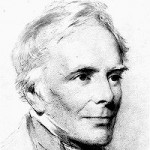
On July 14, 1833 John Keble gave a sermon that was a clarion call for the Church to get out from under the thumb of the State. That sermon marked the beginning of the Oxford Movement, a reform movement in the Church of England that sought to revive Catholic principles, a high view of the Church, Sacraments, and Christian year, to emphasize holiness and a serious religion, and to raise the pastoral care of priests and the view of Christian duties for all. It elevated the English religion everywhere.
By the end of the century, however, a Liberal Catholicism had begun to set in among whom vestments, candles, incense, and genuflection were on the cutting edge of being cool but the Bible was viewed with suspicion.
What went wrong? Beginning in 1833 the Church of England had one of the 2 or 3 greatest revivals it had ever had, and a generation or 2 later, things were already declining.
Some of you may have been Episcopalians back in the 50s or 60s and look at today and see a homosexual man who left his wife and kids for his male partner and gets rewarded by being consecrated a bishop; preparation for same-sex rites; priests who preach based on the daily readings not of the Church but of the newspaper; seminaries that are hotbeds of homosexuality and train their students to disbelieve the Bible.
What happened? How did we get here?
This is a long story, and one I’m not going to tell you today. Instead, I want to look at one small but absolutely crucial part of what went wrong. I want to look at us.
What went wrong, in the most fundamental sense, is that Adam and Eve sinned and we have a fallen and sinful nature. This is what went wrong.
More specifically, the fish has rotted from both the head down and the tail up. We’ve had corrupt and cowardly leaders and complacent and complicit followers. Our churches have been filled with both wolves in sheep’s clothing and sheep who sedately fatten themselves for the slaughter.
In verses 2-4 of 1 Peter 5, St. Peter exhorts the elders of the churches to act as good shepherds. They are, first of all, to be servants, as overseers. The minute a man stops being a servant, he stops being a good shepherd and evolves toward being a wolf. As Bp. Grote taught me when I was first ordained as a deacon in the Reformed Episcopal Church, a man never stops being a deacon when he becomes a priest or bishop. (And then he promptly ordered me to pick up his bags! This was, of course, not an exercise in lordship but a test of my servanthood.)
A man who desires to lead in God’s Church must serve willingly, and not for his own gain. He must rule not as a lord but as his Lord, who came as a suffering servant.
There is much more that could be said about what church leaders should look like, but I want to talk now about you. We know the holy and heavy obligation that Church leaders are under, but what is your part? In verse 8, Peter reminds us to be sober and vigilant because our adversary the devil walks about like a roaring lion, seeking whom he may devour.
Of course, if possible, he would dearly like to devour Church leaders: they’re more calorie dense. He can eat like a snake and consume a Church leader who might sate him for a longer time, or he can eat like a bird, consuming his weight in lay people by snacking constantly on some of us.
One of the keys to resisting the devil and in keeping us from going wrong is to be vigilant: vigilant with regard to our own lives and those of our leaders.
First, take heed for your life and doctrine. In coming to grips with our sinful nature and our part in where Anglicanism (or whatever your church tradition) is, it occurs to me that what went wrong is that a lot of people fell asleep on the job. We have one real job in this life: to love God and serve Him. Though this is a big job and takes many forms, it is our essential job in this life. And too often we fall asleep on the job.
The way to prevent the church from failing, the way to undo the evil that has been done, is to Take Heed to Your Life and Doctrine. “Be sober, be vigilant; because your adversary the devil walks about like a roaring lion, seeking whom he may devour.” There is true evil in this world, and the way to conquer it is to be sober and vigilant. We have a real and rapacious enemy, and we can’t afford to be distracted by amusements or anesthesias.
The way to be sober and vigilant is to take heed to your life and doctrine (1Timothy 4:16). I still remember the sermon that Bp. Grote preached when I was ordained: it was from 1Timothy 4:16. He told me to take heed to my life, including my body and my family. We are to take care with all that God has given us. Normally, we know how to do this with our bodies. We get checkups, we take medicine, and we pay attention to signs that something is not right. Often, it’s not until we’re really sick or our life is threatened that we get serious.
But in your spiritual life, don’t wait until you’re sick or nearly dead, or your church is: be vigilant, and take heed to your life and doctrine now.
Take heed to yourself for the sake of the Church. But what does my life have to do with evils in Church? I began by talking about how the Church declines and falls into sin. But what does that have to do with you?
You know the answer to this: we are the Church. The Church is every member of the Body of Christ united to Him, and so the Church is you and me. When one member has a cold, the rest sneeze; we are connected to one another; we rejoice when our brothers and sisters rejoice; we weep when they weep.
John Donne, one of greatest of Anglican poets (and also a priest) wrote:
“The church is Catholic, universal, so are all her actions; all that she does belongs to all. When she baptizes a child, that action concerns me; for that child is thereby connected to that body which is my head too, and engrafted into that body whereof I am a member. And when she buries a man, that action concerns me: all mankind is of one author, and is one volume; when one man dies, one chapter is not torn out of the book, but translated into a better language; and every chapter must be so translated; God employs several translators; some pieces are translated by age, some by sickness, some by war, some by justice; but God’s hand is in every translation, and his hand shall bind up all our scattered leaves again for that library where every book shall lie open to one another.
As therefore the bell that rings to a sermon calls not upon the preacher only, but upon the congregation to come, so this bell calls us all; but how much more me, who am brought so near the door by this sickness. . . . The bell doth toll for him that thinks it doth; and though it intermit again, yet from that minute that that occasion wrought upon him, he is united to God. Who casts not up his eye to the sun when it rises? but who takes off his eye from a comet when that breaks out? Who bends not his ear to any bell which upon any occasion rings? but who can remove it from that bell which is passing a piece of himself out of this world?
No man is an island, entire of itself; every man is a piece of the continent, a part of the main. If a clod be washed away by the sea, Europe is the less, as well as if a promontory were, as well as if a manor of thy friend’s or of thine own were: any man’s death diminishes me, because I am involved in mankind, and therefore never send to know for whom the bell tolls; it tolls for thee.”
What you do has consequences not only for your own soul – as if that were a small thing – but also for the whole Church. If my soul is weak or disordered or sinful, how can I live for Christ as I ought to? I will get off track and take others with me as well, because we are connected at the soul. If I am not vigilant – if I am spiritually asleep and care more about playing than praying; more about meeting a deer or a bunch of grass and sand with 18 holes in it on Sunday morning than about meeting Jesus Christ – I hurt both myself and the Church, which is to hurt Jesus Christ.
What went wrong? We gave up the Bible: we ceased to believe that when God says, “Thus saith the Lord,” He means it. Along with Satan and Eve we turned “God has said” to “Has God said?” and have exchanged God’s command for our questions.
What went wrong is that we gave up the Bible and preferred newspapers, reality TV, the latest bestseller, or, more probably, the Internet, to the eternal Word of God – and the hard work of studying and learning it.
What went wrong is that our love for God grew cold, and we loved ourselves more than Him.
What went wrong in the Church of England and the Episcopal Church and in each of us is sin, our turning from God to self.
But what went right is that Jesus Christ was born, and died, and rose again so that we may conquer sin. He has done all the impossible work, the work we could not do for ourselves.
And now what he asks is that you Be Sober and Vigilant; Take Heed to Yourself and the Doctrine, for in so doing you will save both yourself and those who hear you.
Prayer: Lord, I ask that You would guard my soul today and make it more watchful. When I wake in the morning, let me look for You, and when I go to bed at night, may I remember You as You have met me throughout the day. By Your grace, may I guard my soul more carefully than I guard my most prized possession. Place me in a high tower that I may see my Enemy when he is coming, and help me to examine myself for those portions of me that have not yet surrendered themselves to You. May I be so watchful that whenever You come to me, in the morning or at night; when I stand guard and when I relax; in poverty and prosperity; and in sickness and health I may find You and so find myself. Amen.
Point for Meditation: Meditate on some of the following ways of being vigilant and taking heed: talking to God in daily prayer; listening to God throughout the day; reading, studying, and meditating on Scripture; reflecting on your life; finding godly fellowship and conversation; acting on what God is telling you.
Resolution: I resolve to act with vigilance in one way today, whether through self-examination, renewed prayer, renewed vows, or a specific action You have been telling me to do.
© 2016 Fr. Charles Erlandson
Previous Post

April 14, 2016
Friday of 2nd Sunday after Easter - 1 Peter 5:1-7
Next Post
April 17, 2016 God's Glorious Plan of Salvation
Browse Our Archives
Select a Category Book Reviews Featured Give Us This Day Give Us This Day Devotional love me love my wife Love My Wife Reformed Catholicism Blog Spirit-Reality Take This Cup Uncategorized
Select a Month February 2022 November 2021 October 2021 August 2021 January 2021 December 2020 November 2020 September 2020 August 2020 July 2020 June 2020 May 2020 September 2018 July 2018 March 2018 November 2017 October 2017 September 2017 August 2017 July 2017 June 2017 May 2017 April 2017 March 2017 February 2017 January 2017 December 2016 November 2016 October 2016 September 2016 August 2016 July 2016 June 2016 May 2016 April 2016 March 2016 February 2016 January 2016 December 2015 November 2015 October 2015 September 2015 August 2015 July 2015 June 2015 May 2015 April 2015 March 2015 February 2015 January 2015 December 2014 November 2014 October 2014 September 2014 August 2014 July 2014 June 2014 May 2014 April 2014 March 2014 February 2014 January 2014 December 2013 November 2013 October 2013 September 2013 August 2013 July 2013 June 2013 May 2013 April 2013 March 2013 February 2013 January 2013 December 2012 November 2012 October 2012 September 2012 August 2012 July 2012 June 2012 May 2012 April 2012 March 2012 February 2012 January 2012 December 2011 November 2011 October 2011 September 2011 August 2011 July 2011 May 2011 April 2011 March 2011 February 2011 January 2011
Follow Us!
TAKE THE
Religious Wisdom Quiz
Who was Saul's son?
Select your answer to see how you score.
Absalom Samuel David Jonathan
Related posts from Give Us This Day


Mark 12:18-27 - What will the Resurrection be...
Mark 12:1-12 - Trees of Righteousness, Trees of...
TRENDING AT PATHEOS Evangelical

The REST of Your Life: A Creative Wrestles...
This week I had a conversation with a good friend from church....

How the author of the world's best hymn...
I've been working with John Newton for a while now. This makes...

Long before this Lectio Divina, Psalm 130 - the song - started...

What About the Trees? Another Living Parable
After I finished writing the last article about falling leaves as a...

Why Classical Education Is a Conversation, Not a...
Come and Read: Joy in Classical Education When I was a little...

Cornell University has received a great deal of negative publicity and intense...
view all Evangelical blogs
Ad-Free & Subscriber Log-In Subscription Support
- About Us
- 2026 Calendar
- Videos
- Podcasts
- Library of World Religions
- Faith In Media Tracker
- Advertise With Us
- Write for Us
- Privacy Policy
- Terms of Service
- Do Not Sell My Data
- Contact Us
- Radiant Digital
- Manage Newsletter Subscriptions
- Unsubscribe From Notifications
- Sitemap
Copyright 2008-2026, Patheos. All rights reserved.
Subscription Support Ad-Free & Subscriber Log-In
Follow Patheos