
BuddhistCatholicContemplativeEvangelicalGeneral ChristianHinduJewishLatter-day SaintMuslimNew VisionsProgressive Christian
Beliefs
- Buddhist
- Catholic
- Contemplative
- Evangelical
- General Christian
- Hindu
- Jewish
- Latter-day Saint
- More Voices
- Muslim
- New Visions
- Pagan
- Progressive Christian
Topics
- Religion News
- Food and Religion
- Sports and Religion
- Religious Art
- Religious Music and Entertainment
- Religious Events
- History and Religion
- Style and Religion
- Politics and Religion
- Women in Religion
- Recreation Outdoors and Religion
- Business Finance and Religion
- Careers Workplace and Religion
- Education and Religion
- Family Parenting and Religion
- Health Fitness and Religion
- Home and Religion
- Relationships and Religion
- Technology and Religion
- Travel and Religion
Columnists
- Buddhist Columnists
- Business Finance and Religion Columnists
- Careers Workplace and Religion Columnists
- Catholic Columnists
- Contemplative Columnists
- Education and Religion Columnists
- Evangelists Columnists
- Family Parenting and Religion Columnists
- General Christian Columnists
- Health Fitness and Religion Columnists
- Hindu Columnists
- History and Religion Columnists
- Home and Religion Columnists
- Jewish Columnists
- More Voices Columnists
- Latter Day Columnists
- Muslim Columnists
- New Visions Columnists
- Nonreligious Columnists
- Pagan Columnists
- Politics and Religion Columnists
- Progressive Columnists
- Recreation Outdoors and Religion Columnists
- Relationships and Religion Columnists
- Religion News Columnists
- Religious Art Columnists
- Religious Events Columnists
- Religious Music and Entertainment Columnists
- Sports and Religion Columnists
- Style and Religion Columnists
- Technology and Religion Columnists
- Travel and Religion Columnists
- Women in Religion Columnists
Resource Library
- 2026 Calendar
- Library of World Religions
- The 100 Most Holy Places on Earth
- Patheos Answers
- Podcasts
- Videos
- Faith Leaders Database
- Anglican Episcopalian
- Bahai
- Baptist
- Buddhism
- Christianity
- Confucianism
- Eastern Orthodoxy
- Hinduism
- Holiness and Pentecostal
- ISKCON
- Islam
- Judaism
- Lutheran
- Methodist
- The Church of Jesus Christ of Latter-day Saints
- New Age
- Paganism
- Presbytarian and Reformed
- Protestantism
- Religion Behind the Scenes
- Roman Catholic
- Scientology
- Shia Islam
- Sikhism
- Sufism
- Sunni Islam
- Taoism
- Zen
- See all religions
Research Tools
 Ad-Free & Subscriber Log-In Subscription Support
Ad-Free & Subscriber Log-In Subscription Support
Follow Patheos 

- Trending:
- Forgiveness
- |
- Marriage
- |
- Consciousness
- |
- Death Penalty
- |
- Election
- |
- Halloween
 Give Us This Day
- Home
- Evangelical
- Monday of Trinity 9 – Romans 1:1-17
Monday of Trinity 9 – Romans 1:1-17
Last updated on: August 17, 2014 at 10:17 pm by Fr. Charles Erlandson
Monday of Trinity 9 – Romans 1:1-17 2014-08-17T22:17:00-05:00 Fr. Charles Erlandson
Patheos Explore the world's faith through different perspectives on religion and spirituality! Patheos has the views of the prevalent religions and spiritualities of the world.
 Romans 1:1-17
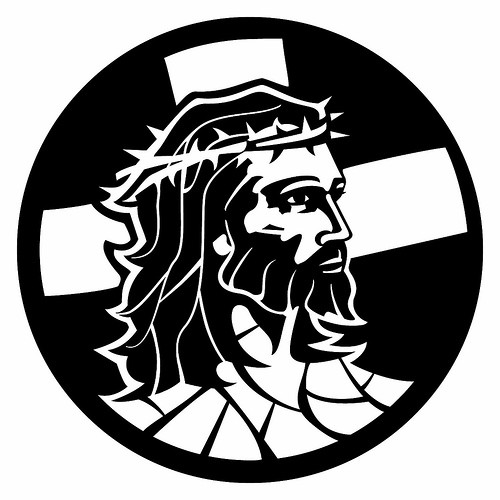
Out of Paul’s life and into his head. This ought to be interesting, having just finished Acts to enter into Paul’s magnum opus, his letter to the Romans.
Do you get the idea, reading Romans 1, that Paul thinks that the gospel of Jesus Christ is important? More than important, the gospel of Jesus Christ is to Paul an all-consuming passion that is intimately connected to Paul’s life and to the life of God’s people before and after Paul.
There’s a temptation for us Protestants to want to jump immediately to Romans 1:17, to the exclusion of everything else. Which is precisely why I’m not going to jump there. The way I figure it, you’ve probably already heard a lot of sermons and Bible studies on it, and so I don’t want to focus exclusively on it. When my brother was in graduate school at Wheaton College he took a lot of Bible courses and church history courses. He came back from Wheaton always talking about “doing violence to the text.” I would never want to do violence to the text (except maybe to a text like The Da Vinci Code or something like it!), and so let me begin in the beginning.
Paul doesn’t just begin to talk about justification by faith out of the blue: he begins in a very personal way. When we read Paul’s letters (not wanting to do violence to the text), we should always read them in the context of Paul’s life. I have a radical idea: what if we actually begin at verse 1?
“Paul, a bondservant of Jesus Christ, called to be an apostle, separated to the gospel of God, which He promised before through His prophets in the Holy Scriptures, concerning His Son Jesus Christ our Lord . . . .”
The gospel, for Paul, isn’t something outside of him: it’s almost as if the gospel is an inseparable part of Paul himself. Paul understands himself to be someone who has been separated to the gospel of God. Separated, set aside, holy. Surely, Paul is remembering the road to Damascus on which the separation to holiness and apostleship and the gospel to which God had elected Paul became very real and alive. When Paul says “called,” he means called. For Paul, this took the form of an audible voice.
This gospel is Paul’s, and yet it’s much larger than he is, for he acknowledges that it was promised before through the prophets in the Holy Scriptures. It’s as if Paul sees the entire plan of God’s and his part in it and boldly and courageously accepts God’s call on his life.
But this gospel and call are closer still. The call of the gospel on Paul’s life is not some intellectual idea that has taken hold of him: it’s a Person who called him and knocked him down and became a part of his life. The Christ whose gospel Paul has been separated to is the Christ through whom Paul and others have received grace and apostleship.
But this gospel that is so close to Paul, this Christ of the gospel, is not Paul’s alone, nor only the prophets. Paul was set aside for obedience to the faith among all the nations. This obedience began with Christ’s obedience, and then Paul’s, and so on . . . and so on . . . . And so the Romans to whom Paul writes are also the called of Jesus Christ (verse 6): “To all who are in Rome, beloved of God, called to be his saints” (verse 7). There it is again, the calling of Jesus Christ to be holy and set apart for His purposes.
The Christ who has so forcefully entered Paul’s life has also entered the life of the Roman saints. Christ is in Paul and Christ is in the Romans, and so Paul is in the Romans and the Romans in Paul. For this reason, Paul thanks God through Jesus Christ because the faith of the Romans is spoken throughout the whole world, and for this reason they are a part of him in his prayers, and he is a part of them.
He longs to see them, because they are one in Christ, and he longs to impart some spiritual gift because he has been taught that it is more blessed to give than to receive. Paul in the Romans and the Romans in Paul, because all in Christ. And so Paul can long to come to them because in coming to them he finds Christ and in his coming the Romans find Christ. And Paul can know that when he comes they will be encouraged together because they have the same Holy Spirit who dwells in them all and makes them all one in Christ. Their faith also is a mutual faith, for it is a common and united faith in the Lord Jesus Christ. This is what happens when you put together those whom Christ has set aside by His call.
And now we come to that more famous part of Romans 1, but only after we understand Christ in Paul: “the just shall live by faith.” Paul doesn’t really say that much about this phrase at this point, although he returns to it later. But here’s the bridge between verse 17 and Paul’s union with Christ through His gospel: “it [the gospel] is the power of God to salvation for everyone who believes” (verse 16).
I think we have a tendency to think of the gospel as a “thing,” a set of propositions about God, the Word of God as a commodity that is imprisoned in paper pages and books. It is an object outside of us and something we objectify.
But to Paul, the gospel seems to be nothing less than Jesus Christ Himself, so that the gospel is not merely about Jesus Christ: it conveys or even is Jesus Christ. The gospel is not just a bunch of words or propositions: Paul says it is the power of God to salvation.
And yet this Christ who is God comes to us in mere words after all. We must hear the gospel, but in hearing, it goes into us. Will it stay? Will it become a part of us? If it does, it cannot remain mere words but must become the Word of God to us.
How? By faith. This faith, mysterious as it is, has the power to apprehend the gospel of Jesus Christ and Jesus Christ Himself. This faith, invisible as it is, has the power to see the invisible and make it real, and it has the power to receive the power of God to salvation, which is the gospel, which is Christ.
This faith, mysterious as it is, simply says “Yes” to God and all that God says, and in saying “Yes” to God we say “Yes” to life, and so the just, those made righteous, shall live by faith. I think this can be taken in two equally wonderful ways, and I see no need to choose one over the other, for they are one. It means that by faith we initially receive God and His power of salvation by saying “Yes” to Him, but it also means that we continue to live by faith, to receive God and His power of salvation by continuing to say “Yes” to Him and His call and gospel.
So, then, what do we have? That the gospel is not just a thing but also a Person, and this Person is the One who calls you by His Word and Gospel. That by saying “Yes” to this Person, by saying “Yes” to His Word (faith), we receive life, and that by continuing to say “Yes” to Him by faith we continue to have life in Him. And that by saying “Yes” to Him we are united to Him and therefore joyfully united to all who also say “Yes” to Him who is the “Yes” and through whom all the promises of God are “Yes.”
They say that all roads lead to Rome, but in the book of Romans, all roads lead to Christ!
Prayer: Lord, I believe: I wish to believe in Thee.
Lord, let my faith be full and unreserved, and let it penetrate my thought,
my way of judging Divine things and human things.
Lord, let my faith be joyful and give peace and gladness to my spirit,
and dispose it for prayer with God and conversation with men,
so that the inner bliss of its fortunate possession may shine forth in sacred and secular conversation.
Lord, let my faith be humble and not presume to be based on the experience of my thought and of my feeling; but let it surrender to the testimony of the Holy Spirit. Amen. (Pope Paul VI)
Point for Meditation:
1. How well and how much have I been saying “Yes” to God with my life?
2. Meditate on the mystery of faith and how Christ has come to you and works through your hearing Him in His Word.
Resolution: I resolve to find one way to say “Yes, I believe and will obey” to Christ today. © 2014 Fr. Charles Erlandson
Give Us This Day daily devotional
Previous Post

August 15, 2014
Saturday of Trinity 8 - Acts 28:16-31
Next Post
August 18, 2014 Tuesday of Trinity 9 - Romans 2:1-16
Browse Our Archives
Select a Category Book Reviews Featured Give Us This Day Give Us This Day Devotional love me love my wife Love My Wife Reformed Catholicism Blog Spirit-Reality Take This Cup Uncategorized
Select a Month February 2022 November 2021 October 2021 August 2021 January 2021 December 2020 November 2020 September 2020 August 2020 July 2020 June 2020 May 2020 September 2018 July 2018 March 2018 November 2017 October 2017 September 2017 August 2017 July 2017 June 2017 May 2017 April 2017 March 2017 February 2017 January 2017 December 2016 November 2016 October 2016 September 2016 August 2016 July 2016 June 2016 May 2016 April 2016 March 2016 February 2016 January 2016 December 2015 November 2015 October 2015 September 2015 August 2015 July 2015 June 2015 May 2015 April 2015 March 2015 February 2015 January 2015 December 2014 November 2014 October 2014 September 2014 August 2014 July 2014 June 2014 May 2014 April 2014 March 2014 February 2014 January 2014 December 2013 November 2013 October 2013 September 2013 August 2013 July 2013 June 2013 May 2013 April 2013 March 2013 February 2013 January 2013 December 2012 November 2012 October 2012 September 2012 August 2012 July 2012 June 2012 May 2012 April 2012 March 2012 February 2012 January 2012 December 2011 November 2011 October 2011 September 2011 August 2011 July 2011 May 2011 April 2011 March 2011 February 2011 January 2011
Follow Us!
TAKE THE
Religious Wisdom Quiz
What was the sign God gave to Noah as a promise to never flood the earth again?
Select your answer to see how you score.
Dove Lightning Rainbow Fire
Related posts from Give Us This Day

James Clark - Book Review of Take This...

Revelation 8 - Heavenly Worship and Prayer

The Day I Prayed for the G.I. Joe...

The Different States of Love - and the...
TRENDING AT PATHEOS Evangelical

How the author of the world's best hymn...
I've been working with John Newton for a while now. This makes...

Long before this Lectio Divina, Psalm 130 - the song - started...

What About the Trees? Another Living Parable
After I finished writing the last article about falling leaves as a...

Why Classical Education Is a Conversation, Not a...
Come and Read: Joy in Classical Education When I was a little...

Falling Leaves: A Living Parable on Letting Go
I’ve spent the vast majority of my life in the southeast corner...

Cornell University has received a great deal of negative publicity and intense...
view all Evangelical blogs
Ad-Free & Subscriber Log-In Subscription Support
- About Us
- 2026 Calendar
- Videos
- Podcasts
- Library of World Religions
- Faith In Media Tracker
- Advertise With Us
- Write for Us
- Privacy Policy
- Terms of Service
- Do Not Sell My Data
- Contact Us
- Radiant Digital
- Manage Newsletter Subscriptions
- Unsubscribe From Notifications
- Sitemap
Copyright 2008-2026, Patheos. All rights reserved.
Subscription Support Ad-Free & Subscriber Log-In
Follow Patheos