
BuddhistCatholicContemplativeEvangelicalGeneral ChristianHinduJewishLatter-day SaintMuslimNew VisionsProgressive Christian
Beliefs
- Buddhist
- Catholic
- Contemplative
- Evangelical
- General Christian
- Hindu
- Jewish
- Latter-day Saint
- More Voices
- Muslim
- New Visions
- Pagan
- Progressive Christian
Topics
- Religion News
- Food and Religion
- Sports and Religion
- Religious Art
- Religious Music and Entertainment
- Religious Events
- History and Religion
- Style and Religion
- Politics and Religion
- Women in Religion
- Recreation Outdoors and Religion
- Business Finance and Religion
- Careers Workplace and Religion
- Education and Religion
- Family Parenting and Religion
- Health Fitness and Religion
- Home and Religion
- Relationships and Religion
- Technology and Religion
- Travel and Religion
Columnists
- Buddhist Columnists
- Business Finance and Religion Columnists
- Careers Workplace and Religion Columnists
- Catholic Columnists
- Contemplative Columnists
- Education and Religion Columnists
- Evangelists Columnists
- Family Parenting and Religion Columnists
- General Christian Columnists
- Health Fitness and Religion Columnists
- Hindu Columnists
- History and Religion Columnists
- Home and Religion Columnists
- Jewish Columnists
- More Voices Columnists
- Latter Day Columnists
- Muslim Columnists
- New Visions Columnists
- Nonreligious Columnists
- Pagan Columnists
- Politics and Religion Columnists
- Progressive Columnists
- Recreation Outdoors and Religion Columnists
- Relationships and Religion Columnists
- Religion News Columnists
- Religious Art Columnists
- Religious Events Columnists
- Religious Music and Entertainment Columnists
- Sports and Religion Columnists
- Style and Religion Columnists
- Technology and Religion Columnists
- Travel and Religion Columnists
- Women in Religion Columnists
Resource Library
- 2026 Calendar
- Library of World Religions
- The 100 Most Holy Places on Earth
- Patheos Answers
- Podcasts
- Videos
- Faith Leaders Database
- Anglican Episcopalian
- Bahai
- Baptist
- Buddhism
- Christianity
- Confucianism
- Eastern Orthodoxy
- Hinduism
- Holiness and Pentecostal
- ISKCON
- Islam
- Judaism
- Lutheran
- Methodist
- The Church of Jesus Christ of Latter-day Saints
- New Age
- Paganism
- Presbytarian and Reformed
- Protestantism
- Religion Behind the Scenes
- Roman Catholic
- Scientology
- Shia Islam
- Sikhism
- Sufism
- Sunni Islam
- Taoism
- Zen
- See all religions
Research Tools
 Ad-Free & Subscriber Log-In Subscription Support
Ad-Free & Subscriber Log-In Subscription Support
Follow Patheos 

- Trending:
- Forgiveness
- |
- Marriage
- |
- Consciousness
- |
- Death Penalty
- |
- Election
- |
- Halloween
 Give Us This Day
- Home
- Evangelical
- Monday of Sunday Next Before Advent – Revelation 1:1-8
Monday of Sunday Next Before Advent – Revelation 1:1-8
Last updated on: November 23, 2014 at 11:58 pm by Fr. Charles Erlandson
Monday of Sunday Next Before Advent – Revelation 1:1-8 2014-11-23T23:58:08-05:00 Fr. Charles Erlandson
Patheos Explore the world's faith through different perspectives on religion and spirituality! Patheos has the views of the prevalent religions and spiritualities of the world.
 Revelation 1:1-8
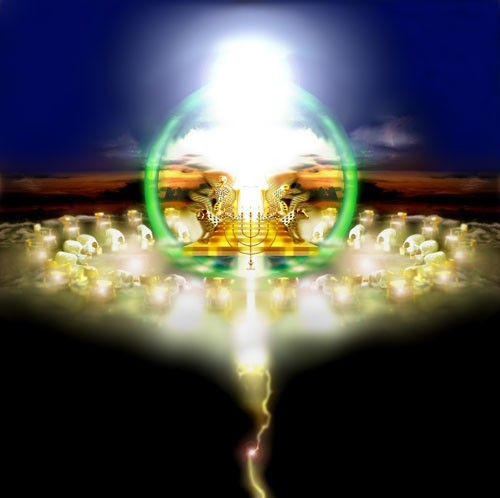
“The revelation of Jesus Christ.” That’s how St. John begins the last and most difficult book in the Bible. But too often, we approach St. John’s Revelation as if it were St. John’s Obfuscation. I can hear it now: “The first lesson is taken from the twenty-first chapter of The Obfuscation of St. John.” And all the people said, “Huh?!”
I’ll say right at the beginning of my devotionals on John’s Revelation that I don’t believe that John was inspired by the Holy Spirit to write a book that no one could understand until the end of time. I don’t believe God would inspire such a book and then carefully place it (as He moved the Church in its process of canonization) as the punctuation mark, the crescendo and finale, of Holy Scripture, unless He intended for us to read, understand, and apply it in our lives.
Don’t get me wrong: I do believe there is a future component to St. John’s Revelation, but I definitely believe it is the most difficult book of the Bible (which is why I always recommend that Christians read it only after they have read and studied the rest of the Bible, especially the Old Testament prophets). I also believe that it was written for our edification. But if it is only meant for Christians in the future and it hasn’t applied to us yet, then I think the book may have done more bad than good. If it is only written with future Christians in mind, then the Church has not profited by it very much for 2000 years now, and it would be a very strange and even perverse thing for the Word of God to be such a tease.
But the book is a revelation of Jesus Christ. St. John’s purpose (which is really the purpose of the Holy Spirit who revealed these things to him) is to make Jesus Christ known: initially to the 7 churches of Asia Minor, progressively to the Church of all ages, and finally to the glorified Church. Initial, progressive, final. Remember that: it will help you understand how Revelation can actually be a revelation of Jesus Christ in your life.
John makes it clear to an unbiased mind that what He is writing about things that he expects his readers to understand and which will happen in their lifetime. He makes this clear in the very first verse: these are not things that John is told are far off but are instead “things which must shortly take place.” Again, in verse 3, John gives us a clear marker of time when he says, “for the time is near.”
In chapter 1, John also writes to 7 churches that existed in the first century. Speaking to his contemporary audience, John says, “I, John, both your brother and companion in the tribulation and kingdom and patience of Jesus Christ” (verse 9). John expects that his contemporary audience will be able to calculate the number of the beast: he doesn’t shut it up for a later generation.
John encloses his entire revelation with a reminder of the nearness of the time: In both the first and the last chapters John tells us the things that have been revealed to him must happen soon. In chapter 22, Jesus Himself, the Revealed One, says, “Behold, I am coming quickly” (verse 12) and “Surely I am coming quickly” (verse 20). John’s original audience is 1st century Christians who are being persecuted and need to be reminded that Jesus Christ has indeed ascended into heaven where He truly reigns.
But this is good news! for our Lord has been revealed to men. We don’t have to wait until the end of time to see Him or to see Him ruling from His throne!
Jesus Christ is and was and is to come, and so is His revelation. He inhabits and now rules over all time, including our own age, and so He is able to dispense to us, as He did to John’s first century audience, His grace and peace. He is, John says (and if it was true in the first century then it’s true today), the faithful witness, the firstborn from the dead, and the ruler over the kings of the earth. Jesus faithfully witnesses to the Father and His holy will, today as He did in John’s day. He is today, as He was by John’s day, the ruler over the kings of the earth, for He ascended to the right hand of the Father and sat down on His throne when He ascended.
This King, who is also our High Priest, has prophesied through the mouth of John that we have been made kings and priests to His God and Father. Yes, we will not find our final and glorified role as kings and priests until heaven, but John believes and teaches that those Christians in the first century were already kings and priests. How can this be? Because Jesus, the King of kings and our High Priest loved us and washed us from our sins in His own blood. And because He continues to plead that Blood and its work before the Father for us in heaven. Our High Priest brings us before God and through the Holy Spirit reveals and brings God to us.
This work of Jesus as Prophet and Priest and King was initially begun in the earthly ministry of Jesus but is continued progressively through His Church, His Body throughout history. And one day it will find its completion in heaven and its glory. He is the beginning and the end of this process of our being made fit to enter heaven and dwell with God. He is the firstborn of the dead, the first human to enter heaven, and not just a human but humanity, for the Son did not take on the person of a particular human but instead took human nature into the divinity.
Therefore, as we proceed through the Revelation, empowered by the ruler over the kings of the earth, we should begin to rule our lives and the world we touch through the power of the King of kings. We should offer ourselves, our souls and bodies, to God as living sacrifices, even as the Son offered and continues to offer Himself for us to the Father.
We should begin today having our minds renewed, our bodies invigorated, and our souls refreshed through Jesus Christ who comes to us today and reveals Himself to us.
To Him be glory and dominion forever and ever. Amen!
Prayer: Holy, holy holy,
Lord God Almighty,
Who was and is and is to come!
You are worthy, O Lord,
To receive glory and honor and power;
For You created all things,
And by Your will they exist and were created. Amen.
Points for Meditation:
- What difference would it make in my life if I truly believed Jesus Christ was on the throne and ruler over the kings of the earth?
- How does remembering Jesus as King and Priest empower you today to act as king and priest?
Resolution: I resolve to give praise throughout the day to the One who is Almighty and who is and was and is to come.
© 2014 Fr. Charles Erlandson
Give Us This Day daily devotional
Interpreting the book of Revelation
Previous Post

November 21, 2014
Saturday of Trinity 22 - Matthew 25:31-46
Next Post
November 25, 2014 Tuesday of Sunday Next Before Advent - Revelation 1:9-20
Browse Our Archives
Select a Category Book Reviews Featured Give Us This Day Give Us This Day Devotional love me love my wife Love My Wife Reformed Catholicism Blog Spirit-Reality Take This Cup Uncategorized
Select a Month February 2022 November 2021 October 2021 August 2021 January 2021 December 2020 November 2020 September 2020 August 2020 July 2020 June 2020 May 2020 September 2018 July 2018 March 2018 November 2017 October 2017 September 2017 August 2017 July 2017 June 2017 May 2017 April 2017 March 2017 February 2017 January 2017 December 2016 November 2016 October 2016 September 2016 August 2016 July 2016 June 2016 May 2016 April 2016 March 2016 February 2016 January 2016 December 2015 November 2015 October 2015 September 2015 August 2015 July 2015 June 2015 May 2015 April 2015 March 2015 February 2015 January 2015 December 2014 November 2014 October 2014 September 2014 August 2014 July 2014 June 2014 May 2014 April 2014 March 2014 February 2014 January 2014 December 2013 November 2013 October 2013 September 2013 August 2013 July 2013 June 2013 May 2013 April 2013 March 2013 February 2013 January 2013 December 2012 November 2012 October 2012 September 2012 August 2012 July 2012 June 2012 May 2012 April 2012 March 2012 February 2012 January 2012 December 2011 November 2011 October 2011 September 2011 August 2011 July 2011 May 2011 April 2011 March 2011 February 2011 January 2011
Follow Us!
TAKE THE
Religious Wisdom Quiz
The great day of the Lord is near—a day of wrath, distress, anguish, trouble, ruin, and what?
Select your answer to see how you score.
Fire and brimstone Darkness and gloom Blood and thunder Plague and famine
Related posts from Give Us This Day

James Clark - Book Review of Take This...

Revelation 8 - Heavenly Worship and Prayer

The Day I Prayed for the G.I. Joe...

The Different States of Love - and the...
TRENDING AT PATHEOS Evangelical

The REST of Your Life: A Creative Wrestles...
This week I had a conversation with a good friend from church....

How the author of the world's best hymn...
I've been working with John Newton for a while now. This makes...

Long before this Lectio Divina, Psalm 130 - the song - started...

What About the Trees? Another Living Parable
After I finished writing the last article about falling leaves as a...

Why Classical Education Is a Conversation, Not a...
Come and Read: Joy in Classical Education When I was a little...

Cornell University has received a great deal of negative publicity and intense...
view all Evangelical blogs
Ad-Free & Subscriber Log-In Subscription Support
- About Us
- 2026 Calendar
- Videos
- Podcasts
- Library of World Religions
- Faith In Media Tracker
- Advertise With Us
- Write for Us
- Privacy Policy
- Terms of Service
- Do Not Sell My Data
- Contact Us
- Radiant Digital
- Manage Newsletter Subscriptions
- Unsubscribe From Notifications
- Sitemap
Copyright 2008-2026, Patheos. All rights reserved.
Subscription Support Ad-Free & Subscriber Log-In
Follow Patheos