
BuddhistCatholicContemplativeEvangelicalGeneral ChristianHinduJewishLatter-day SaintMuslimNew VisionsProgressive Christian
Beliefs
- Buddhist
- Catholic
- Contemplative
- Evangelical
- General Christian
- Hindu
- Jewish
- Latter-day Saint
- More Voices
- Muslim
- New Visions
- Pagan
- Progressive Christian
Topics
- Religion News
- Food and Religion
- Sports and Religion
- Religious Art
- Religious Music and Entertainment
- Religious Events
- History and Religion
- Style and Religion
- Politics and Religion
- Women in Religion
- Recreation Outdoors and Religion
- Business Finance and Religion
- Careers Workplace and Religion
- Education and Religion
- Family Parenting and Religion
- Health Fitness and Religion
- Home and Religion
- Relationships and Religion
- Technology and Religion
- Travel and Religion
Columnists
- Buddhist Columnists
- Business Finance and Religion Columnists
- Careers Workplace and Religion Columnists
- Catholic Columnists
- Contemplative Columnists
- Education and Religion Columnists
- Evangelists Columnists
- Family Parenting and Religion Columnists
- General Christian Columnists
- Health Fitness and Religion Columnists
- Hindu Columnists
- History and Religion Columnists
- Home and Religion Columnists
- Jewish Columnists
- More Voices Columnists
- Latter Day Columnists
- Muslim Columnists
- New Visions Columnists
- Nonreligious Columnists
- Pagan Columnists
- Politics and Religion Columnists
- Progressive Columnists
- Recreation Outdoors and Religion Columnists
- Relationships and Religion Columnists
- Religion News Columnists
- Religious Art Columnists
- Religious Events Columnists
- Religious Music and Entertainment Columnists
- Sports and Religion Columnists
- Style and Religion Columnists
- Technology and Religion Columnists
- Travel and Religion Columnists
- Women in Religion Columnists
Resource Library
- 2026 Calendar
- Library of World Religions
- The 100 Most Holy Places on Earth
- Patheos Answers
- Podcasts
- Videos
- Faith Leaders Database
- Anglican Episcopalian
- Bahai
- Baptist
- Buddhism
- Christianity
- Confucianism
- Eastern Orthodoxy
- Hinduism
- Holiness and Pentecostal
- ISKCON
- Islam
- Judaism
- Lutheran
- Methodist
- The Church of Jesus Christ of Latter-day Saints
- New Age
- Paganism
- Presbytarian and Reformed
- Protestantism
- Religion Behind the Scenes
- Roman Catholic
- Scientology
- Shia Islam
- Sikhism
- Sufism
- Sunni Islam
- Taoism
- Zen
- See all religions
Research Tools
 Ad-Free & Subscriber Log-In Subscription Support
Ad-Free & Subscriber Log-In Subscription Support
Follow Patheos 

- Trending:
- Forgiveness
- |
- Marriage
- |
- Consciousness
- |
- Death Penalty
- |
- Election
- |
- Halloween
 Give Us This Day
- Home
- Evangelical
- Monday of Easter 3 – Ephesians 1:1-14
Monday of Easter 3 – Ephesians 1:1-14
Last updated on: April 29, 2012 at 5:31 pm by Fr. Charles Erlandson
Monday of Easter 3 – Ephesians 1:1-14 2012-04-29T17:31:49-05:00 Fr. Charles Erlandson
Patheos Explore the world's faith through different perspectives on religion and spirituality! Patheos has the views of the prevalent religions and spiritualities of the world.
 Ephesians 1:1-14
Have you ever been excited to be a part of something bigger than yourself? To be in on a very important goal whose greatness brings you glory?
In the book of Ephesians, we find that God has let us in on the Greatest Goal of All – to bring blessing to mankind, who does not deserve it. St. Paul’s message is that as a result of God’s blessing us, we live in a new cosmos, a new world. We are part of a new reality, a new humanity, and a new society because we are seated in the heavenlies with Christ – all because of God’s plan of blessing.
What’s the best sentence you’ve ever read in your life?
For me, it would have to be Ephesians 1:3-14. In one single sentence (it looks like in the Greek it’s only one sentence!), Paul reveals God’s mysterious plan, planned from before the world was created, a plan of such rapturous delight that Paul forgets to take a breath and use any periods! Paul’s writings are always concentrated, but Ephesians 1:3-14 is so concentrated that it’s as dense as a neutron star!
He chants a sevenfold benediction, punctuated by the threefold refrain: “to the praise of the glory of God’s grace”- which is a key phrase in Chapter 1. In verse 3 Paul begins with blessing God because He has blessed us. In fact, the whole book of Ephesians is about how God shares Himself with us and how we are to respond to this.
If God is the one who acted first in creating us; if God is the one who acted first to save us, then our every thought, word, and deed ought to begin with God. Yet in so many churches when you hear someone preach or see them on TV they begin with us. I’ve seen commercials on TV for a local church that doesn’t even mention God: it simply says, in effect, “Come to our church because it’s filled with people just like you.”
Verses 3, 6, 12, 14 all mention “to the praise of His glory” because the new cosmos all centers on the glory of God, from beginning to end.
This God who is worthy of all praise has blessed us with “every spiritual blessing” (verse 3). I can scarcely imagine all of the blessings that God has in store for those who know Him, but I do know some of them: true forgiveness for the many ways I have failed Him; comfort in all my trials in this life; unimaginable bliss in the world to come; a life that is more and more conformed to His will, that seeks to please Him and bless Him, and in the process returns blessing to me; and perhaps most of all – His presence with me.
Paul seems to believe that you already have all these gifts, if you are a Christian, for God “has blessed” us with every spiritual blessing.
But if you want to see what Paul saw – God’s glorious plan to bless and exalt mankind – though he is sinful and deserves nothing but death – then you must go where St. Paul went. St. Paul did not see this dazzling vision of God’s purposes, which are His glory, by standing here on earth. No, he ascended into heaven with Christ and from the heavenly places he saw what I want to see. These divine mysteries can only be gazed at if you recognize with Paul that as Christians, as those upon whom God has bestowed His name and His inheritance of treasure, you are seated with Christ in the heavenly places.
Let’s go: the vision of God and His eternal plan of salvation is waiting for us!
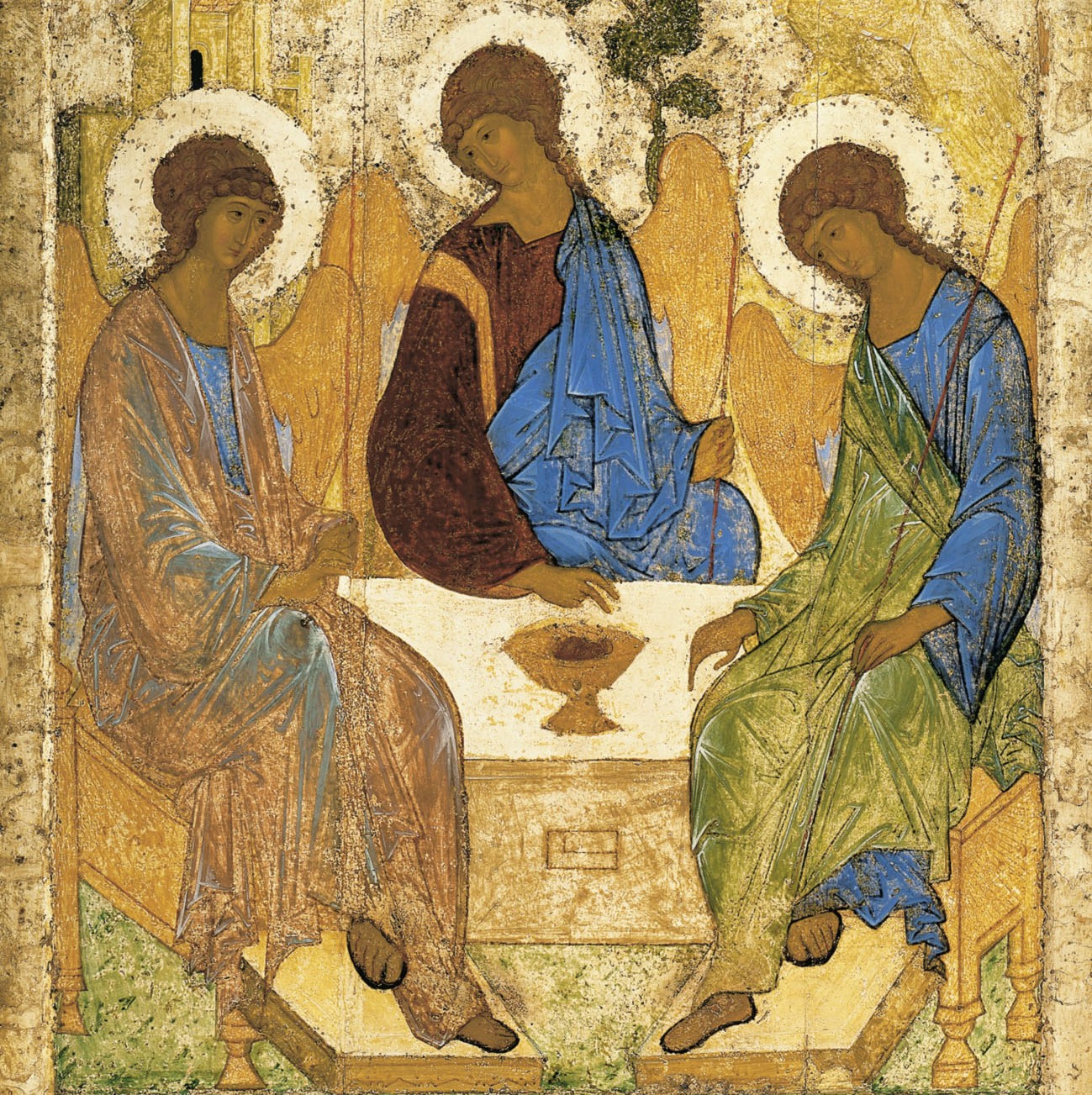
Ephesians 1:3-14 is one of the best places to learn about the Holy Trinity, for Paul teaches something about the role of each person in God’s incredible plan.
Paul begins with the work of the Father. In verse 1, Paul says that he himself is called by the will of God: it is the will of the Father that is done in God’s plan to bless mankind. In verse 2, Paul tells us that it is the Father who has especially blessed us through His Son. And in verse 4 we learn that it was the Father who chose us in him before the foundation of the world. How incredible that God would choose me to be part of His glorious plan for a new world!
It is the Father who destined us in love to be His sons, according to the purpose of His will. Sometimes we think that only the Son or Spirit is love, but it is especially the love of the Father that has made us His sons. Our response, in verse 6, is to praise Him for His glorious grace.
Already, Paul has left me breathless – and there’s more to come!
The eternal will of the Father reaches down to us in history, in our lives, through the Son. We have been adopted as the sons of God (verse 5) only because of the work of God’s only-begotten Son. None of us were born into the family of God: God had to adopt us, which He did through the work of His only natural Son.
It is through the Son that this loving Father has made known to us the mystery of His will (verse 9), and it is in this Son, Jesus Christ, that God is gathering all things into one. This is the work of the New Creation, of making a new world in which God’s creation is able to live with Him again.
God’s plan to unite heaven and earth will be done finally in the future, and it comes through the work of the Spirit (verse 10). We must never forget the plan of salvation that is unfolding day by day before our very eyes. Pentecost is past, and the Spirit has already been given; we are presently in the process of moving closer and closer to the time when all will be done; and one day in the future, earth and heaven will be forever married.
We know that the Father’s loving plan will be fulfilled because we are sealed with the promised Holy Spirit (verse 13). The Father has made many promises to His adopted children – a promise of forgiveness of sins, a promise of eternal life with Him, a promise of a time of heavenly bliss. All of these future realities – which we are in the midst of receiving even now – are sealed by the work of the Spirit in your life. It is the Spirit who guarantees to us that the Father’s loving will is a reality (verse 14).
As a human father, sometimes I make promises I’m unable to keep or that I forget to keep. But through the seal of the Holy Spirit, we can be 100% certain that what the Father has promised will come to pass – that if we have faith and live a life of faith, we will see God’s plan of blessing to the end. How could such a certain promise – of such magnanimous blessing – not result in the praise of the glory of the grace of God?
But all of this incredible plan of God’s blessing – salvation – requires something from you. Though it is all the work of God and planned from eternity past and executed by His will through His Son and by His Spirit, you are required to do something.
What could that something be? What could you possibly give God in return for His magnificent, mind-blowing blessings?
In one sense – nothing. You could never repay such an expensive gift. But you can give what God has enabled you to give – you can truly please God by giving Him yourself: body, mind, and soul; thought, word, and deed.
Some people are destined for greatness. I think of Mozart who composed his first symphony when he was 4. But you were destined and appointed – by God – for something much more glorious. You are destined and appointed to live forever for the praise of God’s glory.
What can you give God? You can give back the glory He lovingly shared with you. You can live for the praise of His glory. Remember: this is the eternal, ultimate purpose of all things – to bring God glory.
And there is no higher honor in life, no greater purpose, than to participate in God’s glory by giving Him glory and praise.
Prayer: Father, I praise You for Your love that planned all things according to Your holy will; Jesus, I praise You that through Your life I have been made a child of God; Spirit, I praise You because You have guaranteed the wonderful promises of the Father to me. Holy Trinity, the Father, the Son, and the Holy Spirit, I praise You because You have blessed me with every spiritual blessing in the heavenly places. Amen.
Points for Meditation:
1. Go back and read Ephesians 1:3-14, slowly meditating on each phrase and praising God for His blessings to you.
2. Plan to praise God throughout the day today. Find a number of different ways and times to be able to praise Him.
3. Praise the Holy Trinity in slow motion throughout the day. Praise the Father in the morning, the Son in the afternoon, and the Holy Spirit in the evening.
Resolution: I resolve to find ways to praise God throughout the day because of His glorious plan of salvation through which He has blessed me.
© 2012 Fr. Charles Erlandson
The Holy Trinity – Andrei Rublev – Wikipedia entry on Trinity
Previous Post

April 27, 2012
Saturday of 2nd Sunday after Easter - 1 Peter 5:8-14
Next Post
April 30, 2012 To What Have We Been Called?
Browse Our Archives
Select a Category Book Reviews Featured Give Us This Day Give Us This Day Devotional love me love my wife Love My Wife Reformed Catholicism Blog Spirit-Reality Take This Cup Uncategorized
Select a Month February 2022 November 2021 October 2021 August 2021 January 2021 December 2020 November 2020 September 2020 August 2020 July 2020 June 2020 May 2020 September 2018 July 2018 March 2018 November 2017 October 2017 September 2017 August 2017 July 2017 June 2017 May 2017 April 2017 March 2017 February 2017 January 2017 December 2016 November 2016 October 2016 September 2016 August 2016 July 2016 June 2016 May 2016 April 2016 March 2016 February 2016 January 2016 December 2015 November 2015 October 2015 September 2015 August 2015 July 2015 June 2015 May 2015 April 2015 March 2015 February 2015 January 2015 December 2014 November 2014 October 2014 September 2014 August 2014 July 2014 June 2014 May 2014 April 2014 March 2014 February 2014 January 2014 December 2013 November 2013 October 2013 September 2013 August 2013 July 2013 June 2013 May 2013 April 2013 March 2013 February 2013 January 2013 December 2012 November 2012 October 2012 September 2012 August 2012 July 2012 June 2012 May 2012 April 2012 March 2012 February 2012 January 2012 December 2011 November 2011 October 2011 September 2011 August 2011 July 2011 May 2011 April 2011 March 2011 February 2011 January 2011
Follow Us!
TAKE THE
Religious Wisdom Quiz
Who was the scribe and priest that led a second group back to Jerusalem?
Select your answer to see how you score.
Mordecai Nehemiah Zerubbabel Ezra
Related posts from Give Us This Day

Tuesday of Trinity 15 - Matthew 7:13-29

Monday of Trinity 15 - Matthew 7:1-14

Saturday of Trinity 14 - Matthew 6:19-34

Friday of Trinity 14 - Matthew 6:1-18
TRENDING AT PATHEOS Evangelical

The REST of Your Life: A Creative Wrestles...
This week I had a conversation with a good friend from church....

How the author of the world's best hymn...
I've been working with John Newton for a while now. This makes...

Long before this Lectio Divina, Psalm 130 - the song - started...

What About the Trees? Another Living Parable
After I finished writing the last article about falling leaves as a...

Why Classical Education Is a Conversation, Not a...
Come and Read: Joy in Classical Education When I was a little...

Cornell University has received a great deal of negative publicity and intense...
view all Evangelical blogs
Ad-Free & Subscriber Log-In Subscription Support
- About Us
- 2026 Calendar
- Videos
- Podcasts
- Library of World Religions
- Faith In Media Tracker
- Advertise With Us
- Write for Us
- Privacy Policy
- Terms of Service
- Do Not Sell My Data
- Contact Us
- Radiant Digital
- Manage Newsletter Subscriptions
- Unsubscribe From Notifications
- Sitemap
Copyright 2008-2026, Patheos. All rights reserved.
Subscription Support Ad-Free & Subscriber Log-In
Follow Patheos