
BuddhistCatholicContemplativeEvangelicalGeneral ChristianHinduJewishLatter-day SaintMuslimNew VisionsProgressive Christian
Beliefs
- Buddhist
- Catholic
- Contemplative
- Evangelical
- General Christian
- Hindu
- Jewish
- Latter-day Saint
- More Voices
- Muslim
- New Visions
- Pagan
- Progressive Christian
Topics
- Religion News
- Food and Religion
- Sports and Religion
- Religious Art
- Religious Music and Entertainment
- Religious Events
- History and Religion
- Style and Religion
- Politics and Religion
- Women in Religion
- Recreation Outdoors and Religion
- Business Finance and Religion
- Careers Workplace and Religion
- Education and Religion
- Family Parenting and Religion
- Health Fitness and Religion
- Home and Religion
- Relationships and Religion
- Technology and Religion
- Travel and Religion
Columnists
- Buddhist Columnists
- Business Finance and Religion Columnists
- Careers Workplace and Religion Columnists
- Catholic Columnists
- Contemplative Columnists
- Education and Religion Columnists
- Evangelists Columnists
- Family Parenting and Religion Columnists
- General Christian Columnists
- Health Fitness and Religion Columnists
- Hindu Columnists
- History and Religion Columnists
- Home and Religion Columnists
- Jewish Columnists
- More Voices Columnists
- Latter Day Columnists
- Muslim Columnists
- New Visions Columnists
- Nonreligious Columnists
- Pagan Columnists
- Politics and Religion Columnists
- Progressive Columnists
- Recreation Outdoors and Religion Columnists
- Relationships and Religion Columnists
- Religion News Columnists
- Religious Art Columnists
- Religious Events Columnists
- Religious Music and Entertainment Columnists
- Sports and Religion Columnists
- Style and Religion Columnists
- Technology and Religion Columnists
- Travel and Religion Columnists
- Women in Religion Columnists
Resource Library
- 2026 Calendar
- Library of World Religions
- The 100 Most Holy Places on Earth
- Patheos Answers
- Podcasts
- Videos
- Faith Leaders Database
- Anglican Episcopalian
- Bahai
- Baptist
- Buddhism
- Christianity
- Confucianism
- Eastern Orthodoxy
- Hinduism
- Holiness and Pentecostal
- ISKCON
- Islam
- Judaism
- Lutheran
- Methodist
- The Church of Jesus Christ of Latter-day Saints
- New Age
- Paganism
- Presbytarian and Reformed
- Protestantism
- Religion Behind the Scenes
- Roman Catholic
- Scientology
- Shia Islam
- Sikhism
- Sufism
- Sunni Islam
- Taoism
- Zen
- See all religions
Research Tools
 Ad-Free & Subscriber Log-In Subscription Support
Ad-Free & Subscriber Log-In Subscription Support
Follow Patheos 

- Trending:
- Forgiveness
- |
- Marriage
- |
- Consciousness
- |
- Death Penalty
- |
- Election
- |
- Halloween
 Give Us This Day
- Home
- Evangelical
- Matthew 27:11-26 – Hath God said? Has the Kingdom come?
Matthew 27:11-26 – Hath God said? Has the Kingdom come?
Last updated on: November 28, 2016 at 4:44 pm by Fr. Charles Erlandson
Matthew 27:11-26 – Hath God said? Has the Kingdom come? 2016-11-28T16:44:18-05:00 Fr. Charles Erlandson
Patheos Explore the world's faith through different perspectives on religion and spirituality! Patheos has the views of the prevalent religions and spiritualities of the world.
** **If you have a pen or pencil, I’d like you to take it out. I have a little exercise I think will help you to understand the Word of God to you this morning.
Have you got a piece of paper and pen ready? Actually, since you’re probably in front of your computer, you can write it right here on this Give Us This Day. Or you can write it on your printed copy.
Here’s what I want you to write. First, write down “The King has come”
Underneath this, I want you to take the word “has” and move it to the beginning of the sentence, but leave everything else in the same place.
What have you now written?
“Has the King come”
Look closely at these two sentences. They both contain the same four words and in almost the identical order. All that’s happened is that you’ve slightly rearranged the words.
And yet in slightly changing the statement of truth, “The King has come,” to the question of doubt, “Has the King Come?” you have completely reversed the meaning.
Hath God said?
Hath God said that you shall not eat of every tree?”
This is how Satan thinks and works. You see, he doesn’t have words of his own: all he can do is take God’s work and His words and corrupt them. He asks questions that make us doubt God and His Word.
God clearly said to Adam and Eve: “If you eat of the Tree . . . you shall surely die.”
And Satan came along and said, “You shall not die.”
And so this morning, God says to you that the King of kings has come. But the Satanic question, asked by many, is: “Has the King Come?”
In Matthew 27 we see three kinds of people: Pilate, Judas, and the chief priest and elders, who don’t have a lot in common. But the one thing that unites them is that they are all people who didn’t receive Jesus as the King who had come.
Oh yes, there is a fourth kind of person who is not willing to accept the King the way He comes as king – and that is the group composed, to some extent, of you and me and all humanity.
The first questioner of Jesus Christ the King is Pontius Pilate. For him, and those like him, Jesus Christ was an inconvenient King.
Pontius Pilate was the governor of Jerusalem and Judea. During his ten years as a governor, from the years A.D. 26-36, Judea had thirty-two riots. The Jews hated the Romans and were constantly on the verge of rioting, and Pilate himself was often the cause for rioting.
In the year A.D. 26, shortly after Pilate become governor, Pontius Pilate came riding into the city of Jerusalem with his troops bearing their standards, carrying medallions of Caesar on them. This infuriated the Jews, and the rioting Jews first came by hundreds and then by thousands to the home of Pontius Pilate in Jerusalem and staged a demonstration for five days. Pilate was incensed with the protestors and killed some of them. Pilate was finally removed from office in A.D. 36 because of his brutal handling of the Jewish riots of that year.
So for Pontius Pilate, admitting that Jesus Christ was a king would have been highly inconvenient: it might have even meant he would lose his job.
When Jesus arrived in Jerusalem, Pilate had already arrived in Jerusalem with 600 troops, ready for another riot. He didn’t want a king who would create a royal mess for him. And so, for the sake of keeping the peace, Pilate refused to acknowledge Jesus as King, even though he had some idea that He was. Though it meant war with God, Pilate wanted to keep his human peace.
Sometimes we’re like Pilate. Sometimes, it’s inconvenient for us to acknowledge Jesus as King. Maybe, in the midst of friends or relatives who are not Christians, we’re willing to act as if Jesus Christ were not King. Or maybe, we know that if we truly allow Jesus to rule as King in our entire lives we will have a riot on our hands – a riot of our old man, the sinful nature.
Nothing will stir up your natural propensity to sin and exalt yourself faster than truly proclaiming that Jesus is King. And that means rearranging your life to please and obey Him. It might be inconvenient to get up on Sunday morning to worship the King.
Because it might inconvenience him, Pontius Pilate denied the King. Instead of proclaiming that Jesus Christ the King had come, Pilate in essence said, “Has the King come?”
Are you willing to follow Pilate?
There is a second questioner of the King in Matthew 27, and that is Judas Iscariot, whom we read about yesterday and who was probably looking for a political king. Disappointed, he represents those for whom Jesus Christ seems like a weak or wimpy king.
The apostasy of Judas Iscariot was probably not just a sudden moment in which he betrayed His King. His betrayal of His Lord was likely to have been a gradually growing disillusionment with Jesus as King.
It’s likely that Judas accepted Jesus as King, as Messiah, and yet rejected Him as the same. Although this sounds contradictory, the truth is that Judas likely accepted Jesus as King, but only on Judas’ terms. Judas wanted Him to come and rule in the way Judas expected, as a political king who overthrew the hated Roman Empire.
But then Jesus began to say some disenchanting things, such as “My kingdom is not of this world.” And what about John the Baptist dying and apparently coming to naught? What would have been Judas’ reaction to Jesus as King when he refused to allow the people to make Him king by force on their terms, and not His? After the feeding of the 5000, the people came to make Jesus king by force, and what did this King, this Messiah do? He retreated to go off and pray by Himself. Some king! “Wimp!” we can almost hear Judas thinking.
You see, Judas’ mastering passion was ambition and greed. He wanted a King with whom he could rule here on earth and parade himself around as someone. He wanted a king whose earthly treasure would be divided with him.
But this King Jesus talked about being a servant and dying. When this King came riding in on a donkey, humbly and lowly, Judas had had enough. By the time that Jesus had washed the disciples’ feet, as a mere servant, it was only a small step to complete betrayal for Judas. Jesus was not the king who ruled in an earthly and immediate way like Judas wanted, and so Judas rejected Him.
But aren’t we too often like Judas, accepting Jesus only as a king in our image, and not truly as the King of kings and complete Master of every aspect of our lives?
We all love the hypothetical Jesus, the one who stands for whatever we want Him to be. Too often, we say we want this hypothetical, figurehead Jesus of a King, but we don’t really want Him as the King of kings. We don’t really want Him to rule in our lives as the dread, sovereign ruler over our entire life, the one who has the power of life and death over us. We will not let Him rule in His way, according to the rules of His kingdom. He can rule in our lives, alright, but only when He rules as we’d like Him to.
What if the King comes to you in unexpected ways – ways that you didn’t desire and plan for? What if He comes to you in the lowly things of life? What if He comes to you in suffering?
What if He comes to suffer, and what if He as your king asks you to suffer for and with Him? Would you still receive Him and hail Him as King?
What if there were no mountain top experiences and no ecstatic visions, but instead, He offered a life to be lived by faith, one humble day after another? What if the path to glory is through humility and the way to rule in His kingdom is to serve? And what if He asks you to love, to give up yourself and your own ambitions, and to accept what He is trying to tell you and has been trying to tell you for some time? What if He didn’t instantly answer all of your prayers or help you out of every mess you were in the way you expected to be helped?
What if He comes lowly, riding on a donkey into your life? Will you still receive Him as your king and vow to obey Him? Or will you follow Him in the way Judas Iscariot followed Him?
There is a third kind of person who rejects Jesus Christ as King in Matthew 27, and that is the chief priest and elders. They rejected Jesus as King, Matthew tells us in verse 18, out of envy. Jesus was very popular with the people because He demonstrated the power of God with His miracles and the truth of God with His words. But the truth He spoke was different from what many of the Jewish leaders were teaching, and so they saw Him as a competitor to be eliminated.
They were kings like Herod: they didn’t want another king, because they wanted to be kings. This isn’t surprising, because they acted as if they were God. So Jesus the King was a threat to their own rule, and so they rejected Him, murdered Him in their hearts, and then put Him to death.
It’s not just the chief priests or elders who have a problem with pride and envy: too often we too want to be God instead of God. We’ve coronated ourselves, and we sit on our man-made thrones, ruling by our own selfish desires. This is the essence of sin.
We want Him to do our will and don’t want to do His will. Sure, we’ll submit to Him, but only when it fits in with our plans and our will. We want to be God, or at least the king, and that will lead to a rejection of the true King every time.
We say with our lips that Jesus is our Lord. We say that we our His disciples, Christ-ians, and that we will faithfully obey Him. As Christians, most of us, if Jesus Christ were here in the flesh and told us to do something, would say “Yes, Lord, right away, Lord.” And we’d be glad to do it.
But the King comes to you in this life through those who have His authority and are to act as His representatives. If the King sent an angel, you’d probably also obey. But what if He asks you to submit to the people in your life that He has put in authority over you? Will you do it? What if the King asked you who are children to obey your parents? Do you obey as you would the King? What if the King asked you to submit to the dictates of your boss? Your pastor preaches and exhorts you to apply the Word of God in your life: do you listen and obey as to the Lord?
Even the circumstances of your life are things allowed by the King. Do you kick against them and curse the King? Or do you see the circumstances of your life as the lowly donkey on which your King comes to you each day?
You see how it’s not just Pilate or Judas or the Pharisees who had a problem with the authority of Jesus in their lives.
There is one final group of people in Matthew 27, although they’re hiding in the shadows. . . . It’s the disciples themselves. Though they’re scattered; though they hide; though like Peter they deny their Lord and King . . . the King came for weak human beings just like them. He came as one of them.
Though they failed Him time and time again, He loved them. Though we have failed Him time and time again, He loves us to the end, and He died on the Cross for us. The King came in a lowly form, as a human, as a helpless baby. He came riding on a donkey to die and to die the most horrific and lowest form of death by crucifixion.
But this is the same King who has the power to rise again from the dead and to destroy sin and death. This is the same king who restored Peter and breathed out His Spirit on those weak men on the day of Pentecost.
It is this King who has come and who rules over you every day of your life. Brothers and sisters in Christ: behold your King has come. May He rule without measure in your lives!
Prayer: To Jesus Christ our Sovereign King
who is the world’s salvation,
All praise and homage do we bring
and thanks and adoration.
Your reign extend O King benign,
to every land and nation;
For in your kingdom Lord divine
Alone do we find salvation.
To you and to your Church, great King
We pledge our heart’s oblation;
Until before your throne we sing
In endless jubilation.
Christ Jesus, Victor!
Christ Jesus, Ruler!
Christ Jesus, Lord and Redeemer. Amen. (Words by Martin B. Hellrigel)
Points for Meditation:
- What are some of the areas in your life where the King rules? How have you been responding to the King’s presence and commands?
- What are some ways in which the King seems to disappoint you? How might you see Him and His rule in a different light today?
Resolution: I resolve to consider one area of my life today where I may more faithfully acknowledge my King and His rule in my life.
Christ Before Pilate – In the U.S. Public Domain

Previous Post
November 27, 2016
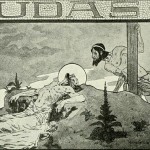
Matthew 27:1-10 - How did Judas end up as Judas?
Next Post

November 29, 2016 Matthew 27:27-44 - Christ, the Bullied One
Browse Our Archives
Select a Category Book Reviews Featured Give Us This Day Give Us This Day Devotional love me love my wife Love My Wife Reformed Catholicism Blog Spirit-Reality Take This Cup Uncategorized
Select a Month February 2022 November 2021 October 2021 August 2021 January 2021 December 2020 November 2020 September 2020 August 2020 July 2020 June 2020 May 2020 September 2018 July 2018 March 2018 November 2017 October 2017 September 2017 August 2017 July 2017 June 2017 May 2017 April 2017 March 2017 February 2017 January 2017 December 2016 November 2016 October 2016 September 2016 August 2016 July 2016 June 2016 May 2016 April 2016 March 2016 February 2016 January 2016 December 2015 November 2015 October 2015 September 2015 August 2015 July 2015 June 2015 May 2015 April 2015 March 2015 February 2015 January 2015 December 2014 November 2014 October 2014 September 2014 August 2014 July 2014 June 2014 May 2014 April 2014 March 2014 February 2014 January 2014 December 2013 November 2013 October 2013 September 2013 August 2013 July 2013 June 2013 May 2013 April 2013 March 2013 February 2013 January 2013 December 2012 November 2012 October 2012 September 2012 August 2012 July 2012 June 2012 May 2012 April 2012 March 2012 February 2012 January 2012 December 2011 November 2011 October 2011 September 2011 August 2011 July 2011 May 2011 April 2011 March 2011 February 2011 January 2011
Follow Us!
TAKE THE
Religious Wisdom Quiz
Who brought to Jesus the woman taken in adultery?
Select your answer to see how you score.
The Pharisees The Publicans The Apostles The Disciples
Related posts from Give Us This Day


Luke 23:50-24:12 - Honoring the Body of Jesus

Luke 23:13-25 - The Bizarro World
TRENDING AT PATHEOS Evangelical

The REST of Your Life: A Creative Wrestles...
This week I had a conversation with a good friend from church....

How the author of the world's best hymn...
I've been working with John Newton for a while now. This makes...

Long before this Lectio Divina, Psalm 130 - the song - started...

What About the Trees? Another Living Parable
After I finished writing the last article about falling leaves as a...

Why Classical Education Is a Conversation, Not a...
Come and Read: Joy in Classical Education When I was a little...

Cornell University has received a great deal of negative publicity and intense...
view all Evangelical blogs
Ad-Free & Subscriber Log-In Subscription Support
- About Us
- 2026 Calendar
- Videos
- Podcasts
- Library of World Religions
- Faith In Media Tracker
- Advertise With Us
- Write for Us
- Privacy Policy
- Terms of Service
- Do Not Sell My Data
- Contact Us
- Radiant Digital
- Manage Newsletter Subscriptions
- Unsubscribe From Notifications
- Sitemap
Copyright 2008-2026, Patheos. All rights reserved.
Subscription Support Ad-Free & Subscriber Log-In
Follow Patheos