
BuddhistCatholicContemplativeEvangelicalGeneral ChristianHinduJewishLatter-day SaintMuslimNew VisionsProgressive Christian
Beliefs
- Buddhist
- Catholic
- Contemplative
- Evangelical
- General Christian
- Hindu
- Jewish
- Latter-day Saint
- More Voices
- Muslim
- New Visions
- Pagan
- Progressive Christian
Topics
- Religion News
- Food and Religion
- Sports and Religion
- Religious Art
- Religious Music and Entertainment
- Religious Events
- History and Religion
- Style and Religion
- Politics and Religion
- Women in Religion
- Recreation Outdoors and Religion
- Business Finance and Religion
- Careers Workplace and Religion
- Education and Religion
- Family Parenting and Religion
- Health Fitness and Religion
- Home and Religion
- Relationships and Religion
- Technology and Religion
- Travel and Religion
Columnists
- Buddhist Columnists
- Business Finance and Religion Columnists
- Careers Workplace and Religion Columnists
- Catholic Columnists
- Contemplative Columnists
- Education and Religion Columnists
- Evangelists Columnists
- Family Parenting and Religion Columnists
- General Christian Columnists
- Health Fitness and Religion Columnists
- Hindu Columnists
- History and Religion Columnists
- Home and Religion Columnists
- Jewish Columnists
- More Voices Columnists
- Latter Day Columnists
- Muslim Columnists
- New Visions Columnists
- Nonreligious Columnists
- Pagan Columnists
- Politics and Religion Columnists
- Progressive Columnists
- Recreation Outdoors and Religion Columnists
- Relationships and Religion Columnists
- Religion News Columnists
- Religious Art Columnists
- Religious Events Columnists
- Religious Music and Entertainment Columnists
- Sports and Religion Columnists
- Style and Religion Columnists
- Technology and Religion Columnists
- Travel and Religion Columnists
- Women in Religion Columnists
Resource Library
- 2026 Calendar
- Library of World Religions
- The 100 Most Holy Places on Earth
- Patheos Answers
- Podcasts
- Videos
- Faith Leaders Database
- Anglican Episcopalian
- Bahai
- Baptist
- Buddhism
- Christianity
- Confucianism
- Eastern Orthodoxy
- Hinduism
- Holiness and Pentecostal
- ISKCON
- Islam
- Judaism
- Lutheran
- Methodist
- The Church of Jesus Christ of Latter-day Saints
- New Age
- Paganism
- Presbytarian and Reformed
- Protestantism
- Religion Behind the Scenes
- Roman Catholic
- Scientology
- Shia Islam
- Sikhism
- Sufism
- Sunni Islam
- Taoism
- Zen
- See all religions
Research Tools
 Ad-Free & Subscriber Log-In Subscription Support
Ad-Free & Subscriber Log-In Subscription Support
Follow Patheos 

- Trending:
- Forgiveness
- |
- Marriage
- |
- Consciousness
- |
- Death Penalty
- |
- Election
- |
- Halloween
 Give Us This Day
- Home
- Evangelical
- Luke 2:41-52 – What is Wisdom and Why Should I Want it?
Luke 2:41-52 – What is Wisdom and Why Should I Want it?
Last updated on: February 26, 2017 at 5:46 pm by Fr. Charles Erlandson
Luke 2:41-52 – What is Wisdom and Why Should I Want it? 2017-02-26T17:46:17-05:00 Fr. Charles Erlandson
Patheos Explore the world's faith through different perspectives on religion and spirituality! Patheos has the views of the prevalent religions and spiritualities of the world.
**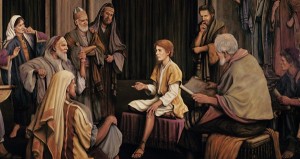 **I want to challenge you this morning to answer a difficult question. If you could ask God for one thing – just one thing – and you were certain He would grant it (as long as it’s not contrary to His revealed will) – what would it be?
This is, of course, simply another way of asking, “What is the most important thing in the world to you?” So, if you could ask God for one thing – what would be the one thing you would ask for? And no asking for more wishes!
Some might be tempted to ask for money. Undoubtedly, money is a good thing in and of itself. Personally, I find it very useful. But is it really the most important thing? Some might ask for a long life, or an extension of life. But a long life by itself may not be the best thing. Would any of us have wanted a Saddam Hussein to live as long as Methuselah?
Actually, God gave this very choice to someone about 3000 years ago. You might remember the story, told in 1 Kings 3, where God tells Solomon that he could ask for anything. Solomon, of course, asked for the wisest thing that any of us could ever ask for: he asked for wisdom.
Many definitions of wisdom may be offered, but wisdom in the Bible has a very definite meaning. We can do no better than the definition of wisdom implied in the Collect for the 1st Sunday after Epiphany, in which we pray that God may “grant that [we] may both perceive and know what things we ought to do, and also may have grace and power faithfully to fulfill the same.”
Today’s lesson from Luke 2:41-52 deals with the only known event in Jesus’ life from the time of His birth to His baptism by John. Interestingly, this passage deals not with the wisdom of Christ in His divine nature from eternity past and not with the wisdom displayed in His public ministry but with the wisdom He manifested when only 12 years old and not yet a teenager.
How was the wisdom of Jesus manifested? By His perceiving and knowing what He ought to do – and then doing it. Jesus Christ was human: He had to grow, and He had to make choices. Verses 40 and 52 both mention the wisdom of the young Jesus, and therefore this passage is intended to teach us about His wisdom. When He was 12, Jesus demonstrated His wisdom in two ways.
First, we read in verse 49 that He knew He had to be about His Father’s business. If anyone ever knew what He ought to do, and had the grace to do it, it was Jesus Christ, your Lord and your example. He knew what was important in His life. In fact, He was so intent on it, that it surprised those around Him – and probably disturbed them. Throughout His life, He never lost this single-minded purpose. Though the will of the Father led Him to willingly go to the Cross and all the suffering involved with it, Jesus never lost sight of the one thing that is necessary in life: to be about the business of our heavenly Father.
So central to His life and ministry did Jesus consider obedience to the Father to be, that He says, “My food is to do the will of Him who sent Me, and to finish His work” (John 4:34). Again, He says, “I can of Myself do nothing. As I hear, I judge; and My judgment is righteous, because I do not seek My own will but the will of the Father who sent Me” (John 5:30).
The second way in which Jesus showed us His wisdom is not only in doing His heavenly Father’s business but also in being subject to His parents (verse 51). His obedience to His heavenly Father and His obedience to His earthly father are connected: He obeyed His heavenly Father by obeying His earthly father. In the same way (since to love God is to obey Him), we show our love of God by loving our neighbor and by being submissive to those God has put in some kind of authority over us. As the Father’s will is done in heaven, may it be done on earth, for this is our daily bread.
Think about it for a minute: here you are, perfect Jesus, and you have to obey Your fallible, human parents. How humbling for humble Joseph and Mary to realize that they had to raise a perfect son, being imperfect themselves. There must have been times when Jesus obeyed Joseph and Mary, knowing He was right and they were wrong: but He was subject to them. I don’t know how many of you grew up with older siblings you were compared to – but how would you have liked to have to be Jesus’ younger sibling? I’m sure that James, Joses, Simon, and Judas and Jesus’ sisters got sick of being compared to Hi! “Why can’t you be more like Jesus?”
We may imagine that as God and as a human without sin that the obedience of Jesus Christ was automatic and that He didn’t have to lift a finger to obey. But Jesus Christ was human, and He had to go through a process in His human nature. And He had to practice obedience. Even Jesus had to start as a baby, become a toddler, and then a schoolboy, and yes, even a teenager.
In all of these stages of life, Jesus chose obedience. Jesus wasn’t just righteous because He was God: as a human, He had to choose it. He chose to learn the Law, and He chose to obey it perfectly. He was tempted every way you are, yet He chose not to sin or disobey the commandments of His Father. Every time He had a choice, He made a choice for the Father.
Maybe you’ve forgotten that obedience is a choice. We’ve been so fooled by a culture that wants to deny its responsibility before God that even in our churches and Christian homes we like to pretend that we aren’t really accountable and that we can’t really act any other way than we are acting. It must be the fault of either our genes or of our environment – because I know it can’t be mine!
But obedience is a choice, and the more you practice making right, godly, choices, the easier they become. Each choice you make is connected to your soul and your will, and to your other choices.
You must therefore follow the Wise One in His wisdom. Since, left to ourselves, we’re a ship of fools, grace is necessary. This is why in the Collect for the 1st Sunday after the Epiphany we pray not only that we would know what to do but also that we “may have grace and power faithfully to fulfill the same.” Solomon had to ask for wisdom because it is a gift from God. By the grace of the one who is all-wise, the one who perfectly obeyed the will of His Father, we too can be wise.
So how can we, by the grace of God the Father, be wise like Jesus? Jesus taught in His Father’s house because He loved God – when He was only 12. And He was Himself taught there. Like Jesus, we must love the Word of God and seek to hear it and obey it as often as we can.
Jesus was always about His Father’s business. He was not only constantly attuned to the voice of the Father, but He made it His ambition in life to constantly obey when He heard. His calling is the same as ours because He gave it to us when He gave Himself to us.
Jesus grew in wisdom and stature, and we must grow in wisdom: it doesn’t happen immediately or automatically. We must take active steps, we need to make a plan to grow in wisdom and stature. This is known as discipleship, and it is your life.
How many of us can say that we are still growing in wisdom and obedience? If you want to be wise in God’s kingdom, then look for ways to grow spiritually. Every day is full of incredible opportunities – both small and great – to offer up yourself as a living sacrifice to God. Every day – every moment – is an opportunity to make an active choice to seek and to follow the will of God.
I probably don’t even have to tell you: you probably already know some of the ways that God is asking you to be wiser by obeying Him more faithfully.
The secret of the wisdom of Christ was that He made Himself a living sacrifice to the Father, and the secret to the wisdom of the ages is to seek the will of God by offering yourself up as a living sacrifice, every moment of every day.
Wisdom is a life of knowing and doing what we ought to do. Why not make your daily prayer something like: “God, give me the wisdom and strength to know and to do Your will.”
Prayer: “O Lord, we beseech thee mercifully to receive the prayers of thy people who call upon thee; and grant that they may both perceive and know what things they ought to do, and also may have grace and power faithfully to fulfill the same; through Jesus Christ our Lord. Amen.
Point for Meditation: Examine your heart. How much can you honestly say that you desire nothing more than to do God’s will? What things that you know God has asked you to do are you still refusing to do or making excuses for not doing?
Resolution: I resolve to listen to God as He tells me the most important way He wants me to obey Him more faithfully today. Having heard, I vow to obey immediately, completely, and joyfully.
Jesus in the Temple at 12 – Free Clip Art
Previous Post

February 24, 2017
Luke 2:21-40 - The Pattern of Piety
Next Post
February 28, 2017 Luke 3:1-22 - What Shall We Do Then?
Browse Our Archives
Select a Category Book Reviews Featured Give Us This Day Give Us This Day Devotional love me love my wife Love My Wife Reformed Catholicism Blog Spirit-Reality Take This Cup Uncategorized
Select a Month February 2022 November 2021 October 2021 August 2021 January 2021 December 2020 November 2020 September 2020 August 2020 July 2020 June 2020 May 2020 September 2018 July 2018 March 2018 November 2017 October 2017 September 2017 August 2017 July 2017 June 2017 May 2017 April 2017 March 2017 February 2017 January 2017 December 2016 November 2016 October 2016 September 2016 August 2016 July 2016 June 2016 May 2016 April 2016 March 2016 February 2016 January 2016 December 2015 November 2015 October 2015 September 2015 August 2015 July 2015 June 2015 May 2015 April 2015 March 2015 February 2015 January 2015 December 2014 November 2014 October 2014 September 2014 August 2014 July 2014 June 2014 May 2014 April 2014 March 2014 February 2014 January 2014 December 2013 November 2013 October 2013 September 2013 August 2013 July 2013 June 2013 May 2013 April 2013 March 2013 February 2013 January 2013 December 2012 November 2012 October 2012 September 2012 August 2012 July 2012 June 2012 May 2012 April 2012 March 2012 February 2012 January 2012 December 2011 November 2011 October 2011 September 2011 August 2011 July 2011 May 2011 April 2011 March 2011 February 2011 January 2011
Follow Us!
TAKE THE
Religious Wisdom Quiz
True or False: In Revelation, the New Jerusalem has ten gates, each made of a single pearl.
Select your answer to see how you score.
TRUE FALSE
Related posts from Give Us This Day

Jesus Took on All Human Suffering - Part...

The Different States of Love - and the...


TRENDING AT PATHEOS Evangelical

The REST of Your Life: A Creative Wrestles...
This week I had a conversation with a good friend from church....

How the author of the world's best hymn...
I've been working with John Newton for a while now. This makes...

Long before this Lectio Divina, Psalm 130 - the song - started...

What About the Trees? Another Living Parable
After I finished writing the last article about falling leaves as a...

Why Classical Education Is a Conversation, Not a...
Come and Read: Joy in Classical Education When I was a little...

Cornell University has received a great deal of negative publicity and intense...
view all Evangelical blogs
Ad-Free & Subscriber Log-In Subscription Support
- About Us
- 2026 Calendar
- Videos
- Podcasts
- Library of World Religions
- Faith In Media Tracker
- Advertise With Us
- Write for Us
- Privacy Policy
- Terms of Service
- Do Not Sell My Data
- Contact Us
- Radiant Digital
- Manage Newsletter Subscriptions
- Unsubscribe From Notifications
- Sitemap
Copyright 2008-2026, Patheos. All rights reserved.
Subscription Support Ad-Free & Subscriber Log-In
Follow Patheos