
BuddhistCatholicContemplativeEvangelicalGeneral ChristianHinduJewishLatter-day SaintMuslimNew VisionsProgressive Christian
Beliefs
- Buddhist
- Catholic
- Contemplative
- Evangelical
- General Christian
- Hindu
- Jewish
- Latter-day Saint
- More Voices
- Muslim
- New Visions
- Pagan
- Progressive Christian
Topics
- Religion News
- Food and Religion
- Sports and Religion
- Religious Art
- Religious Music and Entertainment
- Religious Events
- History and Religion
- Style and Religion
- Politics and Religion
- Women in Religion
- Recreation Outdoors and Religion
- Business Finance and Religion
- Careers Workplace and Religion
- Education and Religion
- Family Parenting and Religion
- Health Fitness and Religion
- Home and Religion
- Relationships and Religion
- Technology and Religion
- Travel and Religion
Columnists
- Buddhist Columnists
- Business Finance and Religion Columnists
- Careers Workplace and Religion Columnists
- Catholic Columnists
- Contemplative Columnists
- Education and Religion Columnists
- Evangelists Columnists
- Family Parenting and Religion Columnists
- General Christian Columnists
- Health Fitness and Religion Columnists
- Hindu Columnists
- History and Religion Columnists
- Home and Religion Columnists
- Jewish Columnists
- More Voices Columnists
- Latter Day Columnists
- Muslim Columnists
- New Visions Columnists
- Nonreligious Columnists
- Pagan Columnists
- Politics and Religion Columnists
- Progressive Columnists
- Recreation Outdoors and Religion Columnists
- Relationships and Religion Columnists
- Religion News Columnists
- Religious Art Columnists
- Religious Events Columnists
- Religious Music and Entertainment Columnists
- Sports and Religion Columnists
- Style and Religion Columnists
- Technology and Religion Columnists
- Travel and Religion Columnists
- Women in Religion Columnists
Resource Library
- 2026 Calendar
- Library of World Religions
- The 100 Most Holy Places on Earth
- Patheos Answers
- Podcasts
- Videos
- Faith Leaders Database
- Anglican Episcopalian
- Bahai
- Baptist
- Buddhism
- Christianity
- Confucianism
- Eastern Orthodoxy
- Hinduism
- Holiness and Pentecostal
- ISKCON
- Islam
- Judaism
- Lutheran
- Methodist
- The Church of Jesus Christ of Latter-day Saints
- New Age
- Paganism
- Presbytarian and Reformed
- Protestantism
- Religion Behind the Scenes
- Roman Catholic
- Scientology
- Shia Islam
- Sikhism
- Sufism
- Sunni Islam
- Taoism
- Zen
- See all religions
Research Tools
 Ad-Free & Subscriber Log-In Subscription Support
Ad-Free & Subscriber Log-In Subscription Support
Follow Patheos 

- Trending:
- Forgiveness
- |
- Marriage
- |
- Consciousness
- |
- Death Penalty
- |
- Election
- |
- Halloween
 Give Us This Day
- Home
- Evangelical
- Jesus of Nazareth by Pope Benedict XVI
Jesus of Nazareth by Pope Benedict XVI
Last updated on: September 7, 2011 at 9:36 pm by Fr. Charles Erlandson
Jesus of Nazareth by Pope Benedict XVI 2011-09-07T21:36:13-05:00 Fr. Charles Erlandson
Patheos Explore the world's faith through different perspectives on religion and spirituality! Patheos has the views of the prevalent religions and spiritualities of the world.
 Profound and Pastoral, Scholarly and Faithful!
“Jesus of Nazareth: Holy Week: From the Entrance Into Jerusalem To The Resurrection” is the sequel to Pope Benedicts XVI’s first book on the life of Christ: “Jesus of Nazareth: From the Baptism in the Jordanto the Transfiguration.” What I am writing, I write as an Anglican priest and professor who has read previously only a few articles by Pope Benedict XVI (back when he was Cardinal Ratzinger). I’m happy to say that I find Benedict XVI’s “Jesus of Nazareth” a wonderful commentary on the life of Jesus Christ. While it’s very clear that the Pope is a scholar, it’s also clear he is a man of deep faith: I want both of these in a good commentary on the life of Christ! This Volume 2 of the Pope’s work makes me want to go out and buy his first volume as well. “Jesus of Nazareth”, especially, makes for wonderful Lent, Passiontide, and Eastertide reading!
I heartily recommend “Jesus of Nazareth: Holy Week: From the Entrance Into Jerusalem To The Resurrection” to all Christians who want to understand Jesus and His teachings better, to be closer to Jesus Christ, and to become more faithful disciples of His in the process. Any writer who manages to combine scholarly erudition with readability and deep insights into faith and theology deserves to be read. This is especially true if the writer is the present Pope!
In his forward, Benedict places his work, and that of scholarly exegesis in general, firmly in its theological context, as a response to the historical-critical exegesis that is even now exhausting itself. In other words, his work will combine the scholar’s care for history with the saint’s devotion to and care for the biblical text. Benedict says that he is not writing another “life of Christ” but wants simply to present the figure and message of Jesus.
When reviewing books, especially ones of a theological nature, I like to look at both the most difficult passages to see if the author will “wimp out” on the reader and to look at the most dense and important passages. Benedict states that the teachings of Jesus on eschatology near the end of the Gospels can be described as “the most difficult text in the whole of the Gospels?” So how does the Pope handle these difficult passages? With great skill and understanding. In essence, he looks at these passages through three temporal lenses. First, he sees them as being in continuity with the tradition that came before. Second, he sees a historical fulfillment in the destruction of the Temple.
Third, he sees them in terms of an eschatology that is beyond our time and reality. I believe this is a faithful way to understand these difficult passages and may be of great help to perplexed Christians. Rather than seeing a naïve and simplistic connection between Jesus’ teaching and the end of the world, Benedict sees in them as well “a time for the Gentiles.”
Being an Anglican, and not a Roman Catholic, I wanted to see how Benedict would handle “the theology of the words of institution.” Benedict begins with a helpful reminder that the words of institution belong in the context of prayer, “the thanksgiving that leads to blessing and to transformation.” In the breaking of the bread, we see the hospitality and caring of God that is to be applied in the caring nature of God’s Church as well. Protestants may not be satisfied with Benedict’s explanation of how Christ can say “This is My Body” while He is still standing there in the flesh, but Benedict expresses Jesus’ meaning without being polemical. In essence, by way of anticipation, Jesus knows that He will indeed offer His life to His disciples and is already in the process of doing it. Nothing very controversial here for many of us.
On a more personal and less theological level, I find that in many places Benedict’s insights not only helped me to understand certain passages better but also to know their deeper meanings. He does a wonderful job of showing how various passages of the Bible all are brought together in parts of the life of Christ (and some of you thought Roman Catholics don’t know their Bible!) For example, I love Benedict’s discussion of Jesus’ passionate prayer in theGardenofGethsemane. Even here, Benedict always keeps the relevant scholarship before, as a means of better understanding the passage at hand.
There are too many other important passages to go through, but I thought Benedict’s handling of Christ’ cry of dereliction on the Cross was very good, placing it, as he does, in the context of what has been called the “corporate personality” of the Psalms. This is in contrast to the individualistic way we tend to read the Scriptures. In other words, Benedict allows for the importance of private piety but always ties them to the life of Christ and therefore the life of the whole Church.
In summary, what we have in Pope Benedict XVI’s “Jesus of Nazareth” is an explanation of the most important man who brought the most important message. It just happens to be written by, arguably, the most important (though all are equal in God’s eyes) Christian alive today. Intelligent and clear, faithful and forceful, I’m sure it will bless the lives of many! My prayer is that “Jesus of Nazareth” will bring many Christians closer to Jesus of Nazareth.
Benedict XVI organizes his book in the following way:
I. The Entrance intoJerusalemand the Cleansing of theTemple
1. The Entrance intoJerusalem
2. The Cleansing of theTemple
II. Jesus’ Eschatological Discourse
1. The End of theTemple
2. The Times of the Gentiles
3. Prophecy and Apocalyptic in the Eschatological Discourse
III. The Washing of the Feet
1. The Hour of Jesus
2. “You are Clean”
3. The New Commandment
4. The Mystery of the Betrayer
5. Two Conversations with Peter
6. Washing of Feet and Confession of Sin
IV. Jesus’ High Priestly Prayer
1. The Jewish Feast of the Atonement
2. Four Major Themes of the Prayer
V. The Last Supper
1. The Dating of the Last Supper
2. The Institution of the Eucharist
3. The Theology of the Words of Institution
4. From the Last Supper to the Sunday Morning Eucharist
VI. Gethsemane
1. On the Way to theMount of Olives
2. The Prayer of Jesus
VII. The Trial of Jesus
1. Preliminary Discussion of the Sanhedrin
2. Jesus Before the Sanhedrin
3. Jesus Before Pilate
VIII. Crucifixion and Burial of Jesus
1. Word and Event in the Passion Narrative
2. Jesus on the Cross (this is subdivided into 8 sections)
3. Jesus’ Death as Reconciliation and Salvation
IX. Jesus’ Resurrection from the Dead
1. What is the Resurrection of Jesus?
2. The 2 Different Types of Resurrection Testimony
– the Confessional Tradition
– the Narrative Tradition
3. Summary: the Nature of Jesus’ Resurrection and its Historical Significance
Epilogue – “He Ascended into Heaven”
Previous Post

September 7, 2011
Thursday of Trinity 11 - Luke 22:31-46
Next Post
September 7, 2011 Defending Constantine by Peter Leithart
Browse Our Archives
Select a Category Book Reviews Featured Give Us This Day Give Us This Day Devotional love me love my wife Love My Wife Reformed Catholicism Blog Spirit-Reality Take This Cup Uncategorized
Select a Month February 2022 November 2021 October 2021 August 2021 January 2021 December 2020 November 2020 September 2020 August 2020 July 2020 June 2020 May 2020 September 2018 July 2018 March 2018 November 2017 October 2017 September 2017 August 2017 July 2017 June 2017 May 2017 April 2017 March 2017 February 2017 January 2017 December 2016 November 2016 October 2016 September 2016 August 2016 July 2016 June 2016 May 2016 April 2016 March 2016 February 2016 January 2016 December 2015 November 2015 October 2015 September 2015 August 2015 July 2015 June 2015 May 2015 April 2015 March 2015 February 2015 January 2015 December 2014 November 2014 October 2014 September 2014 August 2014 July 2014 June 2014 May 2014 April 2014 March 2014 February 2014 January 2014 December 2013 November 2013 October 2013 September 2013 August 2013 July 2013 June 2013 May 2013 April 2013 March 2013 February 2013 January 2013 December 2012 November 2012 October 2012 September 2012 August 2012 July 2012 June 2012 May 2012 April 2012 March 2012 February 2012 January 2012 December 2011 November 2011 October 2011 September 2011 August 2011 July 2011 May 2011 April 2011 March 2011 February 2011 January 2011
Follow Us!
TAKE THE
Religious Wisdom Quiz
Which book comes immediately before Psalms in the Bible?
Select your answer to see how you score.
Ecclesiastes Song of Songs Proverbs Job
Related posts from Give Us This Day
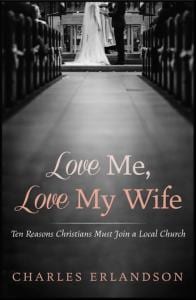
New Book: Love Me, Love My Wife
Luke 18:31-43 - You are the Blind Man
Matthew 17:1-13 - Transfiguration

Whitsun Eve (Day Before Pentecost) - Romans 8:12-18
TRENDING AT PATHEOS Evangelical

How the author of the world's best hymn...
I've been working with John Newton for a while now. This makes...

Long before this Lectio Divina, Psalm 130 - the song - started...

What About the Trees? Another Living Parable
After I finished writing the last article about falling leaves as a...

Why Classical Education Is a Conversation, Not a...
Come and Read: Joy in Classical Education When I was a little...

Falling Leaves: A Living Parable on Letting Go
I’ve spent the vast majority of my life in the southeast corner...

Cornell University has received a great deal of negative publicity and intense...
view all Evangelical blogs
Ad-Free & Subscriber Log-In Subscription Support
- About Us
- 2026 Calendar
- Videos
- Podcasts
- Library of World Religions
- Faith In Media Tracker
- Advertise With Us
- Write for Us
- Privacy Policy
- Terms of Service
- Do Not Sell My Data
- Contact Us
- Radiant Digital
- Manage Newsletter Subscriptions
- Unsubscribe From Notifications
- Sitemap
Copyright 2008-2026, Patheos. All rights reserved.
Subscription Support Ad-Free & Subscriber Log-In
Follow Patheos