
BuddhistCatholicContemplativeEvangelicalGeneral ChristianHinduJewishLatter-day SaintMuslimNew VisionsProgressive Christian
Beliefs
- Buddhist
- Catholic
- Contemplative
- Evangelical
- General Christian
- Hindu
- Jewish
- Latter-day Saint
- More Voices
- Muslim
- New Visions
- Pagan
- Progressive Christian
Topics
- Religion News
- Food and Religion
- Sports and Religion
- Religious Art
- Religious Music and Entertainment
- Religious Events
- History and Religion
- Style and Religion
- Politics and Religion
- Women in Religion
- Recreation Outdoors and Religion
- Business Finance and Religion
- Careers Workplace and Religion
- Education and Religion
- Family Parenting and Religion
- Health Fitness and Religion
- Home and Religion
- Relationships and Religion
- Technology and Religion
- Travel and Religion
Columnists
- Buddhist Columnists
- Business Finance and Religion Columnists
- Careers Workplace and Religion Columnists
- Catholic Columnists
- Contemplative Columnists
- Education and Religion Columnists
- Evangelists Columnists
- Family Parenting and Religion Columnists
- General Christian Columnists
- Health Fitness and Religion Columnists
- Hindu Columnists
- History and Religion Columnists
- Home and Religion Columnists
- Jewish Columnists
- More Voices Columnists
- Latter Day Columnists
- Muslim Columnists
- New Visions Columnists
- Nonreligious Columnists
- Pagan Columnists
- Politics and Religion Columnists
- Progressive Columnists
- Recreation Outdoors and Religion Columnists
- Relationships and Religion Columnists
- Religion News Columnists
- Religious Art Columnists
- Religious Events Columnists
- Religious Music and Entertainment Columnists
- Sports and Religion Columnists
- Style and Religion Columnists
- Technology and Religion Columnists
- Travel and Religion Columnists
- Women in Religion Columnists
Resource Library
- 2026 Calendar
- Library of World Religions
- The 100 Most Holy Places on Earth
- Patheos Answers
- Podcasts
- Videos
- Faith Leaders Database
- Anglican Episcopalian
- Bahai
- Baptist
- Buddhism
- Christianity
- Confucianism
- Eastern Orthodoxy
- Hinduism
- Holiness and Pentecostal
- ISKCON
- Islam
- Judaism
- Lutheran
- Methodist
- The Church of Jesus Christ of Latter-day Saints
- New Age
- Paganism
- Presbytarian and Reformed
- Protestantism
- Religion Behind the Scenes
- Roman Catholic
- Scientology
- Shia Islam
- Sikhism
- Sufism
- Sunni Islam
- Taoism
- Zen
- See all religions
Research Tools
 Ad-Free & Subscriber Log-In Subscription Support
Ad-Free & Subscriber Log-In Subscription Support
Follow Patheos 

- Trending:
- Forgiveness
- |
- Marriage
- |
- Consciousness
- |
- Death Penalty
- |
- Election
- |
- Halloween
 Give Us This Day
- Home
- Evangelical
- Is Anglicanism Catholic?
Is Anglicanism Catholic?
Last updated on: September 24, 2011 at 11:03 am by Fr. Charles Erlandson
Is Anglicanism Catholic? 2011-09-24T11:03:42-05:00 Fr. Charles Erlandson
Patheos Explore the world's faith through different perspectives on religion and spirituality! Patheos has the views of the prevalent religions and spiritualities of the world.
 Anglicanism is Catholicism

I said in my last post that the 2-word definition of Anglicanism is “Reformed Catholicism.” (Funny: isn’t there a blog name somewhere in the blogosphere with that name?)
Though often lost in an over-emphasis on Protestantism (the “Reformed” aspect of Anglicanism), Anglicanism has always been a quest for catholicity. As I said in my previous blog: “Reformed” is the adjective which modifies the noun “Catholicism.” By this I mean that there is a Catholic substance of the faith that Anglican seeks to maintain and preserve. When this Catholic faith is distorted, obscured, mixed with additions and errors, then it needs to be reformed. In this way, the Catholic identity of Anglicanism is always primary, while the Reformed aspect is always a secondary (but still essential) aspect that acts upon the basic Catholic faith which is at the core of Anglicanism.
So what does the word “Catholic” mean? If I’m going to claim that Anglicanism is essentially Reformed Catholicism, then it would be nice of me to let you know what it is that I mean by “Catholic.” Unfortunately, in the Western world for many centuries the word “Catholic” has been associated exclusively with one particular church: the Roman Catholic Church. For most Americans and Westerners to say someone’s a Catholic means that that person is a “Roman Catholic.”
But this isn’t the original meaning of the word “Catholic,” and it’s not what Anglicanism means when it says its “Catholic” by nature. When Christian recite the historic Creeds and say that they believe in the “Catholic church,” they’re not saying that they believe in the Roman Catholic Church or all that it believes. Catholic is a word that basically means “universal” or “whole.” It’s therefore used of the doctrine, discipline, and worship of the Church as practiced by the undivided Church in the early centuries after Christ. It has taken on a secondary meaning of “universal in scope,” and the Church, the one Body of Christ, is certainly the most universal or widely spread religion in the world. St. Cyril captured the multiple and related meanings of “Catholic” when he wrote: “The Church, then, is called Catholic because it is spread through the whole world . . . and because it never stops teaching in all its fullness every doctrine that men ought to be brought to know. . . . It is called Catholic also because it brings into religious obedience every sort of men, rulers and ruled, learned and simple, and because it is a universal treatment and cure for every kind of sin . . . .”
Catholicity in the sense of what was universally believed is often expressed in the words of St. Vincent of Laurens, in what has come to be called “the Vincentian Canon.” The Vincentian Canon is this: “Now in the Catholic Church itself we take the greatest care to hold that which has been believed everywhere, always and by all. That is truly and properly ‘Catholic,’ as is shown by the very force and meaning of the word, which comprehends everything almost universally.”
Anglicanism exists, therefore, because it is a Catholic faith, truly attempting to hold to the faith once delivered to the saints (Jude 3). This Catholic faith is first and foremost found in the Holy Scriptures of the Old and New Testaments. The New Testament is a record of the apostolic teaching of the first century, primarily preserved in the form of Gospels and letters. They alone are the Word of God and the inspired, highest authority for what Christians believe, and they contain all things necessary to salvation.
However, the Bible always requires interpretation, and so the question arises, “Who has the authority to interpret?” The best and true answer is, “The Church,” which, of course, must itself be defined. Certain authoritative interpretations of the Scriptures are necessarily a part of the Catholic faith. These include especially the Creeds (especially the Apostles’ and Nicene Creeds) and the first four (some would say seven) Ecumenical Councils. While not having the same authority as the Bible, they are authoritative interpretations and summaries of the Bible, and are therefore Catholic, meaning apostolic and universal, in nature.
There are many points about doctrine, discipline, and worship that are not immediately clear from Scripture, even if Scripture speaks of these particular points. Often, issues arise that lie outside of what is taught in the Bible, the Creeds, or the Councils. Is there somewhere else we can turn for the best and most authoritative interpreter of the apostolic faith of the Church?
The answer is, “The Church Fathers.” While not inspired like the Bible and not as authoritative or unified as the Creeds or Councils, the Church Fathers provide a good record of the earliest and most universal beliefs of the early church on matters not entirely clear from Scripture itself. Anglicans have consistently turned and returned to the Fathers to help guide them in trying to maintain the doctrine, discipline, and worship of the early church, which is to say, the Catholic, apostolic faith of the Church. If a particular belief or practice was present in the first century and continued until the sixteenth century (when many ancient practices and beliefs were overthrown), then it’s a safe bet that that particular belief or practice is what was handed down by the apostles. To put things another way: who’s more likely to know what the apostles meant in Scripture and how they expected the churches to live and worship: those who were the immediate and proximate descendants of the apostles – or those who have come 2000 years later?
Another source of catholicity, in which the Catholic and apostolic faith was preserved, is the ancient liturgies. The early liturgies provide us not only with knowledge about how the early church worshiped, but also about how they interpreted certain things. Liturgies are not only about worship but also about spirituality and theology.
I’m willing to wager that just about every Christian believes his church is living, believing, and worshiping the way the early Church did. Well, we know a lot about what the early church believed, how they lived, and how they worshiped: and it looks a whole lot like historic Anglicanism, early Roman Catholicism, Eastern Orthodoxy, and to a lesser degree Lutheranism. This is because these church traditions, in particular, have been built upon the apostolic and Catholic nature of the early church, while many Protestant traditions ignore the testimony of the early church and derive their faith and life from much later traditions that began at the time of the Reformation or even later.
And so this preserving of the apostolic faith in its doctrine, discipline, and worship, as was kept universally by the early Church, represents the Catholic ideal upon which the Reformed Catholic character of Anglicanism rests. While Anglicanism has some distinctives of its own, its fundamental identity and character is that it is an inheritor and keeper of the one, apostolic, Catholic faith of the early church, as inculturated into diverse time periods and cultures.
Next time: the Reformed character of Anglicanism. (And then a blog or two on how some of us have become Anglican.)
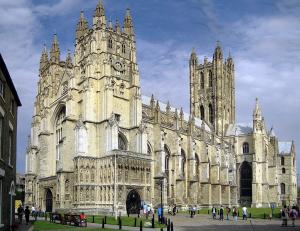
All Saints image from Wikipedia Commons.jpg
Previous Post

September 23, 2011
Saturday of the 13th Sunday After Trinity - 2 Corinthians 5:11-21
Next Post
September 25, 2011 Monday of the 14th Sunday After Trinity - 2 Corinthians 6:1-10
Browse Our Archives
Select a Category Book Reviews Featured Give Us This Day Give Us This Day Devotional love me love my wife Love My Wife Reformed Catholicism Blog Spirit-Reality Take This Cup Uncategorized
Select a Month February 2022 November 2021 October 2021 August 2021 January 2021 December 2020 November 2020 September 2020 August 2020 July 2020 June 2020 May 2020 September 2018 July 2018 March 2018 November 2017 October 2017 September 2017 August 2017 July 2017 June 2017 May 2017 April 2017 March 2017 February 2017 January 2017 December 2016 November 2016 October 2016 September 2016 August 2016 July 2016 June 2016 May 2016 April 2016 March 2016 February 2016 January 2016 December 2015 November 2015 October 2015 September 2015 August 2015 July 2015 June 2015 May 2015 April 2015 March 2015 February 2015 January 2015 December 2014 November 2014 October 2014 September 2014 August 2014 July 2014 June 2014 May 2014 April 2014 March 2014 February 2014 January 2014 December 2013 November 2013 October 2013 September 2013 August 2013 July 2013 June 2013 May 2013 April 2013 March 2013 February 2013 January 2013 December 2012 November 2012 October 2012 September 2012 August 2012 July 2012 June 2012 May 2012 April 2012 March 2012 February 2012 January 2012 December 2011 November 2011 October 2011 September 2011 August 2011 July 2011 May 2011 April 2011 March 2011 February 2011 January 2011
Follow Us!
TAKE THE
Religious Wisdom Quiz
Where did Elisha perform many miracles?
Select your answer to see how you score.
Jericho Bethel Samaria Shunem
Related posts from Give Us This Day

James Clark - Book Review of Take This...
Tracts for the Times 2.0 Tract #2 Part...
Tract #2 Part 1 – When Did Anglicanism...
Tract #1 – What is Anglicanism?
TRENDING AT PATHEOS Evangelical

How the author of the world's best hymn...
I've been working with John Newton for a while now. This makes...

Long before this Lectio Divina, Psalm 130 - the song - started...

What About the Trees? Another Living Parable
After I finished writing the last article about falling leaves as a...

Why Classical Education Is a Conversation, Not a...
Come and Read: Joy in Classical Education When I was a little...

Falling Leaves: A Living Parable on Letting Go
I’ve spent the vast majority of my life in the southeast corner...

Cornell University has received a great deal of negative publicity and intense...
view all Evangelical blogs
Ad-Free & Subscriber Log-In Subscription Support
- About Us
- 2026 Calendar
- Videos
- Podcasts
- Library of World Religions
- Faith In Media Tracker
- Advertise With Us
- Write for Us
- Privacy Policy
- Terms of Service
- Do Not Sell My Data
- Contact Us
- Radiant Digital
- Manage Newsletter Subscriptions
- Unsubscribe From Notifications
- Sitemap
Copyright 2008-2026, Patheos. All rights reserved.
Subscription Support Ad-Free & Subscriber Log-In
Follow Patheos