
BuddhistCatholicContemplativeEvangelicalGeneral ChristianHinduJewishLatter-day SaintMuslimNew VisionsProgressive Christian
Beliefs
- Buddhist
- Catholic
- Contemplative
- Evangelical
- General Christian
- Hindu
- Jewish
- Latter-day Saint
- More Voices
- Muslim
- New Visions
- Pagan
- Progressive Christian
Topics
- Religion News
- Food and Religion
- Sports and Religion
- Religious Art
- Religious Music and Entertainment
- Religious Events
- History and Religion
- Style and Religion
- Politics and Religion
- Women in Religion
- Recreation Outdoors and Religion
- Business Finance and Religion
- Careers Workplace and Religion
- Education and Religion
- Family Parenting and Religion
- Health Fitness and Religion
- Home and Religion
- Relationships and Religion
- Technology and Religion
- Travel and Religion
Columnists
- Buddhist Columnists
- Business Finance and Religion Columnists
- Careers Workplace and Religion Columnists
- Catholic Columnists
- Contemplative Columnists
- Education and Religion Columnists
- Evangelists Columnists
- Family Parenting and Religion Columnists
- General Christian Columnists
- Health Fitness and Religion Columnists
- Hindu Columnists
- History and Religion Columnists
- Home and Religion Columnists
- Jewish Columnists
- More Voices Columnists
- Latter Day Columnists
- Muslim Columnists
- New Visions Columnists
- Nonreligious Columnists
- Pagan Columnists
- Politics and Religion Columnists
- Progressive Columnists
- Recreation Outdoors and Religion Columnists
- Relationships and Religion Columnists
- Religion News Columnists
- Religious Art Columnists
- Religious Events Columnists
- Religious Music and Entertainment Columnists
- Sports and Religion Columnists
- Style and Religion Columnists
- Technology and Religion Columnists
- Travel and Religion Columnists
- Women in Religion Columnists
Resource Library
- 2026 Calendar
- Library of World Religions
- The 100 Most Holy Places on Earth
- Patheos Answers
- Podcasts
- Videos
- Faith Leaders Database
- Anglican Episcopalian
- Bahai
- Baptist
- Buddhism
- Christianity
- Confucianism
- Eastern Orthodoxy
- Hinduism
- Holiness and Pentecostal
- ISKCON
- Islam
- Judaism
- Lutheran
- Methodist
- The Church of Jesus Christ of Latter-day Saints
- New Age
- Paganism
- Presbytarian and Reformed
- Protestantism
- Religion Behind the Scenes
- Roman Catholic
- Scientology
- Shia Islam
- Sikhism
- Sufism
- Sunni Islam
- Taoism
- Zen
- See all religions
Research Tools
 Ad-Free & Subscriber Log-In Subscription Support
Ad-Free & Subscriber Log-In Subscription Support
Follow Patheos 

- Trending:
- Forgiveness
- |
- Marriage
- |
- Consciousness
- |
- Death Penalty
- |
- Election
- |
- Halloween
 Give Us This Day
- Home
- Evangelical
- Good Friday – The Gospel of Suffering, Part I
Good Friday – The Gospel of Suffering, Part I
Last updated on: April 13, 2017 at 3:59 pm by Fr. Charles Erlandson
Good Friday – The Gospel of Suffering, Part I 2017-04-13T15:59:36-05:00 Fr. Charles Erlandson
Patheos Explore the world's faith through different perspectives on religion and spirituality! Patheos has the views of the prevalent religions and spiritualities of the world.
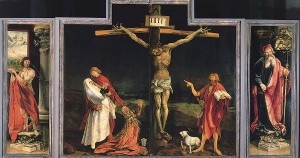 As a Holy Week meditation, I want to present what I call “The Gospel of Suffering” in 3 parts. Part 1 is for Good Friday.
Introduction
Christians, above all other men, should know the mysterious meaning of suffering. Too often, however, popular Christian theology and music is incapable of dealing with suffering, promising instead a magical peace, happiness, and better you. But just as a good story can’t be told without conflict or tension, the good news of Jesus Christ can’t be told without suffering.
So crucial is suffering is to God’s revelation of Himself and His love that we might even dare to speak of “The Gospel of Suffering.”
While suffering is often seen as a reason to reject the existence of a good and loving God, a study of God’s revelation of Himself in the Holy Scriptures yields 3 incredible, transformative insights, which, together, constitute “The Gospel of Suffering.”
- That far from being a sign of God’s non-existence, apathy, or impotence, human suffering is transformed by Christ’s Incarnation into a sign of God’s presence, love, and power.
- That because Christ has become man and suffered to redeem man, suffering is a primary means of participating in God’s nature and being united to Him.
- That as Christians partake of Christ and His suffering, their own suffering is transformed by God into glory and joy.
Hear then, the Gospel of Suffering.
- Far from being a sign and symbol of God’s non-existence, apathy, or impotence, human suffering is transformed by Christ’s Incarnation into a sign of God’s presence, love, and power.
Many people have honest questions about human suffering. However, many assume that suffering is a proof that God doesn’t exist or is not good or powerful enough to do something about human suffering. But God does exist, He is loving and good, and He has powerfully done something about human suffering.
And what He has done is to send His Son into the world to take on human nature, suffer for us, and redeem this suffering. “For God so loved the world that He gave His only begotten Son, that whoever believes in Him should not perish but have everlasting life” (John 3:16).
When sin, evil, and suffering entered into the world, God did not sit idly by and watch His children suffer. In the fullness of time, God the Father decisively entered into human suffering and showed His Fatherly love by sending His Son to take on human nature and its suffering, redeem human nature, and restore it to union with Him.
In assuming human nature in order to redeem it, God revealed His essential goodness. God is, indeed, very good – so good that His nature is always to take evil and transform it into good. As Joseph told his brothers, whose evil had caused him so much suffering: “As for you, you meant evil against me, but God meant it for good, to bring it about that many people should be kept alive, as they are today” (Genesis 50:20).
Christ suffered for us, that we might be united to God and experience the joy of
God’s presence once more. Everything that Jesus did as the Christ, He accomplished as the prophesied Suffering Servant who suffered whenever He deprived Himself of the good things that were rightfully His. He experienced every genus of human suffering and truly suffered when He:
– emptied Himself and took the form of a helpless, infant human
– was homeless and hungry, tired and poor
– was tried and condemned unjustly
– endured mocking, spitting, hitting, and scourging
– was rejected, betrayed, and abandoned by His countrymen and closest friends
– died an excruciating death
Jesus Christ endured and took upon Himself all human suffering: He suffered and died to redeem every bit of human suffering.
Suffering, therefore, is how we see Jesus, for it is how He has revealed Himself to us. If you want to see God the Father and know His kingdom, power, glory, and love – then look at Jesus Christ, who is the image of the invisible God (Colossians 1:15). For Jesus says, “Whoever has seen me has seen the Father” (John 14:9). When we see the Suffering Servant, we are seeing the face of God, the glory of the invisible God made visible in the anguished visage of Christ, the Son.
The Father’s love has a form, and that form is Jesus Christ, the Son. The Son’s love has a shape, and its shape is that of suffering. Christ’s suffering, therefore, is a sign of the presence of God in His power and love.
The Crucifixion of Christ, the incarnate God, is the worst thing man has ever done.
But the Crucifixion of Christ is the best thing God has ever done.
What man means for evil and which causes suffering, God means for good and transforms to glory and joy.
And what does this Cross lead to for the human nature of Christ? St. Paul says that Christ “humbled himself by becoming obedient to the point of death, even death on a cross. Therefore God has highly exalted him and bestowed on him the name that is above every name, so that at the name of Jesus every knee should bow” (Philippians 2:8-10).
Because the Son obediently offered Himself as a sacrifice for the sins and suffering of mankind, God the Father exalted Him to glory. By His suffering and death, the Suffering Servant has established His everlasting Kingdom and dethroned the usurpers – sin, death, and Satan. What Satan meant as a way of humiliating and harming Christ, the Father meant as a way of glorifying Christ and exalting His human nature to His right hand, where glory and joy abound forevermore.
Far from being a sign of God’s non-existence, apathy, or impotence, human suffering is transformed by Christ’s Incarnation into a sacrament of God’s presence, love, and power.
The Crucifixion by Matthias Grunewald – U.S. Public Domain

Previous Post
April 12, 2017
Maundy Thursday - The New Old Commandment
Next Post
April 14, 2017 Good Friday - The Gospel of Suffering, Part II
Browse Our Archives
Select a Category Book Reviews Featured Give Us This Day Give Us This Day Devotional love me love my wife Love My Wife Reformed Catholicism Blog Spirit-Reality Take This Cup Uncategorized
Select a Month February 2022 November 2021 October 2021 August 2021 January 2021 December 2020 November 2020 September 2020 August 2020 July 2020 June 2020 May 2020 September 2018 July 2018 March 2018 November 2017 October 2017 September 2017 August 2017 July 2017 June 2017 May 2017 April 2017 March 2017 February 2017 January 2017 December 2016 November 2016 October 2016 September 2016 August 2016 July 2016 June 2016 May 2016 April 2016 March 2016 February 2016 January 2016 December 2015 November 2015 October 2015 September 2015 August 2015 July 2015 June 2015 May 2015 April 2015 March 2015 February 2015 January 2015 December 2014 November 2014 October 2014 September 2014 August 2014 July 2014 June 2014 May 2014 April 2014 March 2014 February 2014 January 2014 December 2013 November 2013 October 2013 September 2013 August 2013 July 2013 June 2013 May 2013 April 2013 March 2013 February 2013 January 2013 December 2012 November 2012 October 2012 September 2012 August 2012 July 2012 June 2012 May 2012 April 2012 March 2012 February 2012 January 2012 December 2011 November 2011 October 2011 September 2011 August 2011 July 2011 May 2011 April 2011 March 2011 February 2011 January 2011
Follow Us!
TAKE THE
Religious Wisdom Quiz
What was the primary marriage dowry in Biblical times?
Select your answer to see how you score.
Precious stones Livestock Gold coins Land
Related posts from Give Us This Day

James Clark - Book Review of Take This...
Joseph Laughon - Book Review of Take This...
Jesus Took on All Human Suffering - Part...
TRENDING AT PATHEOS Evangelical

How the author of the world's best hymn...
I've been working with John Newton for a while now. This makes...

Long before this Lectio Divina, Psalm 130 - the song - started...

What About the Trees? Another Living Parable
After I finished writing the last article about falling leaves as a...

Why Classical Education Is a Conversation, Not a...
Come and Read: Joy in Classical Education When I was a little...

Falling Leaves: A Living Parable on Letting Go
I’ve spent the vast majority of my life in the southeast corner...

Cornell University has received a great deal of negative publicity and intense...
view all Evangelical blogs
Ad-Free & Subscriber Log-In Subscription Support
- About Us
- 2026 Calendar
- Videos
- Podcasts
- Library of World Religions
- Faith In Media Tracker
- Advertise With Us
- Write for Us
- Privacy Policy
- Terms of Service
- Do Not Sell My Data
- Contact Us
- Radiant Digital
- Manage Newsletter Subscriptions
- Unsubscribe From Notifications
- Sitemap
Copyright 2008-2026, Patheos. All rights reserved.
Subscription Support Ad-Free & Subscriber Log-In
Follow Patheos