
BuddhistCatholicContemplativeEvangelicalGeneral ChristianHinduJewishLatter-day SaintMuslimNew VisionsProgressive Christian
Beliefs
- Buddhist
- Catholic
- Contemplative
- Evangelical
- General Christian
- Hindu
- Jewish
- Latter-day Saint
- More Voices
- Muslim
- New Visions
- Pagan
- Progressive Christian
Topics
- Religion News
- Food and Religion
- Sports and Religion
- Religious Art
- Religious Music and Entertainment
- Religious Events
- History and Religion
- Style and Religion
- Politics and Religion
- Women in Religion
- Recreation Outdoors and Religion
- Business Finance and Religion
- Careers Workplace and Religion
- Education and Religion
- Family Parenting and Religion
- Health Fitness and Religion
- Home and Religion
- Relationships and Religion
- Technology and Religion
- Travel and Religion
Columnists
- Buddhist Columnists
- Business Finance and Religion Columnists
- Careers Workplace and Religion Columnists
- Catholic Columnists
- Contemplative Columnists
- Education and Religion Columnists
- Evangelists Columnists
- Family Parenting and Religion Columnists
- General Christian Columnists
- Health Fitness and Religion Columnists
- Hindu Columnists
- History and Religion Columnists
- Home and Religion Columnists
- Jewish Columnists
- More Voices Columnists
- Latter Day Columnists
- Muslim Columnists
- New Visions Columnists
- Nonreligious Columnists
- Pagan Columnists
- Politics and Religion Columnists
- Progressive Columnists
- Recreation Outdoors and Religion Columnists
- Relationships and Religion Columnists
- Religion News Columnists
- Religious Art Columnists
- Religious Events Columnists
- Religious Music and Entertainment Columnists
- Sports and Religion Columnists
- Style and Religion Columnists
- Technology and Religion Columnists
- Travel and Religion Columnists
- Women in Religion Columnists
Resource Library
- 2026 Calendar
- Library of World Religions
- The 100 Most Holy Places on Earth
- Patheos Answers
- Podcasts
- Videos
- Faith Leaders Database
- Anglican Episcopalian
- Bahai
- Baptist
- Buddhism
- Christianity
- Confucianism
- Eastern Orthodoxy
- Hinduism
- Holiness and Pentecostal
- ISKCON
- Islam
- Judaism
- Lutheran
- Methodist
- The Church of Jesus Christ of Latter-day Saints
- New Age
- Paganism
- Presbytarian and Reformed
- Protestantism
- Religion Behind the Scenes
- Roman Catholic
- Scientology
- Shia Islam
- Sikhism
- Sufism
- Sunni Islam
- Taoism
- Zen
- See all religions
Research Tools
 Ad-Free & Subscriber Log-In Subscription Support
Ad-Free & Subscriber Log-In Subscription Support
Follow Patheos 

- Trending:
- Forgiveness
- |
- Marriage
- |
- Consciousness
- |
- Death Penalty
- |
- Election
- |
- Halloween
 Give Us This Day
- Home
- Evangelical
- How Can I Hope to Keep The Law?
How Can I Hope to Keep The Law?
Last updated on: January 26, 2018 at 1:12 pm by Fr. Charles Erlandson
How Can I Hope to Keep The Law? 2018-01-26T13:12:48-05:00 Fr. Charles Erlandson
Patheos Explore the world's faith through different perspectives on religion and spirituality! Patheos has the views of the prevalent religions and spiritualities of the world.
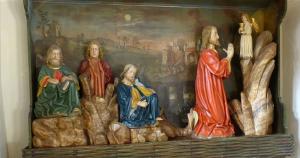 Galatians 2:11-21
Theologically, I say with St. Paul that “a man is not justified by the works of the law but by faith in Jesus Christ.” Devotionally, which is to say theologically in a personal and applied way, I say with St. Paul, “I have been crucified with Christ; it is no longer I who live, but Christ lives in me; and the life which I now live in the flesh I live by faith in the Son of God, who loved me and gave Himself for me.”
We know that a man cannot be justified by the works of the law, for a number of reasons. The most important of these reasons is that even if we were capable of perfectly keeping the Law, in its outward manifestation, it would be impossible to keep it without the grace of God. I don’t believe that before Adam fell that he was able to love and obey the One who had created him without the grace of God. To think so would require that Adam had an independent existence apart from God and His creating and sustaining love. But it is precisely this kind of thinking that is secularism in action: the relegation of God to an optional appendage and the belief that mankind is capable apart from the grace of God.
It’s impossible to keep the Law and be justified by its works without God, as well, because the first and greatest commandment is to love God with all that we are. To believe and act as if we can obey the Law without God is, in fact, to negate the very Law we profess to be able to uphold!
The sad truth is that while all of this is somewhat theoretical, the practical reality is that we are all miserable sinners and that the best of us is not capable of keeping the Law. In fact, we all blow it on the very first point of the Law: to love God with all of our hearts and souls and minds.
Our justification, our righteousness before God, then, must come from God and not ourselves. More specifically, we are made right with God only by Jesus Christ. Sometimes here we also have a tendency to objectify our justification, as if it is the work of Jesus Christ that saves us. We seem to believe that we are saved because of the fact that Jesus Christ died on the Cross for our sins. While it’s certainly true that Jesus Christ died on the Cross for our sins, the mere fact of this doesn’t save us. What’s missing is, of course, Jesus Christ Himself. More correctly, it is the love of the Father through Jesus Christ who saves us. No mere fact, no mere action, apart from the person and love of God can save us. God chose to use the Cross and Christ’s death and resurrection as the means of our salvation and justification, but it is never apart from His person and His life that He imparts to us.
That’s why I prefer to meditate today on verse 20 rather than verse 16. In verse 16 we often allow ourselves to proclaim an objective theological truth against our ancient 16th century enemy: the Roman Catholic Church. But, as true as verse 16 is, the way we often live with it is only through our heads, and not also through or hearts and hands.
But verse 20 requires me to realize that my life is an entire life in relationship to the Father through Jesus Christ. It strikes at the very heart of who I am and leaves no organ or tissue, no nerve or cell, of my being untouched by or untransformed by God. It’s not just that God is making an objective and dispassionate theological proclamation about my condition: He’s saying that He has made an entirely new me. In fact, baptism is a picture of how I have been crucified with Christ that I might live with Him.
One of the most fascinating aspects of faith in Christ is the faith it takes to recognize and live based on the fact that it is no longer I who live but Christ who lives in me. Just how this happens is a mystery, as the Incarnation – God made man – is a mystery. How can Jesus Christ live in me and how does He live in me? I don’t know, but I do know a few things about it. I do know that if God can create the world out of nothing, including myself, then I know He can live within me; I do know that if He can bring back people from the dead, then He can live within me; and I do know that if He can become a man, then He can live within me.
This is not just a figure of speech, any more than baptism is just a figure of speech or simply a picture of God’s grace. It is a miraculous reality, or what I like to call “miraculality,” a truth that is real yet so wonderful and amazing and invisible that it must be of God and must require faith. Therefore, I am saved not so much by the mere fact of the Incarnation or Cross or Resurrection but by the miraculality of Jesus Christ, the One who was made man and was crucified and resurrected for me, living in me.
It’s funny, but often it doesn’t feel like Jesus is living in me. But this is a mistake, to judge by feeling and human experience, rather than what God has said and done. It doesn’t feel like I am dead and Christ has taken over. I think this is at least partially because I often think about it the wrong way. Sometimes I think that we think that to say that I have been crucified and no longer live but Christ lives in me means that somehow we are almost possessed by the Spirit of Christ. Maybe we expect God to so much take over that we can’t even feel ourselves anymore and it is all God.
But here’s the truly miraculous part, that as Jesus Christ is both God and man, Christ in us is both God and man. It is all of grace, and it is now Christ who lives in me, but I am still here. There is still a me, just in case some of you are afraid of letting Christ live in you because there will be no you left. This is not what St. Paul means.
What Paul means is something much more glorious and exciting! What he means, what He, God, means, is that Christ lives in me and that through Christ I am made right with God and I can dwell in God and He in me. What He means is that He has sought and created a union with His people once again, and that we are one flesh with Jesus Christ, through our life in Him. Think Incarnation, think marriage. What God means is the glorification of man and that man is now truly capable of living for God because we live through and with Him.
Of course to truly live for, with, and through Jesus Christ means that our lives will truly be like His life. Once again, there is no faith without faithfulness because He has created a whole life with us, not only an abstract or objective statement of fact. We can’t ever separate faith and faithfulness because with God they are the same thing!
Here, then, is the truth for this day and every day: that Christ lives in me!
Prayer: Father, I thank You for crucifying me with Your Son, Jesus Christ, so that it is now no longer I who live but Him in Me. Thank You for offering Yourself to me through Your Son; may I now offer myself to You, who first loved me. Amen.
Point for Meditation:
- In what ways have you ever experienced Christ living in you?
- You are crucified with Christ, and yet we are also commanded to crucify ourselves. In what ways should you be crucifying yourself so that you may more perfectly and fully live in Christ?
Resolution: I resolve to find one way in which I may actively choose to live for Christ today, that is, to live more faithfully.
Christ Praying in the Garden, Reichenau St. Georg – Creative Commons Attribution-Share Alike 4.0 International license

Previous Post

January 26, 2016
Inflexible in Essentials, Flexible in All Else
Next Post
January 28, 2016 Faith In and Faithfulness To Jesus Christ
Browse Our Archives
Select a Category Book Reviews Featured Give Us This Day Give Us This Day Devotional love me love my wife Love My Wife Reformed Catholicism Blog Spirit-Reality Take This Cup Uncategorized
Select a Month February 2022 November 2021 October 2021 August 2021 January 2021 December 2020 November 2020 September 2020 August 2020 July 2020 June 2020 May 2020 September 2018 July 2018 March 2018 November 2017 October 2017 September 2017 August 2017 July 2017 June 2017 May 2017 April 2017 March 2017 February 2017 January 2017 December 2016 November 2016 October 2016 September 2016 August 2016 July 2016 June 2016 May 2016 April 2016 March 2016 February 2016 January 2016 December 2015 November 2015 October 2015 September 2015 August 2015 July 2015 June 2015 May 2015 April 2015 March 2015 February 2015 January 2015 December 2014 November 2014 October 2014 September 2014 August 2014 July 2014 June 2014 May 2014 April 2014 March 2014 February 2014 January 2014 December 2013 November 2013 October 2013 September 2013 August 2013 July 2013 June 2013 May 2013 April 2013 March 2013 February 2013 January 2013 December 2012 November 2012 October 2012 September 2012 August 2012 July 2012 June 2012 May 2012 April 2012 March 2012 February 2012 January 2012 December 2011 November 2011 October 2011 September 2011 August 2011 July 2011 May 2011 April 2011 March 2011 February 2011 January 2011
Follow Us!
TAKE THE
Religious Wisdom Quiz
She is more precious than rubies, and nothing you desire compares to her. Her ways are pleasant and all her paths are peace. Who is she?
Select your answer to see how you score.
Wisdom A virtuous woman Understanding Knowledge
Related posts from Give Us This Day
Revelation 16 and the Cross of Christ
John 12:20-33 - The Hour of Glory
John 3:1-13 - The One Who Comes By...

Luke 11:14-28 - Take out the Trash
TRENDING AT PATHEOS Evangelical

How the author of the world's best hymn...
I've been working with John Newton for a while now. This makes...

Long before this Lectio Divina, Psalm 130 - the song - started...

What About the Trees? Another Living Parable
After I finished writing the last article about falling leaves as a...

Why Classical Education Is a Conversation, Not a...
Come and Read: Joy in Classical Education When I was a little...

Falling Leaves: A Living Parable on Letting Go
I’ve spent the vast majority of my life in the southeast corner...

Cornell University has received a great deal of negative publicity and intense...
view all Evangelical blogs
Ad-Free & Subscriber Log-In Subscription Support
- About Us
- 2026 Calendar
- Videos
- Podcasts
- Library of World Religions
- Faith In Media Tracker
- Advertise With Us
- Write for Us
- Privacy Policy
- Terms of Service
- Do Not Sell My Data
- Contact Us
- Radiant Digital
- Manage Newsletter Subscriptions
- Unsubscribe From Notifications
- Sitemap
Copyright 2008-2026, Patheos. All rights reserved.
Subscription Support Ad-Free & Subscriber Log-In
Follow Patheos