
BuddhistCatholicContemplativeEvangelicalGeneral ChristianHinduJewishLatter-day SaintMuslimNew VisionsProgressive Christian
Beliefs
- Buddhist
- Catholic
- Contemplative
- Evangelical
- General Christian
- Hindu
- Jewish
- Latter-day Saint
- More Voices
- Muslim
- New Visions
- Pagan
- Progressive Christian
Topics
- Religion News
- Food and Religion
- Sports and Religion
- Religious Art
- Religious Music and Entertainment
- Religious Events
- History and Religion
- Style and Religion
- Politics and Religion
- Women in Religion
- Recreation Outdoors and Religion
- Business Finance and Religion
- Careers Workplace and Religion
- Education and Religion
- Family Parenting and Religion
- Health Fitness and Religion
- Home and Religion
- Relationships and Religion
- Technology and Religion
- Travel and Religion
Columnists
- Buddhist Columnists
- Business Finance and Religion Columnists
- Careers Workplace and Religion Columnists
- Catholic Columnists
- Contemplative Columnists
- Education and Religion Columnists
- Evangelists Columnists
- Family Parenting and Religion Columnists
- General Christian Columnists
- Health Fitness and Religion Columnists
- Hindu Columnists
- History and Religion Columnists
- Home and Religion Columnists
- Jewish Columnists
- More Voices Columnists
- Latter Day Columnists
- Muslim Columnists
- New Visions Columnists
- Nonreligious Columnists
- Pagan Columnists
- Politics and Religion Columnists
- Progressive Columnists
- Recreation Outdoors and Religion Columnists
- Relationships and Religion Columnists
- Religion News Columnists
- Religious Art Columnists
- Religious Events Columnists
- Religious Music and Entertainment Columnists
- Sports and Religion Columnists
- Style and Religion Columnists
- Technology and Religion Columnists
- Travel and Religion Columnists
- Women in Religion Columnists
Resource Library
- 2026 Calendar
- Library of World Religions
- The 100 Most Holy Places on Earth
- Patheos Answers
- Podcasts
- Videos
- Faith Leaders Database
- Anglican Episcopalian
- Bahai
- Baptist
- Buddhism
- Christianity
- Confucianism
- Eastern Orthodoxy
- Hinduism
- Holiness and Pentecostal
- ISKCON
- Islam
- Judaism
- Lutheran
- Methodist
- The Church of Jesus Christ of Latter-day Saints
- New Age
- Paganism
- Presbytarian and Reformed
- Protestantism
- Religion Behind the Scenes
- Roman Catholic
- Scientology
- Shia Islam
- Sikhism
- Sufism
- Sunni Islam
- Taoism
- Zen
- See all religions
Research Tools
 Ad-Free & Subscriber Log-In Subscription Support
Ad-Free & Subscriber Log-In Subscription Support
Follow Patheos 

- Trending:
- Forgiveness
- |
- Marriage
- |
- Consciousness
- |
- Death Penalty
- |
- Election
- |
- Halloween
 Give Us This Day
- Home
- Evangelical
- Friday of 4th Sunday in Lent – 1 Corinthians 14:26-40
Friday of 4th Sunday in Lent – 1 Corinthians 14:26-40
Last updated on: March 14, 2013 at 10:26 pm by Fr. Charles Erlandson
Friday of 4th Sunday in Lent – 1 Corinthians 14:26-40 2013-03-14T22:26:26-05:00 Fr. Charles Erlandson
Patheos Explore the world's faith through different perspectives on religion and spirituality! Patheos has the views of the prevalent religions and spiritualities of the world.
 1 Corinthians 14:26-40
God has made us one Body out of many members. He has given each of us different gifts that are supposed to work all together for the edification of the Body and the glory of God. But we know that humanly speaking if you just gather together a lot of people who all have something to say and have a stake in what’s happening, there would be chaos without an order to the community that was created.
For this reason, St. Paul lays down the divine principle: “let all things be done decently and in order” (verse 40.) St. Basil writes that “Paul is referring to the decent and well-ordered way of life in the society of the faithful, where the relationship which obtains among the members of the body is maintained.” This principle is clear from Paul’s pastoral letters to Timothy and Titus as well, and so the church has ordained leaders (elders, presbyters) who are to govern the church.
Sometimes Christians see this order or government as an imposition and, practically speaking, believe in a kind of Christian libertarianism. The great problem with this is that God is a God of order, and when He created the world and then out of it created the Church, He didn’t just create them as disembodied abstractions but instead clothed them. He incarnated them into specific forms and structures which He had ordained as a part of what He had created.
Therefore, the Church, in her institutional or ecclesiastical order, is from God, and not just a motley crew of individual Christians doing their own thing. Far from being an imposition or limitation on us, God’s order in the church is essential to her well being. It is a matter of law: the royal law of love that gives perfect liberty, because this order and this law provide the means by which love is allowed to rule and facilitate the edification of the Body through the disparate use of spiritual gifts.
Sometimes I grumble and gripe when I’m stopped by a red light (there’s a particularly meddlesome one near where I live that lasts for 2 whole minutes and which often has no cars at all waiting to go.) And sometimes I remember what life would be like without those stop lights: a bloody battlefield of human contest and confusion, an asphalt plain littered with terrible congestion and wreckage.
God has knit us together into one Body, but how shall the Body be seen and how shall it hold together, if everyone does what is right in his own eyes? The spiritual gifts, left to themselves, without a larger Body in which the Spirit dwells, can quickly become unspiritual. Paul has referred, especially in terms of tongues, how a spiritual gift can be used for self instead of the good of the Body. Even the Lord’s Supper, the greatest occasion for God making His Body one, had become a cause for selfishness in the church at Corinth.
The spiritual gifts are centrifugal in their force. They are driven by the Spirit, and therefore they are powerful and explosive, and they look outward. Because of their powerful, charismatic and attractive nature, they have the potential to be used for self and not for the good of the Body. Left unchecked by some other binding force, they might escape the orbit into which God has ordained that they should run. They are, I believe, held in orbit by the fruits of the Spirit: love, joy, peace, longsuffering, kindness, goodness, faithfulness, gentleness, and self-control. These fruits of the Spirit always seek to draw everyone and his gifts into the whole of the Body. They are the centripetal (or “center-seeking”) force that binds the Body together: they are the strong nuclear force that keeps the protons, neutrons, and electrons together in the body of the atom.
It is because we are parts of a larger Body who we are supposed to edify each other that Paul goes into such details about other things in the Church. It is because all things are to be done decently and in order and because all things are to be done for edification (verse 26) that Paul needs to discuss the place of tongues and interpreters, prophecy and the limits on it, and the silence of women in the church.
This divine order to our lives is true not only in the Church but also in the rest of our lives. As St. Chrysostom writes: “Nothing builds up as much as good order, peace, and love, just as nothing is more destructive than their opposites. It is not only in spiritual affairs but in everything that one may observe this.” God has created a world of order and has assigned us a particular place in it, with particular godly obligations. It is not just the Church that is an ordered society bound by the royal law of love but all of our human relationships and all of our human communities. There is an order in the family between parents and children and husband and wife; in work between employer and employee; and in the civil government between leaders and the people.
To build God’s Church, Paul says, each of you must exercise the spiritual gifts that God has graciously given you. But you must also use them within the ordered world He has also created, for you are part of the Body of Jesus Christ. In this way, your individuality and individual membership in the Body of Christ finds its most edifying and loving power in the life of the Body of Christ, as it is inhabited by the Spirit of Christ who gives both the spiritual gifts and the spiritual fruits.
Bound together by the love that’s united in Jesus Christ, and exploding outward to seek the good of others in His love, the Church is, like the Trinity, a holy vortex of love!
Prayer: Grant, we beseech You, merciful God, that Your Church, being gathered together in unity by Your Holy Spirit, may manifest Your power among all peoples, to the glory of Your Name; through Jesus Christ our Lord, who lives and reigns with You and the Holy Spirit, one God, world without end.
Resolution and Point for Meditation: I resolve to examine my life in the Body of Christ. Am I using the spiritual gifts God has given me to edify His Body? Am I willing to submit to the order that God has established in the Church, or do I go too much my own way?
© 2013 Fr. Charles Erlandson
Previous Post

March 14, 2013
Thursday of 4th Sunday in Lent - 1 Corinthians 14:12-25
Next Post
March 15, 2013 Saturday of 4th Sunday in Lent - 1 Corinthians 15:1-11
Browse Our Archives
Select a Category Book Reviews Featured Give Us This Day Give Us This Day Devotional love me love my wife Love My Wife Reformed Catholicism Blog Spirit-Reality Take This Cup Uncategorized
Select a Month February 2022 November 2021 October 2021 August 2021 January 2021 December 2020 November 2020 September 2020 August 2020 July 2020 June 2020 May 2020 September 2018 July 2018 March 2018 November 2017 October 2017 September 2017 August 2017 July 2017 June 2017 May 2017 April 2017 March 2017 February 2017 January 2017 December 2016 November 2016 October 2016 September 2016 August 2016 July 2016 June 2016 May 2016 April 2016 March 2016 February 2016 January 2016 December 2015 November 2015 October 2015 September 2015 August 2015 July 2015 June 2015 May 2015 April 2015 March 2015 February 2015 January 2015 December 2014 November 2014 October 2014 September 2014 August 2014 July 2014 June 2014 May 2014 April 2014 March 2014 February 2014 January 2014 December 2013 November 2013 October 2013 September 2013 August 2013 July 2013 June 2013 May 2013 April 2013 March 2013 February 2013 January 2013 December 2012 November 2012 October 2012 September 2012 August 2012 July 2012 June 2012 May 2012 April 2012 March 2012 February 2012 January 2012 December 2011 November 2011 October 2011 September 2011 August 2011 July 2011 May 2011 April 2011 March 2011 February 2011 January 2011
Follow Us!
TAKE THE
Religious Wisdom Quiz
Which Psalm is famous as the "Shepherd's Psalm"?
Select your answer to see how you score.
Psalm 1 Psalm 23 Psalm 119 Psalm 51
Related posts from Give Us This Day

James Clark - Book Review of Take This...
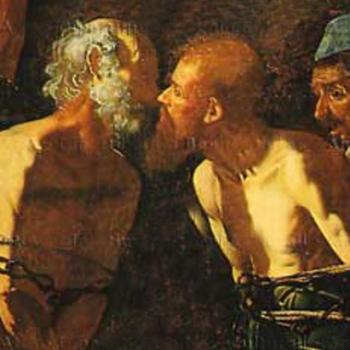
Greet One Another With a Holy Kiss
John 2:13-25 - Cleansing the Temple
TRENDING AT PATHEOS Evangelical

How the author of the world's best hymn...
I've been working with John Newton for a while now. This makes...

Long before this Lectio Divina, Psalm 130 - the song - started...

What About the Trees? Another Living Parable
After I finished writing the last article about falling leaves as a...

Why Classical Education Is a Conversation, Not a...
Come and Read: Joy in Classical Education When I was a little...

Falling Leaves: A Living Parable on Letting Go
I’ve spent the vast majority of my life in the southeast corner...

Cornell University has received a great deal of negative publicity and intense...
view all Evangelical blogs
Ad-Free & Subscriber Log-In Subscription Support
- About Us
- 2026 Calendar
- Videos
- Podcasts
- Library of World Religions
- Faith In Media Tracker
- Advertise With Us
- Write for Us
- Privacy Policy
- Terms of Service
- Do Not Sell My Data
- Contact Us
- Radiant Digital
- Manage Newsletter Subscriptions
- Unsubscribe From Notifications
- Sitemap
Copyright 2008-2026, Patheos. All rights reserved.
Subscription Support Ad-Free & Subscriber Log-In
Follow Patheos