
BuddhistCatholicContemplativeEvangelicalGeneral ChristianHinduJewishLatter-day SaintMuslimNew VisionsProgressive Christian
Beliefs
- Buddhist
- Catholic
- Contemplative
- Evangelical
- General Christian
- Hindu
- Jewish
- Latter-day Saint
- More Voices
- Muslim
- New Visions
- Pagan
- Progressive Christian
Topics
- Religion News
- Food and Religion
- Sports and Religion
- Religious Art
- Religious Music and Entertainment
- Religious Events
- History and Religion
- Style and Religion
- Politics and Religion
- Women in Religion
- Recreation Outdoors and Religion
- Business Finance and Religion
- Careers Workplace and Religion
- Education and Religion
- Family Parenting and Religion
- Health Fitness and Religion
- Home and Religion
- Relationships and Religion
- Technology and Religion
- Travel and Religion
Columnists
- Buddhist Columnists
- Business Finance and Religion Columnists
- Careers Workplace and Religion Columnists
- Catholic Columnists
- Contemplative Columnists
- Education and Religion Columnists
- Evangelists Columnists
- Family Parenting and Religion Columnists
- General Christian Columnists
- Health Fitness and Religion Columnists
- Hindu Columnists
- History and Religion Columnists
- Home and Religion Columnists
- Jewish Columnists
- More Voices Columnists
- Latter Day Columnists
- Muslim Columnists
- New Visions Columnists
- Nonreligious Columnists
- Pagan Columnists
- Politics and Religion Columnists
- Progressive Columnists
- Recreation Outdoors and Religion Columnists
- Relationships and Religion Columnists
- Religion News Columnists
- Religious Art Columnists
- Religious Events Columnists
- Religious Music and Entertainment Columnists
- Sports and Religion Columnists
- Style and Religion Columnists
- Technology and Religion Columnists
- Travel and Religion Columnists
- Women in Religion Columnists
Resource Library
- 2026 Calendar
- Library of World Religions
- The 100 Most Holy Places on Earth
- Patheos Answers
- Podcasts
- Videos
- Faith Leaders Database
- Anglican Episcopalian
- Bahai
- Baptist
- Buddhism
- Christianity
- Confucianism
- Eastern Orthodoxy
- Hinduism
- Holiness and Pentecostal
- ISKCON
- Islam
- Judaism
- Lutheran
- Methodist
- The Church of Jesus Christ of Latter-day Saints
- New Age
- Paganism
- Presbytarian and Reformed
- Protestantism
- Religion Behind the Scenes
- Roman Catholic
- Scientology
- Shia Islam
- Sikhism
- Sufism
- Sunni Islam
- Taoism
- Zen
- See all religions
Research Tools
 Ad-Free & Subscriber Log-In Subscription Support
Ad-Free & Subscriber Log-In Subscription Support
Follow Patheos 

- Trending:
- Forgiveness
- |
- Marriage
- |
- Consciousness
- |
- Death Penalty
- |
- Election
- |
- Halloween
 Give Us This Day
- Home
- Evangelical
- Excommunication!
Excommunication!
Last updated on: March 16, 2018 at 3:51 pm by Fr. Charles Erlandson
Excommunication! 2018-03-16T15:51:47-05:00 Fr. Charles Erlandson
Patheos Explore the world's faith through different perspectives on religion and spirituality! Patheos has the views of the prevalent religions and spiritualities of the world.
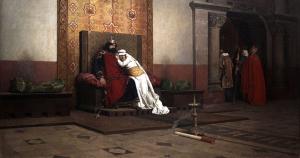 Excommunication – 2 Thessalonians 3:6-18
I get upset when I hear of those who call themselves Christians and yet insist on their right to disobey God – and I’ll bet you do too. As an Anglican, in the past few years I’ve heard a lot of self-professed Christians insist that homosexuality is not a sin – in clear violation of God’s holy commandments. It’s relatively easy to see this as a clear refusal to obey God’s commandments, but I’m constantly surprised at how many Christians deny in many areas what God has so clearly said. Some of those who I’m pretty sure believe the articles of the Creeds seem to think they have to believe God about the “big” things such as the nature of Jesus Christ but that when it comes to the “little” things, i.e., our moral behavior, that they can believe and act however they want.
To which St. Paul says: “But we command you brethren, in the name of our Lord Jesus Christ, that you withdraw from every brother who walks disorderly and not according to the tradition which he received from us” (verse 6.) In case we are tempted to wish or ‘splain this verse away, Paul reminds us again in verse 14: “And if anyone does not obey our word in this epistle, note that person and do not keep company with him, that he may be ashamed.”
As we congratulate ourselves for not condoning homosexuality or __________ (fill in the blank with your favorite sin), how are we doing with keeping what St. Paul teaches in his letters? St. Paul has made it very clear that in some way the church is to discipline those who refuse to walk in obedience to the Word of God.
But is this something many of our churches are doing? Do we take this commandment of God as seriously as His commandments to not sin in various other ways?
The Amish are an interesting people. On the one hand, they seem naïve and inconsistent in a lot of ways: I’m still not sure how they decide what is permissible and what is not in terms of partaking of the culture. Personally, I’m not going to give up my 2003 Ford Windstar for a horse and buggy, and I’m kind of attached to things like Velcro and JB Weld as modern conveniences. I’ve grown accustomed to my Internet and e-mail (without which Give Us This Day could not be your daily bread and most of you couldn’t receive it), and without modern medicine I’m pretty sure I’d have been a gonner a long time ago.
But these same Amish have been able to testify to a watching world about the forgiveness of Jesus Christ because they have a genuine community with clear standards that they enforce. The Amish take seriously St. Paul’s clear commandments to discipline or “shun” those who refuse to walk according to the commandments of God. Though imperfect and off track in many ways, they have been able to maintain godly standards of behavior at least partially because they have taken seriously the words of St. Paul to withdraw from those who walk disorderly and not according to the apostolic tradition.
In disciplining the erring brother, Paul is careful to tell the Thessalonians that in disciplining him they do not treat him as an enemy but instead admonish him as a brother. The goal of discipline and even excommunication is that the erring brother would repent of his sin and return to God and His holy congregation.
Our daily devotions aren’t the place to work out the specific way in which our churches should be more faithful in their discipline, and yet we should take seriously the challenge to consider the ways in which we may be picking and choosing which commandments of God we are willing to obey. While the practice of church discipline or excommunication (the ultimate sanction the church has) may be abused, it seems safe to say that today it is mostly abused by not being used at all. One of the “benefits” of churches that don’t take discipline seriously is that any one can hop from church to church, even if in public sin, because no one in the new church is likely to find out or do anything about it even if they did find out about it.
But a church that disciplines is a church that is a functioning family, for God, the loving but holy Father, disciplines His children, that they may turn back to Him. Why should we expect that He would want us to run His house here on earth any differently? A church that disciplines is also a church that cares, for in order to discipline, you must be close enough to one another to experience not only the sweet aroma of holy fellowship we all desire but also the acrid stench of unholy living that must be dealt with. Churches that practice little or no discipline are churches that don’t know their members, don’t care enough about the sin in their lives, or don’t care enough about the destruction that the cancer of untreated sin will bring into God’s family.
In essence, church discipline is another way of “checking on” each other, which is simply another way that God has called us to love one another in His holy family.
Prayer: Thank You Lord for Your Word in my life which has come so forcefully through both the life and example of St. Paul. I ask that You would give me the same desire He had to perfectly keep Your commandments and to diligently labor in Your Church. Since I am weak, Father, have mercy on me, a sinner. Show me the errors of my life, and give me strength to do all that You have commanded me.
Point for Meditation:
Reflect on how you are being held accountable for your conduct before the Lord, by yourself, by your family, and by your church. If accountability is seriously lacking in your life, resolve today to seek one way in which you can obtain it.
Resolution: I resolve to honestly reflect on my obedience to the Lord and to find and reflect on one area He has been seeking me, to bring me into conformity with His holy will. I resolve further to repent where I need to repent for this failing, to seek His grace, and to find one practical way I can show my repentance in this matter.
The Excommunication of Robert the Pious – U.S. Public Domain

Previous Post

September 30, 2015
Glory Be
Next Post
October 2, 2015 Saturday of the 17th Sunday after Trinity - James 1:1-11
Browse Our Archives
Select a Category Book Reviews Featured Give Us This Day Give Us This Day Devotional love me love my wife Love My Wife Reformed Catholicism Blog Spirit-Reality Take This Cup Uncategorized
Select a Month February 2022 November 2021 October 2021 August 2021 January 2021 December 2020 November 2020 September 2020 August 2020 July 2020 June 2020 May 2020 September 2018 July 2018 March 2018 November 2017 October 2017 September 2017 August 2017 July 2017 June 2017 May 2017 April 2017 March 2017 February 2017 January 2017 December 2016 November 2016 October 2016 September 2016 August 2016 July 2016 June 2016 May 2016 April 2016 March 2016 February 2016 January 2016 December 2015 November 2015 October 2015 September 2015 August 2015 July 2015 June 2015 May 2015 April 2015 March 2015 February 2015 January 2015 December 2014 November 2014 October 2014 September 2014 August 2014 July 2014 June 2014 May 2014 April 2014 March 2014 February 2014 January 2014 December 2013 November 2013 October 2013 September 2013 August 2013 July 2013 June 2013 May 2013 April 2013 March 2013 February 2013 January 2013 December 2012 November 2012 October 2012 September 2012 August 2012 July 2012 June 2012 May 2012 April 2012 March 2012 February 2012 January 2012 December 2011 November 2011 October 2011 September 2011 August 2011 July 2011 May 2011 April 2011 March 2011 February 2011 January 2011
Follow Us!
TAKE THE
Religious Wisdom Quiz
Which Psalm begins, "The Lord is my light and my salvation; whom shall I fear?"
Select your answer to see how you score.
Psalm 14 Psalm 139 Psalm 91 Psalm 27
Related posts from Give Us This Day

Jesus Took on All Human Suffering - Part...

The Different States of Love - and the...

TRENDING AT PATHEOS Evangelical

How the author of the world's best hymn...
I've been working with John Newton for a while now. This makes...

Long before this Lectio Divina, Psalm 130 - the song - started...

What About the Trees? Another Living Parable
After I finished writing the last article about falling leaves as a...

Why Classical Education Is a Conversation, Not a...
Come and Read: Joy in Classical Education When I was a little...

Falling Leaves: A Living Parable on Letting Go
I’ve spent the vast majority of my life in the southeast corner...

Cornell University has received a great deal of negative publicity and intense...
view all Evangelical blogs
Ad-Free & Subscriber Log-In Subscription Support
- About Us
- 2026 Calendar
- Videos
- Podcasts
- Library of World Religions
- Faith In Media Tracker
- Advertise With Us
- Write for Us
- Privacy Policy
- Terms of Service
- Do Not Sell My Data
- Contact Us
- Radiant Digital
- Manage Newsletter Subscriptions
- Unsubscribe From Notifications
- Sitemap
Copyright 2008-2026, Patheos. All rights reserved.
Subscription Support Ad-Free & Subscriber Log-In
Follow Patheos