
BuddhistCatholicContemplativeEvangelicalGeneral ChristianHinduJewishLatter-day SaintMuslimNew VisionsProgressive Christian
Beliefs
- Buddhist
- Catholic
- Contemplative
- Evangelical
- General Christian
- Hindu
- Jewish
- Latter-day Saint
- More Voices
- Muslim
- New Visions
- Pagan
- Progressive Christian
Topics
- Religion News
- Food and Religion
- Sports and Religion
- Religious Art
- Religious Music and Entertainment
- Religious Events
- History and Religion
- Style and Religion
- Politics and Religion
- Women in Religion
- Recreation Outdoors and Religion
- Business Finance and Religion
- Careers Workplace and Religion
- Education and Religion
- Family Parenting and Religion
- Health Fitness and Religion
- Home and Religion
- Relationships and Religion
- Technology and Religion
- Travel and Religion
Columnists
- Buddhist Columnists
- Business Finance and Religion Columnists
- Careers Workplace and Religion Columnists
- Catholic Columnists
- Contemplative Columnists
- Education and Religion Columnists
- Evangelists Columnists
- Family Parenting and Religion Columnists
- General Christian Columnists
- Health Fitness and Religion Columnists
- Hindu Columnists
- History and Religion Columnists
- Home and Religion Columnists
- Jewish Columnists
- More Voices Columnists
- Latter Day Columnists
- Muslim Columnists
- New Visions Columnists
- Nonreligious Columnists
- Pagan Columnists
- Politics and Religion Columnists
- Progressive Columnists
- Recreation Outdoors and Religion Columnists
- Relationships and Religion Columnists
- Religion News Columnists
- Religious Art Columnists
- Religious Events Columnists
- Religious Music and Entertainment Columnists
- Sports and Religion Columnists
- Style and Religion Columnists
- Technology and Religion Columnists
- Travel and Religion Columnists
- Women in Religion Columnists
Resource Library
- 2026 Calendar
- Library of World Religions
- The 100 Most Holy Places on Earth
- Patheos Answers
- Podcasts
- Videos
- Faith Leaders Database
- Anglican Episcopalian
- Bahai
- Baptist
- Buddhism
- Christianity
- Confucianism
- Eastern Orthodoxy
- Hinduism
- Holiness and Pentecostal
- ISKCON
- Islam
- Judaism
- Lutheran
- Methodist
- The Church of Jesus Christ of Latter-day Saints
- New Age
- Paganism
- Presbytarian and Reformed
- Protestantism
- Religion Behind the Scenes
- Roman Catholic
- Scientology
- Shia Islam
- Sikhism
- Sufism
- Sunni Islam
- Taoism
- Zen
- See all religions
Research Tools
 Ad-Free & Subscriber Log-In Subscription Support
Ad-Free & Subscriber Log-In Subscription Support
Follow Patheos 

- Trending:
- Forgiveness
- |
- Marriage
- |
- Consciousness
- |
- Death Penalty
- |
- Election
- |
- Halloween
 Give Us This Day
- Home
- Evangelical
- Eschatological and Ecumenical Hope
Eschatological and Ecumenical Hope
Last updated on: July 1, 2020 at 3:07 pm by Fr. Charles Erlandson
Eschatological and Ecumenical Hope 2020-07-01T15:07:56-05:00 Fr. Charles Erlandson
Patheos Explore the world's faith through different perspectives on religion and spirituality! Patheos has the views of the prevalent religions and spiritualities of the world.
Eschatological and Ecumenical Hope
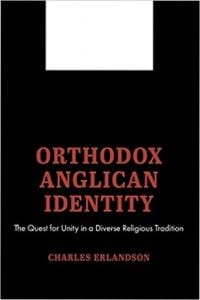
This post if from the Conclusion to my book Orthodox Anglican Identity, which may be purchased here:
I began my book by quoting Dickens’ A Tale of Two Cities. So far, it may seem as if I’ve forcefully presented only “the worst of times” face of Dickens’ introduction. Where, in my analysis of orthodox Anglicanism, are the elusive best of times? If I’ve been quick to portray difficulties, I want to be just as quick to express hope. I’m sure many will be troubled by the complex, fragmented, and contentious nature of orthodox Anglicanism: I know I was. When I began my work on orthodox Anglicanism, I experienced a year of grieving for the Anglicanism I hoped would be, the one I had read about and which could easily be defined. But then a bold spirit of encouragement seized me, and I had the epiphany that there was no Golden Age of the church and that what orthodox Anglicanism looked like in the twenty-first century was what the church had always looked like in all places and in all times! Furthermore, the fact that orthodox Anglican identity is messier, more ambiguous, and less definable than desired does not mean that an authentic Anglican identity is an impossible or fatuous thing. Religious identities are inherently complex and ambiguous, while also being livable and essential realities.
Jesus Christ prayed: “I do not pray for these alone, but also for those who will believe in Me through their word; that they all may be one, as You, Father, are in Me, and I in You; that they also may be one in Us, that the world may believe that You sent Me,” (John 17:20-21). That is the orthodox Anglican hope because it is the Christian hope.
Christian and Anglican unity implies, like marriage, a unity that emerges through diversity and which can only be accomplished by the love of God, which loves the other as himself. The disputes and diversities of orthodox Anglicans may be seen, then, as marriage spats, even if the actions of TEC and others may, ultimately lead to divorce. While the diversity within orthodox Anglicanism is great, so is the commitment to walk together in love and unity. GAFCON and the ACNA are hopeful signs of Christian and Anglican unity. Despite the difficulties and differences, GAFCON and the ACNA are committed to walking together as orthodox Christians. Although the convergence of different spiritualities and even norms is fragile, one cannot attend either GAFCON or ACNA events and not experience a palpable unity and good will.
Whether these are enough to bind orthodox Anglicans together in the future remains to be seen. At some point in time, for example, the issue of women’s ordination in the ACNA will have to be decided, and this will test whether the ACNA or any church so conceived and so dedicated, can long endure. But hopefully, this book is a starting point for the ecclesial spouses to know who it is they have married. Hopefully, the members of GAFCON, the ACNA, and others will not experience the embarrassing shock of Jacob, who, although he had agreed to marry Rachel, in the morning discovered that “Behold: It was Leah!” It may be that the new orthodox Anglicanism, most exemplified by GAFCON and the ACNA but certainly not limited to them, is the new wineskin into which God is pouring the new wine of Anglican identity in the postmodern world.
Anglicanism is a microcosm of the entire Christian church and has often been the most ecumenical of churches. Its inherent identity, derived from both Catholic and Protestant principles, and from the kind of ecclesial comprehension manifested most formatively by the Elizabethan Settlement, allows it to look to the one, catholic church as a whole, and to extend Christian communion to Roman Catholics, Orthodox Christians, and Protestants alike. The kind of diversity manifested in orthodox Anglicanism is a microcosm of the kind of diversity that is true for the one, catholic church. Both the brokenness and the hopefulness of the orthodox Anglican identity, therefore, has the ability to illuminate the struggles with identity caused by the interplay between unity and diversity that is replicated on a grander scale by the church as a whole, as well as by other Christian ecclesial bodies. It is not only Anglicanism that is diverse, messy, and divided but the entire catholic church. But perhaps out of this hybrid Anglican identity may come a new way of imagining Christian unity, one that compels us to look both beyond and before the Constantinianism in which ecclesial unity is compelled by the state and is imagined in terms of national identities.
Previous Post

June 30, 2020
Musical Revision in a Minor Key
Next Post
July 24, 2020 How You are Treating the Church is How You are Treating Jesus
Browse Our Archives
Select a Category Book Reviews Featured Give Us This Day Give Us This Day Devotional love me love my wife Love My Wife Reformed Catholicism Blog Spirit-Reality Take This Cup Uncategorized
Select a Month February 2022 November 2021 October 2021 August 2021 January 2021 December 2020 November 2020 September 2020 August 2020 July 2020 June 2020 May 2020 September 2018 July 2018 March 2018 November 2017 October 2017 September 2017 August 2017 July 2017 June 2017 May 2017 April 2017 March 2017 February 2017 January 2017 December 2016 November 2016 October 2016 September 2016 August 2016 July 2016 June 2016 May 2016 April 2016 March 2016 February 2016 January 2016 December 2015 November 2015 October 2015 September 2015 August 2015 July 2015 June 2015 May 2015 April 2015 March 2015 February 2015 January 2015 December 2014 November 2014 October 2014 September 2014 August 2014 July 2014 June 2014 May 2014 April 2014 March 2014 February 2014 January 2014 December 2013 November 2013 October 2013 September 2013 August 2013 July 2013 June 2013 May 2013 April 2013 March 2013 February 2013 January 2013 December 2012 November 2012 October 2012 September 2012 August 2012 July 2012 June 2012 May 2012 April 2012 March 2012 February 2012 January 2012 December 2011 November 2011 October 2011 September 2011 August 2011 July 2011 May 2011 April 2011 March 2011 February 2011 January 2011
Follow Us!
TAKE THE
Religious Wisdom Quiz
How many times did Peter deny Jesus?
Select your answer to see how you score.
4 5 3 2
Related posts from Give Us This Day
Tracts for the Times 2.0 Tract #2 Part...
Tract #2 Part 1 – When Did Anglicanism...
Tract #1 – What is Anglicanism?
The 1-Sentence Definition of Anglicanism
TRENDING AT PATHEOS Evangelical

How the author of the world's best hymn...
I've been working with John Newton for a while now. This makes...

Long before this Lectio Divina, Psalm 130 - the song - started...

What About the Trees? Another Living Parable
After I finished writing the last article about falling leaves as a...

Why Classical Education Is a Conversation, Not a...
Come and Read: Joy in Classical Education When I was a little...

Falling Leaves: A Living Parable on Letting Go
I’ve spent the vast majority of my life in the southeast corner...

Cornell University has received a great deal of negative publicity and intense...
view all Evangelical blogs
Ad-Free & Subscriber Log-In Subscription Support
- About Us
- 2026 Calendar
- Videos
- Podcasts
- Library of World Religions
- Faith In Media Tracker
- Advertise With Us
- Write for Us
- Privacy Policy
- Terms of Service
- Do Not Sell My Data
- Contact Us
- Radiant Digital
- Manage Newsletter Subscriptions
- Unsubscribe From Notifications
- Sitemap
Copyright 2008-2026, Patheos. All rights reserved.
Subscription Support Ad-Free & Subscriber Log-In
Follow Patheos