
BuddhistCatholicContemplativeEvangelicalGeneral ChristianHinduJewishLatter-day SaintMuslimNew VisionsProgressive Christian
Beliefs
- Buddhist
- Catholic
- Contemplative
- Evangelical
- General Christian
- Hindu
- Jewish
- Latter-day Saint
- More Voices
- Muslim
- New Visions
- Pagan
- Progressive Christian
Topics
- Religion News
- Food and Religion
- Sports and Religion
- Religious Art
- Religious Music and Entertainment
- Religious Events
- History and Religion
- Style and Religion
- Politics and Religion
- Women in Religion
- Recreation Outdoors and Religion
- Business Finance and Religion
- Careers Workplace and Religion
- Education and Religion
- Family Parenting and Religion
- Health Fitness and Religion
- Home and Religion
- Relationships and Religion
- Technology and Religion
- Travel and Religion
Columnists
- Buddhist Columnists
- Business Finance and Religion Columnists
- Careers Workplace and Religion Columnists
- Catholic Columnists
- Contemplative Columnists
- Education and Religion Columnists
- Evangelists Columnists
- Family Parenting and Religion Columnists
- General Christian Columnists
- Health Fitness and Religion Columnists
- Hindu Columnists
- History and Religion Columnists
- Home and Religion Columnists
- Jewish Columnists
- More Voices Columnists
- Latter Day Columnists
- Muslim Columnists
- New Visions Columnists
- Nonreligious Columnists
- Pagan Columnists
- Politics and Religion Columnists
- Progressive Columnists
- Recreation Outdoors and Religion Columnists
- Relationships and Religion Columnists
- Religion News Columnists
- Religious Art Columnists
- Religious Events Columnists
- Religious Music and Entertainment Columnists
- Sports and Religion Columnists
- Style and Religion Columnists
- Technology and Religion Columnists
- Travel and Religion Columnists
- Women in Religion Columnists
Resource Library
- 2026 Calendar
- Library of World Religions
- The 100 Most Holy Places on Earth
- Patheos Answers
- Podcasts
- Videos
- Faith Leaders Database
- Anglican Episcopalian
- Bahai
- Baptist
- Buddhism
- Christianity
- Confucianism
- Eastern Orthodoxy
- Hinduism
- Holiness and Pentecostal
- ISKCON
- Islam
- Judaism
- Lutheran
- Methodist
- The Church of Jesus Christ of Latter-day Saints
- New Age
- Paganism
- Presbytarian and Reformed
- Protestantism
- Religion Behind the Scenes
- Roman Catholic
- Scientology
- Shia Islam
- Sikhism
- Sufism
- Sunni Islam
- Taoism
- Zen
- See all religions
Research Tools
 Ad-Free & Subscriber Log-In Subscription Support
Ad-Free & Subscriber Log-In Subscription Support
Follow Patheos 

- Trending:
- Forgiveness
- |
- Marriage
- |
- Consciousness
- |
- Death Penalty
- |
- Election
- |
- Halloween
 Give Us This Day
- Home
- Evangelical
- Anglicanism is Reformed
Anglicanism is Reformed
Last updated on: October 3, 2011 at 7:47 pm by Fr. Charles Erlandson
Anglicanism is Reformed 2011-10-03T19:47:05-05:00 Fr. Charles Erlandson
Patheos Explore the world's faith through different perspectives on religion and spirituality! Patheos has the views of the prevalent religions and spiritualities of the world.
 Anglicanism is Reformed
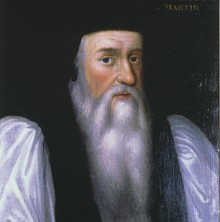
The one central thing I’ve wanted to have you see in my writings about Anglicanism is that Anglicanism is, at heart, Reformed Catholicism. In my last blog, I discussed the Catholic identity of Anglicanism and re-asserted another central idea: that “Reformed” is an adjective and “Catholic” is a noun. My examination of the Catholic identity of Anglicanism led me into a discussion of “catholicity,” which I defined as the faith once delivered to the saints. This faith is expressed most authoritatively and by unique inspiration in the Holy Scriptures. However, the apostolic faith is also embodied in the ancient Creeds, the four Ecumenical Councils, the ancient liturgies, and in the writings of the early Church Fathers. The Catholic quest of Anglicanism is to hold to that which has been believed everywhere, always and by all.
But Anglicanism also has a distinctly Reformed character as well that must be acknowledged. If Anglicanism is Reformed Catholicism, and we now understand the essentially Catholic identity of Anglicanism, then where does the Reformed aspect come in? The truth is that while the Scriptures themselves are inspired and infallible, the Church and men are not. Throughout history, the Catholic faith of the early church has been challenged from many quarters, and so catholicity must always be open to the work of the Holy Spirit in reforming a Church that is corrupt or in error.
The great Ecumenical Councils may be seen as a reform movement within the Church. At the time of the Councils (especially during the fourth and fifth centuries) many heresies regarding essential doctrines were being propagated. The Councils were summoned in order to combat (or “reform”) these errors.
The reformation movement with which most of us are most familiar is, of course, the Protestant Reformation of the 16th century. In reality, it’s not quite right to speak of “The Reformation.” More properly, a series of related reformations took place especially during the 16th century. One kind of Reformation took place under Luther’s leadership in Germany and other places, while the Reformation took on related yet distinct forms under Calvin in Geneva, Zwingli in Switzerland, and in England under the leadership of Cranmer and the English State. In the Church of England, the Reformation eventually took on a different form than the major Reformations of the Continent, even while in theological substance it often started in a similar place as the other Reformations. In typical English style, the English Reformation was a more moderate Reformation than those that took place on the Continent. One way of seeing this is to say that in some ways the English Church retained more of the catholic heritage, for example in retaining bishops and the ancient liturgy.
Because Anglicanism is a part of the larger Reformation of the 16th century, it’s appropriate to speak of Anglicanism both in terms of its being “Reformed” and also “Protestant.” However, Protestant is a large term that includes so much diversity that it also masks a great deal of disagreement.
So why did the Catholic faith require a reformation in the 16th century? The short (but accurate) answer is that the medieval Roman Catholic Church, which was by the 16th century essentially the same as Western Christianity, had become filled with a number of serious errors, abuses, and corruption. Reform movements within the Roman Catholic Church had manifested themselves for centuries, but none had adequate power or motive to cleanse the Church of these errors and abuses. Time does not permit a discussion of these errors, but I’m sure most are familiar with the abuses of papal power and claims, clerical exaltation at the expense of the laity, a liturgy in a language which the people couldn’t understand, erroneous doctrines about the nature of grace and the Sacraments, and the Holy Communion which was effectively taken out of the hands of the people.
In the Continental Reformations, ultimately, the result was not only a purging of the errors and abuses of the medieval Church but also to get rid of much that had been the unbroken belief and practice of the Church since the earliest centuries. While men like Calvin and Luther read widely in the Church Fathers and often adhered to a relatively full Catholic faith, in time most of the churches of the Reformation ultimately came to reject much that the Church had taught and done since the earliest centuries. These Continental Reformations, in turn, unleashed even more extreme Reformations, some of which are related to Anabaptism and which bear a resemblance to much of modern Protestantism in the West.
Areas where most of the “Reformed” churches ultimately parted ways not only with the medieval Roman Catholic Church but also with the early church and Anglicanism include: church government (Reformed churches eradicated the office of bishop which was universal by the end of the first century and had been maintained until the Reformation); understandings of the Sacraments (the Anabaptists, Baptists, and non-denominational churches today have gotten rid of infant baptism, which had been the unbroken practice of the early church; the Eucharist or Lord’s supper came to be viewed as merely a mnemonic device or a ordinance where the Presence of Christ was diminished); ecclesiologies (many of the churches that proceeded out of the Reformation view the church as primarily an invisible entity composed of individual members related to Christ who voluntary covenant with each other, as opposed to the early church’s view that the Church was the visible Body of Christ on earth with certain distinguishing marks); and liturgy (virtually all of the churches that proceeded from the Continental Reformation discarded virtually all aspects of the ancient liturgy. Lutheranism is an exception here, and in many other regards).
In fact, many Reformed churches simply say they are “Reformed,” turning the adjective into a noun, somewhat akin to the way that what Luther taught became Lutheranism and what Calvin taught became “Calvinism.” As others have noticed, Calvin would not have wholeheartedly embraced what has become known as Calvinism.
How can we explain the fact that the Church of England chose both to rid itself of the errors and abuses of the Roman Catholic Church while at the same time maintaining much of what had been taught and practiced in the early Church? While over time the Continental Reformation began to look more and more at the Bible – by itself – as the sole authority and source of apostolic teaching, the Church of England continued to gaze intently as well at the early Church and especially the writings of the early Church Fathers. Coming to the Bible alone with human reason, and without the Catholic traditions of the Church, Christians began to interpret the Bible in many areas in ways that were contrary to what the Church had always taught (see the list above for some examples of these areas). If you begin with the idea that you’ll believe only what can be directly proved by proof texts from Scripture, then you’ll arrive at different beliefs than if you look at the Scriptures typologically, covenantally, and within the framework of the Church’s unbroken tradition of interpretation and embodiment.
By contrast to the Continent Reformations, (without yet entering into a discussion of just why and how this happened), the Church of England chose to maintain the bishops; a strong view of the Church; a strong view of the presence of Christ in the Sacraments (while refusing to tolerate transubstantiation); infant baptism; and the ancient liturgies.
So while both the Continental Reformations and the English Reformation undertook the work of reformation, they ultimately (over time) used different principles on which to establish the work of reformation. While gladly acknowledging its Reformation and even Protestant heritage, Anglicanism has also maintained its essential Catholic identity.
In the next blog, I’ll take a break from the more intellectual approach and tell you how I became an Anglican. Please share your stories with me and others!
Previous Post

October 3, 2011
Tuesday of 15th Sunday after Trinity - 2 Corinthians 11:1-15
Next Post
October 4, 2011 Wednesday of Trinity 15 - 2 Corinthians 11:16-33
Browse Our Archives
Select a Category Book Reviews Featured Give Us This Day Give Us This Day Devotional love me love my wife Love My Wife Reformed Catholicism Blog Spirit-Reality Take This Cup Uncategorized
Select a Month February 2022 November 2021 October 2021 August 2021 January 2021 December 2020 November 2020 September 2020 August 2020 July 2020 June 2020 May 2020 September 2018 July 2018 March 2018 November 2017 October 2017 September 2017 August 2017 July 2017 June 2017 May 2017 April 2017 March 2017 February 2017 January 2017 December 2016 November 2016 October 2016 September 2016 August 2016 July 2016 June 2016 May 2016 April 2016 March 2016 February 2016 January 2016 December 2015 November 2015 October 2015 September 2015 August 2015 July 2015 June 2015 May 2015 April 2015 March 2015 February 2015 January 2015 December 2014 November 2014 October 2014 September 2014 August 2014 July 2014 June 2014 May 2014 April 2014 March 2014 February 2014 January 2014 December 2013 November 2013 October 2013 September 2013 August 2013 July 2013 June 2013 May 2013 April 2013 March 2013 February 2013 January 2013 December 2012 November 2012 October 2012 September 2012 August 2012 July 2012 June 2012 May 2012 April 2012 March 2012 February 2012 January 2012 December 2011 November 2011 October 2011 September 2011 August 2011 July 2011 May 2011 April 2011 March 2011 February 2011 January 2011
Follow Us!
TAKE THE
Religious Wisdom Quiz
We are two prophets who speak for 1,260 days with great power. Fire comes from our mouths to devour enemies. Who are we?
Select your answer to see how you score.
Moses and Elijah The two witnesses Enoch and Elijah Peter and Paul
Related posts from Give Us This Day

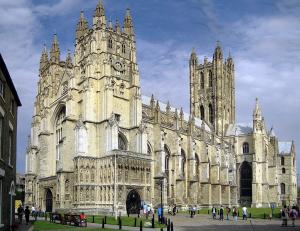
Tracts for the Times 2.0 Tract #2 Part...
Tract #2 Part 1 – When Did Anglicanism...
Tract #1 – What is Anglicanism?
TRENDING AT PATHEOS Evangelical

How the author of the world's best hymn...
I've been working with John Newton for a while now. This makes...

Long before this Lectio Divina, Psalm 130 - the song - started...

What About the Trees? Another Living Parable
After I finished writing the last article about falling leaves as a...

Why Classical Education Is a Conversation, Not a...
Come and Read: Joy in Classical Education When I was a little...

Falling Leaves: A Living Parable on Letting Go
I’ve spent the vast majority of my life in the southeast corner...

Cornell University has received a great deal of negative publicity and intense...
view all Evangelical blogs
Ad-Free & Subscriber Log-In Subscription Support
- About Us
- 2026 Calendar
- Videos
- Podcasts
- Library of World Religions
- Faith In Media Tracker
- Advertise With Us
- Write for Us
- Privacy Policy
- Terms of Service
- Do Not Sell My Data
- Contact Us
- Radiant Digital
- Manage Newsletter Subscriptions
- Unsubscribe From Notifications
- Sitemap
Copyright 2008-2026, Patheos. All rights reserved.
Subscription Support Ad-Free & Subscriber Log-In
Follow Patheos