
BuddhistCatholicContemplativeEvangelicalGeneral ChristianHinduJewishLatter-day SaintMuslimNew VisionsProgressive Christian
Beliefs
- Buddhist
- Catholic
- Contemplative
- Evangelical
- General Christian
- Hindu
- Jewish
- Latter-day Saint
- More Voices
- Muslim
- New Visions
- Pagan
- Progressive Christian
Topics
- Religion News
- Food and Religion
- Sports and Religion
- Religious Art
- Religious Music and Entertainment
- Religious Events
- History and Religion
- Style and Religion
- Politics and Religion
- Women in Religion
- Recreation Outdoors and Religion
- Business Finance and Religion
- Careers Workplace and Religion
- Education and Religion
- Family Parenting and Religion
- Health Fitness and Religion
- Home and Religion
- Relationships and Religion
- Technology and Religion
- Travel and Religion
Columnists
- Buddhist Columnists
- Business Finance and Religion Columnists
- Careers Workplace and Religion Columnists
- Catholic Columnists
- Contemplative Columnists
- Education and Religion Columnists
- Evangelists Columnists
- Family Parenting and Religion Columnists
- General Christian Columnists
- Health Fitness and Religion Columnists
- Hindu Columnists
- History and Religion Columnists
- Home and Religion Columnists
- Jewish Columnists
- More Voices Columnists
- Latter Day Columnists
- Muslim Columnists
- New Visions Columnists
- Nonreligious Columnists
- Pagan Columnists
- Politics and Religion Columnists
- Progressive Columnists
- Recreation Outdoors and Religion Columnists
- Relationships and Religion Columnists
- Religion News Columnists
- Religious Art Columnists
- Religious Events Columnists
- Religious Music and Entertainment Columnists
- Sports and Religion Columnists
- Style and Religion Columnists
- Technology and Religion Columnists
- Travel and Religion Columnists
- Women in Religion Columnists
Resource Library
- 2026 Calendar
- Library of World Religions
- The 100 Most Holy Places on Earth
- Patheos Answers
- Podcasts
- Videos
- Faith Leaders Database
- Anglican Episcopalian
- Bahai
- Baptist
- Buddhism
- Christianity
- Confucianism
- Eastern Orthodoxy
- Hinduism
- Holiness and Pentecostal
- ISKCON
- Islam
- Judaism
- Lutheran
- Methodist
- The Church of Jesus Christ of Latter-day Saints
- New Age
- Paganism
- Presbytarian and Reformed
- Protestantism
- Religion Behind the Scenes
- Roman Catholic
- Scientology
- Shia Islam
- Sikhism
- Sufism
- Sunni Islam
- Taoism
- Zen
- See all religions
Research Tools
 Ad-Free & Subscriber Log-In Subscription Support
Ad-Free & Subscriber Log-In Subscription Support
Follow Patheos 

- Trending:
- Forgiveness
- |
- Marriage
- |
- Consciousness
- |
- Death Penalty
- |
- Election
- |
- Halloween
 Give Us This Day
- Home
- Evangelical
- The Chameleon Servant
The Chameleon Servant
Last updated on: December 5, 2017 at 12:56 pm by Fr. Charles Erlandson
The Chameleon Servant 2017-12-05T12:56:28-05:00 Fr. Charles Erlandson
Patheos Explore the world's faith through different perspectives on religion and spirituality! Patheos has the views of the prevalent religions and spiritualities of the world.
 1 Corinthians 9:15-27
One of my favorite Woody Allen movies is Zelig, in which the humor is a little more subdued than in some of his others. In Zelig, Woody Allen plays a guy who is a human chameleon: that is, he becomes like whomever he is around. He becomes, in turn, many things, including a psychologist, a Native American, a Roman Catholic priest, and a Nazi.
In a very different way, St. Paul is a human chameleon. Though Paul never stops being Paul, he finds things in common with and finds a way to be able to share Jesus Christ with whoever is near him.
It’s true that Paul underwent one amazing transformation from Saul of Tarsus to Paul the apostle, and it’s this one crucial transformation that allows, even demands, that he expresses himself in different ways with different people. But the basic, fundamental St. Paul is the same. No matter whom he’s with, he considers himself first and foremost a servant of the Lord Jesus Christ and the Temple of the Holy Spirit, a steward of the mysteries of God, and a messenger of Jesus Christ.
Because Paul sees himself as the servant of Jesus Christ, he imitates his Master who served others and commanded Paul to be the servant of all. But being a servant of Jesus Christ who serves others requires that you really serve them, based on who they actually are and what they actually need. One of the hardest things to do as a disciple of Jesus Christ who wants to make other disciples of Jesus Christ is to determine what is best for others. Yes, I know that they need Jesus Christ, but how can I best bring Him to them?
To do this requires at least two things that are the mark of a servant of God, two things that require love on our part. First, to be a servant who serves others in a way they most easily receive Christ requires sympathy on our part. We have to care enough about the people we are trying to serve to try and see things from their point of view. The second thing that is required is that we give up what we might want to do for the sake of others.
I might find it most natural for me to approach others through their mind. Let’s have a little debate over the Resurrection or proofs for the existence of God. I might find that I like this way of introducing people to Jesus Christ. But what if they can’t see Him this way? Though my goal is to love them and serve them by bringing Christ to them, it’s important that I know who they are and how they best receive things.
I learned this lesson in the years I spent teaching at All Saints Episcopal School in Tyler, Texas. Previously, I had spent a few years teaching Good Shepherd School, the parochial school of Good Shepherd Reformed Episcopal Church, also in Tyler. Good Shepherd was a more thoroughly Christian environment where I blended in more easily and naturally, and it was also the Church where I was worshiping and eventually ordained deacon and priest.
But teaching at All Saints taught me a lot more about how to bring Christ to people because I had to get out of myself and learn to serve others in a way they could receive Christ. At All Saints I especially learned to become an All Saints Episcopal student to All Saints Episcopal students. It’s a lesson that prepared me more for being a priest than learning more theology or Greek or the theory of the cure of souls.
I remember a student by the name of Niles Ream, who I had in 7th grade and then 9th grade. One year he began to dress all in black (maybe it was the year I began to dress all in black, too – but for a very different reason!) He was a very quiet guy and obviously had a troubled life. Though he had a few friends, he often sat by himself before school in the hallway. One day, taking notice of him, I just sat beside him quietly for 5 minutes, saying only a few words. A few years later, when I was leaving All Saints to begin work on my Ph.D. in England, I realized that another teacher had noticed. I’m sure in his own way Niles did too.
After my first year of teaching at All Saints, the headmaster, Bill McGee, told me that because he thought I’d had a good year and established good rapport with the students, he had a challenge for me: he wanted me to teach Humanities to the first senior class the next year. Now Senior Humanities was a double class, combining English with both Government and Economics, and so I’d have these seniors for an hour and forty minutes in a row. This first senior class had made a reputation for themselves by being the most obnoxious, rebellious, “in your face” class the school had ever had. And I was to teach them for 2 periods back to back.
I remember spending the whole summer reading books on teaching and thinking about what I could do to recruit them and win them over. The first 6 weeks I tried some innovative ways of teaching I had read about that pretty much bombed.
But I tried some things that worked. I tried, especially, to show them that I loved them and wasn’t afraid of them. I made it a point to sit with them at lunch sometimes, even when I didn’t have lunch duty (you teachers will know what a sacrifice that was!) It crossed my mind that they were kind of like Jesus’ tax collectors and sinners.
Because I was teaching Government and Literature from an overtly Christian perspective, I had one guy who sat in the back of the class and whenever I’d tie together God and government or God and literature, he muttered under his breath “church. church.” By the end of the year, however, this class and I had grown to respect, and even be fond of, each other.
To the Jews, Paul became as a Jew, and to those without the law he became as one without the law. This is reflected in how Paul spoke to people he was trying to lead to Christ. To the Jews, he often argued from the Old Testament, but to the Greeks he quoted Greek philosophers (Acts 17 on Mars Hill is the classic example.)
“I have become all things to all men, that I might be all means save some” (verse 22.)
This is to be our attitude as well. We need to get out of the Christian ghetto sometimes and really engage the lives of those who don’t know Christ. They’re all around us, at work or school, at our clubs and associations, and they’re the WalMart cashier and your auto mechanic. Even those who say they are Christians are often without Christ and need us to become like them for the sake of the gospel.
It’s uncomfortable, and it takes time, effort, and experience. But there is no other way.
The way I figure it is like this: if God can become one of us to save us, then in order to be like God I’ll have to go out and become one of “them,” those without Christ. To serve God and to serve them, in other words to love God and to love them, I need to become one of “them.”
For this is the stewardship that God has given to us, and this is what it means to participate in Jesus Christ. And in going out to them, becoming all things to all people, that some may be saved, there is great joy and great reward.
Prayer: Lord Jesus Christ, I thank You that You became one of us that we might become part of You. Thank You for sending Your disciples into my life that I might be saved, and please give me the courage and wisdom to go out and share You with others. Help me to love as I have been loved and to be able to see past myself and my own comfort that by all means possible I might share You with those You’ve made my neighbors. Amen.
Point for Meditation:
What will it require you to give up in order to go out and share Christ with another person? Meditate on what God may be requiring of you in one particular circumstance, and spend some time thinking about that other person. How might he or she best receive Christ from spending time with you? By the way: sharing Christ doesn’t always mean evangelizing an unbeliever. We Christians need to receive Christ from each other as well!
Resolution: I resolve to consider one way that I might better become like one of “them” that I might more effectively show or tell them about Jesus Christ.
Zelig the Human Chameleon – Creative Commons Attribution-Share Alike 3.0 Unported license

Previous Post

March 5, 2015
The Care and Nurture of Your Pastor
Next Post

March 9, 2015 Tuesday of the 3rd Sunday in Lent - 1 Corinthians 10:1-13
Browse Our Archives
Select a Category Book Reviews Featured Give Us This Day Give Us This Day Devotional love me love my wife Love My Wife Reformed Catholicism Blog Spirit-Reality Take This Cup Uncategorized
Select a Month February 2022 November 2021 October 2021 August 2021 January 2021 December 2020 November 2020 September 2020 August 2020 July 2020 June 2020 May 2020 September 2018 July 2018 March 2018 November 2017 October 2017 September 2017 August 2017 July 2017 June 2017 May 2017 April 2017 March 2017 February 2017 January 2017 December 2016 November 2016 October 2016 September 2016 August 2016 July 2016 June 2016 May 2016 April 2016 March 2016 February 2016 January 2016 December 2015 November 2015 October 2015 September 2015 August 2015 July 2015 June 2015 May 2015 April 2015 March 2015 February 2015 January 2015 December 2014 November 2014 October 2014 September 2014 August 2014 July 2014 June 2014 May 2014 April 2014 March 2014 February 2014 January 2014 December 2013 November 2013 October 2013 September 2013 August 2013 July 2013 June 2013 May 2013 April 2013 March 2013 February 2013 January 2013 December 2012 November 2012 October 2012 September 2012 August 2012 July 2012 June 2012 May 2012 April 2012 March 2012 February 2012 January 2012 December 2011 November 2011 October 2011 September 2011 August 2011 July 2011 May 2011 April 2011 March 2011 February 2011 January 2011
Follow Us!
TAKE THE
Religious Wisdom Quiz
What is the last book of the Bible?
Select your answer to see how you score.
Malachi Jude Revelation Hebrews
Related posts from Give Us This Day

Is Christianity a Relationship and Not a Religion?

The Different States of Love - and the...
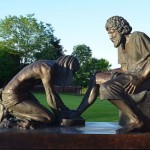
Are You Really the Disciple Jesus Loved?
John 13:1-17 - The New Commandment
TRENDING AT PATHEOS Evangelical

The REST of Your Life: A Creative Wrestles...
This week I had a conversation with a good friend from church....

How the author of the world's best hymn...
I've been working with John Newton for a while now. This makes...

Long before this Lectio Divina, Psalm 130 - the song - started...

What About the Trees? Another Living Parable
After I finished writing the last article about falling leaves as a...

Why Classical Education Is a Conversation, Not a...
Come and Read: Joy in Classical Education When I was a little...

Cornell University has received a great deal of negative publicity and intense...
view all Evangelical blogs
Ad-Free & Subscriber Log-In Subscription Support
- About Us
- 2026 Calendar
- Videos
- Podcasts
- Library of World Religions
- Faith In Media Tracker
- Advertise With Us
- Write for Us
- Privacy Policy
- Terms of Service
- Do Not Sell My Data
- Contact Us
- Radiant Digital
- Manage Newsletter Subscriptions
- Unsubscribe From Notifications
- Sitemap
Copyright 2008-2026, Patheos. All rights reserved.
Subscription Support Ad-Free & Subscriber Log-In
Follow Patheos