
BuddhistCatholicContemplativeEvangelicalGeneral ChristianHinduJewishLatter-day SaintMuslimNew VisionsProgressive Christian
Beliefs
- Buddhist
- Catholic
- Contemplative
- Evangelical
- General Christian
- Hindu
- Jewish
- Latter-day Saint
- More Voices
- Muslim
- New Visions
- Pagan
- Progressive Christian
Topics
- Religion News
- Food and Religion
- Sports and Religion
- Religious Art
- Religious Music and Entertainment
- Religious Events
- History and Religion
- Style and Religion
- Politics and Religion
- Women in Religion
- Recreation Outdoors and Religion
- Business Finance and Religion
- Careers Workplace and Religion
- Education and Religion
- Family Parenting and Religion
- Health Fitness and Religion
- Home and Religion
- Relationships and Religion
- Technology and Religion
- Travel and Religion
Columnists
- Buddhist Columnists
- Business Finance and Religion Columnists
- Careers Workplace and Religion Columnists
- Catholic Columnists
- Contemplative Columnists
- Education and Religion Columnists
- Evangelists Columnists
- Family Parenting and Religion Columnists
- General Christian Columnists
- Health Fitness and Religion Columnists
- Hindu Columnists
- History and Religion Columnists
- Home and Religion Columnists
- Jewish Columnists
- More Voices Columnists
- Latter Day Columnists
- Muslim Columnists
- New Visions Columnists
- Nonreligious Columnists
- Pagan Columnists
- Politics and Religion Columnists
- Progressive Columnists
- Recreation Outdoors and Religion Columnists
- Relationships and Religion Columnists
- Religion News Columnists
- Religious Art Columnists
- Religious Events Columnists
- Religious Music and Entertainment Columnists
- Sports and Religion Columnists
- Style and Religion Columnists
- Technology and Religion Columnists
- Travel and Religion Columnists
- Women in Religion Columnists
Resource Library
- 2026 Calendar
- Library of World Religions
- The 100 Most Holy Places on Earth
- Patheos Answers
- Podcasts
- Videos
- Faith Leaders Database
- Anglican Episcopalian
- Bahai
- Baptist
- Buddhism
- Christianity
- Confucianism
- Eastern Orthodoxy
- Hinduism
- Holiness and Pentecostal
- ISKCON
- Islam
- Judaism
- Lutheran
- Methodist
- The Church of Jesus Christ of Latter-day Saints
- New Age
- Paganism
- Presbytarian and Reformed
- Protestantism
- Religion Behind the Scenes
- Roman Catholic
- Scientology
- Shia Islam
- Sikhism
- Sufism
- Sunni Islam
- Taoism
- Zen
- See all religions
Research Tools
 Ad-Free & Subscriber Log-In Subscription Support
Ad-Free & Subscriber Log-In Subscription Support
Follow Patheos 

- Trending:
- Forgiveness
- |
- Marriage
- |
- Consciousness
- |
- Death Penalty
- |
- Election
- |
- Halloween
 Give Us This Day
- Home
- Evangelical
- Where There Is Not Love: The Church of the Corinthians
Where There Is Not Love: The Church of the Corinthians
Last updated on: November 29, 2017 at 12:55 pm by Fr. Charles Erlandson
Where There Is Not Love: The Church of the Corinthians 2017-11-29T12:55:31-05:00 Fr. Charles Erlandson
Patheos Explore the world's faith through different perspectives on religion and spirituality! Patheos has the views of the prevalent religions and spiritualities of the world.
 1 Corinthians 6:1-11
Though Paul’s letters are not usually laid out as a whole in terms of a logical argument, I think it’s still possible to discern a pattern or picture in his teachings to the Corinthians. Paul’s overall message through much of 1 Corinthians is that he wants the Church, including the Church at Corinth to live as God’s Temple, His people whom He has redeemed and built together for His glory and their edification.
With this grand goal in mind, Paul talks in Chapter 3 about how we are the Temple of the Holy Spirit through which Christ dwells in us. In Chapter 4 Paul continues this theme by reminding us that we are stewards of the mysteries of God, which is Christ in us and gives us examples of how he endures all things in love**.** But since not all of the Corinthians or all Christians choose to live in love and obedience as God’s holy Temple, in Chapter 5 Paul finds it necessary to speak of the authority of the Church to discipline unrepentant sinners.
Now, in Chapter 6, Paul continues speaking about the lack of love in some of the Corinthians and the tragic consequences that a life without holiness, repentance, and love (all essential sides of the same life in Christ) inevitably leads to.
God has chosen to share His immeasurable treasure, which is Himself, with His children. His is the Kingdom and the power and the glory, and through His Son, both God and man, He shares Himself and His Kingdom, power, and glory with His people. But sadly, when we refuse Him we are also refusing His good gifts.
The glory of mankind, redeemed by Jesus Christ through a life of faith in Him, is that we are now made higher than the angels. Paul teaches that some day, Christians will, in fact, judge the angels. But when we prove unable to judge ourselves, we give up this glory for our own, paltry, evaporating glory. Though we should be able to judge the angels, instead we are not even able to judge ourselves, and so we take each other to the civil courts. Watching recently as a couple heads towards divorce, I was struck by the fact is that it is a lack of love for and obedience to God that leads us to divorce and division and lawsuits, and it’s a lack of love for God that leads to a lack of love for one another.
The lawsuits that the Corinthians were experiencing, as well as our own sad divisions and disputes, reveals not only the glory of God we’ve given up but His power as well. The power of God is able to make a man and wife one flesh; the power of God is able to make God man; and the power of God is able to unite sinful men to Himself through the Blood of Jesus Christ. And God has shared this power. But when we pursue our own sinful policies, we lose the power of God, which is the power of the Holy Spirit in us. No holiness = no God = no power.
Why do we so willing give up this power and glory? We do it all for the sake of self, the very thing that has alienated us from God and each other to begin with. We willingly trade the power and glory of God in our lives for a little sinful selfishness.
At the heart of the Corinthians’ failings (and ours) is a loss of love, and where there is not love people hurt each other.
The origin of the lawsuits of the Corinthians and our own disputes, divisions, and divorces is our lack of love. One brother has something against another brother, and there is sin in how we have wronged each other. But this sin is compounded by the fact that we are not merely sinning in the abstract or even just sinning against our own bodies or souls: no, often when we sin, we sin against our brothers and sisters in Christ. Let me put this more bluntly: often, we sin against Jesus Christ in us, against the Temple of the Holy Spirit.
It gets worse. Rather than accepting being wronged, we insist on the right to get back at the person who’s wronged us. All that it takes for a dispute to end sometimes is for one person to give in, even if that person is more sinned against than sinning.
I don’t think Paul is teaching that we never have a right to seek justice. But if the choice is between bringing shame on Christ through dragging a brother or sister in Christ through a civil court and allowing oneself to be wronged, Paul is asking us which is worse. Better still, of course, why not bring the matter before the Church? Hasn’t God given us His wisdom, which is Christ? Hasn’t He given us the ability and power to judge even the angels? Yet we won’t trust ourselves to the Church. Has it really come to this – that we trust the civil courts more than the Church? Or is it just that we think we have a better chance of getting our way through the civil courts?
All of this tragedy comes as a result of our lack of love, which is a lack of Jesus Christ in our lives. Weren’t you washed by the Blood of the Lamb? Weren’t you sanctified and justified? (verse 11.) Then how is it that we still choose such selfish ways?
Our inability to settle our own disputes in love and through the Church reminds me of children, who wage these petty wars and will not stop to be governed by God’s Holy Spirit. More often than is necessary, the adults have to be dragged into things. Are we no better than children?
The worst part of all is that if we persist in our sin, we lose not only God’s power and glory but also His kingdom. In verses 9 and 10 Paul lists some of the sins which, if continued without repentance, will mean we will not inherit the Kingdom of God. These are chilling words, but if we persist in a life of unrepentant sin, then we have no part in God’s kingdom and will be disinherited.
There is a wide variety of sins listed here, and many more could be added to this list. Perhaps most notable in this list to our own present culture are the categories of homosexuals and sodomites. God’s Word, both in the Old and New Testament is clear: homosexuality is a sin. If you lead a life of homosexuality and refuse to repent, you will not inherit the Kingdom of God.
There are 2 errors we often make, though. First, notice that homosexuality in this passage is in the same category as fornicating (any sex outside of marriage), stealing, and coveting. Homosexuality is clearly a sin – but then so are many other things. We should be careful not to follow the culture in giving it a special category apart from other (sinful) behavior.
The second error is in calling God a liar and saying that homosexuality is not a sin. “But I know lots of good people who are homosexuals.” I’ve heard this many, many times from young people who are Christians. In saying this, they are (often without meaning to) calling God a liar. They are judging by their own experience and thoughts, clouded by sinfulness. We could just as easily say of many adulterers, murderers, thieves, and idolaters (and liars, coveters, gossipers, etc.): “But I know them, and they’re good people.”
Why do we pay so much attention to homosexuality, then, if it is a sin just like many other behaviors? My own belief is that it is precisely because many homosexuals and others do not believe it is a sin, and they defiantly and proudly advocate “equal rights” for sinful behavior. The difference lies in this: I don’t hear a lot about adulterers, rapists, murderers, thieves, or extortioners saying “Give me equal rights and tax breaks because I’m an adulterer, rapist, murderer, thief, or extortioner. I have a special right to come before God without asking for forgiveness of my sins.” The Christian alcoholics I know who are trying to be faithful to God acknowledge they have a problem and need help, instead of televising, “I’m a drunkard and you can’t tell me it’s wrong to get drunk. I refuse to get help or go for counseling. Now you must serve me the Lord’s Supper.”
The problem with homosexuality is not with homosexuals who acknowledge their sin before God and are asking for forgiveness and help, but with homosexuals who refuse to acknowledge their sin before God at all. Likewise, the problem with _________ is not ________ists who acknowledge their sin before God and ask for forgiveness and help, but with __________ists who refuse to acknowledge their sin before God.
If you are a Christian, God has washed you with the Blood of His Son. He has sanctified and justified you in the name of Jesus Christ and by the Spirit of God. He has even shared His kingdom, and power, and glory with you. But to receive this treasured inheritance, you must learn to judge yourself and to live in love and obedience to God, repenting of the sins for which He died.
Prayer: Our Father, who art in heaven, hallowed be Thy name. Thy kingdom come. Thy will be done, on earth as it is in heaven. Give us this day our daily bread. And forgive us our trespasses, as we forgive those who trespass against us. And lead us not into temptation, but deliver us from evil. For thine is the kingdom, and the power, and the glory, for ever and ever. Amen.
Points for Meditation:
- Meditate on the treasure that God has shared with His people: first, Himself, but also His Kingdom, power, and glory.
- Meditate on the mercy and forgiveness of God that comes to all truly penitent sinners, regardless of their sins.
Resolution: I resolve to consider the ways in which I may be sinning against my brother or against God. I resolve to judge my own life and freely confess any sins that God brings to my attention.
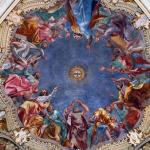
Pentecost, San Marco Milan – By permission of copyright holder

Previous Post

March 1, 2015
Excommunicated!
Next Post
March 4, 2015 Your Body is a Temple
Browse Our Archives
Select a Category Book Reviews Featured Give Us This Day Give Us This Day Devotional love me love my wife Love My Wife Reformed Catholicism Blog Spirit-Reality Take This Cup Uncategorized
Select a Month February 2022 November 2021 October 2021 August 2021 January 2021 December 2020 November 2020 September 2020 August 2020 July 2020 June 2020 May 2020 September 2018 July 2018 March 2018 November 2017 October 2017 September 2017 August 2017 July 2017 June 2017 May 2017 April 2017 March 2017 February 2017 January 2017 December 2016 November 2016 October 2016 September 2016 August 2016 July 2016 June 2016 May 2016 April 2016 March 2016 February 2016 January 2016 December 2015 November 2015 October 2015 September 2015 August 2015 July 2015 June 2015 May 2015 April 2015 March 2015 February 2015 January 2015 December 2014 November 2014 October 2014 September 2014 August 2014 July 2014 June 2014 May 2014 April 2014 March 2014 February 2014 January 2014 December 2013 November 2013 October 2013 September 2013 August 2013 July 2013 June 2013 May 2013 April 2013 March 2013 February 2013 January 2013 December 2012 November 2012 October 2012 September 2012 August 2012 July 2012 June 2012 May 2012 April 2012 March 2012 February 2012 January 2012 December 2011 November 2011 October 2011 September 2011 August 2011 July 2011 May 2011 April 2011 March 2011 February 2011 January 2011
Follow Us!
TAKE THE
Religious Wisdom Quiz
Which major biblical covenant is first introduced in Genesis?
Select your answer to see how you score.
Davidic Covenant New Covenant Abrahamic Covenant Mosaic Covenant
Related posts from Give Us This Day

Is Christianity a Relationship and Not a Religion?

The Different States of Love - and the...

Are You Really the Disciple Jesus Loved?
John 13:1-17 - The New Commandment
TRENDING AT PATHEOS Evangelical

The REST of Your Life: A Creative Wrestles...
This week I had a conversation with a good friend from church....

How the author of the world's best hymn...
I've been working with John Newton for a while now. This makes...

Long before this Lectio Divina, Psalm 130 - the song - started...

What About the Trees? Another Living Parable
After I finished writing the last article about falling leaves as a...

Why Classical Education Is a Conversation, Not a...
Come and Read: Joy in Classical Education When I was a little...

Cornell University has received a great deal of negative publicity and intense...
view all Evangelical blogs
Ad-Free & Subscriber Log-In Subscription Support
- About Us
- 2026 Calendar
- Videos
- Podcasts
- Library of World Religions
- Faith In Media Tracker
- Advertise With Us
- Write for Us
- Privacy Policy
- Terms of Service
- Do Not Sell My Data
- Contact Us
- Radiant Digital
- Manage Newsletter Subscriptions
- Unsubscribe From Notifications
- Sitemap
Copyright 2008-2026, Patheos. All rights reserved.
Subscription Support Ad-Free & Subscriber Log-In
Follow Patheos