
BuddhistCatholicContemplativeEvangelicalGeneral ChristianHinduJewishLatter-day SaintMuslimNew VisionsProgressive Christian
Beliefs
- Buddhist
- Catholic
- Contemplative
- Evangelical
- General Christian
- Hindu
- Jewish
- Latter-day Saint
- More Voices
- Muslim
- New Visions
- Pagan
- Progressive Christian
Topics
- Religion News
- Food and Religion
- Sports and Religion
- Religious Art
- Religious Music and Entertainment
- Religious Events
- History and Religion
- Style and Religion
- Politics and Religion
- Women in Religion
- Recreation Outdoors and Religion
- Business Finance and Religion
- Careers Workplace and Religion
- Education and Religion
- Family Parenting and Religion
- Health Fitness and Religion
- Home and Religion
- Relationships and Religion
- Technology and Religion
- Travel and Religion
Columnists
- Buddhist Columnists
- Business Finance and Religion Columnists
- Careers Workplace and Religion Columnists
- Catholic Columnists
- Contemplative Columnists
- Education and Religion Columnists
- Evangelists Columnists
- Family Parenting and Religion Columnists
- General Christian Columnists
- Health Fitness and Religion Columnists
- Hindu Columnists
- History and Religion Columnists
- Home and Religion Columnists
- Jewish Columnists
- More Voices Columnists
- Latter Day Columnists
- Muslim Columnists
- New Visions Columnists
- Nonreligious Columnists
- Pagan Columnists
- Politics and Religion Columnists
- Progressive Columnists
- Recreation Outdoors and Religion Columnists
- Relationships and Religion Columnists
- Religion News Columnists
- Religious Art Columnists
- Religious Events Columnists
- Religious Music and Entertainment Columnists
- Sports and Religion Columnists
- Style and Religion Columnists
- Technology and Religion Columnists
- Travel and Religion Columnists
- Women in Religion Columnists
Resource Library
- 2026 Calendar
- Library of World Religions
- The 100 Most Holy Places on Earth
- Patheos Answers
- Podcasts
- Videos
- Faith Leaders Database
- Anglican Episcopalian
- Bahai
- Baptist
- Buddhism
- Christianity
- Confucianism
- Eastern Orthodoxy
- Hinduism
- Holiness and Pentecostal
- ISKCON
- Islam
- Judaism
- Lutheran
- Methodist
- The Church of Jesus Christ of Latter-day Saints
- New Age
- Paganism
- Presbytarian and Reformed
- Protestantism
- Religion Behind the Scenes
- Roman Catholic
- Scientology
- Shia Islam
- Sikhism
- Sufism
- Sunni Islam
- Taoism
- Zen
- See all religions
Research Tools
 Ad-Free & Subscriber Log-In Subscription Support
Ad-Free & Subscriber Log-In Subscription Support
Follow Patheos 

- Trending:
- Forgiveness
- |
- Marriage
- |
- Consciousness
- |
- Death Penalty
- |
- Election
- |
- Halloween
 Give Us This Day
- Home
- Evangelical
- Priscilla and Aquila
Priscilla and Aquila
Last updated on: December 22, 2017 at 10:25 am by Fr. Charles Erlandson
Priscilla and Aquila 2017-12-22T10:25:44-05:00 Fr. Charles Erlandson
Patheos Explore the world's faith through different perspectives on religion and spirituality! Patheos has the views of the prevalent religions and spiritualities of the world.
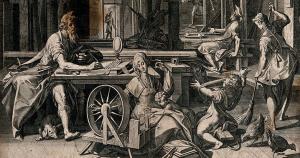 1 Corinthians 16:15-24
Every Christian household should be transformed into a house of God. Christian households are the backbone, the foundation, of the Christian church, and if they are not consecrated to the Lord, then the Church herself will be weak and sickly. Sadly, in the 21st century American church, both Church and family are weak and sickly.
It’s one thing to spend five weeks on 1 Corinthians, examining in detail the problems of the Corinthian church and admiring the wise and loving way in which St. Paul instructs the Corinthian church. It’s another to apply these things to our local church. We have, in many ways, the same set of sicknesses they had, and therefore the same prescription is the cure.
But my challenge this morning is this: What if we actually read 1 Corinthians not just in terms of our local church but in terms of our families and our households?
Paul commends two remarkable families in 1 Corinthians 16, as he brings his letter to the church to an end. First, there is the household of Stephanus, which Paul himself had baptized (1:16), and they are the firstfruits of Achaia, just as Christ is the firstfruits of the Resurrection. This household, which would have included Stephanus’s extended family, including children and servants and perhaps more, came to Christ together, as a household. This pattern of families coming together to Christ is repeated throughout the Scriptures, for example, in the life of the Philippian jailer and his family. Throughout history, when kings converted to Christ, their nations came with them.
My research in the sociology of religion confirms that people come into the Church largely through the Christian family. A classic study of conversion found that when Mormons go door to door, “cold calling” on people, they have a very low batting average: only 1 out of 1000 converts. When they pursue someone by a covert referral (the name of the Mormon who suggested the person be contacted is not used), the successful recruitment rate is 7 out of 100; when an overt referral is the method, then 8 out of 100. When an appointment is set up with missionaries, the rate jumps to 34 out of 100, and when the contact with the missionaries took place in the home of a Mormon friend or relative, then the rate is 50/100: one half of all so contacted become Mormons.
The sociology of religion teaches us that people make religious decisions based on the social networks in which they find themselves. In other words, the more you are connected with a true Christian community, the more likely you’ll be a Christian, and if you’re socially strongly connected with other non-Christians then you’re less likely to become a Christian. But this connection with Christ and the Church is most commonly made through the Christian household. What else would we expect from the religion of the Incarnation, in which God entered intimately into the messy and lonely life of man?
This household of Stephanus was also the firstfruits because they were first in the kingdom. How so? Because they had learned to be the servants of all. Why is it that Stephanus and his household merit this amazing mention in Paul’s sacred letter? It’s because they had “devoted themselves to the ministry of the saints” (verse 15.) So great were they in the kingdom, through their learning to be the servants of all, that Paul tells the Corinthians to submit to them and those like them who have dedicated themselves to the ministry of the saints (verse 16.) Stephanus and his household supplied what was lacking in the Corinthians (verse 17) and refreshed Paul’s spirit and the Corinthians, and so such men should be acknowledged and honored (verse 18.) In other words, they must have read 1 Corinthians 12-14 because they served others by using the spiritual gifts that God had given them for the good and edification of others. In other words: they had learned to love.
The second household of Priscilla and Aquila is also remarkable. They had so opened their lives to God and His call on them that they allowed the church to meet in their house. Can you imagine what a nervous wreck Priscilla must have been? The Christian household of Priscilla and Aquila was one with the Christian church. They let the Church, the people of God, so infiltrate their lives that the lives of Priscilla, Aquila, and the Church were forever intertwined. (I think there’s a little perichoresis going on here, in which Christian lives are so intertwined in love, as with the Trinity, that they interpenetrate each other!)
Every Christian household is to be a little monastery, a community of love whose mission is to make worshipers and disciples of Jesus Christ. Fathers should be abbots and mothers abbesses, ruling the household that God has given them in love.
This is the vision I have been trying to communicate to my own little family at home. I use the term “community of love” frequently, and patiently explain the rules of the household and that every rule (just like every law in the Old Testament or New) is a way of protecting and encouraging love of either God or man. We make sure that we eat our meals together, giving thanks before God, even when Jackie is slowly moving us toward an even healthier diet. After dinner, we have evening prayer every evening.
The goal of the Christian family is to live together in love, to make disciples of your children, and to serve the larger world, especially the Church, in love. “Train up a child in the way of the Lord, and when he is old, he will not depart from it” (Proverbs 22:6.) The problem is, our Christian children are departing because Christian families and households are too busy pursuing the things of this world to teach their children the way of Christ and to live together in love, preferring each to do what is right in his own eyes.
My research into the sociology of religion has yielded a life-changing statistic. It is this: that for every person who is made a disciple of Jesus Christ through converting them from some other religion (or none), 12 disciples are made by being born into a Christian family. It’s not just that families are often the means by which people convert: even more importantly, most people become Christians by being born into Christian families who train their children to love and serve the Lord.
What if we had Christian households whose goal was to devote themselves to the ministry of the saints? What if we went back and read 1 Corinthians in light of the Christian household and learned how to minister in love; seeking peace instead of selfish divisions and factions; building God’s temple together in love; dealing together with the sin in our lives; allowing ourselves to be wronged by our brothers and sisters or parents or children; joyfully receiving the station in life to which God has assigned us; strengthening and encouraging the weaker brothers and sisters; seeking together to give up self and become all things to all men that some might be edified or saved; discerning the presence of the Lord among us; using the gifts that God has given us on behalf of one another; practicing daily love; and reminding ourselves of the glorious Resurrection?
Every Christian household would be transformed into a house of God, and we’d see more of heaven, even here on earth.
Prayer: God made us a family.
We need one another.
We love one another.
We forgive one another.
We work together.
We play together.
We worship together.
Together we use God’s word.
Together we grow in Christ.
Together we love all people.
Together we serve our God.
Together we hope for heaven.
These are our hopes and ideals.
Help us to attain them,
O God, through Jesus Christ our Lord.
Amen.
Point for Meditation: Meditate on what the ideal Christian household would look like, as it applies to your situation (married, with or without children; extended family; single.) Listen for what God is asking you to do to work towards such a household in your life.
Resolution: I resolve to take one practical step toward making my household a house of God. You might want to consider what you have learned in 1 Corinthians or apply what you know God has already been asking you to do.
Paul in the House of Priscilla and Aquila – Creative Commons Attribution-Share Alike 4.0 International license

Previous Post

March 26, 2015
The Litmus Test of Love
Next Post
March 29, 2015 Monday Before Easter, Holy Week - John 14:1-14
Browse Our Archives
Select a Category Book Reviews Featured Give Us This Day Give Us This Day Devotional love me love my wife Love My Wife Reformed Catholicism Blog Spirit-Reality Take This Cup Uncategorized
Select a Month February 2022 November 2021 October 2021 August 2021 January 2021 December 2020 November 2020 September 2020 August 2020 July 2020 June 2020 May 2020 September 2018 July 2018 March 2018 November 2017 October 2017 September 2017 August 2017 July 2017 June 2017 May 2017 April 2017 March 2017 February 2017 January 2017 December 2016 November 2016 October 2016 September 2016 August 2016 July 2016 June 2016 May 2016 April 2016 March 2016 February 2016 January 2016 December 2015 November 2015 October 2015 September 2015 August 2015 July 2015 June 2015 May 2015 April 2015 March 2015 February 2015 January 2015 December 2014 November 2014 October 2014 September 2014 August 2014 July 2014 June 2014 May 2014 April 2014 March 2014 February 2014 January 2014 December 2013 November 2013 October 2013 September 2013 August 2013 July 2013 June 2013 May 2013 April 2013 March 2013 February 2013 January 2013 December 2012 November 2012 October 2012 September 2012 August 2012 July 2012 June 2012 May 2012 April 2012 March 2012 February 2012 January 2012 December 2011 November 2011 October 2011 September 2011 August 2011 July 2011 May 2011 April 2011 March 2011 February 2011 January 2011
Follow Us!
TAKE THE
Religious Wisdom Quiz
What Christian holiday celebrates Jesus’ birth?
Select your answer to see how you score.
Good Friday Easter Christmas Pentecost
Related posts from Give Us This Day
John 2:13-25 - Cleansing the Temple

Tuesday of Trinity 15 - Matthew 7:13-29

Monday of Trinity 15 - Matthew 7:1-14

Saturday of Trinity 14 - Matthew 6:19-34
TRENDING AT PATHEOS Evangelical

The REST of Your Life: A Creative Wrestles...
This week I had a conversation with a good friend from church....

How the author of the world's best hymn...
I've been working with John Newton for a while now. This makes...

Long before this Lectio Divina, Psalm 130 - the song - started...

What About the Trees? Another Living Parable
After I finished writing the last article about falling leaves as a...

Why Classical Education Is a Conversation, Not a...
Come and Read: Joy in Classical Education When I was a little...

Cornell University has received a great deal of negative publicity and intense...
view all Evangelical blogs
Ad-Free & Subscriber Log-In Subscription Support
- About Us
- 2026 Calendar
- Videos
- Podcasts
- Library of World Religions
- Faith In Media Tracker
- Advertise With Us
- Write for Us
- Privacy Policy
- Terms of Service
- Do Not Sell My Data
- Contact Us
- Radiant Digital
- Manage Newsletter Subscriptions
- Unsubscribe From Notifications
- Sitemap
Copyright 2008-2026, Patheos. All rights reserved.
Subscription Support Ad-Free & Subscriber Log-In
Follow Patheos