
BuddhistCatholicContemplativeEvangelicalGeneral ChristianHinduJewishLatter-day SaintMuslimNew VisionsProgressive Christian
Beliefs
- Buddhist
- Catholic
- Contemplative
- Evangelical
- General Christian
- Hindu
- Jewish
- Latter-day Saint
- More Voices
- Muslim
- New Visions
- Pagan
- Progressive Christian
Topics
- Religion News
- Food and Religion
- Sports and Religion
- Religious Art
- Religious Music and Entertainment
- Religious Events
- History and Religion
- Style and Religion
- Politics and Religion
- Women in Religion
- Recreation Outdoors and Religion
- Business Finance and Religion
- Careers Workplace and Religion
- Education and Religion
- Family Parenting and Religion
- Health Fitness and Religion
- Home and Religion
- Relationships and Religion
- Technology and Religion
- Travel and Religion
Columnists
- Buddhist Columnists
- Business Finance and Religion Columnists
- Careers Workplace and Religion Columnists
- Catholic Columnists
- Contemplative Columnists
- Education and Religion Columnists
- Evangelists Columnists
- Family Parenting and Religion Columnists
- General Christian Columnists
- Health Fitness and Religion Columnists
- Hindu Columnists
- History and Religion Columnists
- Home and Religion Columnists
- Jewish Columnists
- More Voices Columnists
- Latter Day Columnists
- Muslim Columnists
- New Visions Columnists
- Nonreligious Columnists
- Pagan Columnists
- Politics and Religion Columnists
- Progressive Columnists
- Recreation Outdoors and Religion Columnists
- Relationships and Religion Columnists
- Religion News Columnists
- Religious Art Columnists
- Religious Events Columnists
- Religious Music and Entertainment Columnists
- Sports and Religion Columnists
- Style and Religion Columnists
- Technology and Religion Columnists
- Travel and Religion Columnists
- Women in Religion Columnists
Resource Library
- 2026 Calendar
- Library of World Religions
- The 100 Most Holy Places on Earth
- Patheos Answers
- Podcasts
- Videos
- Faith Leaders Database
- Anglican Episcopalian
- Bahai
- Baptist
- Buddhism
- Christianity
- Confucianism
- Eastern Orthodoxy
- Hinduism
- Holiness and Pentecostal
- ISKCON
- Islam
- Judaism
- Lutheran
- Methodist
- The Church of Jesus Christ of Latter-day Saints
- New Age
- Paganism
- Presbytarian and Reformed
- Protestantism
- Religion Behind the Scenes
- Roman Catholic
- Scientology
- Shia Islam
- Sikhism
- Sufism
- Sunni Islam
- Taoism
- Zen
- See all religions
Research Tools
 Ad-Free & Subscriber Log-In Subscription Support
Ad-Free & Subscriber Log-In Subscription Support
Follow Patheos 

- Trending:
- Forgiveness
- |
- Marriage
- |
- Consciousness
- |
- Death Penalty
- |
- Election
- |
- Halloween
 Give Me Only My Daily Bread
- Home
- Progressive Christian
- Food and Religion
- Tips for Writing a Food Column for Faith Based Publications
Tips for Writing a Food Column for Faith Based Publications
Last updated on: October 8, 2023 at 12:46 pm by Chef John Politte
Tips for Writing a Food Column for Faith Based Publications 2023-10-08T12:46:07-05:00 Chef John Politte
Patheos Explore the world's faith through different perspectives on religion and spirituality! Patheos has the views of the prevalent religions and spiritualities of the world.
What Are the Challenges of Writing a Food Column for a Religious Publication?
Being a food writer in a religious or faith-based publication comes with a unique set of challenges that are not commonly encountered in other publications. These challenges range from adhering to religious dietary requirements to balancing religion and food in your recipes and writing for a specific audience. In this article, I will delve deeper into these challenges and offer some tips for writing a food column for faith based publications.
Adherence to Religious Dietary Requirements
One of the most significant challenges of being a food writer in a religious publication is adhering to religious dietary requirements. Different religions have different dietary laws and restrictions that are fundamental to their beliefs and practices. As a food writer in a religious publication, you need to be well-versed in these dietary requirements and ensure that your recipes adhere to them. I have started a collection of books on religions, as well as the trusty internet to use as reference for this specific topic.
For instance, if you’re writing for a Jewish publication, you would need to be familiar with the Kashrut, which is a set of dietary laws that govern Jewish food practices. The Kashrut prohibits the consumption of certain animals, such as pigs and shellfish, and requires the separation of meat and dairy products. As a food writer in a Jewish publication, you would need to create recipes that align with these laws.
Similarly, in Islam, there are dietary laws known as Halal that govern food practices. These laws mandate the consumption of halal meat and prohibit the consumption of pork and alcohol. As a food writer in a Muslim publication, it’s essential to ensure that your recipes meet these requirements. The column that I write is for Christianity, but I do sometime compare and make reference to other religions regarding food and diet, so it is a good idea to be well versed in the diversity of culinary practices in religion and their dietary practices.
Balancing Religion and Food
Another challenge that food writers in religious publications face is balancing religion and food. Food is a crucial aspect of religious celebrations and traditions, and it’s essential to incorporate this aspect into your recipes. However, you need to do so while ensuring that your recipes adhere to religious dietary laws.
For instance, during Ramadan, Muslims fast from sunrise to sunset and break their fast with a meal known as Iftar. As a food writer in a Muslim publication, you would need to create recipes that cater to the dietary laws of Islam and are suitable for Iftar. Similarly, during Passover, Jews eat unleavened bread known as Matzo. As a food writer in a Jewish publication, you would need to create recipes that incorporate Matzo into the dishes.
Writing for a Specific Audience
In addition to the above challenges, food writers in religious publications also need to write for a specific audience. Religious publications have a specific audience with unique preferences, dietary requirements, and cultural traditions. As a food writer, you need to understand these preferences and create content that resonates with your readers.
For instance, if you’re writing for a Muslim publication, you would need to be familiar with Middle Eastern cuisine and traditional dishes. Similarly, if you’re writing for a Jewish publication, you would need to understand the traditional Jewish dishes and ingredients.
Patheos is a an online publication that caters (pardon the pun) to all the worlds religions, but each writer selects his or her faith topic to have their column in. That doesn’t mean that the column won’t be read by someone of a different faith while searching through the website or being directed to the column through a search of the internet. So it is wise to have a fundamental understanding of the dietary practises if each faith.
Maintaining Religious Sensitivities
Finally, food writers in religious publications need to maintain sensitivity when writing about food. Food is a sensitive topic that is often closely tied to cultural and religious sensitivities. As a food writer in a religious publication, you need to be mindful of these sensitivities and ensure that your content is respectful and appropriate.
For instance, if you’re writing for a Buddist publication, you would need to be mindful of the prohibition of meat and certain aromatics in your recipes, due to their philosophy on non-violence and cultivation practises Similarly, if you’re writing for a Jewish publication, you would need to be mindful of the prohibition of pork and avoid using pork products in your recipes.
To Sum Up
In conclusion, being a food writer in a religious publication is a challenging but rewarding job. By adhering to religious dietary requirements, balancing religion and food, writing for a specific audience, and maintaining sensitivity, you can create engaging and informative content that resonates with your readers.
In the spirit of inclusion, I have a wonderful Buddist recipe for Vegetarian Momos below, please drop me a line in the comments section of this article to let me know if you enjoyed them. The recipe is attributed to The Tibetan Nuns Project
Vegetarian Momos

Ingredients
For the Dough
- 2 cups white all-purpose flour
- 3/4 cup water
For the Filling
- 1/2 large onion (we use red onion)
- 1 and 1/2 tablespoons minced fresh ginger
- 4 cloves of garlic
- 1/2 cup minced cilantro
- 1 cup baby bok choy (about 2 clusters) or cabbage
- 5 ounces super firm tofu
- 2 stalks green onion
- 6 largish shiitake mushrooms (you can substitute white mushrooms)
- 1 teaspoon salt, or to your taste
- 1 tablespoon of soy sauce
- 1/2 tablespoon vegetable bouillon
- 1/4 cup of cooking oil (we use Canola)
Method
Prepare the Dough
- Mix the flour and water very well by hand; knead until you make a smooth, flexible ball of dough (About 5 minutes)
- Leave your dough in a pot with the lid on, or in a plastic bag, while you prepare the rest of the ingredients. You should not let the dough dry out or it will be hard to work with.
ingredients for veggie momosPrepare the Filling for Vegetarian MomosChop the onion, ginger, garlic, cilantro, bok choy, tofu, green onions and mushrooms into very small pieces. - Heat 1/4 cup of cooking oil in a pan to high and add chopped tofu. Cook on medium high for 2 minutes, until the edges are brown (cooking all water out). Add chopped mushroom and cook another 3-4 minutes.
- Cool completely (very important) and add to filling mix.
When your dough and filling are both ready, it is time for the tricky part of making the dumpling shapes.
- Place the dough on a chopping board and use a rolling pin to roll it out thinly, about 1/8 inch thick. It should not be so thin that you can see through it when you pick it up.
- Cutting the dough into circles: Turn a small cup or glass upside down and cut out circles about the size of your palm. Pinch the edges of each circle to thin them
Shaping a Half-Moon Momo
- Prepare a non-stick surface and a damp cloth or lid to keep the momos you’ve made from drying out while you’re finishing the others (lightly-greased trays of steamer with lid or wax paper and a damp cloth).
- Hold a dough circle in your left hand, slightly cupping it. Put about a tablespoon of your veggie filling in the center of the dough. Start with a small amount, try to not overfill.
- Starting on one edge and moving to the other, pinch the two sides of the dough together, creating a curved crescent shape. The bottom side of the momo will stay relatively flat, whereas the pinched edge has folds to allow for the bulk of the filling. Be sure to close all gaps so that you don’t lose juice while cooking.
Cook Your Momos!
- Finally, you should boil water in a large steamer. (Tibetans often use a double-decker steamer, to make many momos at one time.)
- Oil the steamer surface lightly.
- Once the water is boiling, place the momos a little distance apart in the steamer as they will expand a little bit when they cook.
- Steam the momos for 10-12 minutes, with the water boiling continuously.
Momos are done once the dough is cooked.
Serve the momos right off the stove, with the dipping sauce of your choice. At home, we mix together soy sauce and Patak’s Lime Relish, which we get in Indian stores, or the Asian section of supermarkets. Tibetan hot sauce is also very good.
Progressive Christian
General Christian
Careers, Workplace and Religion
About Chef John Politte
I have dabbled in the culinary world for the last 40 odd years as a chef, bartender, bouncer, dishwasher, waiter, multi-level manager, teacher, media personality, food journalist, food photographer, online seasonings and spice shop curator, podcaster and cookbook author. I enjoy using my humor, wisdom, and experience to entertain and teach the curious among us. You can read more about the author here.
Previous Post

October 1, 2023
Can Religion Make Us Better Stewards for the Planet?
Next Post

October 15, 2023 Hospitality in the Bible: A Guide to Sharing Food and Fellowship
Recent Comments
"That is true of satan; you could say that he manifests that theory in all ..."
"yes, as a lifelong SDA, we have a health message, Christ came "to give life ..."
"I appreciate your comment, Alan. Have a great rest of your day!"
What Does Saying Grace Actually Accomplish?
"I very much enjoyed this article, thanks!"
What Does Saying Grace Actually Accomplish?
Browse Our Archives
Select a Category food Uncategorized
Select a Month March 2024 February 2024 December 2023 November 2023 October 2023 September 2023 August 2023 July 2023
Follow Us!
TAKE THE
Religious Wisdom Quiz
Which book of the Bible has the longest chapter?
Select your answer to see how you score.
Jeremiah Genesis Isaiah Psalms
Related posts from Give Me Only My Daily Bread
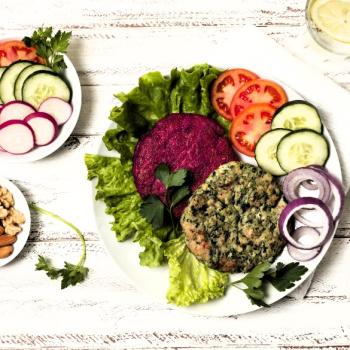
Religion and a Plant-Based Diet

The Keys to Solving World Hunger

The Magic of Food on Christmas
TRENDING AT PATHEOS Food and Religion

Swimfan: Forgotten Aughts Pleasures
This is a recovery effort. In 2002, My Big Fat Greek Wedding...

Top Three Anti-Catholic Lies About Catholicism
This is my initial transcript for the video, "THE 3 WORST...

Pope Leo Celebrates Mass for Nurses & Docs...
I don't have any idea how he did it, but Pope Leo...

The Sermon on the Mount, Part I: Matthew...
The Sermon on the Mount, Part I (Matthew 4:12-5:12) St. Matthew moves...

What's up from Crossway: Reviewing some of their latest A few weeks...

Janie Learns the Way of the Cross: A...
Teaching children about Jesus' Passion can be challenging. Many parents and educators...
view all Food and Religion blogs
Ad-Free & Subscriber Log-In Subscription Support
- About Us
- 2026 Calendar
- Videos
- Podcasts
- Library of World Religions
- Faith In Media Tracker
- Advertise With Us
- Write for Us
- Privacy Policy
- Terms of Service
- Do Not Sell My Data
- Contact Us
- Radiant Digital
- Manage Newsletter Subscriptions
- Unsubscribe From Notifications
- Sitemap
Copyright 2008-2026, Patheos. All rights reserved.
Subscription Support Ad-Free & Subscriber Log-In
Follow Patheos