
BuddhistCatholicContemplativeEvangelicalGeneral ChristianHinduJewishLatter-day SaintMuslimNew VisionsProgressive Christian
Beliefs
- Buddhist
- Catholic
- Contemplative
- Evangelical
- General Christian
- Hindu
- Jewish
- Latter-day Saint
- More Voices
- Muslim
- New Visions
- Pagan
- Progressive Christian
Topics
- Religion News
- Food and Religion
- Sports and Religion
- Religious Art
- Religious Music and Entertainment
- Religious Events
- History and Religion
- Style and Religion
- Politics and Religion
- Women in Religion
- Recreation Outdoors and Religion
- Business Finance and Religion
- Careers Workplace and Religion
- Education and Religion
- Family Parenting and Religion
- Health Fitness and Religion
- Home and Religion
- Relationships and Religion
- Technology and Religion
- Travel and Religion
Columnists
- Buddhist Columnists
- Business Finance and Religion Columnists
- Careers Workplace and Religion Columnists
- Catholic Columnists
- Contemplative Columnists
- Education and Religion Columnists
- Evangelists Columnists
- Family Parenting and Religion Columnists
- General Christian Columnists
- Health Fitness and Religion Columnists
- Hindu Columnists
- History and Religion Columnists
- Home and Religion Columnists
- Jewish Columnists
- More Voices Columnists
- Latter Day Columnists
- Muslim Columnists
- New Visions Columnists
- Nonreligious Columnists
- Pagan Columnists
- Politics and Religion Columnists
- Progressive Columnists
- Recreation Outdoors and Religion Columnists
- Relationships and Religion Columnists
- Religion News Columnists
- Religious Art Columnists
- Religious Events Columnists
- Religious Music and Entertainment Columnists
- Sports and Religion Columnists
- Style and Religion Columnists
- Technology and Religion Columnists
- Travel and Religion Columnists
- Women in Religion Columnists
Resource Library
- 2026 Calendar
- Library of World Religions
- The 100 Most Holy Places on Earth
- Patheos Answers
- Podcasts
- Videos
- Faith Leaders Database
- Anglican Episcopalian
- Bahai
- Baptist
- Buddhism
- Christianity
- Confucianism
- Eastern Orthodoxy
- Hinduism
- Holiness and Pentecostal
- ISKCON
- Islam
- Judaism
- Lutheran
- Methodist
- The Church of Jesus Christ of Latter-day Saints
- New Age
- Paganism
- Presbytarian and Reformed
- Protestantism
- Religion Behind the Scenes
- Roman Catholic
- Scientology
- Shia Islam
- Sikhism
- Sufism
- Sunni Islam
- Taoism
- Zen
- See all religions
Research Tools
 Ad-Free & Subscriber Log-In Subscription Support
Ad-Free & Subscriber Log-In Subscription Support
Follow Patheos 

- Trending:
- Forgiveness
- |
- Marriage
- |
- Consciousness
- |
- Death Penalty
- |
- Election
- |
- Halloween
 Give Me Only My Daily Bread
- Home
- Progressive Christian
- Food and Religion
- Mental Health in the Kitchen
Mental Health in the Kitchen
Last updated on: October 29, 2023 at 12:14 pm by Chef John Politte
Mental Health in the Kitchen 2023-10-29T12:14:28-05:00 Chef John Politte
Patheos Explore the world's faith through different perspectives on religion and spirituality! Patheos has the views of the prevalent religions and spiritualities of the world.
Mental Health in the Kitchen
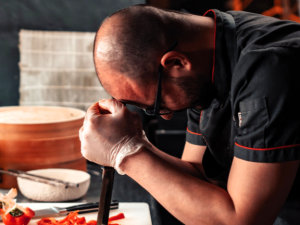 Cooking is an art that demands an enormous amount of creativity, discipline, and skill. Culinary professionals are often lauded for their ability to craft incredible dishes that satisfy even the most discerning palates. However, the kitchen environment can also be incredibly challenging and stressful, exacting a heavy toll on the mental health of chefs, cooks, and other kitchen staff. In this post, I will share my personal story and delve into the importance of mental health in the kitchen and how this vital aspect of culinary arts is often overlooked.
The Kitchen Environment: A Recipe for Mental Health Challenges
The kitchen is a high-pressure environment that can be chaotic and stressful, particularly during peak hours. Chefs, cooks, servers, waitstaff, and porters are often required to work long hours, juggle multiple tasks simultaneously, and deal with high-stress situations such as equipment breakdowns, unanticipated customer demands, and unexpected rushes. The constant pressure to perform at a high level, all while exceeding expectations and maintaining the highest standards, can lead to burnout, anxiety, addiction, and depression.
Furthermore, the kitchen environment can be physically demanding, with chefs and cooks often required to stand for long periods, lift heavy items, and work in high-temperature environments with knives, fire, and hot tempers. These physical demands can have a significant impact on the mental health of kitchen staff, leading to exhaustion, health issues, and even injury.
Living in the Pressure Cooker Culture of the Kitchen
From the first day I walked into the kitchen, I was seduced by the challenges to keep up. I was a dishwasher and only 14 years old, but I understood that there was a relentless, rhythmic pulse of having the tables bussed, the plates on the line, the silverware, cups, and glassware cleaned and ready for re-stocking the dining room. Add to that the endless soaking and scrubbing of pots and pans, sweeping and mopping, cleaning the bathrooms, policing the parking lot, and all the other tasks in my job description.
Over time, I became a cook, as did many of us who could withstand the stress and the high we got from living daily in the pressure cooker. As the hours got longer and the workflow increased, so did my impulse to keep up. That’s when an older cook introduced me to substances that would allow me to keep up without letting me know there would be substances needed to come down. That, combined with the nights of drinking and partying after work, led me into the world of addiction and despair.
As most of us do in this industry, I kept moving up and eventually started running kitchens. This was in the late 80s and early 90s, and the food service culture was much different, and HR was barely seen in privately owned establishments. Drug culture permeated the industry, and ownership and management overlooked the problem as “they’re just blowing off steam in their alpha male way.” But we all know what eventually happens with addiction: rock bottom comes, and it comes hard. With no safety net from our industry, a lot of us had nowhere to go but jail or state-funded outpatient treatment.
Today, the stigma of drug use in the industry seems shocking to most younger culinarians, and the idea of being burned out is unacceptable from the top down. And thankfully, there is healthcare for the workers who are lucky enough to work for places that carry it. Now, it’s hard to imagine someone working 80 hours a week, burning themselves out. It may still happen, but it’s not an industry standard like it once was. Thank God
The Stigma Surrounding Mental Health in the Kitchen
Despite the high prevalence of mental health challenges in the kitchen, there is often a stigma surrounding mental health that can prevent chefs and cooks from seeking the help they need. Many people view mental health challenges as a sign of weakness, and the high-pressure environment of the kitchen can exacerbate this stigma. Chefs and cooks may feel that admitting to mental health challenges will make them appear less competent or less capable in the eyes of their colleagues.
This stigma can be incredibly harmful, preventing chefs and cooks from seeking the support they need to maintain their mental health. It can also lead to a culture of silence around mental health, where individuals feel that they cannot speak openly about their challenges without fear of judgment or repercussions. , the ability to take time off, and the lack of primary health care are also contributing factors in seeking the help they need.
Mental Health in the Kitchen: Strategies for Success
To address the mental health challenges faced by chefs and cooks, it is essential to create a culture of openness and support in the kitchen. Employers can take proactive steps to promote mental health, such as providing access to mental health services, offering regular breaks, and creating a positive work environment. Additionally, employers can work to reduce the stigma surrounding mental health by promoting open communication and setting a positive example for their staff.
Individuals can also take proactive steps to maintain their mental health in the kitchen. This might include taking regular breaks, practicing mindfulness or meditation, seeking support from friends and family, and prioritizing self-care activities such as exercise and healthy eating. It is essential for chefs and cooks to recognize the importance of mental health and to take proactive steps to maintain their well-being, such as eating right, exercising, and getting proper sleep.
Conclusion
Mental health in the kitchen is a crucial yet often overlooked aspect of culinary arts. The high-pressure environment of the kitchen can lead to a range of mental health challenges, from burnout and stress to anxiety, depression, and addiction. To address these challenges, it is essential to offer affordable healthcare that covers mental health issues and to create a culture of openness and support in the kitchen, where individuals feel comfortable seeking the help they need. By prioritizing mental health in the kitchen, we can help ensure culinary professionals continue to create food that satisfies customers while maintaining their well-being.
Progressive Christian
General Christian
Health, Fitness and Religion
About Chef John Politte
I have dabbled in the culinary world for the last 40 odd years as a chef, bartender, bouncer, dishwasher, waiter, multi-level manager, teacher, media personality, food journalist, food photographer, online seasonings and spice shop curator, podcaster and cookbook author. I enjoy using my humor, wisdom, and experience to entertain and teach the curious among us. You can read more about the author here.
Previous Post

October 22, 2023
Manna: A Fascinating and Enigmatic Food
Next Post

November 5, 2023 Does God Care If We Eat Healthy?
Recent Comments
"That is true of satan; you could say that he manifests that theory in all ..."
"yes, as a lifelong SDA, we have a health message, Christ came "to give life ..."
"I appreciate your comment, Alan. Have a great rest of your day!"
What Does Saying Grace Actually Accomplish?
"I very much enjoyed this article, thanks!"
What Does Saying Grace Actually Accomplish?
Browse Our Archives
Select a Category food Uncategorized
Select a Month March 2024 February 2024 December 2023 November 2023 October 2023 September 2023 August 2023 July 2023
Follow Us!
TAKE THE
Religious Wisdom Quiz
What does the name "Jesus" mean?
Select your answer to see how you score.
Chosen One Prince of Peace The Lord Saves Son of Man
Related posts from Give Me Only My Daily Bread
Religion and a Plant-Based Diet

The Keys to Solving World Hunger

The Magic of Food on Christmas

TRENDING AT PATHEOS Food and Religion

Swimfan: Forgotten Aughts Pleasures
This is a recovery effort. In 2002, My Big Fat Greek Wedding...

Top Three Anti-Catholic Lies About Catholicism
This is my initial transcript for the video, "THE 3 WORST...

Pope Leo Celebrates Mass for Nurses & Docs...
I don't have any idea how he did it, but Pope Leo...

The Sermon on the Mount, Part I: Matthew...
The Sermon on the Mount, Part I (Matthew 4:12-5:12) St. Matthew moves...

What's up from Crossway: Reviewing some of their latest A few weeks...

Janie Learns the Way of the Cross: A...
Teaching children about Jesus' Passion can be challenging. Many parents and educators...
view all Food and Religion blogs
Ad-Free & Subscriber Log-In Subscription Support
- About Us
- 2026 Calendar
- Videos
- Podcasts
- Library of World Religions
- Faith In Media Tracker
- Advertise With Us
- Write for Us
- Privacy Policy
- Terms of Service
- Do Not Sell My Data
- Contact Us
- Radiant Digital
- Manage Newsletter Subscriptions
- Unsubscribe From Notifications
- Sitemap
Copyright 2008-2026, Patheos. All rights reserved.
Subscription Support Ad-Free & Subscriber Log-In
Follow Patheos