
BuddhistCatholicContemplativeEvangelicalGeneral ChristianHinduJewishLatter-day SaintMuslimNew VisionsProgressive Christian
Beliefs
- Buddhist
- Catholic
- Contemplative
- Evangelical
- General Christian
- Hindu
- Jewish
- Latter-day Saint
- More Voices
- Muslim
- New Visions
- Pagan
- Progressive Christian
Topics
- Religion News
- Food and Religion
- Sports and Religion
- Religious Art
- Religious Music and Entertainment
- Religious Events
- History and Religion
- Style and Religion
- Politics and Religion
- Women in Religion
- Recreation Outdoors and Religion
- Business Finance and Religion
- Careers Workplace and Religion
- Education and Religion
- Family Parenting and Religion
- Health Fitness and Religion
- Home and Religion
- Relationships and Religion
- Technology and Religion
- Travel and Religion
Columnists
- Buddhist Columnists
- Business Finance and Religion Columnists
- Careers Workplace and Religion Columnists
- Catholic Columnists
- Contemplative Columnists
- Education and Religion Columnists
- Evangelists Columnists
- Family Parenting and Religion Columnists
- General Christian Columnists
- Health Fitness and Religion Columnists
- Hindu Columnists
- History and Religion Columnists
- Home and Religion Columnists
- Jewish Columnists
- More Voices Columnists
- Latter Day Columnists
- Muslim Columnists
- New Visions Columnists
- Nonreligious Columnists
- Pagan Columnists
- Politics and Religion Columnists
- Progressive Columnists
- Recreation Outdoors and Religion Columnists
- Relationships and Religion Columnists
- Religion News Columnists
- Religious Art Columnists
- Religious Events Columnists
- Religious Music and Entertainment Columnists
- Sports and Religion Columnists
- Style and Religion Columnists
- Technology and Religion Columnists
- Travel and Religion Columnists
- Women in Religion Columnists
Resource Library
- 2026 Calendar
- Library of World Religions
- The 100 Most Holy Places on Earth
- Patheos Answers
- Podcasts
- Videos
- Faith Leaders Database
- Anglican Episcopalian
- Bahai
- Baptist
- Buddhism
- Christianity
- Confucianism
- Eastern Orthodoxy
- Hinduism
- Holiness and Pentecostal
- ISKCON
- Islam
- Judaism
- Lutheran
- Methodist
- The Church of Jesus Christ of Latter-day Saints
- New Age
- Paganism
- Presbytarian and Reformed
- Protestantism
- Religion Behind the Scenes
- Roman Catholic
- Scientology
- Shia Islam
- Sikhism
- Sufism
- Sunni Islam
- Taoism
- Zen
- See all religions
Research Tools
 Ad-Free & Subscriber Log-In Subscription Support
Ad-Free & Subscriber Log-In Subscription Support
Follow Patheos 

- Trending:
- Forgiveness
- |
- Marriage
- |
- Consciousness
- |
- Death Penalty
- |
- Election
- |
- Halloween
 Give Me Only My Daily Bread
- Home
- Progressive Christian
- Food and Religion
- What Was the Roman Diet in the Time of Christ?
What Was the Roman Diet in the Time of Christ?
Last updated on: September 13, 2023 at 4:15 pm by Chef John Politte
What Was the Roman Diet in the Time of Christ? 2023-09-13T16:15:58-05:00 Chef John Politte
Patheos Explore the world's faith through different perspectives on religion and spirituality! Patheos has the views of the prevalent religions and spiritualities of the world.
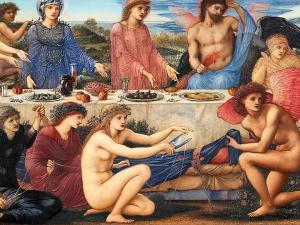
The Feast of Peleus
What was the Roman Diet when Jesus was Alive?
The Roman Empire was one of the largest and most powerful empires in history, spanning over three continents and lasting centuries. The diet of the Romans during the time of Christ was diverse and influenced by various factors, including social class, geography, and religious beliefs.
Food not only provided sustenance but also represented wealth, power, and social status in ancient Rome. The elites of Rome were known for their extravagant banquets, which showcased exotic foods and rare spices from across the empire. However, most of the population had limited access to such luxuries and had to rely on a more basic diet. In this post, I will attempt to explain the Roman diet during the time of Christ and how it reflected the culture and society of the ancient Roman Empire.
The Roman Diet: A Diverse and Varied Cuisine
The Roman diet during the time of Christ was influenced by various factors such as social class, geography, and religious beliefs. The diet of the rich was vastly different from the diet of the poor. The wealthy Romans had access to a wide variety of foods, including meat, fish, and exotic fruits and vegetables from all over the world. They also had access to expensive spices and seasonings to enhance the flavor of their dishes.
The Diet Between the Roman Classes
On the other hand, the diet of the poor consisted mainly of grains, legumes, and vegetables. Meat was a luxury that only the rich could afford, and it was usually reserved for special occasions such as feasts and celebrations. The poor also had limited access to spices and seasonings, and their meals were often bland and unappetizing.
Depending on Where You Lived in the Empire
Geography also played a significant role in shaping the Roman diet. We need to remember that the Roman Empire was very large. The cuisine of the coastal regions was heavily influenced by seafood, while the cuisine of the inland regions was based on grains, legumes, and vegetables. The diet of the Romans also varied depending on the season. During the summer months, fresh fruits and vegetables were abundant, while during the winter months, preserved and pickled foods were more common.
And the gods Played a Role in the Roman Diet
Religious beliefs were also a significant factor in shaping the Roman diet. The Romans worshipped a wide variety of gods and goddesses, and each deity had its own specific dietary requirements. For example, the goddess Ceres was associated with grain and agriculture, and her followers were encouraged to eat a diet rich in grains and vegetables.
Meat in the Roman Diet
Meat was a significant part of the Roman diet, but it was not as common as many people think. The Romans did not eat meat every day, and it was usually reserved for special occasions such as feasts and celebrations. Beef and pork were the most commonly consumed meats, but the Romans also ate a wide variety of other meats, including chicken, duck, goose, and wild game such as boar and deer.
Meat was typically roasted or boiled and served with various sauces and seasonings. The wealthy Romans also enjoyed exotic meats such as peacock, ostrich, and even giraffe. These meats were often served as a symbol of wealth and status.
Fish in the Roman Diet
Fish was also an essential part of the Roman diet, especially in the coastal regions. The Romans ate a wide variety of fish, including tuna, salmon, sardines, and mackerel. Fish was typically cooked in a variety of ways, including grilling, roasting, and boiling. The Romans also enjoyed seafood such as oysters, clams, and mussels.
Bread in the Roman Diet
Bread was a staple in the Roman diet, and it was consumed by all social classes. The Romans baked a wide variety of bread, including white bread, whole grain bread, and flatbread. Bread was typically served with olive oil and vinegar, or it was used to sop up sauces and gravies.
Beverages in the Roman Diet
Beverages like wine and beer were popular in ancient Rome, with wine being the preferred drink for people of all social classes. It was often diluted with water to reduce its strength, as drinking it straight was considered unhealthy.
Was Nutrition Important?
The understanding of nutrition in ancient Rome was limited, and there was no concept of a balanced diet. The focus was mainly on satisfying hunger and filling the stomach. However, certain foods were considered essential, such as the belief that beans were good for digestion, and lentils were beneficial for the heart.
Food was also linked to health and disease, with some foods believed to have medicinal properties. For example, honey was used to treat coughs and colds, while garlic was thought to ward off evil spirits and prevent illness.
Drawing Conclusions
In conclusion, the Roman diet during the time of Christ was centered around grains, vegetables, and fruits, with meat and fish being consumed on occasion. Although the understanding of nutrition was basic, the importance of specific foods was acknowledged. Food in ancient Rome was not just a source of sustenance, but also a symbol of wealth and social status. As we explore the Roman diet, we can gain a better understanding of the culture and lifestyle of ancient Romans.
But What About Pasta?
Contrary to popular belief, the ancient Romans did not consume pasta. It was only introduced to Italy during the Middle Ages, centuries after the fall of the Roman Empire.
Below is a traditional Romanesque Pasta recipe Fettuccine with Arrabbiata Sauce that I featured on my YouTube channel. I hope you enjoy!
Homemade Arrabbiata Sauce
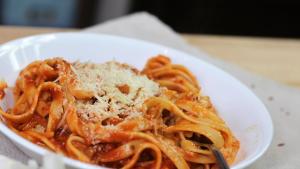
Fettuccine with Arrabbiata Sauce Photo by Chef John Politte
Ingredients
- 3 Tablespoons olive oil
- 1 yellow onion, small dice
- 3 garlic cloves, minced
- 2 teaspoons red pepper flakes
- 1 teaspoon dried oregano
- Salt and pepper to taste
- 1 can tomato sauce
- 2 Tablespoons tomato paste
- 1 teaspoon granulated sugar
- 8 ounces of your favorite cooked pasta
- ½ cup grated or shredded Parmesan cheese
Method
- Place a large skillet over medium heat. Add the olive oil
- When the oil is hot, add the onion, and cook until translucent
- Add the garlic, salt and pepper, red pepper flakes, and oregano, and cook until fragrant
- Add the tomato paste, crushed tomatoes, and sugar.
- Bring to a simmer. Cover the pan and simmer for 15 minutes. If you want the sauce thicker, increase the cooking time and uncover 10 more minutes
Serve with Parmesan cheese, a Caesar salad, and garlic bread
Progressive Christian
General Christian
About Chef John Politte
I have dabbled in the culinary world for the last 40 odd years as a chef, bartender, bouncer, dishwasher, waiter, multi-level manager, teacher, media personality, food journalist, food photographer, online seasonings and spice shop curator, podcaster and cookbook author. I enjoy using my humor, wisdom, and experience to entertain and teach the curious among us. You can read more about the author here.
Previous Post

August 6, 2023
Is There a Relationship Between Food and Religions?
Next Post

August 20, 2023 A Tribute to the Lutheran Church Basement Ladies
Recent Comments
"That is true of satan; you could say that he manifests that theory in all ..."
"yes, as a lifelong SDA, we have a health message, Christ came "to give life ..."
"I appreciate your comment, Alan. Have a great rest of your day!"
What Does Saying Grace Actually Accomplish?
"I very much enjoyed this article, thanks!"
What Does Saying Grace Actually Accomplish?
Browse Our Archives
Select a Category food Uncategorized
Select a Month March 2024 February 2024 December 2023 November 2023 October 2023 September 2023 August 2023 July 2023
Follow Us!
TAKE THE
Religious Wisdom Quiz
What analogy does Jesus use for believers in Matthew 5:13-14?
Select your answer to see how you score.
Salt and light A tree and its fruit Gold and silver Bread and water
Related posts from Give Me Only My Daily Bread

Religion and a Plant-Based Diet

The Keys to Solving World Hunger

The Magic of Food on Christmas

TRENDING AT PATHEOS Food and Religion

The Real AI Story Is Adoption Without Trust
Artificial intelligence has crossed a political threshold. It is no longer a...

A new article, written by Jeff Lindsay and Gale L. Pooley,...

Swimfan: Forgotten Aughts Pleasures
This is a recovery effort. In 2002, My Big Fat Greek Wedding...

Top Three Anti-Catholic Lies About Catholicism
This is my initial transcript for the video, "THE 3 WORST...

Pope Leo Celebrates Mass for Nurses & Docs...
I don't have any idea how he did it, but Pope Leo...

The Sermon on the Mount, Part I: Matthew...
The Sermon on the Mount, Part I (Matthew 4:12-5:12) St. Matthew moves...
view all Food and Religion blogs
Ad-Free & Subscriber Log-In Subscription Support
- About Us
- 2026 Calendar
- Videos
- Podcasts
- Library of World Religions
- Faith In Media Tracker
- Advertise With Us
- Write for Us
- Privacy Policy
- Terms of Service
- Do Not Sell My Data
- Contact Us
- Radiant Digital
- Manage Newsletter Subscriptions
- Unsubscribe From Notifications
- Sitemap
Copyright 2008-2026, Patheos. All rights reserved.
Subscription Support Ad-Free & Subscriber Log-In
Follow Patheos