
BuddhistCatholicContemplativeEvangelicalGeneral ChristianHinduJewishLatter-day SaintMuslimNew VisionsProgressive Christian
Beliefs
- Buddhist
- Catholic
- Contemplative
- Evangelical
- General Christian
- Hindu
- Jewish
- Latter-day Saint
- More Voices
- Muslim
- New Visions
- Pagan
- Progressive Christian
Topics
- Religion News
- Food and Religion
- Sports and Religion
- Religious Art
- Religious Music and Entertainment
- Religious Events
- History and Religion
- Style and Religion
- Politics and Religion
- Women in Religion
- Recreation Outdoors and Religion
- Business Finance and Religion
- Careers Workplace and Religion
- Education and Religion
- Family Parenting and Religion
- Health Fitness and Religion
- Home and Religion
- Relationships and Religion
- Technology and Religion
- Travel and Religion
Columnists
- Buddhist Columnists
- Business Finance and Religion Columnists
- Careers Workplace and Religion Columnists
- Catholic Columnists
- Contemplative Columnists
- Education and Religion Columnists
- Evangelists Columnists
- Family Parenting and Religion Columnists
- General Christian Columnists
- Health Fitness and Religion Columnists
- Hindu Columnists
- History and Religion Columnists
- Home and Religion Columnists
- Jewish Columnists
- More Voices Columnists
- Latter Day Columnists
- Muslim Columnists
- New Visions Columnists
- Nonreligious Columnists
- Pagan Columnists
- Politics and Religion Columnists
- Progressive Columnists
- Recreation Outdoors and Religion Columnists
- Relationships and Religion Columnists
- Religion News Columnists
- Religious Art Columnists
- Religious Events Columnists
- Religious Music and Entertainment Columnists
- Sports and Religion Columnists
- Style and Religion Columnists
- Technology and Religion Columnists
- Travel and Religion Columnists
- Women in Religion Columnists
Resource Library
- 2026 Calendar
- Library of World Religions
- The 100 Most Holy Places on Earth
- Patheos Answers
- Podcasts
- Videos
- Faith Leaders Database
- Anglican Episcopalian
- Bahai
- Baptist
- Buddhism
- Christianity
- Confucianism
- Eastern Orthodoxy
- Hinduism
- Holiness and Pentecostal
- ISKCON
- Islam
- Judaism
- Lutheran
- Methodist
- The Church of Jesus Christ of Latter-day Saints
- New Age
- Paganism
- Presbytarian and Reformed
- Protestantism
- Religion Behind the Scenes
- Roman Catholic
- Scientology
- Shia Islam
- Sikhism
- Sufism
- Sunni Islam
- Taoism
- Zen
- See all religions
Research Tools
 Ad-Free & Subscriber Log-In Subscription Support
Follow Patheos 

- Trending:
- Advent
- |
- Forgiveness
- |
- Thanksgiving
- |
- Election
- |
- Seasonal Holidays
- |
- Marriage
 GetReligion
- Home
- Religion News
- Did Jesus only become God at Easter?
Did Jesus only become God at Easter?
Last updated on: August 29, 2014 at 2:28 pm by Richard Ostling
Did Jesus only become God at Easter? 2014-08-29T14:28:07-04:00 Richard Ostling
Patheos Explore the world's faith through different perspectives on religion and spirituality! Patheos has the views of the prevalent religions and spiritualities of the world.
ARTHUR ASKS:
Christians observe that the Son of God died to atone for human sins. But St. Paul says (Romans 1:4) that Jesus was “declared … to be the Son of God by his resurrection from the dead.” So apparently Jesus wasn’t divine when he died (or before). How then does atonement work?
THE RELIGION GUY ANSWERS:
A timely inquiry as Christians reflect on Jesus’ death and resurrection, and also due to the clash between two new scholarly books, “How Jesus Became God” by skeptic Bart Ehrman, answered simultaneously (!!!) by an international team of conservatives in “How God Became Jesus.”
Arthur cites a sentence Paul wrote only a couple decades or so after Jesus’ crucifixion, and “form critics” think the apostle was quoting from a previous creed so these words date back to Christianity’s earliest days.
Thanks to www.biblegateway.com, The Guy compared 46 English translations and found “declared” is the typical wording. Other versions say that by the resurrection Jesus’ divine Sonshop was “openly designated,” “publicly identified,” “demonstrated,” “proved,” “marked out” and “shown,” while Bible commentaries add “displayed,” “proclaimed” and “manifested.”
So the expert consensus agrees with the 8th Century theologian John of Damascus that Paul meant that by the resurrection “it was made plain and certain to the world that Christ was the Son of God.”
Note that all the translators say “by” the resurrection, not “at” or “with” or “upon,” which could indicate Jesus’ divinity originated only at Easter. All this agrees with the early belief found elsewhere in the New Testament that Jesus was divine in his earthly life and beforehand (for instance Matthew 27:54, John 1:1-3, I Corinthians 2:8, Philippians 2:6).
But get this: A favorite conservative translation of the Bible could be read as suggesting Jesus only became God at Easter. The 2011 edition of the New International Version says Jesus was “appointed the Son of God” by the resurrection, vs. “declared” in earlier N.I.V. editions. Similarly, the first edition of U.S. Catholics’ New American Bible (1970) said Jesus was “made” the Son of God by Easter. The 1986 N.A.B. revision changed that to the ambiguous “established,” which to average English readers could mean either newly established or established for everyone to see.
Then, how does atonement “work”? What does it mean that “Jesus saves” or “Jesus died for our sins”?
Arthur suggests what Christian tradition teaches, that Jesus would have to be God for his death on the cross to be effective for sin. Otherwise he was just another victim of unjust execution. Theologians pondering this have proposed theories known as “ransom,” “recapitulation,” “satisfaction” “penal substitution” and the modern liberal favorite, “moral example.”
The Catechism of the Catholic Church avoids such formulations and sticks to familiar New Testament phrases: “Christ died for our sins in accordance with the scriptures”; “taking our death upon himself”; as a “ransom that would free men from the slavery of sin”; God “made him to be sin who knew no sin so that in him we might become the righteousness of God”‘ “God did not spare his own Son but gave him up for us all”; we are “reconciled to God by the death of his Son”; “we have been sanctified through the offering of the body of Jesus Christ once for all”; and Jesus as “the Lamb of God who takes away the sin of the world.”
Michael Root, a specialist in ecumenical theology at Catholic University of America, tells “Religion Q and A” that the various concepts of Jesus’ atonement for sin never divided Christianity the way other issues did. “Some branches of the tradition have emphasized some images more than others, but some mix of images is probably needed to capture comprehensively the meaning of Christ’s death.” Unlike the extensive debate about how Jesus is both human and divine, “the precise sense in which he died ‘for our sins’ has never been defined. That is itself, I think, highly significant. There is something here that resists precise definition.”
Root, a Catholic convert, was formerly a Lutheran delegate who helped write the significant 1999 Lutheran-Catholic accord that overcame the old dispute over the role of “faith” and “works” in salvation, which included this: “By grace alone, in faith in Christ’s saving work and not because of any merit on our part, we are accepted by God and receive the Holly Spirit, who renews our hearts while equipping and calling us to good works.”
The “how” question looks this way to Peter Bouteneff, former executive secretary for theology at the World Council of Churches now teaching at St. Vladimir’s Orthodox Theological Seminary: We can’t grasp the atonement without acknowledging humanity’s “brokenness” and then understanding who could bring healing. He says what’s needed is someone “outside the situation, someone perfect and whole already — otherwise it’s the blind leading the blind.” In other words, the divine Christ.
“But it also has to be someone who reaches us at the point of our needs, in the depths of our fallen situation.” Bouteneff says only Jesus Christ, fully divine and also fully human, can heal us “as the human Son, experiencing the depths of human need and vulnerability.” “In his self-offering on the cross” Jesus “shows us what God looks like: loving creation unto death” so that “death and suffering don’t have the last word. Life does … This sacrifice restores balance to a terrible imbalance, the rift between a wandering humanity and a faithful God.”
DO YOU HAVE A QUESTION FOR THE GUY?
Please leave your questions for Richard Ostling in our comments pages or go to his site and leave them there!
Previous Post

April 14, 2014
For the Times, Ayaan Hirsi Ali controversy has only one side
Next Post
April 14, 2014 Bizarre AP wording in update on Overland Park shootings
Browse Our Archives
Select a Category 5Q+1 Academia Anglicanism Announcements Atheists & Agnostics Baptists Books Business & Economy Catholicism Creeping Fundamentalism Education Ethics Evangelicals Film First Person gays Godbeat Got news? Humor Interviews Islam Journalism Judaism Lutherans Mainline Marriage & family Middle East Mormons Music Nones Orthodoxy Pagans Pentecostalism People Podcasts Politics Pop Culture Race Radio & TV Religion religious liberty Same-sex marriage Science Sex Social Issues Sports Uncategorized Vatican Web/Tech What is this? World World Religions Worship
Select a Month August 2014 July 2014 June 2014 May 2014 April 2014 March 2014 February 2014 January 2014 December 2013 November 2013 October 2013 September 2013 August 2013 July 2013 June 2013 May 2013 April 2013 March 2013 February 2013 January 2013 December 2012 November 2012 October 2012 September 2012 August 2012 May 2010 July 2009 February 2009 October 2008 July 2008 January 2007 August 2006 July 2006 October 2005
Follow Us!
TAKE THE
Religious Wisdom Quiz
Who was the first Judge of Israel?
Select your answer to see how you score.
Gideon Othniel Deborah Samson
Related posts from GetReligion

Same as it ever was: It's time for...

Wait? Who is calling who an 'evangelical' or...
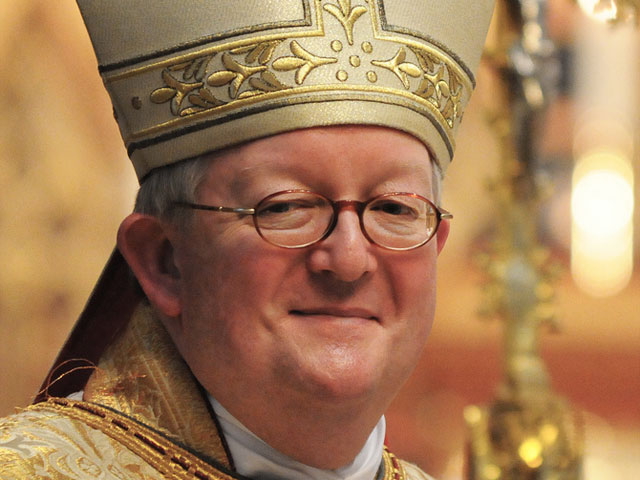
Are Catholics about to loosen Communion rules?

Church of The New York Times keeps preaching...
TRENDING AT PATHEOS Religion News

Catholic Integralists believe that religious values – specifically Christian ones – should...

Electing A Virtuous President Would Make Immunity Irrelevant
Presidential immunity can bring with it many risks. So how can we...

Why The Olympic Games Are A ‘Civil Religious’...
Sporting events form a vital space where Americans display their 'civil religious...

After more than a decade of news, research updates, and insights on...

Q: Why do Southern Baptists and like-minded Protestants...
THE RELIGION GUY’S ANSWER: Why? Simple. Because they believe that’s what the...

THE QUESTION: Is gambling evil? THE RELIGION GUY’S ANSWER: Analysts anticipate a...
view all Religion News blogs
Ad-Free & Subscriber Log-In Subscription Support
- About Us
- 2026 Calendar
- Videos
- Podcasts
- Library of World Religions
- Faith In Media Tracker
- Advertise With Us
- Write for Us
- Privacy Policy
- Terms of Service
- Do Not Sell My Data
- Contact Us
- Radiant Digital
- Manage Newsletter Subscriptions
- Unsubscribe From Notifications
- Sitemap
Copyright 2008-2026, Patheos. All rights reserved.
Subscription Support Ad-Free & Subscriber Log-In
Follow Patheos