
BuddhistCatholicContemplativeEvangelicalGeneral ChristianHinduJewishLatter-day SaintMuslimNew VisionsProgressive Christian
Beliefs
- Buddhist
- Catholic
- Contemplative
- Evangelical
- General Christian
- Hindu
- Jewish
- Latter-day Saint
- More Voices
- Muslim
- New Visions
- Pagan
- Progressive Christian
Topics
- Religion News
- Food and Religion
- Sports and Religion
- Religious Art
- Religious Music and Entertainment
- Religious Events
- History and Religion
- Style and Religion
- Politics and Religion
- Women in Religion
- Recreation Outdoors and Religion
- Business Finance and Religion
- Careers Workplace and Religion
- Education and Religion
- Family Parenting and Religion
- Health Fitness and Religion
- Home and Religion
- Relationships and Religion
- Technology and Religion
- Travel and Religion
Columnists
- Buddhist Columnists
- Business Finance and Religion Columnists
- Careers Workplace and Religion Columnists
- Catholic Columnists
- Contemplative Columnists
- Education and Religion Columnists
- Evangelists Columnists
- Family Parenting and Religion Columnists
- General Christian Columnists
- Health Fitness and Religion Columnists
- Hindu Columnists
- History and Religion Columnists
- Home and Religion Columnists
- Jewish Columnists
- More Voices Columnists
- Latter Day Columnists
- Muslim Columnists
- New Visions Columnists
- Nonreligious Columnists
- Pagan Columnists
- Politics and Religion Columnists
- Progressive Columnists
- Recreation Outdoors and Religion Columnists
- Relationships and Religion Columnists
- Religion News Columnists
- Religious Art Columnists
- Religious Events Columnists
- Religious Music and Entertainment Columnists
- Sports and Religion Columnists
- Style and Religion Columnists
- Technology and Religion Columnists
- Travel and Religion Columnists
- Women in Religion Columnists
Resource Library
- 2026 Calendar
- Library of World Religions
- The 100 Most Holy Places on Earth
- Patheos Answers
- Podcasts
- Videos
- Faith Leaders Database
- Anglican Episcopalian
- Bahai
- Baptist
- Buddhism
- Christianity
- Confucianism
- Eastern Orthodoxy
- Hinduism
- Holiness and Pentecostal
- ISKCON
- Islam
- Judaism
- Lutheran
- Methodist
- The Church of Jesus Christ of Latter-day Saints
- New Age
- Paganism
- Presbytarian and Reformed
- Protestantism
- Religion Behind the Scenes
- Roman Catholic
- Scientology
- Shia Islam
- Sikhism
- Sufism
- Sunni Islam
- Taoism
- Zen
- See all religions
Research Tools
 Ad-Free & Subscriber Log-In Subscription Support
Follow Patheos 

- Trending:
- Advent
- |
- Forgiveness
- |
- Thanksgiving
- |
- Election
- |
- Seasonal Holidays
- |
- Marriage
 GetReligion
- Home
- Religion News
- NYTimes mostly ‘gets it’ on German schools and Islam
NYTimes mostly ‘gets it’ on German schools and Islam
Last updated on: January 7, 2019 at 4:08 pm by Mark Kellner
NYTimes mostly ‘gets it’ on German schools and Islam 2019-01-07T16:08:54-05:00 Mark Kellner
Patheos Explore the world's faith through different perspectives on religion and spirituality! Patheos has the views of the prevalent religions and spiritualities of the world.
A few days ago, George Conger took to this space to “bury” The New York Times for suddenly noticing the rise of Calvinism in unlikely Protestant venues, such as (Southern) Baptist churches.
Today, I’d like to congratulate the Times for, mostly, “getting it” when it comes to Germany’s public schools and religious instruction, in this case about Islam. Here’s the top of that report:
FRANKFURT — For the first time, German public schools are offering classes in Islam to primary school students using state-trained teachers and specially written textbooks, as officials try to better integrate the nation’s large Muslim minority and counter the growing influence of radical religious thinking.
The classes offered in Hesse State are part of a growing consensus that Germany, after decades of neglect, should do more to acknowledge and serve its Muslim population if it is to foster social harmony, overcome its aging demographics and head off a potential domestic security threat.
The need, many here say, is ever more urgent. According to German security officials and widespread reports in the German news media, this past semester at least two young Germans in Hesse — one thought to be just 16 — were killed in Syria after heeding the call for jihad and apparently being recruited by hard-line Salafist preachers in Frankfurt.
This is, in my opinion, Times reporting just about at its best: a crisp, clean lede, and a close-to-the-top explanation of what it means.
Granted, it’s a bit late, I would suggest, in terms of Germany’s government, since questions about assimilation of “guest workers” from predominantly Muslim nations, beginning with Turkey, has been an issue for decades. But better (very) late than never, one supposes.
There’s also a bit of explanation on how “religious instruction” has come to be in “public” (i.e., state-sponsored) schools, a concept that might be a tad jarring in the U.S. of A., where even bringing candy canes to class can get a grade-schooler in trouble. Read on.
The Hesse curriculum effectively places Islamic instruction on equal footing with similarly state-approved ethics training in the Protestant and Catholic faiths. By offering young Muslims a basic introduction to Islam as early as first grade, emphasizing its teachings on tolerance and acceptance, the authorities hope to inoculate young people against more extreme religious views while also signaling state acceptance of their faith.
Parents have the option to enroll their children in the religious education classes offered in the district. Nurguel Altuntas, who helped develop the Hesse program at the state’s Ministry of Education, said the sign-up for 29 classes in immigrant-heavy districts was enthusiastic.
The classes are optional, and are designed to emphasize “tolerance and acceptance.” So far, so good, and, in fact, very good, in my opinion, when it comes to a specific object lesson:
In one class, Timur Kumlu recently asked his 19 6-year-old students each to take a strand from a large wool ball. He then instructed the children — whose parents hailed from Muslim countries as varied as Afghanistan, Albania, Morocco and Turkey — to examine how, like the threads, they, too, were woven together.
It was a simple lesson containing a gentle message filled with symbolism — that they were linked by their Islamic faith and practices of prayer.
“We are now all bound together — you come from different countries, and so do your parents,” said Mr. Kumlu, who reminded the children that while their parents came from Afghanistan or Albania, they were born in Germany.
His generally well-behaved pupils squirmed a bit, but listened attentively. “They come here with such different backgrounds,” Mr. Kumlu said after the lesson. “We must educate so that they develop a personality with common roots,” in Germany and in Islam.
There is, however, only a glancing reference to anyone remotely resembling an Islamic authority, and then it’s a attorney and organizational person, not an imam:
Fazil Altin, 34, a lawyer who is president of the Islamic Federation, said Muslims and the city authorities in Berlin had wasted 20 years while they battled in court about whether Islam could be taught. Then, Mr. Altin said, the federation had to overcome suspicions about indoctrination — and all for 40 minutes’ instruction per week, which he called “pretty paltry.”
In his view, it will take more than formal state instruction in Islam to bridge the cultural gap between observant Muslims and a highly secular German society. “It is difficult to be a Muslim in Germany,” said Mr. Altin, who said he had been denied access to clients in jails because of his faith. “The fact is, we are seen as a danger.”
Along with getting some more Islamic authorities in the piece, it would have been helpful to have an explanation of why some in Germany see Muslims “as a danger,” so as to put Altin’s complaint in context.
Again, The New York Times mostly got it right here: there’s apparently good instruction in the state of Hesse, and the idea is “mainstreaming” children into tolerance. There are some unanswered questions, however, as well as extra context that could have been added.
Previous Post

January 10, 2014
So what is the new 'On Faith' about, in these early days?
Next Post
January 12, 2014 Concerning that strange, lost Sports Illustrated Tebow epic
Browse Our Archives
Select a Category 5Q+1 Academia Anglicanism Announcements Atheists & Agnostics Baptists Books Business & Economy Catholicism Creeping Fundamentalism Education Ethics Evangelicals Film First Person gays Godbeat Got news? Humor Interviews Islam Journalism Judaism Lutherans Mainline Marriage & family Middle East Mormons Music Nones Orthodoxy Pagans Pentecostalism People Podcasts Politics Pop Culture Race Radio & TV Religion religious liberty Same-sex marriage Science Sex Social Issues Sports Uncategorized Vatican Web/Tech What is this? World World Religions Worship
Select a Month August 2014 July 2014 June 2014 May 2014 April 2014 March 2014 February 2014 January 2014 December 2013 November 2013 October 2013 September 2013 August 2013 July 2013 June 2013 May 2013 April 2013 March 2013 February 2013 January 2013 December 2012 November 2012 October 2012 September 2012 August 2012 May 2010 July 2009 February 2009 October 2008 July 2008 January 2007 August 2006 July 2006 October 2005
Follow Us!
TAKE THE
Religious Wisdom Quiz
What was Paul's original name?
Select your answer to see how you score.
Levi Saul Matthias Simon
Related posts from GetReligion

Same as it ever was: It's time for...

Can a laundromat replace the traditional church?
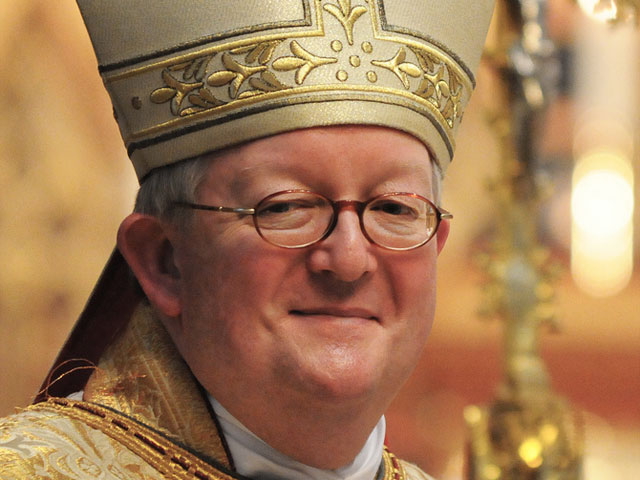
Are Catholics about to loosen Communion rules?

Members mourn Atlanta church; why don’t they talk?
TRENDING AT PATHEOS Religion News

Catholic Integralists believe that religious values – specifically Christian ones – should...

Electing A Virtuous President Would Make Immunity Irrelevant
Presidential immunity can bring with it many risks. So how can we...

Why The Olympic Games Are A ‘Civil Religious’...
Sporting events form a vital space where Americans display their 'civil religious...

After more than a decade of news, research updates, and insights on...

Q: Why do Southern Baptists and like-minded Protestants...
THE RELIGION GUY’S ANSWER: Why? Simple. Because they believe that’s what the...

THE QUESTION: Is gambling evil? THE RELIGION GUY’S ANSWER: Analysts anticipate a...
view all Religion News blogs
Ad-Free & Subscriber Log-In Subscription Support
- About Us
- 2026 Calendar
- Videos
- Podcasts
- Library of World Religions
- Faith In Media Tracker
- Advertise With Us
- Write for Us
- Privacy Policy
- Terms of Service
- Do Not Sell My Data
- Contact Us
- Radiant Digital
- Manage Newsletter Subscriptions
- Unsubscribe From Notifications
- Sitemap
Copyright 2008-2026, Patheos, part of the Radiant Digital network of media brands. All rights reserved.
Subscription Support Ad-Free & Subscriber Log-In
Follow Patheos