
BuddhistCatholicContemplativeEvangelicalGeneral ChristianHinduJewishLatter-day SaintMuslimNew VisionsProgressive Christian
Beliefs
- Buddhist
- Catholic
- Contemplative
- Evangelical
- General Christian
- Hindu
- Jewish
- Latter-day Saint
- More Voices
- Muslim
- New Visions
- Pagan
- Progressive Christian
Topics
- Religion News
- Food and Religion
- Sports and Religion
- Religious Art
- Religious Music and Entertainment
- Religious Events
- History and Religion
- Style and Religion
- Politics and Religion
- Women in Religion
- Recreation Outdoors and Religion
- Business Finance and Religion
- Careers Workplace and Religion
- Education and Religion
- Family Parenting and Religion
- Health Fitness and Religion
- Home and Religion
- Relationships and Religion
- Technology and Religion
- Travel and Religion
Columnists
- Buddhist Columnists
- Business Finance and Religion Columnists
- Careers Workplace and Religion Columnists
- Catholic Columnists
- Contemplative Columnists
- Education and Religion Columnists
- Evangelists Columnists
- Family Parenting and Religion Columnists
- General Christian Columnists
- Health Fitness and Religion Columnists
- Hindu Columnists
- History and Religion Columnists
- Home and Religion Columnists
- Jewish Columnists
- More Voices Columnists
- Latter Day Columnists
- Muslim Columnists
- New Visions Columnists
- Nonreligious Columnists
- Pagan Columnists
- Politics and Religion Columnists
- Progressive Columnists
- Recreation Outdoors and Religion Columnists
- Relationships and Religion Columnists
- Religion News Columnists
- Religious Art Columnists
- Religious Events Columnists
- Religious Music and Entertainment Columnists
- Sports and Religion Columnists
- Style and Religion Columnists
- Technology and Religion Columnists
- Travel and Religion Columnists
- Women in Religion Columnists
Resource Library
- 2026 Calendar
- Library of World Religions
- The 100 Most Holy Places on Earth
- Patheos Answers
- Podcasts
- Videos
- Faith Leaders Database
- Anglican Episcopalian
- Bahai
- Baptist
- Buddhism
- Christianity
- Confucianism
- Eastern Orthodoxy
- Hinduism
- Holiness and Pentecostal
- ISKCON
- Islam
- Judaism
- Lutheran
- Methodist
- The Church of Jesus Christ of Latter-day Saints
- New Age
- Paganism
- Presbytarian and Reformed
- Protestantism
- Religion Behind the Scenes
- Roman Catholic
- Scientology
- Shia Islam
- Sikhism
- Sufism
- Sunni Islam
- Taoism
- Zen
- See all religions
Research Tools
 Ad-Free & Subscriber Log-In Subscription Support
Follow Patheos 

- Trending:
- Advent
- |
- Forgiveness
- |
- Thanksgiving
- |
- Election
- |
- Seasonal Holidays
- |
- Marriage
 GetReligion
- Home
- Religion News
- WSJ gets the tone right on Holocaust survivor story
WSJ gets the tone right on Holocaust survivor story
Last updated on: December 6, 2013 at 3:23 pm by Mark Kellner
WSJ gets the tone right on Holocaust survivor story 2013-12-06T15:23:38-05:00 Mark Kellner
Patheos Explore the world's faith through different perspectives on religion and spirituality! Patheos has the views of the prevalent religions and spiritualities of the world.
There’s so much bad reporting about religion and religion-related stories these days — the continual surprise evidenced by The New York Times that the leaders of Roman Catholic institutions may choose to act, well, in a Catholic manner, for example — that it’s not a bad thing, I believe to highlight instances where a given reporter (and publication) get it right.
Such a refreshing, if deeply sobering, example comes from reporter Naftali Bendavid of The Wall Street Journal. A Congressional correspondent for the paper, he ventured somewhat far afield to extensively report on “A Race to Preserve the Voices of Holocaust’s Last Survivors.” The opening sets the tone, of course:
JEMEPPE-SUR-SAMBRE, Belgium — Simon Gronowski, an 82-year-old Holocaust survivor, mesmerized schoolchildren in this small town recently with a detailed account of jumping off a train to Auschwitz and hiding from the Nazis for three years.
The students lobbed close to 50 questions at him, ranging from the unsophisticated — “Did you meet Hitler?” — to the sensitive, like his feelings about losing the mother and sister who stayed on the train.
But the talk exhausted Mr. Gronowski. His knees bother him, he doesn’t hear that well, and it isn’t clear how much longer he can deliver such talks, though he has no plans to stop. “My children and my grandchildren will talk about it,” he said. “I can’t do any more than I’m doing.”
Although there are believed to be 160,000 survivors of the Shoah, or “destruction,” as Jews often refer to the Holocaust, still alive, their numbers are dwindling. As each one passes, a voice, a recollection and even the physical evidence of having survived — the numbered tattoo on a forearm — is lost:
A survivor who was 20 when Auschwitz was liberated would be 88 today, and already few are left who were adults during the war. “Nothing has as much impact as seeing the person in real life,” said Regina Sluszny, 74, who was hidden from the Nazis as a child. “But we have no choice. We can’t live forever.”
The need for living witness, ironically, grows as generations are more and more removed from the actual events of World War II.
I was born during Eisenhower’s second presidential term, and as a child and teen there were plenty of documentaries, interviews, films and mini-series focusing on the National Socialists and their reign of terror. Now, such documentaries are fewer and farther between, it seems, even if some notable ones are still appearing.
Examined in closer detail, the numbers are even more dire:
Figures for camps that focused on forced labor rather than killing are more complex, because more inmates survived and moved among camps. Bergen-Belsen, in Germany, had roughly 50,000 inmates at liberation, though about 10,000 died within weeks. Today, the Bergen-Belsen Memorial and Museum knows of about 2,000 survivors.
The world’s Holocaust memorials are scrambling to react. The U.S. Holocaust Memorial Museum and Israel’s Yad Vashem are accelerating their collection of personal artifacts like dolls and diaries. Almost all Holocaust museums now feature eyewitness recordings. The Shoah Foundation, founded by Steven Spielberg, is developing holograms of survivors that can interact with visitors.
But these are responses, not replacements. After the war, Holocaust survivors were initially slow to speak, partly because a world focused on healing didn’t seem that interested. But a desire to scrutinize the Holocaust has grown sharply over the decades, and a few years ago survivors began telling their stories, driven by a need to rebut Holocaust deniers and a recognition that they wouldn’t be around forever.
There are, of course, difficulties when trying to summarize as complex an issue as the preservation of the stories of the Holocaust, and the Journal rightly examines a key issue facing today’s museums dedicated to the subject:
The questions raised by the survivors’ aging go deeper than educational techniques. With their fading, the Holocaust is transforming from memory to history, and it is now being fitted into its long-term place in the Western narrative.
The question is where that place is. Some museums are trying to keep the Holocaust relevant, as survivors age, by putting it in the context of more recent atrocities. Belgium recently opened a “Museum on the Holocaust and Human Rights,” and it seeks to tie the tragedy to recognizable daily problems.
A film near the entrance shows episodes of playground bullying and workplace harassment, then moves to apartheid and lynching before arriving at the Nazis. On another floor, a wall features a photo of a delirious crowd at a music festival, to illustrate mob behavior.
The museum focuses primarily on the Holocaust, and its displays are affecting, but some Belgian Jews are unhappy with its broad lens—”There is not enough feeling from the Jewish deportation,” said survivor Denis Baumerder. It is an expression of a broader dispute between those who see the Holocaust as unique, almost outside history, and those who want to place it firmly in the flow of historical events.
This is a sensitively written story, exquisitely told, and which should be of concern to all who value human rights, religious freedom and the accurate telling of history.
Previous Post

December 6, 2013
The Methodist roots of Nelson Mandela
Next Post
December 6, 2013 Mandela the sinner? Mandela the prophet? Yes, cover both
Browse Our Archives
Select a Category 5Q+1 Academia Anglicanism Announcements Atheists & Agnostics Baptists Books Business & Economy Catholicism Creeping Fundamentalism Education Ethics Evangelicals Film First Person gays Godbeat Got news? Humor Interviews Islam Journalism Judaism Lutherans Mainline Marriage & family Middle East Mormons Music Nones Orthodoxy Pagans Pentecostalism People Podcasts Politics Pop Culture Race Radio & TV Religion religious liberty Same-sex marriage Science Sex Social Issues Sports Uncategorized Vatican Web/Tech What is this? World World Religions Worship
Select a Month August 2014 July 2014 June 2014 May 2014 April 2014 March 2014 February 2014 January 2014 December 2013 November 2013 October 2013 September 2013 August 2013 July 2013 June 2013 May 2013 April 2013 March 2013 February 2013 January 2013 December 2012 November 2012 October 2012 September 2012 August 2012 May 2010 July 2009 February 2009 October 2008 July 2008 January 2007 August 2006 July 2006 October 2005
Follow Us!
TAKE THE
Religious Wisdom Quiz
Which Psalm opens and closes with "Bless the Lord, O my soul"?
Select your answer to see how you score.
Psalm 22 Psalm 1 Psalm 37 Psalm 103
Related posts from GetReligion

Same as it ever was: It's time for...

Wait? Who is calling who an 'evangelical' or...

Can a laundromat replace the traditional church?
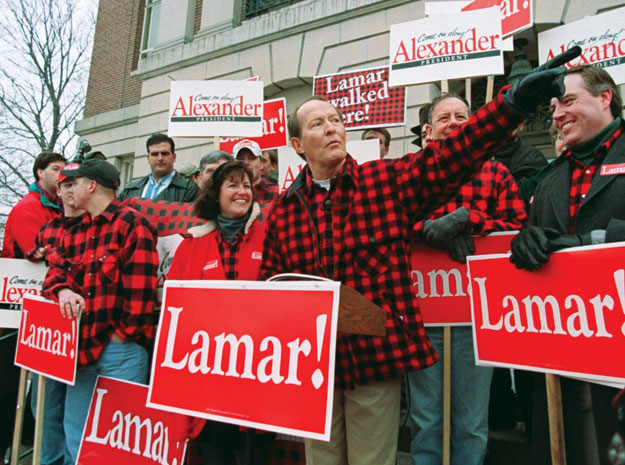
God, Tennessee, culture and that (ironic) red-flannel shirt
TRENDING AT PATHEOS Religion News

Catholic Integralists believe that religious values – specifically Christian ones – should...

Electing A Virtuous President Would Make Immunity Irrelevant
Presidential immunity can bring with it many risks. So how can we...

Why The Olympic Games Are A ‘Civil Religious’...
Sporting events form a vital space where Americans display their 'civil religious...

After more than a decade of news, research updates, and insights on...

Q: Why do Southern Baptists and like-minded Protestants...
THE RELIGION GUY’S ANSWER: Why? Simple. Because they believe that’s what the...

THE QUESTION: Is gambling evil? THE RELIGION GUY’S ANSWER: Analysts anticipate a...
view all Religion News blogs
Ad-Free & Subscriber Log-In Subscription Support
- About Us
- 2026 Calendar
- Videos
- Podcasts
- Library of World Religions
- Faith In Media Tracker
- Advertise With Us
- Write for Us
- Privacy Policy
- Terms of Service
- Do Not Sell My Data
- Contact Us
- Radiant Digital
- Manage Newsletter Subscriptions
- Unsubscribe From Notifications
- Sitemap
Copyright 2008-2026, Patheos, part of the Radiant Digital network of media brands. All rights reserved.
Subscription Support Ad-Free & Subscriber Log-In
Follow Patheos