
BuddhistCatholicContemplativeEvangelicalGeneral ChristianHinduJewishLatter-day SaintMuslimNew VisionsProgressive Christian
Beliefs
- Buddhist
- Catholic
- Contemplative
- Evangelical
- General Christian
- Hindu
- Jewish
- Latter-day Saint
- More Voices
- Muslim
- New Visions
- Pagan
- Progressive Christian
Topics
- Religion News
- Food and Religion
- Sports and Religion
- Religious Art
- Religious Music and Entertainment
- Religious Events
- History and Religion
- Style and Religion
- Politics and Religion
- Women in Religion
- Recreation Outdoors and Religion
- Business Finance and Religion
- Careers Workplace and Religion
- Education and Religion
- Family Parenting and Religion
- Health Fitness and Religion
- Home and Religion
- Relationships and Religion
- Technology and Religion
- Travel and Religion
Columnists
- Buddhist Columnists
- Business Finance and Religion Columnists
- Careers Workplace and Religion Columnists
- Catholic Columnists
- Contemplative Columnists
- Education and Religion Columnists
- Evangelists Columnists
- Family Parenting and Religion Columnists
- General Christian Columnists
- Health Fitness and Religion Columnists
- Hindu Columnists
- History and Religion Columnists
- Home and Religion Columnists
- Jewish Columnists
- More Voices Columnists
- Latter Day Columnists
- Muslim Columnists
- New Visions Columnists
- Nonreligious Columnists
- Pagan Columnists
- Politics and Religion Columnists
- Progressive Columnists
- Recreation Outdoors and Religion Columnists
- Relationships and Religion Columnists
- Religion News Columnists
- Religious Art Columnists
- Religious Events Columnists
- Religious Music and Entertainment Columnists
- Sports and Religion Columnists
- Style and Religion Columnists
- Technology and Religion Columnists
- Travel and Religion Columnists
- Women in Religion Columnists
Resource Library
- 2026 Calendar
- Library of World Religions
- The 100 Most Holy Places on Earth
- Patheos Answers
- Podcasts
- Videos
- Faith Leaders Database
- Anglican Episcopalian
- Bahai
- Baptist
- Buddhism
- Christianity
- Confucianism
- Eastern Orthodoxy
- Hinduism
- Holiness and Pentecostal
- ISKCON
- Islam
- Judaism
- Lutheran
- Methodist
- The Church of Jesus Christ of Latter-day Saints
- New Age
- Paganism
- Presbytarian and Reformed
- Protestantism
- Religion Behind the Scenes
- Roman Catholic
- Scientology
- Shia Islam
- Sikhism
- Sufism
- Sunni Islam
- Taoism
- Zen
- See all religions
Research Tools
 Ad-Free & Subscriber Log-In Subscription Support
Follow Patheos 

- Trending:
- Advent
- |
- Forgiveness
- |
- Thanksgiving
- |
- Election
- |
- Seasonal Holidays
- |
- Marriage
 GetReligion
- Home
- Religion News
- What The Economist Gets Wrong About Calvinist Baptists
What The Economist Gets Wrong About Calvinist Baptists
Last updated on: July 10, 2013 at 5:46 pm by Joe Carter
What The Economist Gets Wrong About Calvinist Baptists 2013-07-10T17:46:47-04:00 Joe Carter
Patheos Explore the world's faith through different perspectives on religion and spirituality! Patheos has the views of the prevalent religions and spiritualities of the world.
Image source: Christian Post
Today is the 504th anniversary of the birth of John Calvin (July 10, 1509) — and the 497th anniversary of misunderstanding Calvinists.
To commemorate the event, let’s look at a recent notable example provided by The Economist. The article is out-datedly titled, “Dippers divided” and the subhead is “Where evangelicals disagree.” Where evangelicals disagree, apparently, is on whether to maintain,
the “theocon” alliance in American politics between Catholics and evangelicals, who have set aside their doctrinal differences (over the Virgin Mary, for example) to take a joint stand against abortion and in favour of the traditional family.
What could be causing the rift between Catholics and evangelicals. According to The Economist, the alleged culprit is Calvinists in the Southern Baptist denomination.
. . . the effectiveness of the Catholic-evangelical axis may be compromised by a deepening ideological fissure within the evangelical camp; or more specifically within America’s largest Protestant denomination, the Southern Baptist Convention, which has about 16m members.
Broadly speaking, the difference is over whether Jesus Christ died to save mankind as a whole, or sacrificed himself only for a particular group of human beings, the elect, whom God had chosen in advance. The latter view is associated with John Calvin, the French reformer of the 16th century; critics find it too fatalistic, and inconsistent with the idea of a loving God. Taken to its logical extreme, some say, Calvinism can lead to an introverted, exclusive mindset: if most of humanity is irrevocably damned, what’s the point of engaging with the world?
Who is this “some” who “say?” Probably the same “some” who claim that premillennial dispensationalists (who are rarely, if ever, Calvinists) also believe that if most of humanity is irrevocably damned (see: the Left Behind novels), there is no point of engaging with the world. Of course, these same groups — Calvinists and dispensationalists — are frequently portrayed as also wanting to create a theocracy in America, so who knows what to believe. The “some” have a tendency to “say” contradictory things.
The Economist adds,
The perceived leader of the Calvinist camp is Albert Mohler, president of Southern Baptist Theological Seminary in Louisville, Kentucky. He has helped to ensure that many of the young Baptist ministers now starting their careers have a Calvinist way of thinking. In many cases they are out of their step with their flock, and that can lead to stormy pastoral situations.
Change the opening “The” to an “A” and that paragraph is mostly right — predicated on the “Calvinist way of thinking” being actual way Calvinists think and not the caricature presented earlier. A few more paragraphs detail some of the controversy over Calvinism in the Southern Baptist Convention. The reporting on the controversy is rather uncontroversial, until they slip in the F-word:
Neither party will have the slightest truck with liberal ideas. But even among fundamentalists, there can be hard arguments over what the fundamentals are.
So now the opposite of theologicaly liberal is “fundamentalist” rather than, say, theologically conservative? Ugh. You already know what we at GetReligion think of that term so I’ll let that slide without further comment. Now back to the Calvinism:
Will the outcome of this argument make a difference to anybody outside the world of Baptist theology? Yes, because as well as being hard-line over salvation, the Calvinists oppose any blurring of the boundaries between Christian denominations. So there are limits to their willingness to co-operate with higher-church Christians. “The Calvinists have a very anti-Catholic theological stand,” I was told by David Key, director of Baptist studies at Emory University’s Candler School of Theology.
Mr Mohler, for example, responded to the general excitement over the election of Pope Francis by recalling that evangelicals utterly rejected the Catholic idea that the pope was Christ’s vicar on earth. In another statement, he said that Catholics and evangelicals might still agree on sexual and reproductive issues, but he also stressed that evangelicals could not accept the validity of the pope’s office.
Let’s examine some of the many confusions in those two short paragraphs. First, Calvinists do not oppose “any blurring of the boundaries between Christian denominations” because Calvinism is not a denomination. Calvinism is a theological system that crosses numerous denominational boundaries; you can be a Calvinist and be a member of a “low-church” denomination (e.g., Southern Baptist) or you can be a Calvinist and a “higher-church Christian” (e.g., Anglicans). Second, the limits to Calvinists willingness to co-operate with Catholics is almost purely on a theological level. But this is a trait shared by all Protestants. That’s why we’re called Protestants.
The Economist assumes that disagreements about theological matters (e.g., the validity of the pope’s office) will cause conservative Calvinist evangelicals to refuse to work with conservative Catholics on social and political issues. Obviously, they are unaware that this is the exact opposite of what most Calvinist evangelicals believe.
Within evangelicalism, the use of the term ‘co-belligerence’ was popularized by the Calvinist intellectual Francis Schaeffer. Schaeffer, whose influence on evangelical politics is incalculable, emphasized the importance of activism that leads neither to compromise nor separatism because of theological differences. As Schaeffer once wrote, “A co-belligerent is a person with whom I do not agree on all sorts of vital issues, but who, for whatever reasons of their own, is on the same side in a fight for some specific issue of public justice.”
Indeed, this view is not only shared by many evangelicals, it is the exact same position taken by Dr. Mohler. Here is Mohler’s own words:
. . . with the cultural challenges now before us, Evangelicals, Roman Catholics, and the Orthodox should stand without embarrassment as co-belligerents in the culture war. The last persons on earth to have an honest disagreement may also be the last on earth to recognize transcendent truth and moral principles—even the sanctity of human life itself.
This quote is from an essay Mohler published in the the ecumenical(!) journal Touchstone titled “Standing Together, Standing Apart: Cultural Co-belligerence Without Theological Compromise.” The date: July 2003.
Francis Schaeffer, the godfather of the Religious Right, wrote about co-belligerence 33 years. Albert Mohler, the “perceived leader of the Calvinist camp”, wrote about co-belligerence 10 years ago. For Calvinists, the concept of working together with Catholics goes back more than 400 years (Calvin himself worked with the French Catholic Inquisition on the Michael Servetus heresy trial). In other words, Calvinism is likely to have the exact opposite effect that The Economist seems to think it will have.
This is an embarrassing unforced error by one of the world’s most esteemed newspapers.* But other journalists can learn from their mistake and can avoid such shame-inducing gaffes by using a technique that has worked for four centuries: When you want to know what Calvinists think, ask them.
*For historical reasons The Economist refers to itself as a newspaper. Since Carter’s Rule of Religious Labels states that “Use a religious label a person would use to describe themselves and avoid using ones they would not,” I figure a similar principles should apply to publications.
Previous Post

July 10, 2013
In Kentucky, 'Shiite Baptists' and the crazy old uncle
Next Post
July 11, 2013 Strangely faith-free story about ministry to feed the poor
Browse Our Archives
Select a Category 5Q+1 Academia Anglicanism Announcements Atheists & Agnostics Baptists Books Business & Economy Catholicism Creeping Fundamentalism Education Ethics Evangelicals Film First Person gays Godbeat Got news? Humor Interviews Islam Journalism Judaism Lutherans Mainline Marriage & family Middle East Mormons Music Nones Orthodoxy Pagans Pentecostalism People Podcasts Politics Pop Culture Race Radio & TV Religion religious liberty Same-sex marriage Science Sex Social Issues Sports Uncategorized Vatican Web/Tech What is this? World World Religions Worship
Select a Month August 2014 July 2014 June 2014 May 2014 April 2014 March 2014 February 2014 January 2014 December 2013 November 2013 October 2013 September 2013 August 2013 July 2013 June 2013 May 2013 April 2013 March 2013 February 2013 January 2013 December 2012 November 2012 October 2012 September 2012 August 2012 May 2010 July 2009 February 2009 October 2008 July 2008 January 2007 August 2006 July 2006 October 2005
Follow Us!
TAKE THE
Religious Wisdom Quiz
What does the Shield of Faith protect believers from?
Select your answer to see how you score.
Physical attacks The need for armor The fiery darts of the enemy Earthly wealth
Related posts from GetReligion

Same as it ever was: It's time for...

Wait? Who is calling who an 'evangelical' or...

Can a laundromat replace the traditional church?
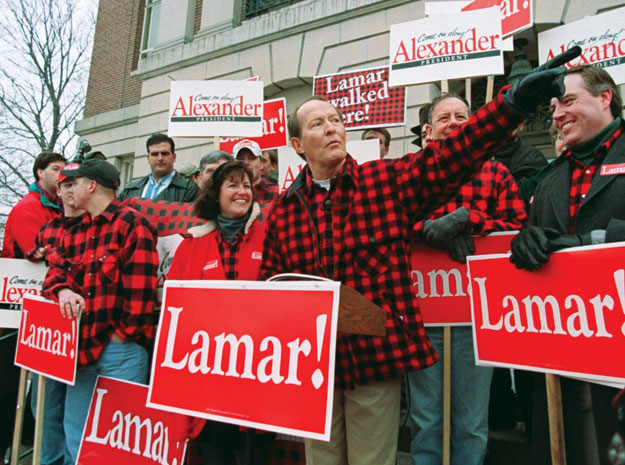
God, Tennessee, culture and that (ironic) red-flannel shirt
TRENDING AT PATHEOS Religion News

Catholic Integralists believe that religious values – specifically Christian ones – should...

Electing A Virtuous President Would Make Immunity Irrelevant
Presidential immunity can bring with it many risks. So how can we...

Why The Olympic Games Are A ‘Civil Religious’...
Sporting events form a vital space where Americans display their 'civil religious...

After more than a decade of news, research updates, and insights on...

Q: Why do Southern Baptists and like-minded Protestants...
THE RELIGION GUY’S ANSWER: Why? Simple. Because they believe that’s what the...

THE QUESTION: Is gambling evil? THE RELIGION GUY’S ANSWER: Analysts anticipate a...
view all Religion News blogs
Ad-Free & Subscriber Log-In Subscription Support
- About Us
- 2026 Calendar
- Videos
- Podcasts
- Library of World Religions
- Faith In Media Tracker
- Advertise With Us
- Write for Us
- Privacy Policy
- Terms of Service
- Do Not Sell My Data
- Contact Us
- Radiant Digital
- Manage Newsletter Subscriptions
- Unsubscribe From Notifications
- Sitemap
Copyright 2008-2026, Patheos, part of the Radiant Digital network of media brands. All rights reserved.
Subscription Support Ad-Free & Subscriber Log-In
Follow Patheos