
BuddhistCatholicContemplativeEvangelicalGeneral ChristianHinduJewishLatter-day SaintMuslimNew VisionsProgressive Christian
Beliefs
- Buddhist
- Catholic
- Contemplative
- Evangelical
- General Christian
- Hindu
- Jewish
- Latter-day Saint
- More Voices
- Muslim
- New Visions
- Pagan
- Progressive Christian
Topics
- Religion News
- Food and Religion
- Sports and Religion
- Religious Art
- Religious Music and Entertainment
- Religious Events
- History and Religion
- Style and Religion
- Politics and Religion
- Women in Religion
- Recreation Outdoors and Religion
- Business Finance and Religion
- Careers Workplace and Religion
- Education and Religion
- Family Parenting and Religion
- Health Fitness and Religion
- Home and Religion
- Relationships and Religion
- Technology and Religion
- Travel and Religion
Columnists
- Buddhist Columnists
- Business Finance and Religion Columnists
- Careers Workplace and Religion Columnists
- Catholic Columnists
- Contemplative Columnists
- Education and Religion Columnists
- Evangelists Columnists
- Family Parenting and Religion Columnists
- General Christian Columnists
- Health Fitness and Religion Columnists
- Hindu Columnists
- History and Religion Columnists
- Home and Religion Columnists
- Jewish Columnists
- More Voices Columnists
- Latter Day Columnists
- Muslim Columnists
- New Visions Columnists
- Nonreligious Columnists
- Pagan Columnists
- Politics and Religion Columnists
- Progressive Columnists
- Recreation Outdoors and Religion Columnists
- Relationships and Religion Columnists
- Religion News Columnists
- Religious Art Columnists
- Religious Events Columnists
- Religious Music and Entertainment Columnists
- Sports and Religion Columnists
- Style and Religion Columnists
- Technology and Religion Columnists
- Travel and Religion Columnists
- Women in Religion Columnists
Resource Library
- 2026 Calendar
- Library of World Religions
- The 100 Most Holy Places on Earth
- Patheos Answers
- Podcasts
- Videos
- Faith Leaders Database
- Anglican Episcopalian
- Bahai
- Baptist
- Buddhism
- Christianity
- Confucianism
- Eastern Orthodoxy
- Hinduism
- Holiness and Pentecostal
- ISKCON
- Islam
- Judaism
- Lutheran
- Methodist
- The Church of Jesus Christ of Latter-day Saints
- New Age
- Paganism
- Presbytarian and Reformed
- Protestantism
- Religion Behind the Scenes
- Roman Catholic
- Scientology
- Shia Islam
- Sikhism
- Sufism
- Sunni Islam
- Taoism
- Zen
- See all religions
Research Tools
 Ad-Free & Subscriber Log-In Subscription Support
Ad-Free & Subscriber Log-In Subscription Support
Follow Patheos 

- Trending:
- Forgiveness
- |
- Marriage
- |
- Consciousness
- |
- Death Penalty
- |
- Election
- |
- Halloween
 GetReligion
- Home
- Religion News
- Unforced Episcopal errors from the Wall Street Journal
Unforced Episcopal errors from the Wall Street Journal
Last updated on: April 15, 2013 at 8:41 pm by geoconger
Unforced Episcopal errors from the Wall Street Journal 2013-04-15T20:41:24-04:00 geoconger
Patheos Explore the world's faith through different perspectives on religion and spirituality! Patheos has the views of the prevalent religions and spiritualities of the world.
Even the best newspapers will drop a brick now and again. And today’s piece in the Wall Street Journal about the Episcopal wars in South Carolina is a real stinker.
I’ve been reading the Journal since the early 1980s when I went to New York to work as a floor clerk at the Commodities Exchange for Drexel Burnham Lambert. In those far off misty days of my misspent youth (the lark’s on the wing, the snail’s on the thorn, Reagan’s in the White House, God’s in His heaven, all was right with the world) I would start at the back of the paper every morning and work forward after I had finished with the futures prices.
As my life and interests took a different path (no more filthy lucre for me) I began to enjoy the paper’s forays into religion, art, literature and other highbrow genres. The Wall Street Journal has consistently done a fine job in covering these topics bringing a depth of knowledge and balance to its reporting — and is one of the best written, best edited English language newspapers in the business.
Hence my disappointment with today’s article entitled “Church Fight Heads to Court: South Carolina Episcopalian Factions Each File Suit After Split Over Social Issues”. The story gets just about everything of importance wrong. The lede misrepresents the underlying issue. It begins:
Episcopalians along the South Carolina coast are battling in court to determine which of two factions owns an estimated $500 million in church buildings, grounds and cemeteries, following an acrimonious split last year over social issues.
The leadership and about two-thirds of the members of the Diocese of South Carolina, based in Charleston, broke away from the national Episcopal Church last November over its blessing of same-sex unions, ordination of gay clergy and its liberal approach to other social and theological issues.
No, that is not what happened. In South Carolina the diocesan convention voted to withdraw from the General Convention of the Episcopal Church after the Presiding Bishop of the Episcopal Church suspended the Bishop of South Carolina with the intent to depose him (remove him from the ministry). Yes, South Carolina has opposed the innovations of doctrine and discipline introduced over the past two generations — and I guess you could say, taking the long view, that social issues were subsidiary issues — but last year’s split was in response to specific actions taken by the leadership of the national church.
Farther down the article some of the details about the South Carolina fight are presented and the story gets the facts back on track.
In South Carolina, bad blood between the diocese and the national church has been building for about 15 years. It reached a breaking point last summer, when the bishop and other leaders of the diocese walked out of the triennial General Convention in Indianapolis, following the national church’s approval of policies on blessing same-sex unions. The walkout triggered a series of events, including the national church’s removal of the Rt. Rev. Lawrence as bishop, and subsequent lawsuits.
(A hint that the writer is not au courant with religion reporting is the “Rt. Rev. Lawrence” — proper style is to use the first name after the Rt Rev and then Bishop or Dr if you want an honorific before the last name.)
The story also collapses the time line of the Episcopal wars and is written as if the South Carolina lawsuit is new news when the latest lawsuit was filed about six weeks ago.
The schism in South Carolina is one of many that have erupted over the past decade between local Episcopal parishes and dioceses and their national church—particularly since the election of a gay bishop in 2003. Thousands of conservative members left their churches over such issues around the middle of last decade, a time some Southern churchgoers call “the Great Unpleasantness,” the same euphemism once used for the Civil War. Other mainline Protestant denominations also have struggled with issues related to homosexuality, with many congregations moving to leave the Presbyterian Church USA after its leadership voted to allow openly gay clergy.
The split between liberal and conservative Episcopalians has been around for almost 40 years and has witnessed dozens of lawsuits between congregations and diocese. Beginning in 2006 the national church headquarters entered the fray spending upwards of $24 million (this in addition to the fees paid out by the dioceses and parishes). Nor did the fight begin in 2003 — GetReligion‘s tmatt has written extensively on this point and I need not restate the accurate Anglican timeline here.
The reporting on the lawsuits — the purpose of the article — is dodgy as well. The article reports the diocese filed a lawsuit in December in state court, with the explanation “The group says it shouldn’t have to turn property over to a church that it believes has drifted from Biblical principles.” Well that was one of the issues — but the bulk of the pleadings and the central issue before the state court was who was the true Episcopal Diocese of South Carolina?
This is followed in the article by the response of the national church affiliated faction:
A group representing the one-third of diocesan congregants still aligned with the national Episcopal Church have joined it in filing suit in federal court, arguing the property must remain with the national church. The national church, which says it is the one upholding Biblical teachings by wrestling with difficult questions as a community, believes the suit should be heard in federal court because it argues the dispute involves the First Amendment; a hearing is expected later this spring on whether the matter will go to federal or state court.
No. This is not true either. On 31 January lawyers representing the national church faction agreed to the entry of a preliminary injunction against their client (called a temporary injunction in South Carolina) promising not to use the name, marks and insignia of the Episcopal Diocese of South Carolina pending the outcome of the state court proceedings.
On 6 March the national church faction brought a complaint based on the federal trademark law known as the Lanham Act (15 U.S.C. Sections 1051 et seq.) against Bishop Lawrence claiming it, not Bishop Lawrence and his faction were the true diocese. It asked the federal court to block the January state court order in favor of Bishop Lawrence and his group. Bishop Lawrence, they argued, was infringing on their trademarks. And last week, back in state court, the attorneys for the national church filed their answer to the original lawsuit.
Religious freedom and the First Amendment are all well and good, but it would have behooved the Journal to read the pleadings rather than the press hand outs.
The choice of legal commentary is one-sided — and also manages to pawn off further frauds onto the reader while managing to omit one of the crucial elements in the story.
How the fight will be resolved is difficult to tell. The national church has prevailed in 12 similar disputes in state supreme or appellate courts since 1980, said Martin Nussbaum, a Colorado specialist in church property law who isn’t involved in the South Carolina matter.
Some religious scholars say such schisms are hurting the church’s image and distracting attention that could be devoted to reversing a decline in church membership. “Once we’re through the issue of property and gay people, the real issue is how can this church change its way of being?” said Frank Kirkpatrick, the author of “The Episcopal Church in Crisis: How Sex, the Bible, and Authority are Dividing the Faithful.”
This is untrue also. While a number of lawsuits between dioceses and parishes have gone to state supreme courts, with the diocese prevailing in many of them, in South Carolina the state supreme court ruled the other way and held the church’s national property rules, called the Dennis Canon, were of no legal effect in South Carolina. In other words, if a parish has clear title to its property in South Carolina, it can take it with it if it leaves its diocese or denomination. Omitting this crucial legal precedent in the story was most unfortunate.
It should also be added that the appellate courts have not adjudicated the issue of whether a diocese may withdraw from the national church. Attorneys for the national church have argued the legal precedents from outside South Carolina governing the relationship of the parish to the diocese should govern the relationship of the diocese to the national church. The diocese’s lawyers in South Carolina have argued this relationship is not comparable.
One might also add, contrary to the assertion in the article about declining membership, that until these lawsuits erupted the Episcopal Diocese of South Carolina was one of the few Episcopal diocese to see a growth in membership over the past decade.
So far I’ve pointed out mistakes of fact, significant omissions, and unbalanced commentary — let’s look at tone. The deafness of this article — its cluelessness — can be illustrated by this line;
The breakaway group, which still calls itself the Diocese of South Carolina, continues to operate from the diocesan headquarters and retains control of many of its most recognizable parishes, including St. Michael’s, in Charleston, established in the 1750s.
The breakaway group still calls itself the “Episcopal Diocese of South Carolina” — not merely the “Diocese of South Carolina”. The “Episcopal” name, and from it the control of assets, is the question before the courts.
Not a good outing I’m afraid from the Journal.
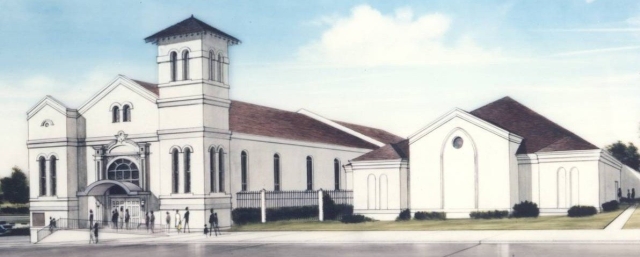
Update: I neglected to mention a further flaw. The photo of the church used with the article is captioned as St Michael’s Church in Charleston — the photo is actually of St Helena’s in Beaufort. Hardly a fatal flaw, but I suppose it does help to pack all your errors into one story.
Episcopal Diocese of South Carolina
Previous Post

April 15, 2013
WPost demonstrates how not to respond to Gosnell critiques, again
Next Post
April 16, 2013 Let us attend: Waiting for a religion shoe to drop in Boston
Browse Our Archives
Select a Category 5Q+1 Academia Anglicanism Announcements Atheists & Agnostics Baptists Books Business & Economy Catholicism Creeping Fundamentalism Education Ethics Evangelicals Film First Person gays Godbeat Got news? Humor Interviews Islam Journalism Judaism Lutherans Mainline Marriage & family Middle East Mormons Music Nones Orthodoxy Pagans Pentecostalism People Podcasts Politics Pop Culture Race Radio & TV Religion religious liberty Same-sex marriage Science Sex Social Issues Sports Uncategorized Vatican Web/Tech What is this? World World Religions Worship
Select a Month August 2014 July 2014 June 2014 May 2014 April 2014 March 2014 February 2014 January 2014 December 2013 November 2013 October 2013 September 2013 August 2013 July 2013 June 2013 May 2013 April 2013 March 2013 February 2013 January 2013 December 2012 November 2012 October 2012 September 2012 August 2012 May 2010 July 2009 February 2009 October 2008 July 2008 January 2007 August 2006 July 2006 October 2005
Follow Us!
TAKE THE
Religious Wisdom Quiz
According to 2 Peter, what are believers partakers of?
Select your answer to see how you score.
Christ's sufferings Eternal glory The divine nature God's kingdom
Related posts from GetReligion

Same as it ever was: It's time for...

Can a laundromat replace the traditional church?

Are Catholics about to loosen Communion rules?
Members mourn Atlanta church; why don’t they talk?
TRENDING AT PATHEOS Religion News

Catholic Integralists believe that religious values – specifically Christian ones – should...

Electing A Virtuous President Would Make Immunity Irrelevant
Presidential immunity can bring with it many risks. So how can we...

Why The Olympic Games Are A ‘Civil Religious’...
Sporting events form a vital space where Americans display their 'civil religious...

After more than a decade of news, research updates, and insights on...

Q: Why do Southern Baptists and like-minded Protestants...
THE RELIGION GUY’S ANSWER: Why? Simple. Because they believe that’s what the...

THE QUESTION: Is gambling evil? THE RELIGION GUY’S ANSWER: Analysts anticipate a...
view all Religion News blogs
Ad-Free & Subscriber Log-In Subscription Support
- About Us
- 2026 Calendar
- Videos
- Podcasts
- Library of World Religions
- Faith In Media Tracker
- Advertise With Us
- Write for Us
- Privacy Policy
- Terms of Service
- Do Not Sell My Data
- Contact Us
- Radiant Digital
- Manage Newsletter Subscriptions
- Unsubscribe From Notifications
- Sitemap
Copyright 2008-2026, Patheos. All rights reserved.
Subscription Support Ad-Free & Subscriber Log-In
Follow Patheos