
BuddhistCatholicContemplativeEvangelicalGeneral ChristianHinduJewishLatter-day SaintMuslimNew VisionsProgressive Christian
Beliefs
- Buddhist
- Catholic
- Contemplative
- Evangelical
- General Christian
- Hindu
- Jewish
- Latter-day Saint
- More Voices
- Muslim
- New Visions
- Pagan
- Progressive Christian
Topics
- Religion News
- Food and Religion
- Sports and Religion
- Religious Art
- Religious Music and Entertainment
- Religious Events
- History and Religion
- Style and Religion
- Politics and Religion
- Women in Religion
- Recreation Outdoors and Religion
- Business Finance and Religion
- Careers Workplace and Religion
- Education and Religion
- Family Parenting and Religion
- Health Fitness and Religion
- Home and Religion
- Relationships and Religion
- Technology and Religion
- Travel and Religion
Columnists
- Buddhist Columnists
- Business Finance and Religion Columnists
- Careers Workplace and Religion Columnists
- Catholic Columnists
- Contemplative Columnists
- Education and Religion Columnists
- Evangelists Columnists
- Family Parenting and Religion Columnists
- General Christian Columnists
- Health Fitness and Religion Columnists
- Hindu Columnists
- History and Religion Columnists
- Home and Religion Columnists
- Jewish Columnists
- More Voices Columnists
- Latter Day Columnists
- Muslim Columnists
- New Visions Columnists
- Nonreligious Columnists
- Pagan Columnists
- Politics and Religion Columnists
- Progressive Columnists
- Recreation Outdoors and Religion Columnists
- Relationships and Religion Columnists
- Religion News Columnists
- Religious Art Columnists
- Religious Events Columnists
- Religious Music and Entertainment Columnists
- Sports and Religion Columnists
- Style and Religion Columnists
- Technology and Religion Columnists
- Travel and Religion Columnists
- Women in Religion Columnists
Resource Library
- 2026 Calendar
- Library of World Religions
- The 100 Most Holy Places on Earth
- Patheos Answers
- Podcasts
- Videos
- Faith Leaders Database
- Anglican Episcopalian
- Bahai
- Baptist
- Buddhism
- Christianity
- Confucianism
- Eastern Orthodoxy
- Hinduism
- Holiness and Pentecostal
- ISKCON
- Islam
- Judaism
- Lutheran
- Methodist
- The Church of Jesus Christ of Latter-day Saints
- New Age
- Paganism
- Presbytarian and Reformed
- Protestantism
- Religion Behind the Scenes
- Roman Catholic
- Scientology
- Shia Islam
- Sikhism
- Sufism
- Sunni Islam
- Taoism
- Zen
- See all religions
Research Tools
 Ad-Free & Subscriber Log-In Subscription Support
Follow Patheos 

- Trending:
- Advent
- |
- Forgiveness
- |
- Thanksgiving
- |
- Election
- |
- Seasonal Holidays
- |
- Marriage
 GetReligion
- Home
- Religion News
- Covering Catholics who are more like ‘Catholics’
Covering Catholics who are more like ‘Catholics’
Last updated on: December 1, 2012 at 5:18 pm by tmatt
Covering Catholics who are more like ‘Catholics’ 2012-12-01T17:18:12-05:00 tmatt
Patheos Explore the world's faith through different perspectives on religion and spirituality! Patheos has the views of the prevalent religions and spiritualities of the world.
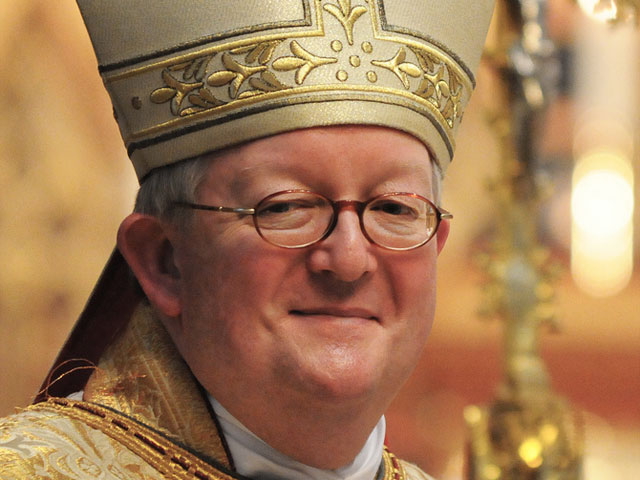
GetReligion readers may recall the case of young Lennon Cihak, who — at the very least — told the Rev. Gary LaMoine (in photo) that he disagreed with the Catholic Church’s teachings on sexual ethics and marriage. Thus, the priest — after long talks with the family — decided that the young man should not be confirmed as a grown-up, loyal Catholic believer.
Now, it seems that there has been another news development in that headline-grabbing case. This update is, frankly, not much of a surprise.
DETROIT LAKES, Minn. — A nontraditional Catholic organization has offered to confirm a Barnesville 17-year-old after he was denied confirmation because of his support for gay marriage.
“I did speak to the father of the young man and let them know the Evangelical Catholic Diocese of the Northwest would be happy to confirm the young man if he is interested in doing so,” said Bishop James Wilkowski, of Chicago.
The family of Lennon Cihak says the Rev. Gary LaMoine of Assumption Catholic Church in Barnesville wouldn’t confirm the boy after learning from a photo on Lennon’s Facebook page that he supports gay marriage. Lennon’s parents, Shana and Doug, who have lived in Barnesville their entire lives and have always been members of Assumption, say they have also been denied Holy Communion there since the dustup.
Actually, that is a very sketchy version of the basic facts, especially the statement that the priest’s decision was based on the Facebook photo alone, or even the photo and the teen’s statement opposing Catholic teachings on marriage.
But nevermind, that’s not what this post is about.
What, pray tell, is the Evangelical Catholic Church? Here is what the story offers:
Wilkowski describes the Evangelical Catholic Church as “separate but equal” to the traditional Roman Catholic Church. “We are a validly consecrated Catholic faith community,” he said. “We do have some pastoral differences between the Roman Church and ours.”
One difference is that priests can marry. Another is that women can become priests. The church also offers a quicker path to annulments after a divorce — a process that Wilkowski said can take up to 10 years in the traditional church, leaving members in limbo.
The Evangelical Catholic Church is also “non-discriminatory,” when it comes to the sexual orientation of its members. … The church was founded in 1997, he said.
So how many parishes does this church have? How many members, in this separate-but-equal — in comparison to Rome — jurisdiction? Frankly, it’s hard to tell, but it is clear that this is another tiny splinter on the very complex tree of the Old Catholic universe. This is the first I have ever heard of this body and I’ve been covering that alternative-Catholic world for decades. These tiny church bodies have a way of evolving and morphing.
So is this enough information about this small, alternative church, in a basic news story? Should journalists let a bishop of a church of this kind simply make these kinds of statements and that is that, with no response from Catholic leaders?
To be blunt: No way.
This story needed a few more factual sentences and some kind of on-the-record Catholic response.
So is it possible to accurately describe the Old Catholic world in a daily newspaper? A GetReligion reader sent us an example of a story that at least made the attempt. Patrick Krisak said: “I thought this was interesting and well done. I have a few more questions about the council, the other churches on it, and what the local Catholics think of the whole thing, but I was pleasantly surprised to find much more here than I expected.”
The news hook, in this story from the Catskills in New York, is that a local interfaith groups has been reluctant to admit one of these alternative Old Catholic parishes. Thus, readers learn:
Bishop Francisco Betancourt, a founding pastor of the independent Catholic Holy Innocents church in Halcottsville, said that his church has been trying to join the Margaretville Interfaith Council for 12 years, ever since the church was established. Throughout that time, Betancourt said, his efforts have been met with a resounding silence — a response that was never quite clear enough to be ‘no,’ but never a welcoming ‘yes.’
The reason his church has not been welcomed, Betancourt says, is Holy Innocents’ willingness to perform same-sex marriage, an issue that Interfaith Council leaders acknowledge is deeply controversial among their members.
Now, this is a rather long news story and, thus, there is room for more detail. Yes, the usual Brazilian bishops play a starring role. While I am sure that Catholics loyal to Rome will be able to pick holes in this historical narrative, it’s still nice to see a newsroom make the attempt to provide some background:
Holy Innocents is one of hundreds of independent Catholic churches around the world that trace their lineage of ordained priests in a direct line of succession back to the Roman Catholic hierarchy, but have severed their relationship with the Vatican. Some are more conservative than the Vatican itself; others are theologically liberal.
Holy Innocents is a member of the Catholic Apostolic Church In North America (CACINA), an offshoot of a Brazilian church founded in the 1940s by an excommunicated Roman Catholic bishop. Unlike the Roman Catholic church, CACINA practices the ordination of women and married people, admits same-sex couples to the sacrament of marriage, and allows divorced parishoners to remarry and receive the Eucharist.
Betancourt said that has been told by his parishoners that local Catholics have challenged the legitimacy of Holy Innocents as a church, and that he has confronted the priest of Margaretville’s Roman Catholic Sacred Heart parish, Father Paul Catena, about the issue.
Catena could not be reached for comment. Sacred Heart’s representative to the Interfaith Council, Dick Tucker, declined to speak with the Watershed Post.
Once again, a few crisp statistics about the Catholic Apostolic Church In North America — number of members, the number of parishes (there appear to be 10 parishes in all) — would help.
Still, this was a nice try. A bit of progress!
Previous Post

December 1, 2012
Pod people: Manhattan media melancholia
Next Post
December 2, 2012 Washington Post's ghostly top 50 list
Browse Our Archives
Select a Category 5Q+1 Academia Anglicanism Announcements Atheists & Agnostics Baptists Books Business & Economy Catholicism Creeping Fundamentalism Education Ethics Evangelicals Film First Person gays Godbeat Got news? Humor Interviews Islam Journalism Judaism Lutherans Mainline Marriage & family Middle East Mormons Music Nones Orthodoxy Pagans Pentecostalism People Podcasts Politics Pop Culture Race Radio & TV Religion religious liberty Same-sex marriage Science Sex Social Issues Sports Uncategorized Vatican Web/Tech What is this? World World Religions Worship
Select a Month August 2014 July 2014 June 2014 May 2014 April 2014 March 2014 February 2014 January 2014 December 2013 November 2013 October 2013 September 2013 August 2013 July 2013 June 2013 May 2013 April 2013 March 2013 February 2013 January 2013 December 2012 November 2012 October 2012 September 2012 August 2012 May 2010 July 2009 February 2009 October 2008 July 2008 January 2007 August 2006 July 2006 October 2005
Follow Us!
TAKE THE
Religious Wisdom Quiz
Why was crossing the Jordan River particularly difficult for the Israelites at that time?
Select your answer to see how you score.
The river was frozen It was at flood stage There were no bridges The river was filled with crocodiles
Related posts from GetReligion

Same as it ever was: It's time for...

Wait? Who is calling who an 'evangelical' or...
Are Catholics about to loosen Communion rules?

Church of The New York Times keeps preaching...
TRENDING AT PATHEOS Religion News

Catholic Integralists believe that religious values – specifically Christian ones – should...

Electing A Virtuous President Would Make Immunity Irrelevant
Presidential immunity can bring with it many risks. So how can we...

Why The Olympic Games Are A ‘Civil Religious’...
Sporting events form a vital space where Americans display their 'civil religious...

After more than a decade of news, research updates, and insights on...

Q: Why do Southern Baptists and like-minded Protestants...
THE RELIGION GUY’S ANSWER: Why? Simple. Because they believe that’s what the...

THE QUESTION: Is gambling evil? THE RELIGION GUY’S ANSWER: Analysts anticipate a...
view all Religion News blogs
Ad-Free & Subscriber Log-In Subscription Support
- About Us
- 2026 Calendar
- Videos
- Podcasts
- Library of World Religions
- Faith In Media Tracker
- Advertise With Us
- Write for Us
- Privacy Policy
- Terms of Service
- Do Not Sell My Data
- Contact Us
- Radiant Digital
- Manage Newsletter Subscriptions
- Unsubscribe From Notifications
- Sitemap
Copyright 2008-2026, Patheos, part of the Radiant Digital network of media brands. All rights reserved.
Subscription Support Ad-Free & Subscriber Log-In
Follow Patheos