
BuddhistCatholicContemplativeEvangelicalGeneral ChristianHinduJewishLatter-day SaintMuslimNew VisionsProgressive Christian
Beliefs
- Buddhist
- Catholic
- Contemplative
- Evangelical
- General Christian
- Hindu
- Jewish
- Latter-day Saint
- More Voices
- Muslim
- New Visions
- Pagan
- Progressive Christian
Topics
- Religion News
- Food and Religion
- Sports and Religion
- Religious Art
- Religious Music and Entertainment
- Religious Events
- History and Religion
- Style and Religion
- Politics and Religion
- Women in Religion
- Recreation Outdoors and Religion
- Business Finance and Religion
- Careers Workplace and Religion
- Education and Religion
- Family Parenting and Religion
- Health Fitness and Religion
- Home and Religion
- Relationships and Religion
- Technology and Religion
- Travel and Religion
Columnists
- Buddhist Columnists
- Business Finance and Religion Columnists
- Careers Workplace and Religion Columnists
- Catholic Columnists
- Contemplative Columnists
- Education and Religion Columnists
- Evangelists Columnists
- Family Parenting and Religion Columnists
- General Christian Columnists
- Health Fitness and Religion Columnists
- Hindu Columnists
- History and Religion Columnists
- Home and Religion Columnists
- Jewish Columnists
- More Voices Columnists
- Latter Day Columnists
- Muslim Columnists
- New Visions Columnists
- Nonreligious Columnists
- Pagan Columnists
- Politics and Religion Columnists
- Progressive Columnists
- Recreation Outdoors and Religion Columnists
- Relationships and Religion Columnists
- Religion News Columnists
- Religious Art Columnists
- Religious Events Columnists
- Religious Music and Entertainment Columnists
- Sports and Religion Columnists
- Style and Religion Columnists
- Technology and Religion Columnists
- Travel and Religion Columnists
- Women in Religion Columnists
Resource Library
- 2026 Calendar
- Library of World Religions
- The 100 Most Holy Places on Earth
- Patheos Answers
- Podcasts
- Videos
- Faith Leaders Database
- Anglican Episcopalian
- Bahai
- Baptist
- Buddhism
- Christianity
- Confucianism
- Eastern Orthodoxy
- Hinduism
- Holiness and Pentecostal
- ISKCON
- Islam
- Judaism
- Lutheran
- Methodist
- The Church of Jesus Christ of Latter-day Saints
- New Age
- Paganism
- Presbytarian and Reformed
- Protestantism
- Religion Behind the Scenes
- Roman Catholic
- Scientology
- Shia Islam
- Sikhism
- Sufism
- Sunni Islam
- Taoism
- Zen
- See all religions
Research Tools
 Ad-Free & Subscriber Log-In Subscription Support
Follow Patheos 

- Trending:
- Advent
- |
- Forgiveness
- |
- Thanksgiving
- |
- Election
- |
- Seasonal Holidays
- |
- Marriage

- Home
- Evangelical
- Politics and Religion
- The Testimony of Josephus about Jesus
The Testimony of Josephus about Jesus
Last updated on: November 13, 2026 at 7:44 am by Gene Veith
The Testimony of Josephus about Jesus 2026-11-13T07:44:04-05:00 Gene Veith
Patheos Explore the world's faith through different perspectives on religion and spirituality! Patheos has the views of the prevalent religions and spiritualities of the world.
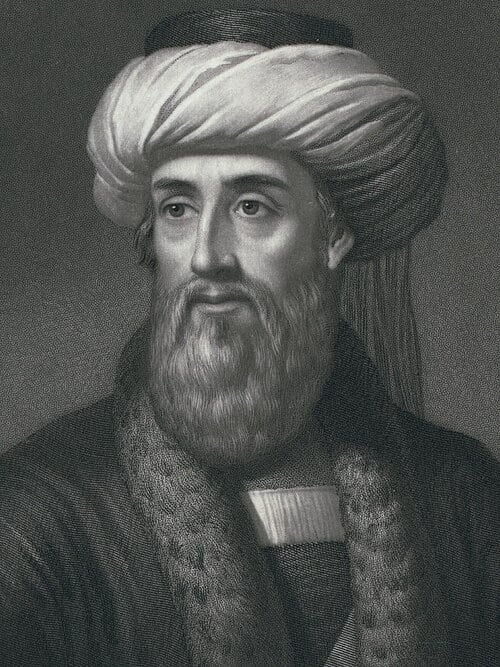
Josephus was a Jewish historian who was born in 36 A.D., shortly after Christ’s crucifixion, and who died in 100 A.D. In his writings about the history of the Jewish people up to the time of the destruction of Jerusalem in 70 A.D., he discusses Pilate, John the Baptist, and–crucially–Jesus.
Josephus thus gives extra-Biblical evidence not only for the existence of Jesus but also for His miracles, His crucifixion, His resurrection, and His messiahship. Some scholars have insisted that what Josephus says about Jesus must be a later insertion into his text by Christian scribes. But new scholarship gives evidence that the passage about Jesus is authentic.
John J. Miller tells the tale in his Wall Street Journal article entitled Unlocking the Josephus Code with the deck, “The original version of a much-debated text provides reliable evidence of the historical Jesus.”
Here is the passage in question:
from The Antiquities of the Jews/Book XVIII:
- Now there was about this time Jesus, a wise man, if it be lawful to call him a man; for he was a doer of wonderful works, a teacher of such men as receive the truth with pleasure. He drew over to him both many of the Jews and many of the Gentiles. He was [the] Christ. And when Pilate, at the suggestion of the principal men amongst us, had condemned him to the cross, those that loved him at the first did not forsake him; for he appeared to them alive again the third day; as the divine prophets had foretold these and ten thousand other wonderful things concerning him. And the tribe of Christians, so named from him, are not extinct at this day.
T.C. Schmidt first encountered this so-called Testimonium Flavium (“testimony of Flavius [Josephus]) as a graduate student at Yale. As a religious studies professor at Fairfield University in Connecticut, he began to study the text and the controversies surrounding it in 2020. He has written a book about his research published by Oxford University Press entitled Josephus and Jesus: New Evidence for the One Called Christ. (You can download a copy of this book for free, thanks to a donor and the Institute for Christian Reflection, at Schmidt’s website here.)
Josephus wrote in koiné Greek, the lingua franca of the Greco-Roman world and the language of the New Testament. His work was translated very early into Latin, Armenian, Arabic and Syriac. Schmidt examined all of the versions from all of the extant manuscripts, all of which include the Testimonium. He also did a statistical study of the style and linguistic usages of Josephus, finding that the language of the Testimonium is consistent with the rest of Josephus’ works. He also examines the arguments of those who believe the Testimonium is an addition and finds them wanting. (See this for the controversy.)
Miller also reports,
Mr. Schmidt also considers sources. Josephus was born shortly after the Crucifixion, but he was in fact only two degrees separated from Jesus. He probably knew a variety of people who had encountered the celebrated Galilean, such as the brother-in-law of Caiaphas, the priest who presided over the trial of Jesus before the Sanhedrin. The parents of Josephus also seem to have been in Jerusalem at the time of the critical events. We may never know what they and others said about Jesus to Josephus, if anything, but it’s easy to imagine them discussing a figure who had caused such a stir.
Miller also notes the importance of Schmidt’s findings:
The stakes are high, at least for scholars. If Mr. Schmidt is right, it may suggest that Christians held their basic ideas about the life of Jesus at an early date—and that their belief in the resurrection, for example, wasn’t based on a legend from decades later, as many scholars have maintained. “We must follow the evidence,” writes Mr. Schmidt in the final line of his book. “The ‘Testimonium Flavianum’ is authentic, and within it there resides a compelling witness to the origins of Christianity.”
Josephus himself has a fascinating story, which he recounts in his autobiography. As his Wikipedia entry tells it, he was from a priestly family and became the general of the Jewish forces in Galilee when the Romans, under the leadership of Vespasian, were seeking to crush the Jewish rebellion. After their defeat in battle, Josephus was trapped with 40 men in a cave as the Romans closed in. They were offered the chance to surrender, but they refused, resolving instead to commit suicide. Josephus offered the plan of casting lots, with the men killing each other one by one. He was one of only two left when the Romans broke in. While imprisoned, he said he had a vision from God that interpreted the prophetic writings that prompted the Jews’ rebellion against Rome as predicting that the victorious Roman general Vespasian would become Emperor. When Vespasian heard about this, he procured Josephus as his slave and translator. And when he did become Emperor, he freed Josephus and awarded him with Roman citizenship.
In his book, Schmidt makes what could be a small concession to the higher critics. He says that the Testimonium could be translated differently:
Mr. Schmidt contends that the most common renderings of the “Testimonium Flavianum” need an update, based on what he has gleaned from rare manuscripts. Josephus didn’t declare of Jesus that “He was the Christ,” but made a more tentative statement: “He was thought to be the Christ.” Josephus didn’t call Jesus “a doer of miraculous deeds” but rather “a doer of incredible deeds” or “a doer of paranormal deeds,” in formulations that are less encumbered by the Christian sense of the word “miracle.” And Mr. Schmidt translates “he appeared to them alive again on the third day” as “on the third day it seemed to them that he was alive again.” This new way of reading Josephus offers a much more neutral account of Jesus—and one that feels like it could be the authentic voice of a first-century Jew committed to fair and balanced reporting.
Or, it could be the authentic voice of a first-century Jew who believed Jesus to be the Messiah.
Illustration: Josephus by John Sartain (1880) by Scan by NYPL – https://digitalcollections.nypl.org/items/510d47da-f9a1-a3d9-e040-e00a18064a99, Public Domain, https://commons.wikimedia.org/w/index.php?curid=177122059

Josephus on the historical Jesus
Previous Post

November 12, 2026
Repudiation Elections
Next Post

November 16, 2026 Monday Miscellany, 11/16/26
Recent Comments
"Can we teach the AI to play tic-tac-toe and develop a winning strategy?"
"Yes, people are saying......"
"Not that I'm aware of. I'm simply sharing the cryptic comments of those who know ..."
"David, as you, I have been involved with computer program development for a very long ..."
Browse Our Archives
Select a Category America Apologetics Art baseball Bible Blog Christ Church crime Culture Economics Education Ethics Family Food Football Government History Holidays Holy Week Humor International Islam Language Law Life Issues Literature Media Medicine Movies Music Nature News Personal Philosophy Politics psychology Reformation Religions Sacraments Science sex Social Science Sports technology television terrorism Theology Uncategorized Vocation war
Select a Month November 2026 October 2026 September 2026 August 2026 July 2026 June 2026 May 2026 April 2026 March 2026 February 2026 January 2026 December 2025 November 2025 October 2025 September 2025 August 2025 July 2025 June 2025 May 2025 April 2025 March 2025 February 2025 January 2025 December 2024 November 2024 October 2024 September 2024 August 2024 July 2024 June 2024 May 2024 April 2024 March 2024 February 2024 January 2024 December 2023 November 2023 October 2023 September 2023 August 2023 July 2023 June 2023 May 2023 April 2023 March 2023 February 2023 January 2023 December 2022 November 2022 October 2022 September 2022 August 2022 July 2022 June 2022 May 2022 April 2022 March 2022 February 2022 January 2022 December 2021 November 2021 October 2021 September 2021 August 2021 July 2021 June 2021 May 2021 April 2021 March 2021 February 2021 January 2021 December 2020 November 2020 October 2020 September 2020 August 2020 July 2020 June 2020 May 2020 April 2020 March 2020 February 2020 January 2020 December 2019 November 2019 October 2019 September 2019 August 2019 July 2019 June 2019 May 2019 April 2019 March 2019 February 2019 January 2019 December 2018 November 2018 October 2018 September 2018 August 2018 July 2018 June 2018 May 2018 April 2018 March 2018 February 2018 January 2018 December 2017 November 2017 October 2017 September 2017 August 2017 July 2017 June 2017 May 2017 April 2017 March 2017 February 2017 January 2017 December 2016 November 2016 October 2016 September 2016 August 2016 July 2016 June 2016 May 2016 April 2016 March 2016 February 2016 January 2016 December 2015 November 2015 October 2015 September 2015 August 2015 July 2015 June 2015 May 2015 April 2015 March 2015 February 2015 January 2015 December 2014 November 2014 October 2014 September 2014 August 2014 July 2014 June 2014 May 2014 April 2014 March 2014 February 2014 January 2014 December 2013 November 2013 October 2013 September 2013 August 2013 July 2013 June 2013 May 2013 April 2013 March 2013 February 2013 January 2013 December 2012 November 2012 October 2012 September 2012 August 2012 July 2012 June 2012 May 2012 April 2012 March 2012 February 2012 January 2012 December 2011 November 2011 October 2011 September 2011 August 2011 July 2011 June 2011 May 2011 April 2011 March 2011 February 2011 January 2011 December 2010 November 2010 October 2010 September 2010 August 2010 July 2010 June 2010 May 2010 April 2010 March 2010 February 2010 January 2010 December 2009 November 2009 October 2009 September 2009 August 2009 July 2009 June 2009 May 2009 April 2009 March 2009 February 2009 January 2009 December 2008 November 2008 October 2008 September 2008 August 2008 July 2008 June 2008 May 2008 April 2008 March 2008 February 2008 January 2008 December 2007 November 2007 October 2007
Give A Subscription
Follow Us!
TAKE THE
Religious Wisdom Quiz
What were the first man and woman’s names in the Bible?
Select your answer to see how you score.
Adam and Eve Joseph and Mary Samson and Delilah Jacob and Rachel
Books by This Author Books by Gene Veith
Related posts from Cranach
A Scientist on the Location of Heaven
Who Receives the New Benefit of Clergy
TRENDING AT PATHEOS Evangelical

Smart people saying smart things (11.24.26)
Please take time to listen to Perry Bacon, Sarah Posner, Adam Serwer,...

The Contingency of Our Technology
Last week we were hit with a raft of massive technology outages....

In 1939, President Franklin D. Roosevelt moved Thanksgiving from November 30 to...

Reasons for Restraint: Ricardo Gonzalez, Florida and Dec...
The Morning of January 3 I begin with the dead. On the...

I published this column for Thanksgiving 2012 in the Deseret News....

For many years, Catholicism has been caught up in division over the...
view all Evangelical blogs
What Are Your Thoughts?leave a comment
Ad-Free & Subscriber Log-In Subscription Support
- About Us
- 2026 Calendar
- Videos
- Podcasts
- Library of World Religions
- Faith In Media Tracker
- Advertise With Us
- Write for Us
- Privacy Policy
- Terms of Service
- Do Not Sell My Data
- Contact Us
- Radiant Digital
- Manage Newsletter Subscriptions
- Unsubscribe From Notifications
- Sitemap
Copyright 2008-2026, Patheos, part of the Radiant Digital network of media brands. All rights reserved.
Subscription Support Ad-Free & Subscriber Log-In
Follow Patheos